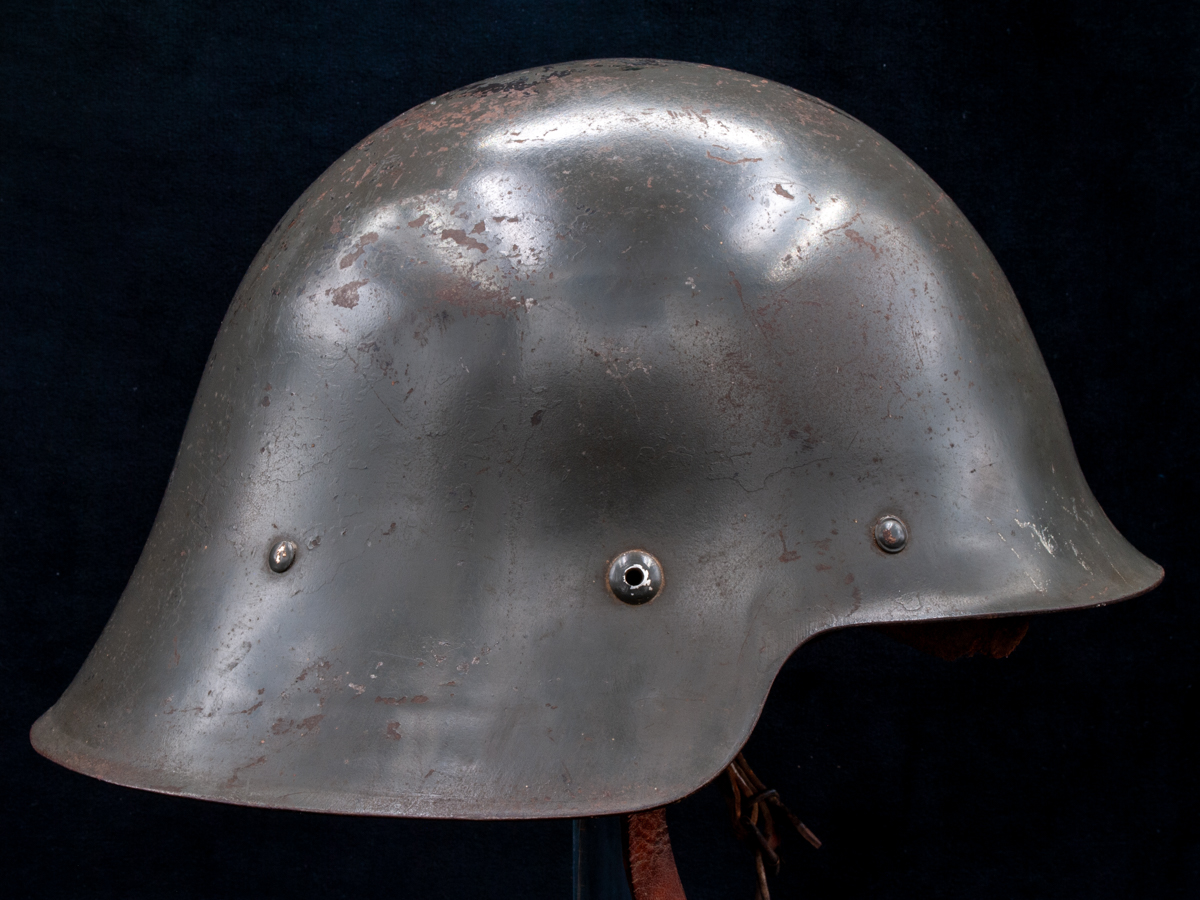
$290 SOLD
Tag Archives: Steel Helmet
British MKII*

General Information: The British MKII was helmet most widely used by British soldiers in the Second World War. Ultimately twelve million were produced from 1938 to 1944.[1] Commonwealth countries Australia, Canada, India, New Zealand, and South Africa each produced their own version of the MKII. The MKII, or copies thereof, continued to see service inContinue reading “British MKII*”
German M16*
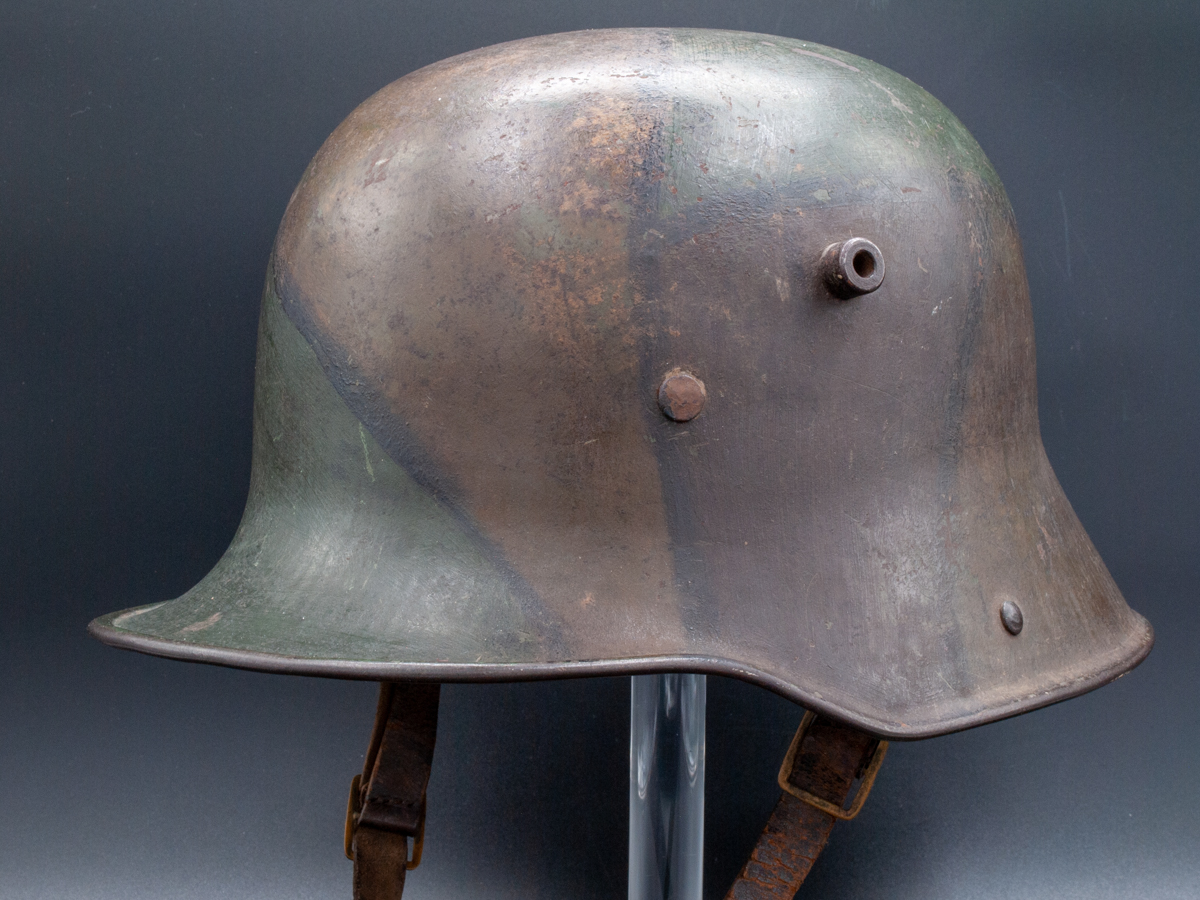
General Information: The German Model 1916 is widely considered to be the best helmet of the First World War in terms of its ability to protect the soldiers from head wounds. The one-piece construction provided a degree of structural integrity lacking in the four-piece French Model 1915 and the chromium-nickel steel composition was a strongContinue reading “German M16*”
French M26*

General Information: The French Model 1926 helmet was the main helmet used by French armed forces in the second world war. A large number of reissued Model 1915 helmets were also used. A transitional helmet, the Model 1923, was issued in limited numbers. In addition to the M26, specialty helmets were issued for armored, antiaircraft,Continue reading “French M26*”
German Export M35

$695
Japanese Type 90*
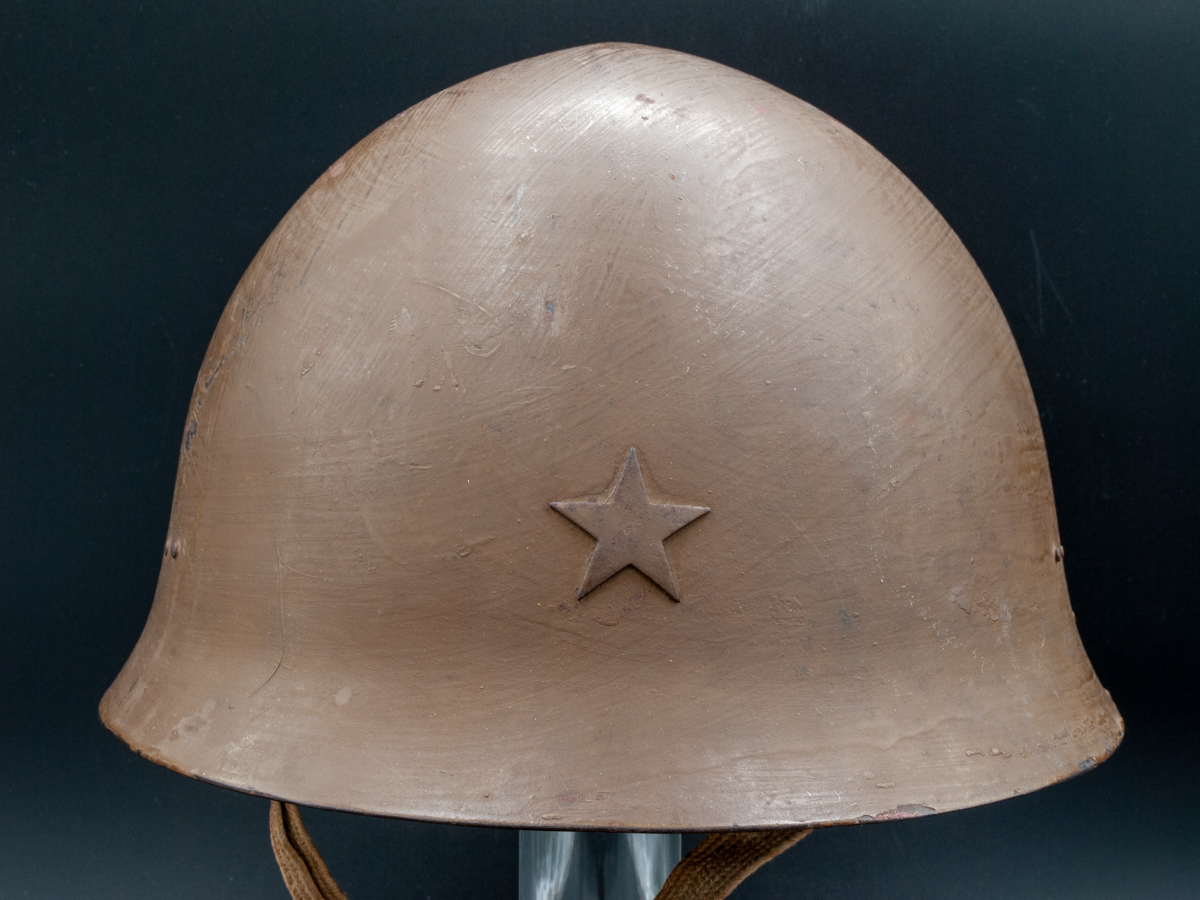
General Information: The Type 90 helmet is named after the year of its design using the Japanese Imperial year system called “kōki.” Ninety is shorthand for kōki year 2590 which corresponds to 1930 in the Gregorian calendar. For this reason, the helmet is also referred to as the Model 1930 or Model 1930-32. The TypeContinue reading “Japanese Type 90*”
German M35*
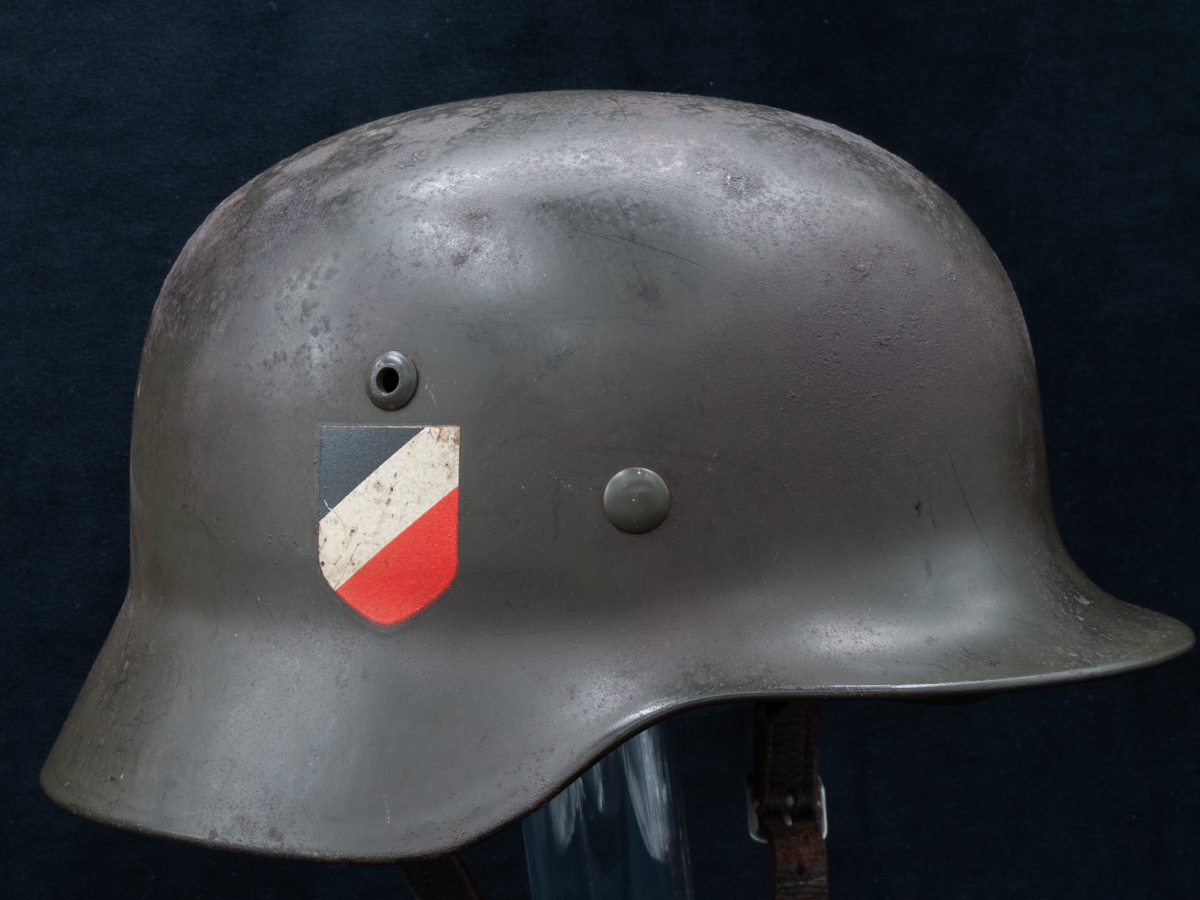
General Information: The German Model 1935 was the first of a series of three basic models of helmets used by German soldiers during the Third Reich era. During the Weimar and early Nazi era German soldiers used reissued M16/17/18 type helmets. These were good helmets, but the new design addressed certain flaws of their predecessors,Continue reading “German M35*”
Italian M33*

General Information: The Italian M33 was the main helmet used by Italian armed forces throughout the Second World War. It was designed by an engineer named Nicola Leszl. The helmets were made of a strong nickel and steel alloy. The liners were brown leather mounted on a steel harness. The helmet sizes were stamped intoContinue reading “Italian M33*”
Austro-Hungarian M17*
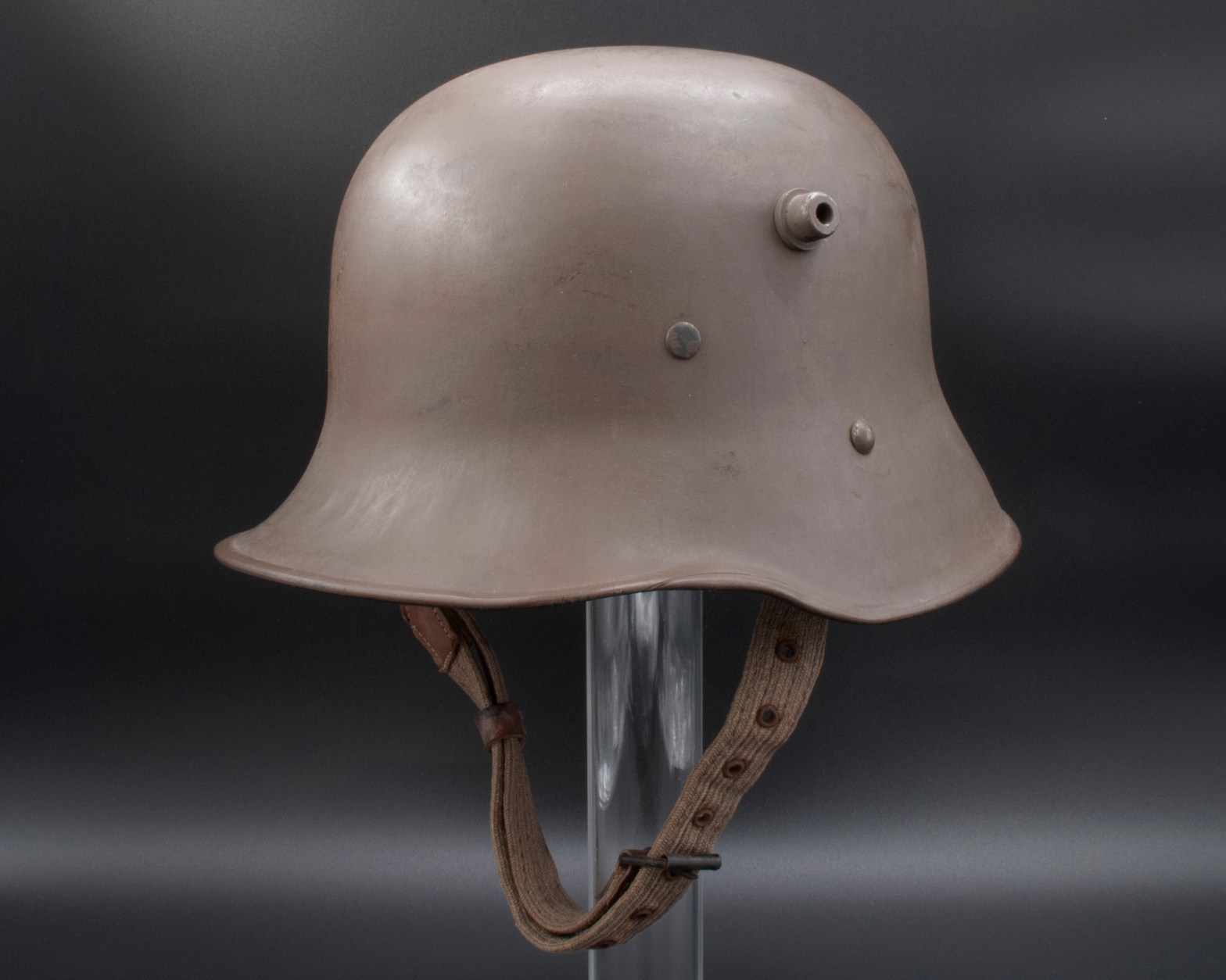
General Information: The Austro-Hungarian Model 1917 helmet was almost identical to the German First World War helmets. The main exterior difference was that the Austro-Hungarian M17s were painted brown and the rivet for securing the chinstrap loop attachments was higher up. In period black and white photos, it is the location of the chinstrap rivetContinue reading “Austro-Hungarian M17*”
German M18*

* General Information: In July of 1918 the Germans introduced a new steel helmet, the Model 1918.[1] The new helmet was identical to the Model 1916/17 with the exception of the chinstrap configuration. The new chinstraps were made in two pieces with a carbine type clip that connected them. Instead of being connected by lugsContinue reading “German M18*”
 Steel Helmets of the World Wars