

Updated November 22, 2026
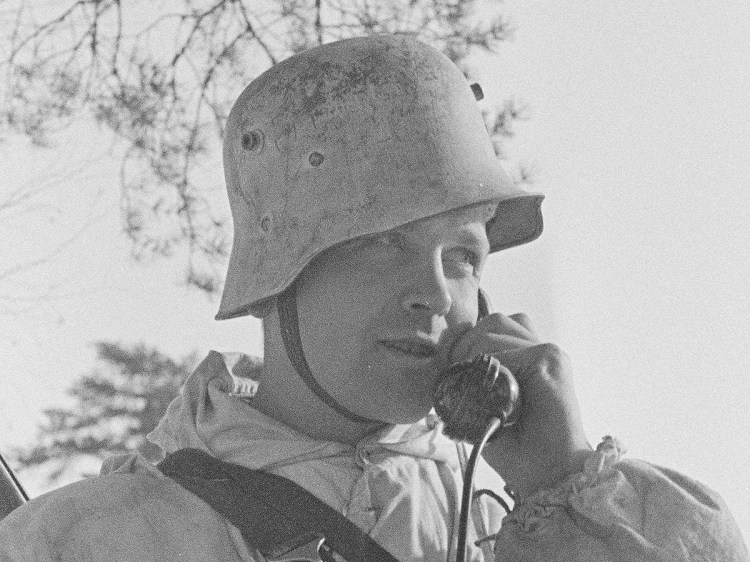
General Information: On April 14, 1920, the Finnish Ministry of War authorized the German-style helmet as the type to be issued to their armed forces. The German WWI style helmets were the only type used by the Finnish army in the 1920s and 30s and through the First Winter War. After this period a surprising variety of other helmets were secured, but the German WWI models continued to be used throughout the war and into the post-war period (see Finnish German M16 Post-WWII).
These helmets were German WWI surplus (Model 1916, Model 1917, or Model 1918), Austro-Hungarian Model 1917s, or post-WWI manufactured pieces. The Finns procured approximately 75,000 helmets of this type.[1] They came from a variety of sources. Some were part of a 1919 shipment of 15,000 helmets supplied by the French that included both French Model 1915s and captured German stocks.[2] The French helmets were sold to Finnish fire departments while the German helmets were retained by the army. Subsequently, two Finnish companies supplied German type helmets.[3] It is not known where the Finnish companies acquired these helmets, but judging from surviving examples they must have procured them from multiple sources. The largest single supplier of the helmets to the Finnish army was the Adolf Westen A.- G. Stanz- Und Emaillierwerke[4], sometimes abbreviated as “A. Westen.” This manufacturer was located in Cilli which had been part of the Austro-Hungarian empire. After the First World War it became part of the Kingdom of Slovenes, Croats, and Serbs, later named Yugoslavia in 1929. Today the name of the city is Celje and is located in Slovenia. During the war the A. Westen factory produced size 64 helmets that bore the manufacturing code, “A.W.” although the strikes on the helmets’ skirts were often weak or not visible (see Austro-Hungarian M17). The post-WWI A. Westen helmet are differentiated from the WWI produced helmets by their color: the wartime helmets were brown while the postwar export helmets were green. Based on study of surviving examples of A. Westen Finnish contract helmets, these either lacked manufacturer codes or had a single digit “W” rather than the “A.W.” of the Austro-Hungarian helmets.[5] It should be noted that some surplussed Austro-Hungarian helmets also made their way into Finnish armed forces inventories.[6] A. Westen supplied an estimated 35,000 to 50,000 helmets to Finland.[7]
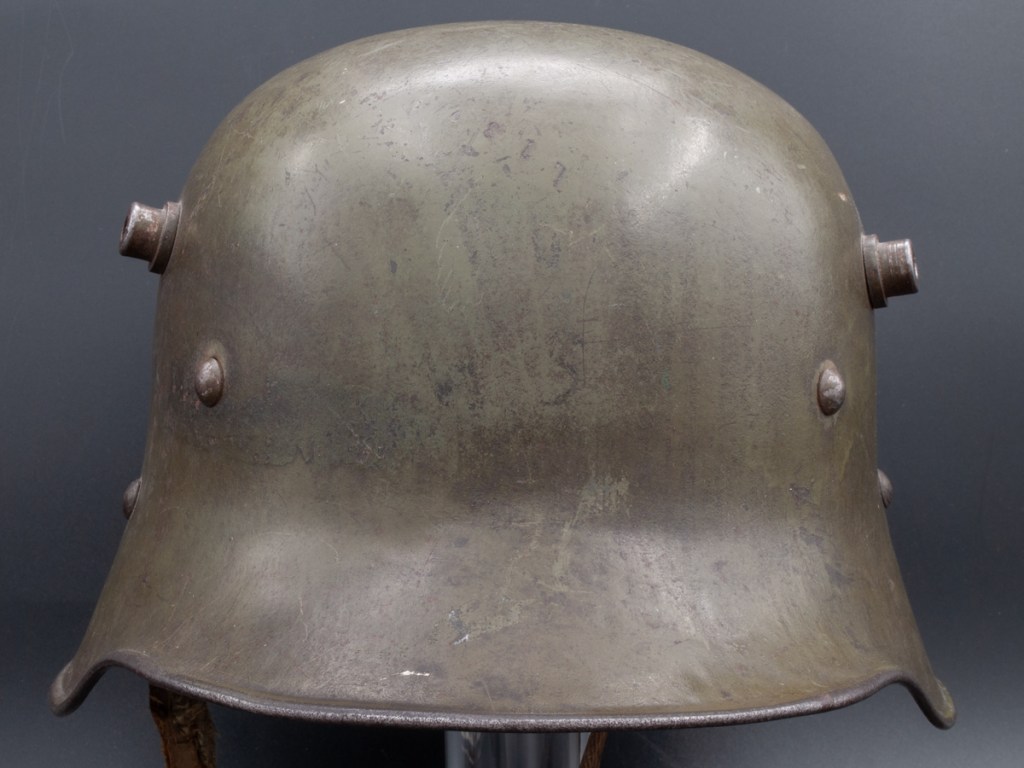
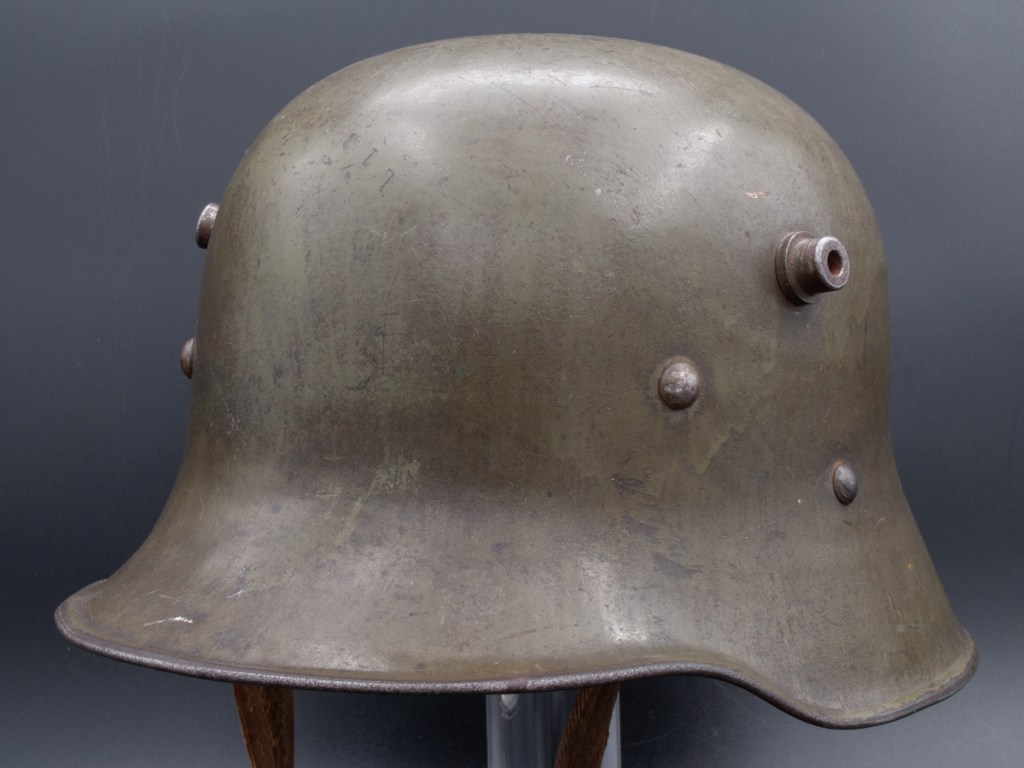
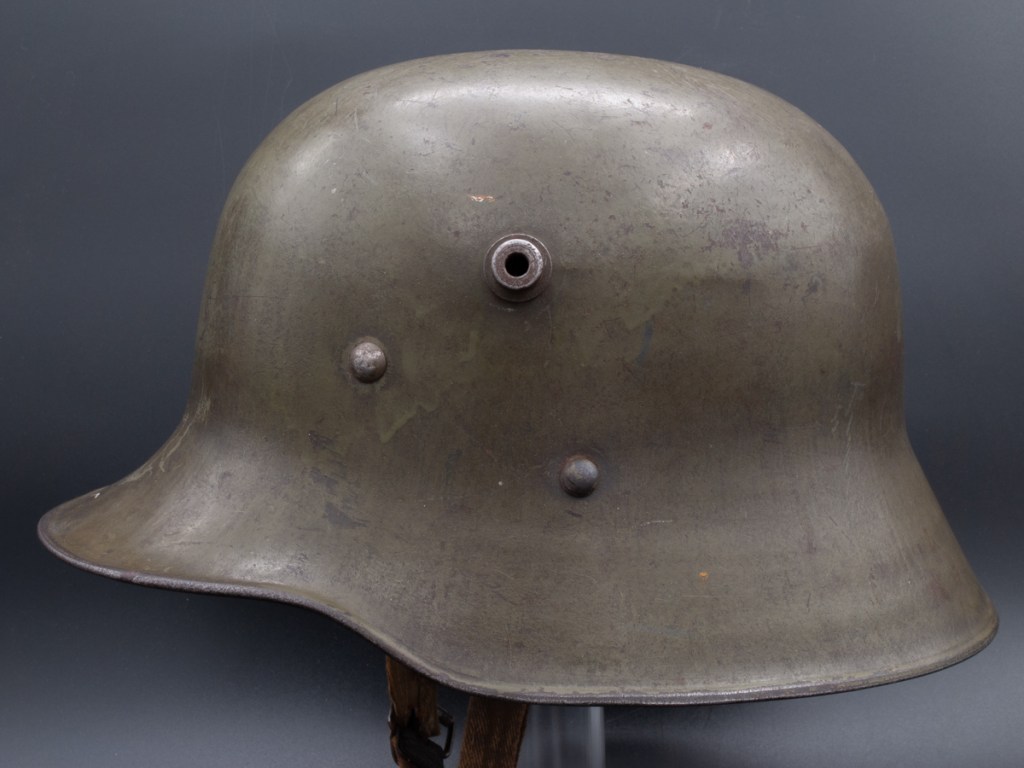
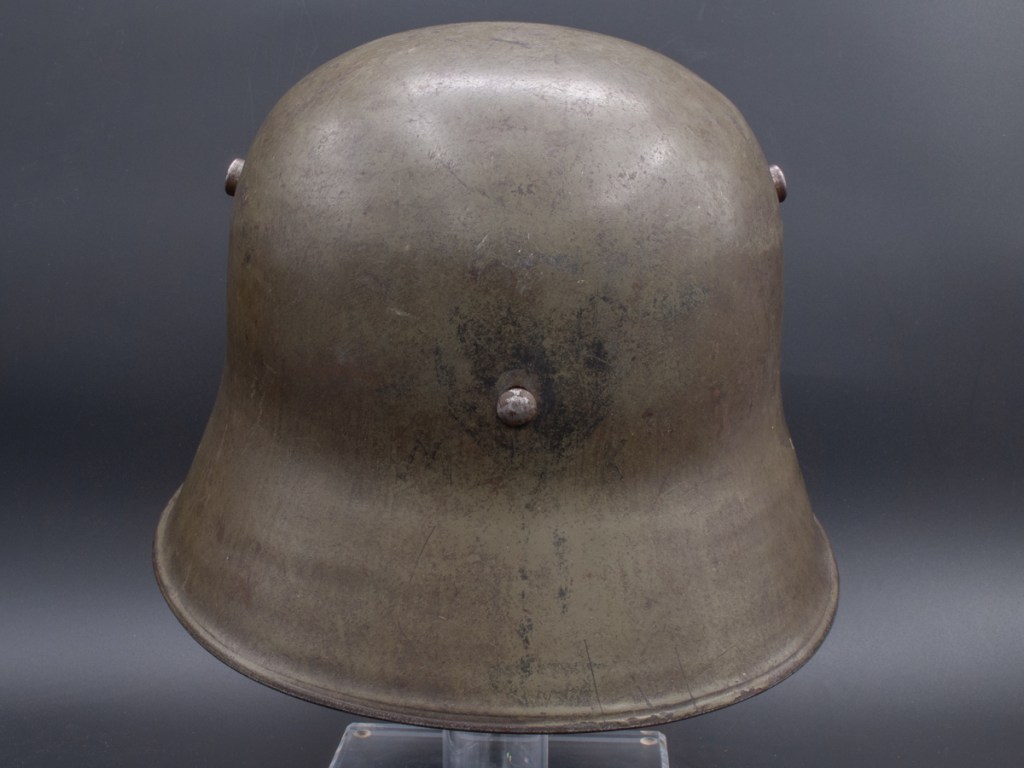
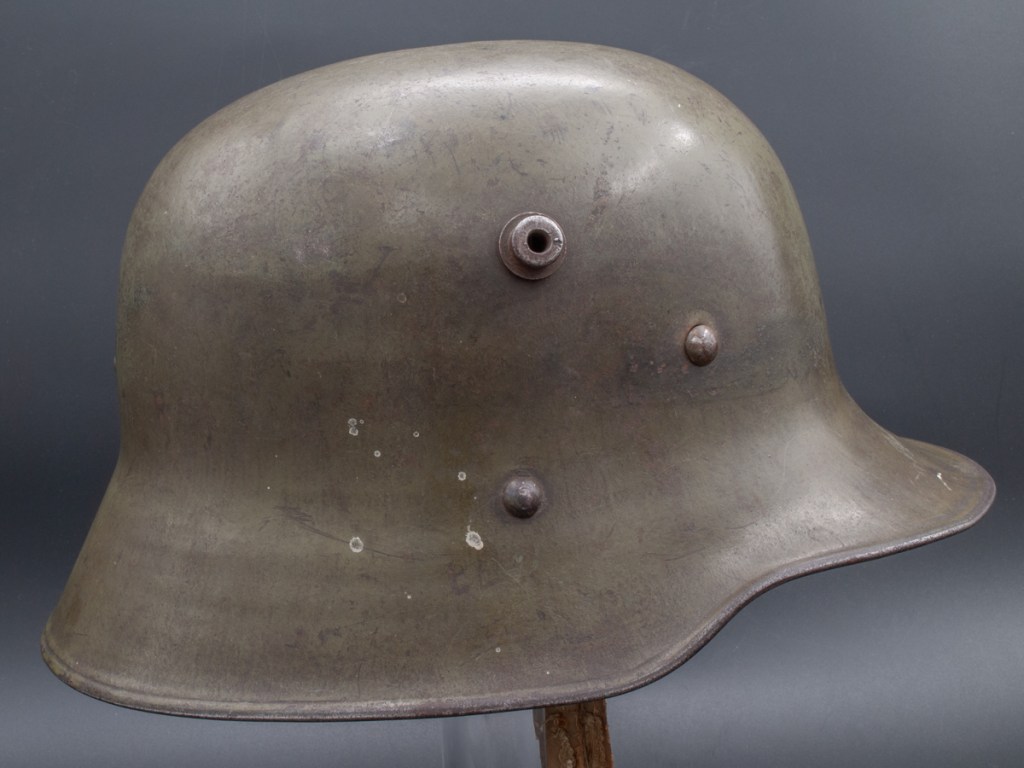
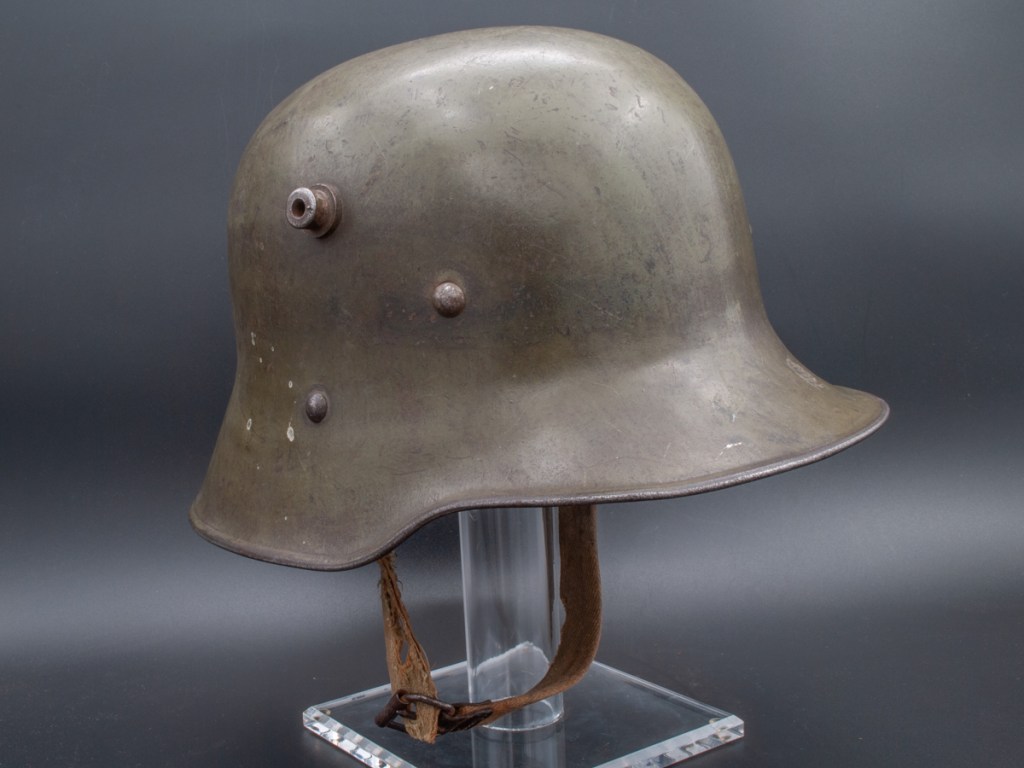
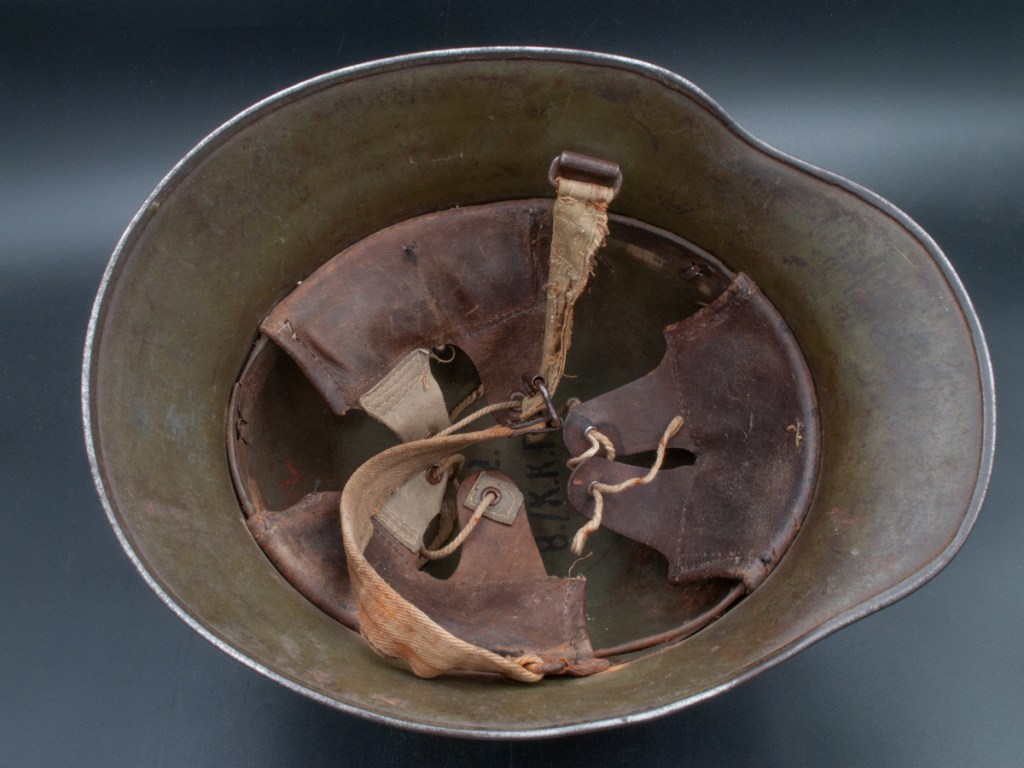
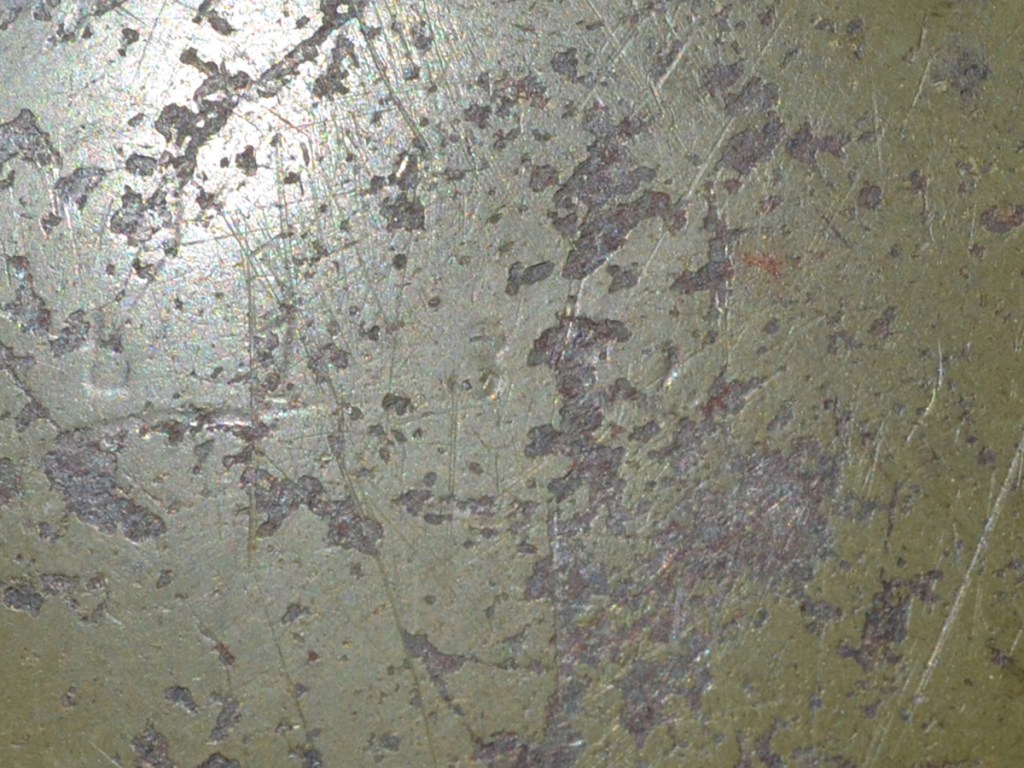
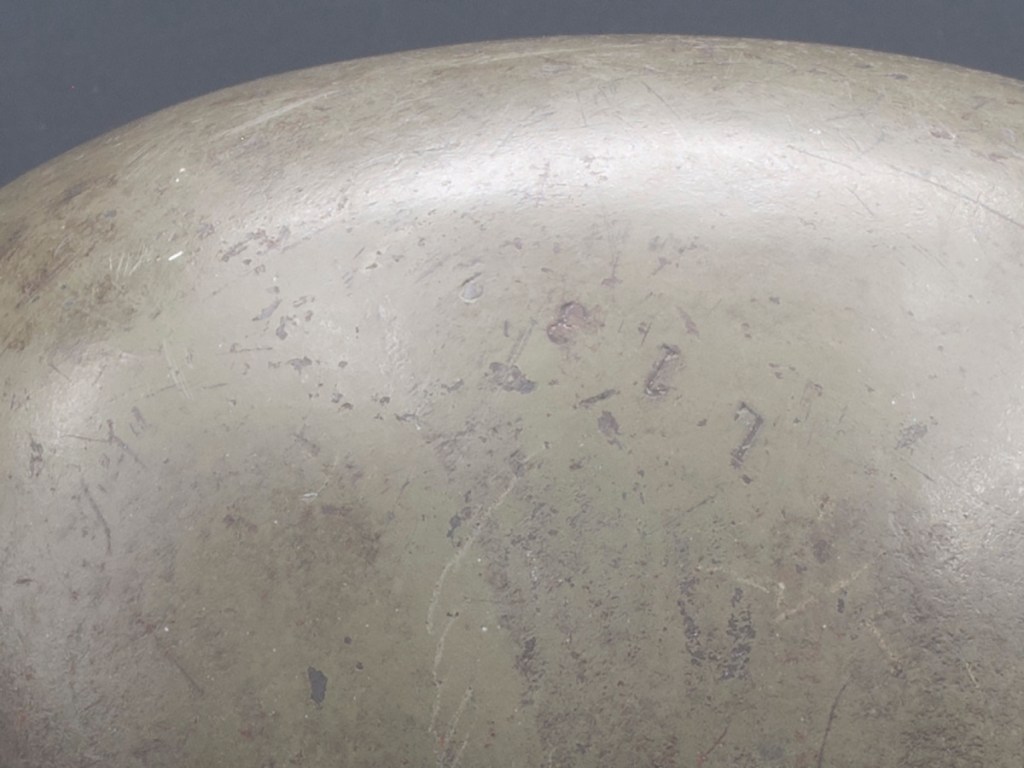
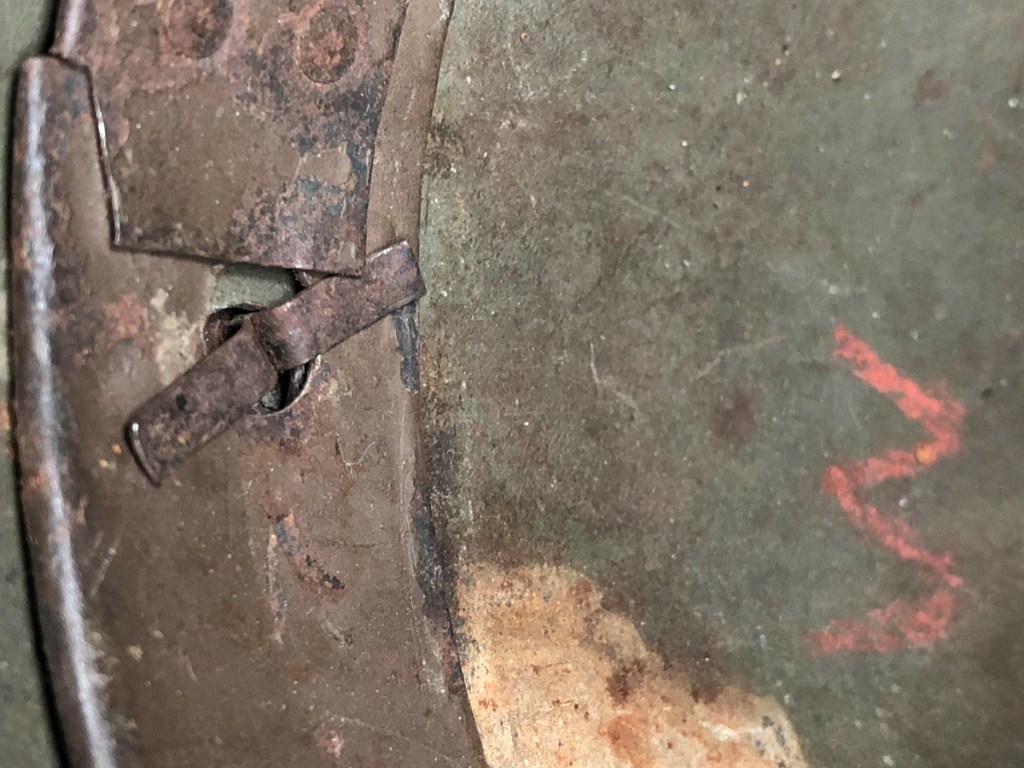
Displayed Example: This helmet was produced in the 1920s by the A. Westen company and was part of the contract the company had to supply helmets to the Finns. As with other A. Westen made during and after the war, this one lacks a visible maker mark. Like all other A. Westen helmets, it is a size 64. The chinstrap hooks are the particular type found on AW helmets. The remaining original section of chinstrap with the roller buckle is identical to those used during the First World War. The leather pads could be factory original, but they have been repaired. The repairs are typical of what you often see on Finnish wartime helmets.[8] While the chinstrap section on the wearer’s left is factory original, the section on the right is a replacement – by appearance period original. The Finns were very frugal and were adept at repairing and reissuing equipment. There is a lot number on the dome, “L 1 3 2.” Strangely, the lot number is repeated on the forehead section. That is something I have not seem before. The “L” stands for the Lapp company of Rottenman (Austria) which supplied steel to A. Westen for their helmets – yet another indicator that this is an A. Westen helmet.[9] The helmet is painted green throughout which, as mentioned above, is a feature of the postwar A. Westen helmets.
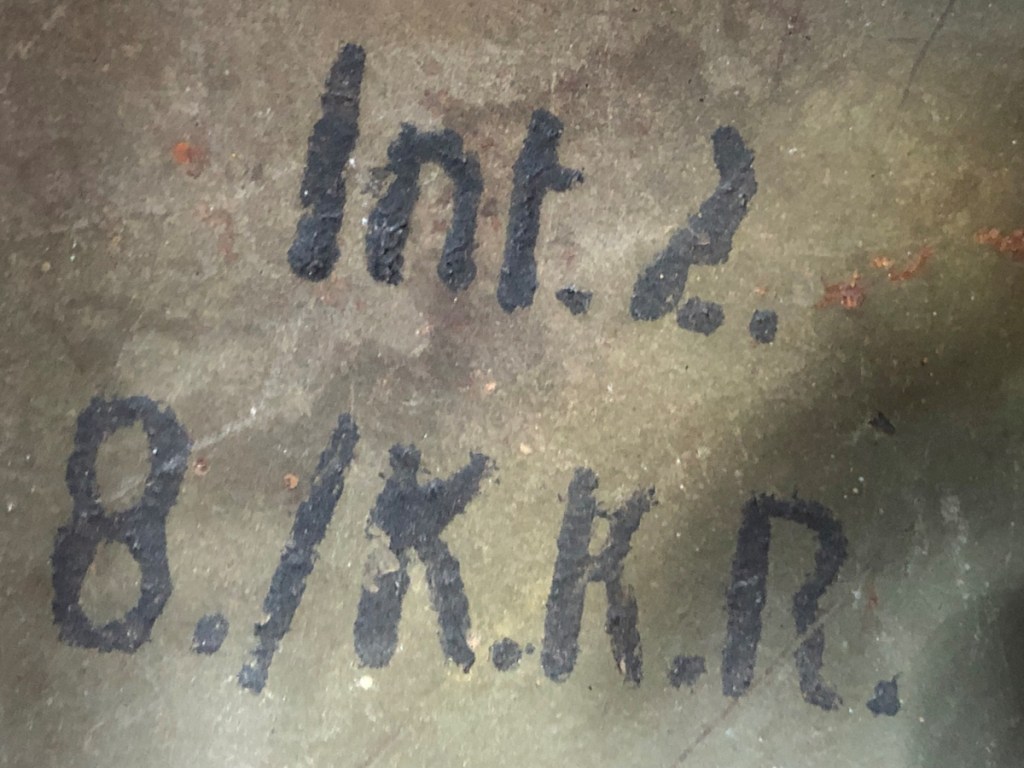
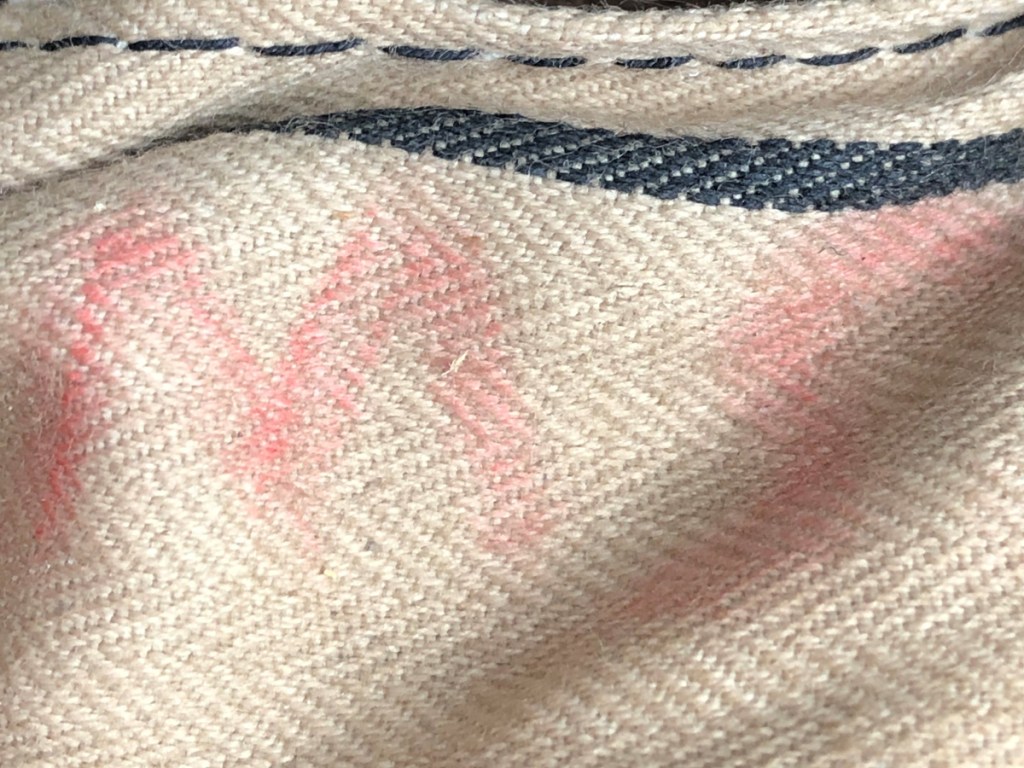
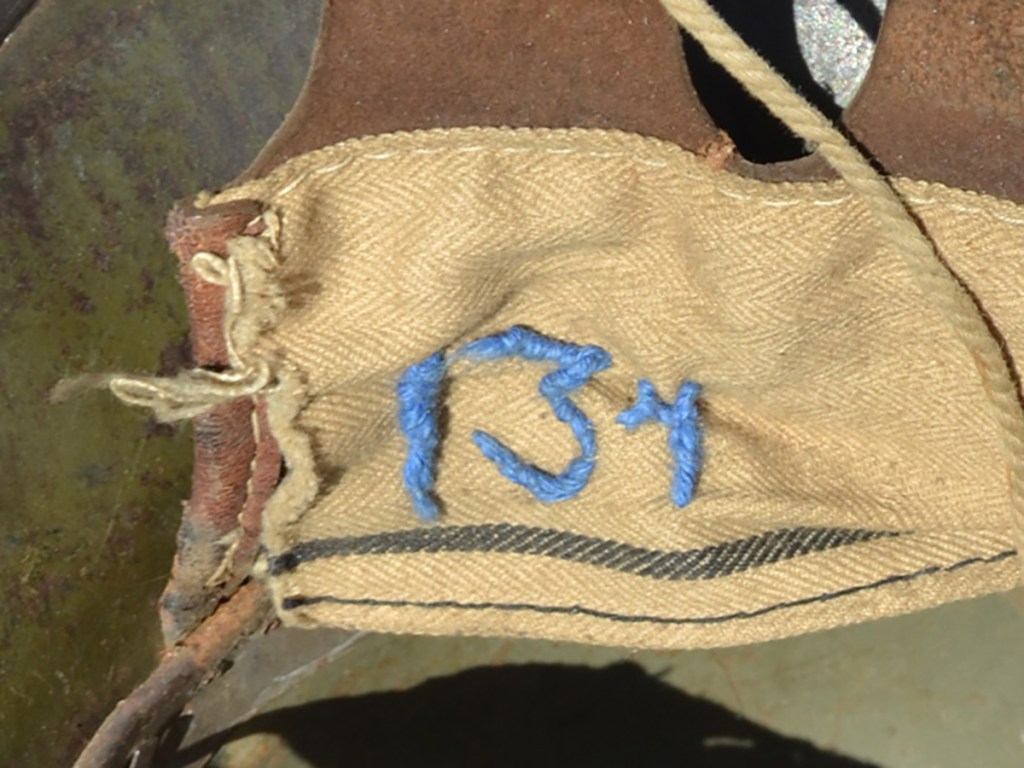
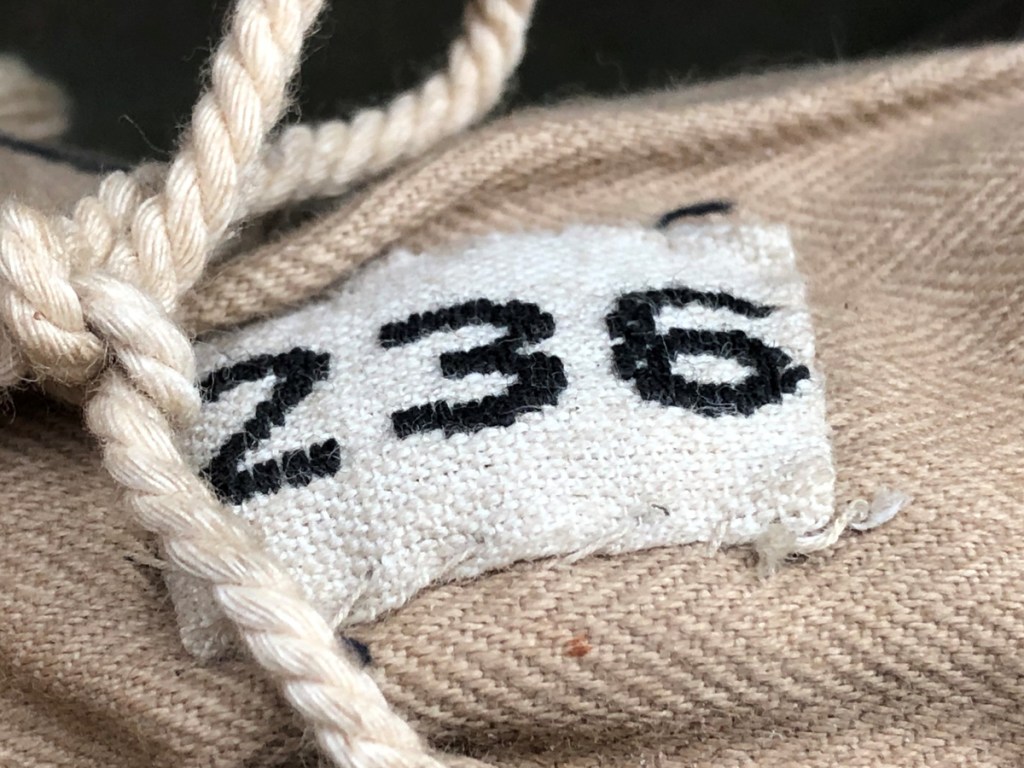
The dome of the helmet is stamped “Int. 2. 8./K.K.R.” This stands for Karjalan Kaartin Rykemtti 8th Company 2nd Battalion. The English translation of the unit name is Karelian Guards Regiment. “Int.” is an abbreviation for “Intendentuuri”, the administrative and supply department of the Finnish armed forces, which was engaged in the procurement of equipment. Karelia was the contested area between Finland and the Soviet Union. The unit was posted to the Finnish town of Viipuri. After the Winter War Viipuri was given to the Soviets as part of the terms of the peace treaty of 1940. The unit was officially disbanded in 1940.[10] The Finnish army applied unit numbers on equipment until 1935[11], so the Karelian Guards Regiment stencil would have been applied in 1935 or earlier. There are numbers stitched into the liner pads. I do not know for what purpose. There are initials “MS” in red on one of the liner pads and a red “M” in the dome of the helmet. This would likely be the original owner’s initial(s).
The helmet came from the collection of a now deceased Finnish collector. I bought it from Dragoon Militaria, a Finnish militaria store.
Collector Notes: A large cache of surplus World War Two Finnish helmet hit the market a few years ago, including many German WWI models, and these interesting helmets can be had for a modest price (see Finnish German M16 Post-WWI). Almost all of these helmets were refurbished post-WWII. The refurbishment involved refitting the helmets with leather liner bands and three liner pads of the German First World War style. The helmets were repainted a matt olive or sometimes grey color. It is very difficult, however, to find one of these helmets in its original WWII state. The post-WWII refurbished helmets have washers behind the split pins and an extra pair of small-headed rivets to secure the liner bands. That, in addition to the post-war liners, is a quick identifier of post-war helmets.
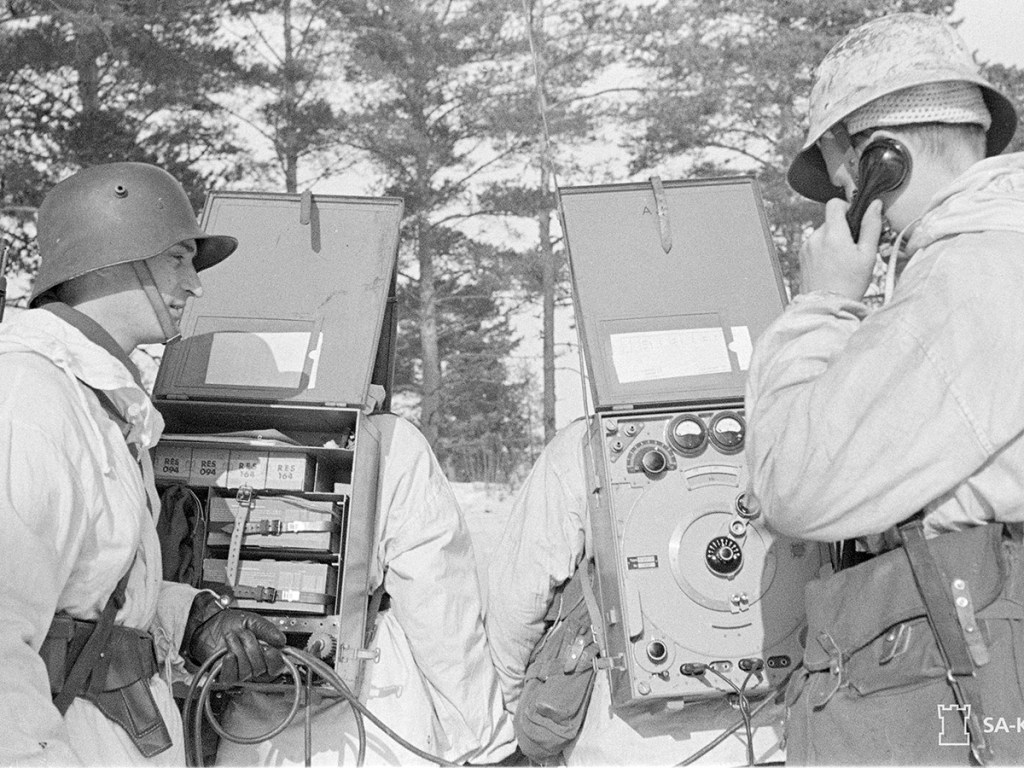
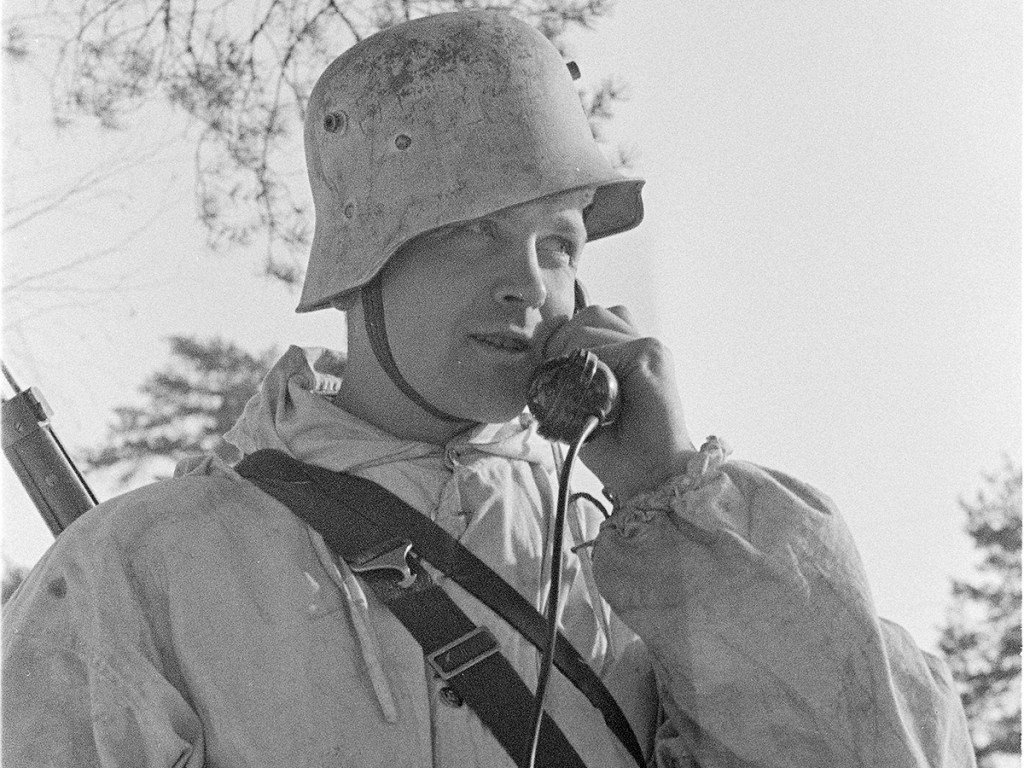
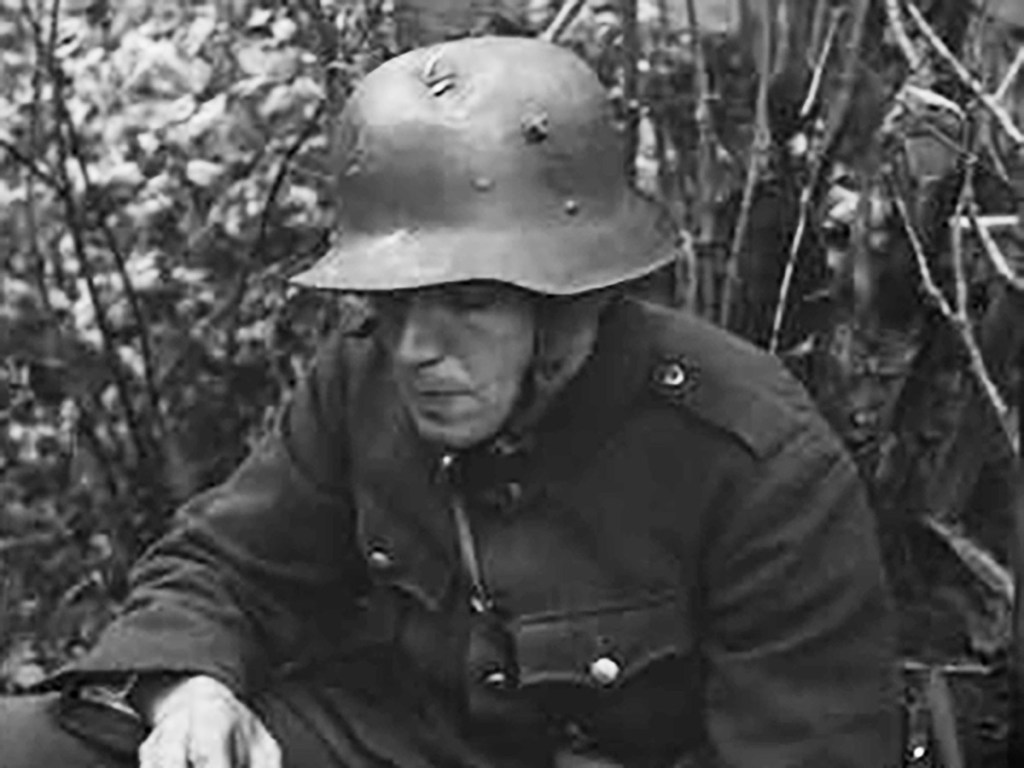
* “From the front line to the home front 1939-1945: Radio The team leader speaks on the radio.” Finnish Wartime Photograph Archive. The Finnish Defense Forces. Source: SA-kuva. Accessed June 9, 2022
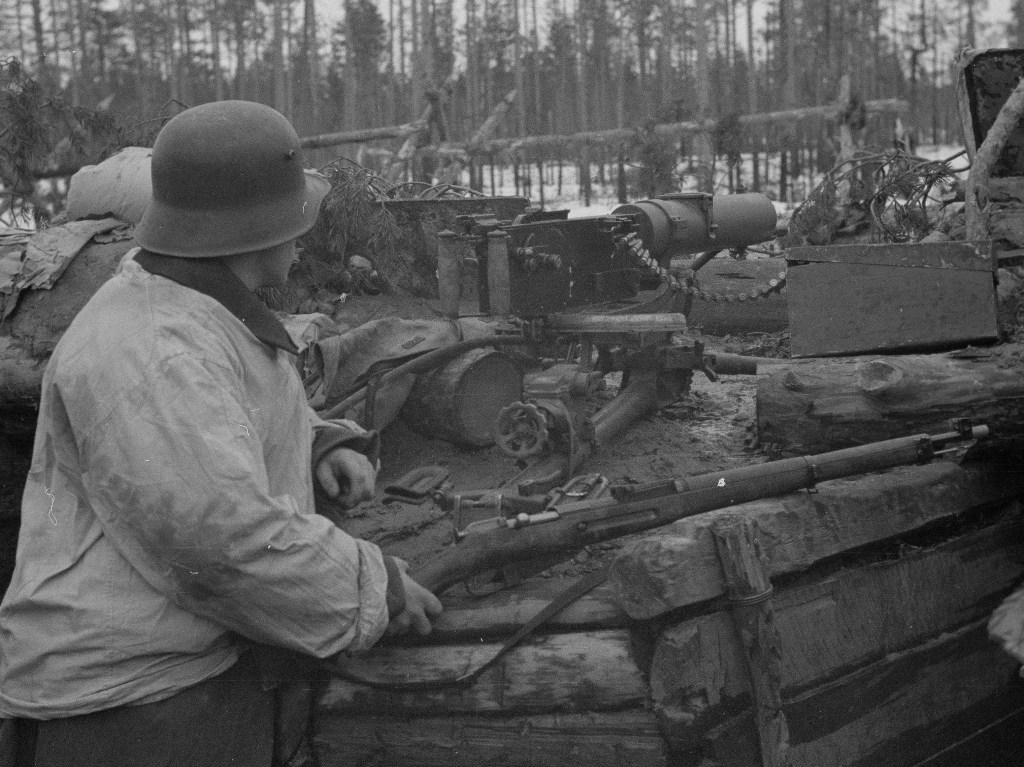
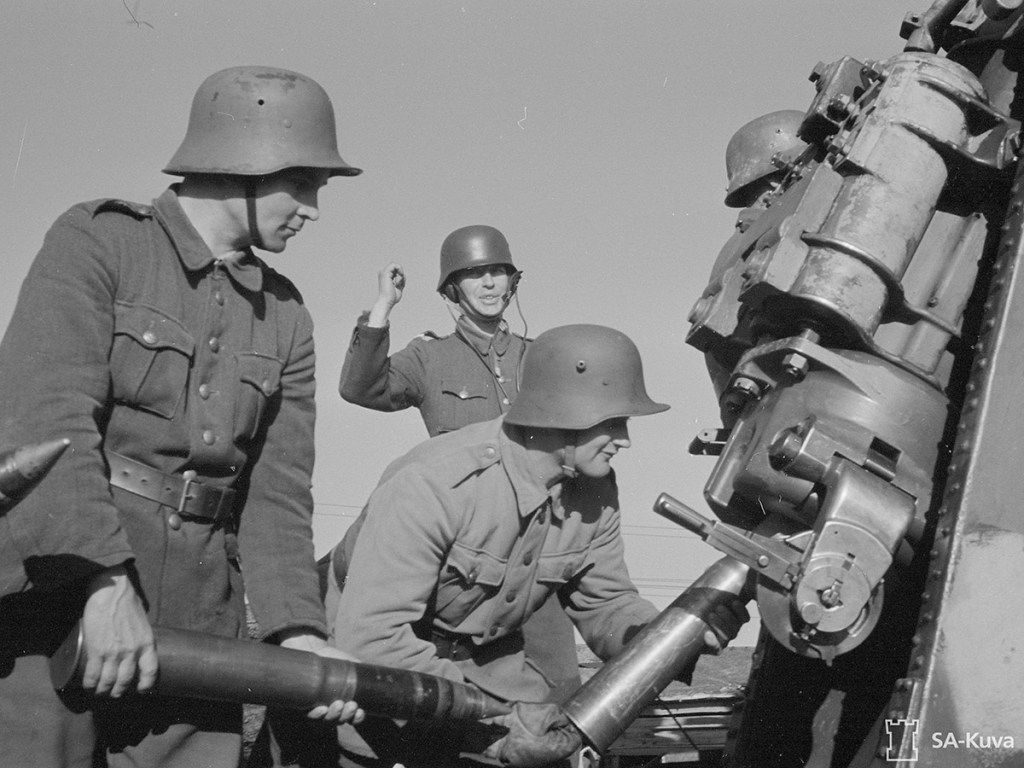
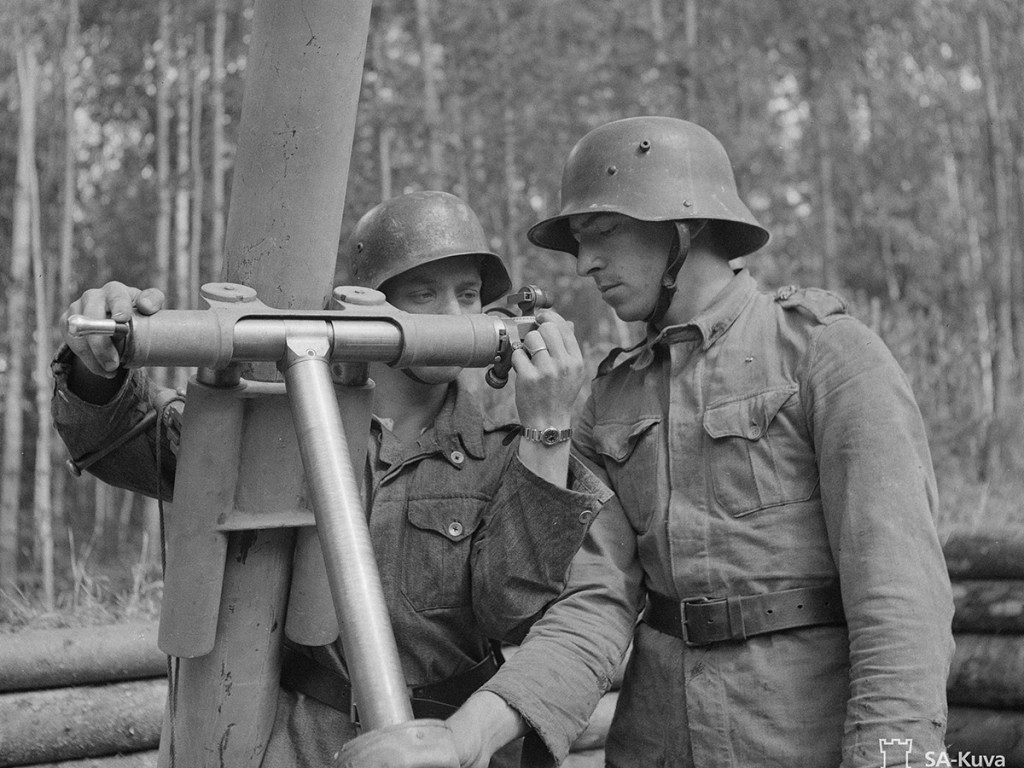
* All gallery photos below from: Finnish Wartime Photograph Archive. The Finnish Defense Forces. Source: SA-kuva. Accessed June 9, 2022
[1] Stig Roudasmaa in his book on Finnish helmets gives the number of WWI German-style helmets used by Finnland as 70,000 (pp.62). Elsewhere in his book he quotes a 1939 dated letter from the General Staff which states there were “about 75,000” helmets available at that time (pp.20). An army memo from 1927 states that there were 81,290 helmets in inventory (pp.19). I have used the 75,000 as an approximate median of these figures.
[2] Roudasmaa, S. pp.18
[3] Roudasmaa, S. pp.18
[4] Roudasmaa, S. pp.18
[5] Soininen, Rami. Personal communication. November 11, 2026
[6] Rami Soininen. Personal Communication. November 11, 2026
[7] Soininen, R. Dragoon Militaria. 1920s Austrian M17 steel helmet – Finnish contract W64. Accessed November 11, 2026.
[8] Soininen, Rami. Personal communication. May 2015
[9] Osio, Ariberto. Personal communication. November 21, 2022
[10] Soininen, Rami. Personal communication. May 2015
[11] Soininen, Rami. Personal communication. May 2015May 2015




Very interesting article. Thank you!
I have a Vz- 32/34 Czech. helmet I recently purchased on Ebay (in route).
It’s a Danish Railway re-issue with coin/disk identifier. It seems to be in very good condition with light colored leather, and horse tail for padding. The pads do have eyelets, as some, I see, do not. The Shell color appears to be a very dark grey/green. Due to some ware I can see that under this appears to be a “mustardie”/olive drab color.
Now, I was considering using it (gently) for Finnish reenacting. Is this something I should ABSOLUTELY NOT DO in your opinion?
Is there an appropriate paint/ color you could recommend for a re-issued Finnish war time helmet?
Were all Finnish re-issued helmets painted that battleship grey?
Any other input, or information would be greatly appreciated!
Thanks again.
LikeLike
Hi Tony, Thanks for reaching out. The WWII Danish Railway Police (DAB) helmets may not be extremely valuable, but they are rare. I would strongly advise that you not repaint it. Instead, I’d recommend finding a post-WWII reissued vz.32 helmet. These are usually painted black. They don’t have much cachet in collectors’ markets and you should be able to pick one up for a modest sum. I’m not sure about the color, but a greenish/grey would be a good bet. The Finnish M40 on my website might provide a good color to try to match: https://maplecreekmilitaria.com/2022/06/11/finnish-m40/. You can sell me your DAB helmet! : )
Best regards, Mark D.
LikeLike