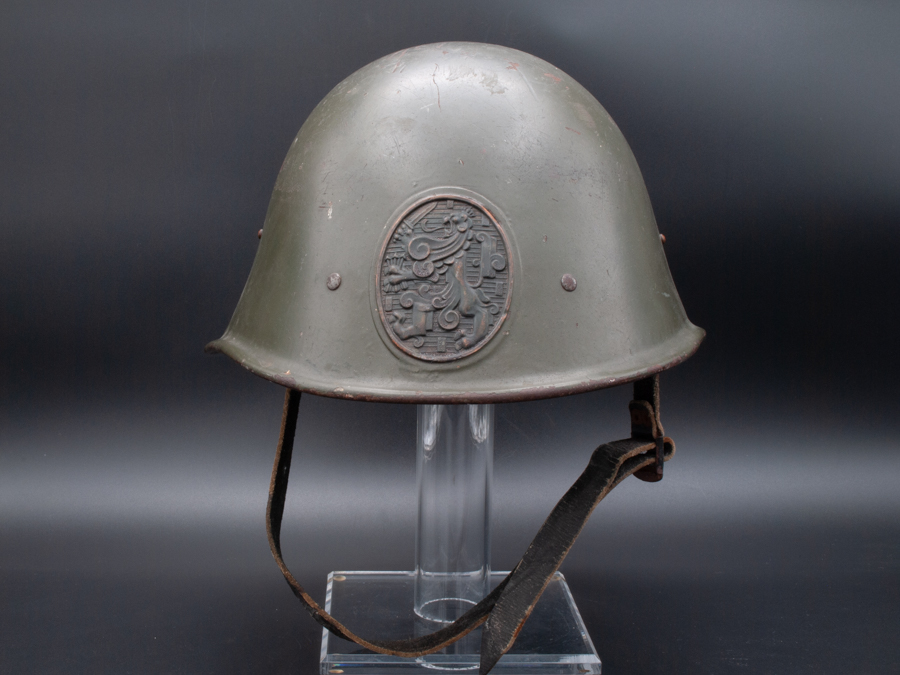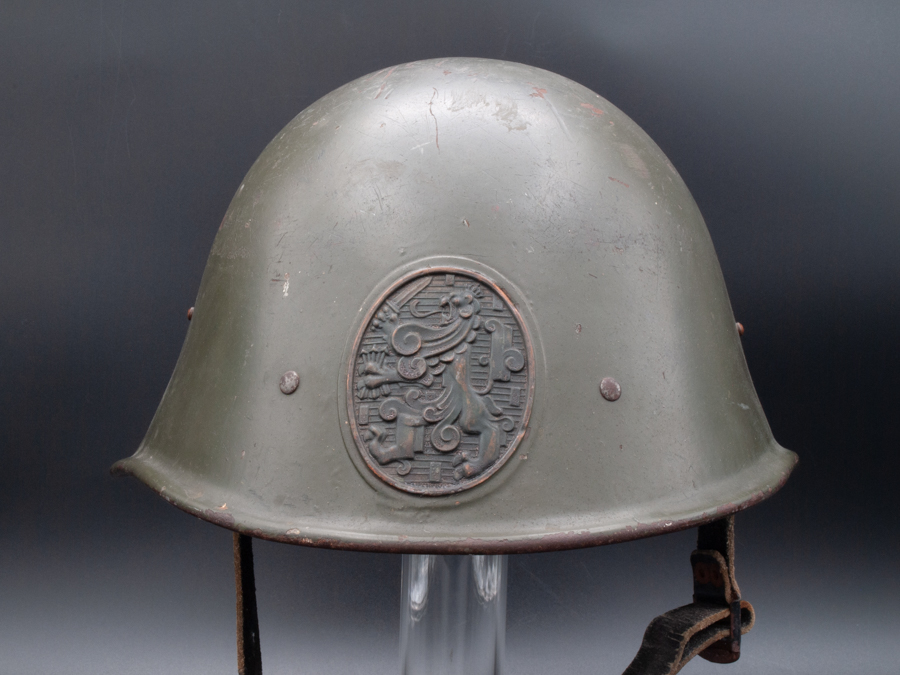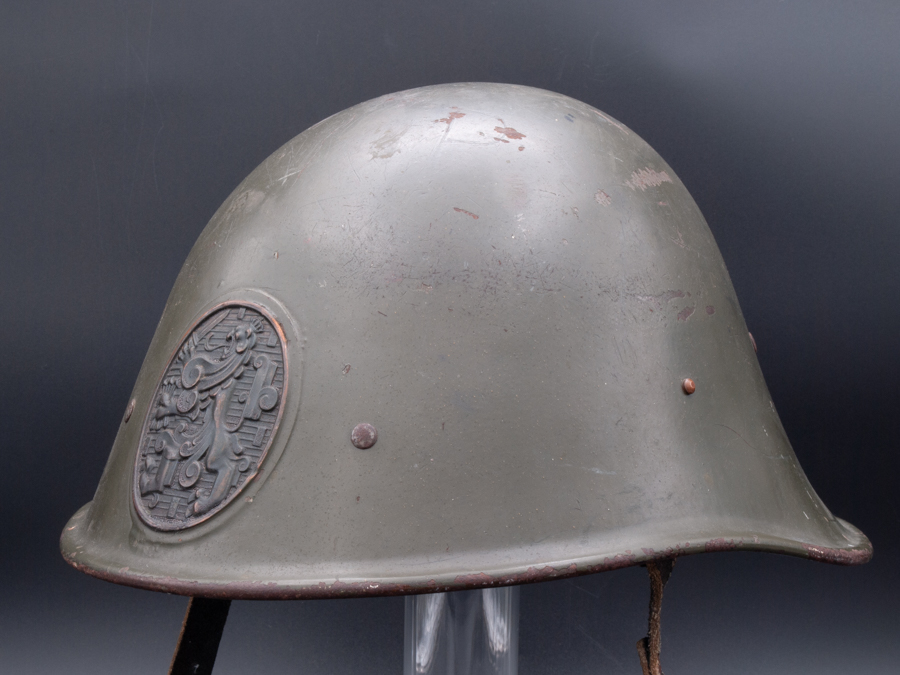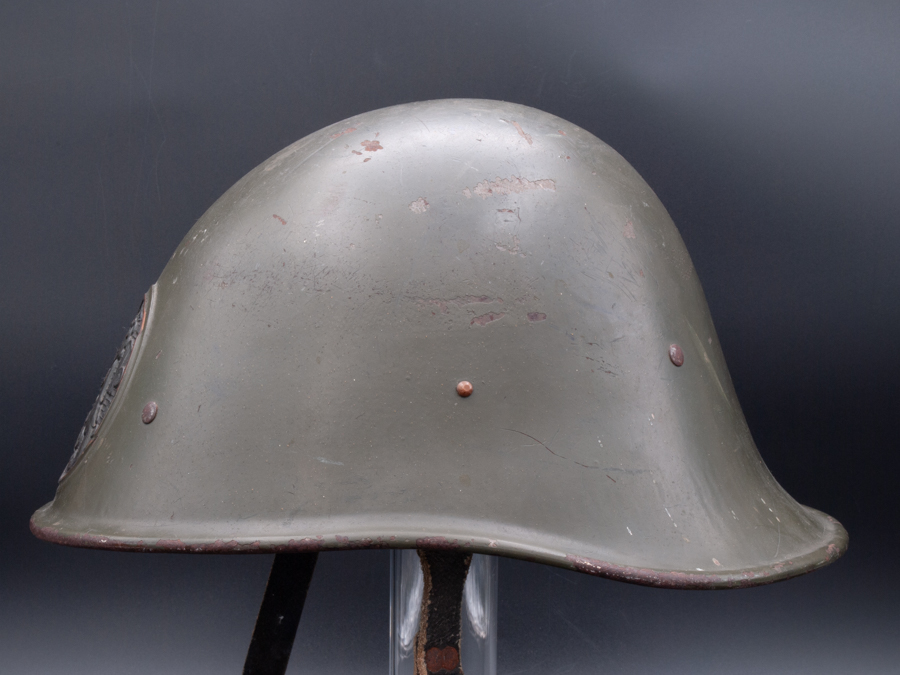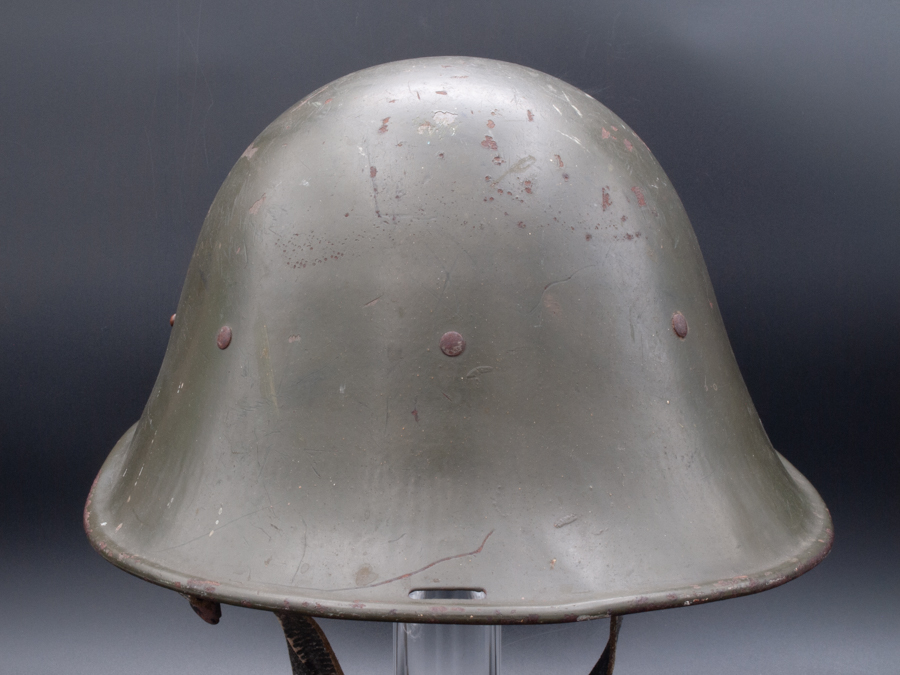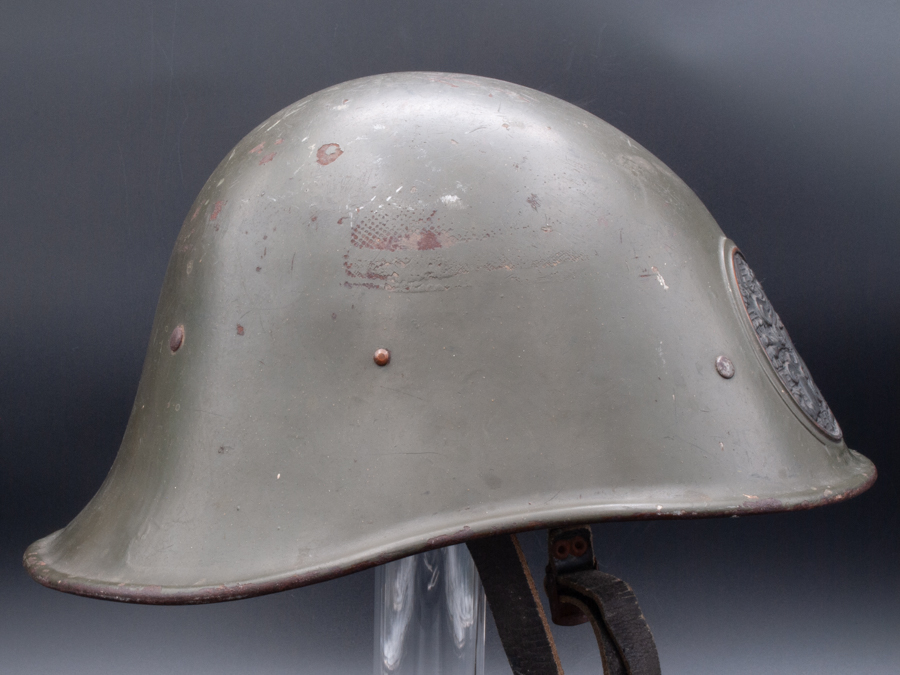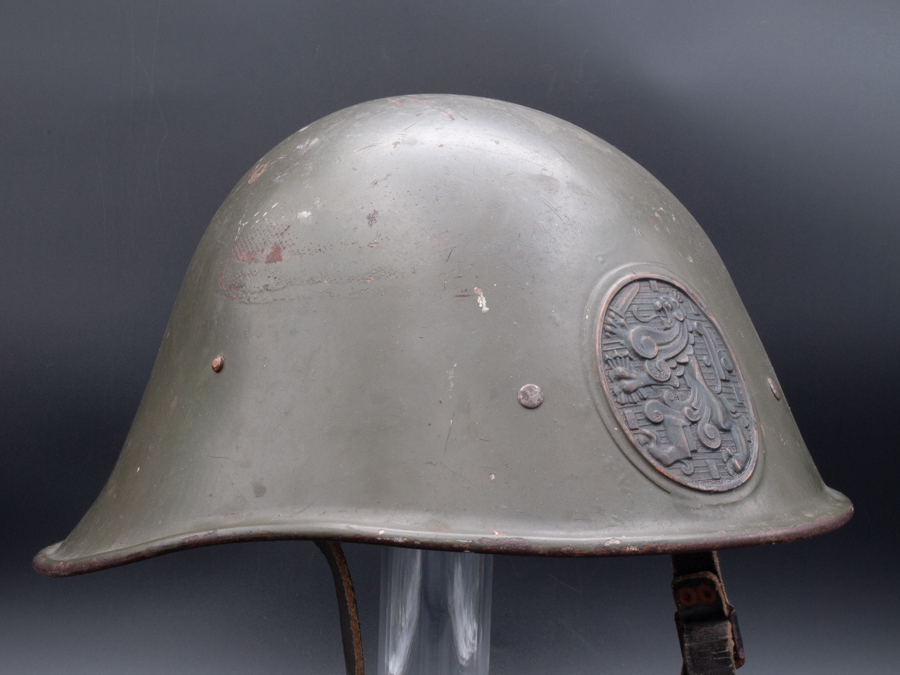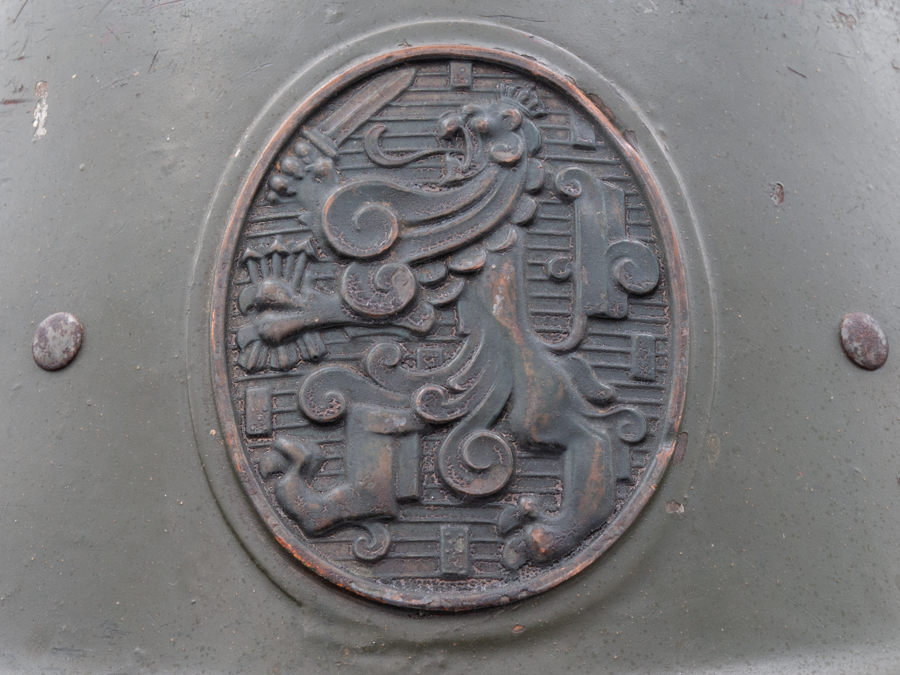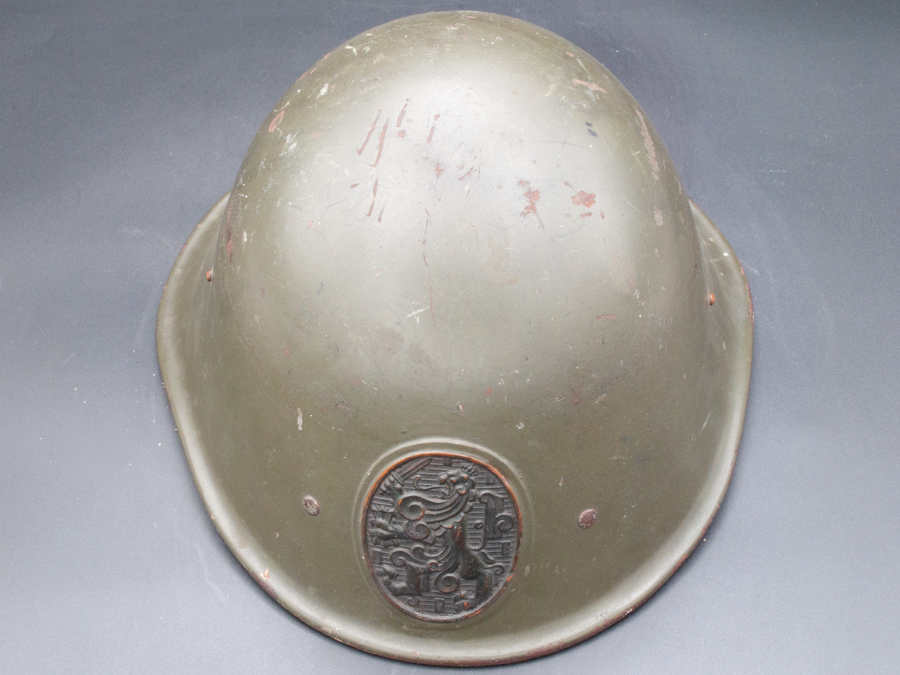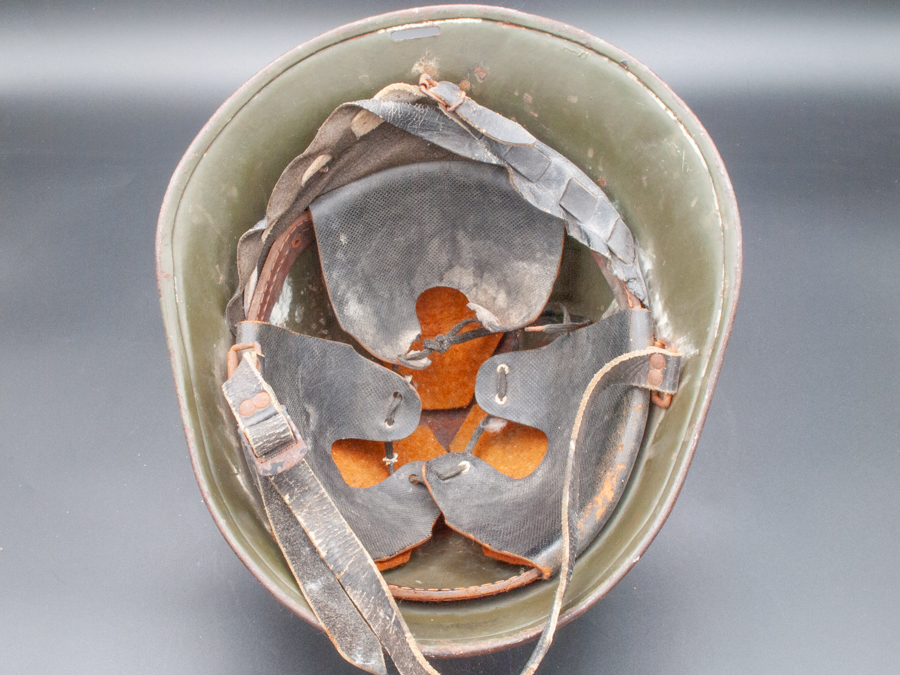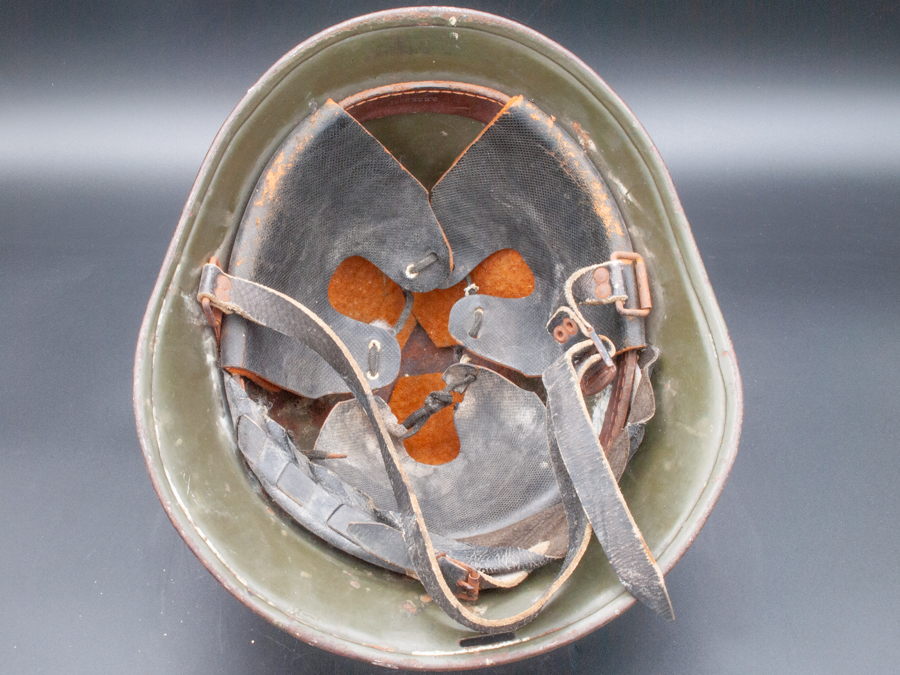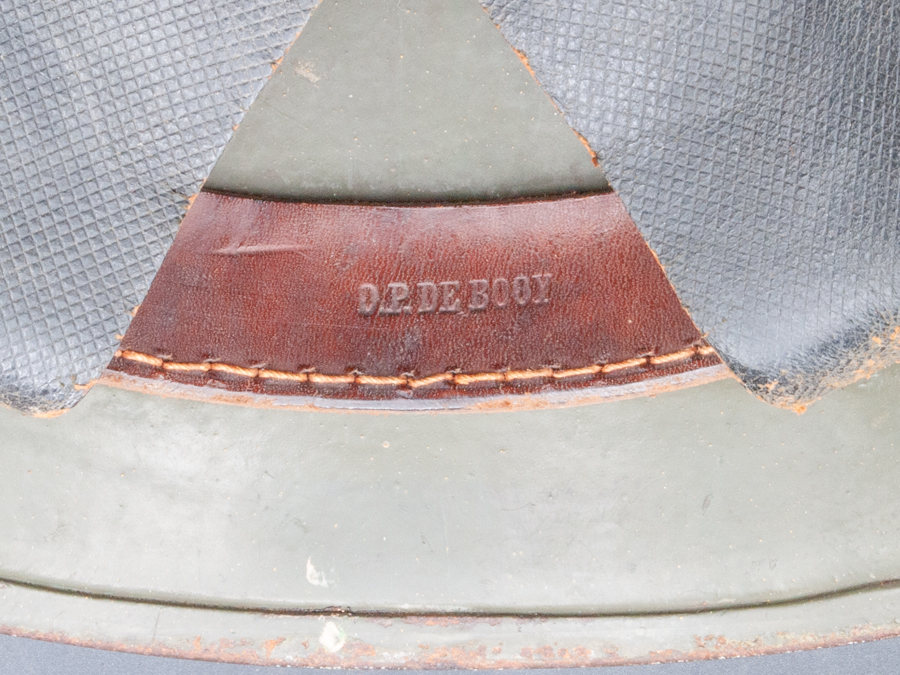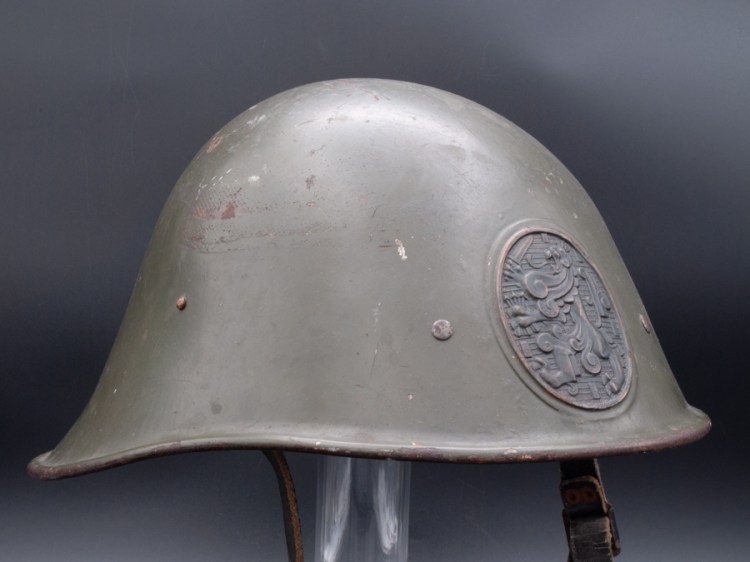
General Information: The Dutch developed prototypes of the Model 1927 helmet in 1924 and production began at the end of 1927. The new model replaced the Dutch Model 1916 which had a profile similar to the British MKI. The M27 was slightly larger and had a better center of gravity than its predecessor. The liner design was improved and a black painted red copper emblem depicting a heraldic Dutch lion was soldered to the front of the shell. Six separate manufacturers produced the liners for these helmets and the manufacturer names may be found on the liner bands. As a cost saving measure, the M27 was initially made in just one size. This did not obviate the need for larger sized helmets and in 1931 the Dutch military began production of a larger sized version of the M27 measuring 63 cm.
Initially the Dutch military entity, the Artillerie Inrichtingen, produced the M27. In 1931 private firm Verblifa began production of the helmet. By 1933 Verblifa became responsible for almost the entire production of the M27 except for special sized helmets that Artillerie Inrichtingen continued to manufacture. The larger sized helmets, at least some of them, are stamped “G.R.” on the liner band.
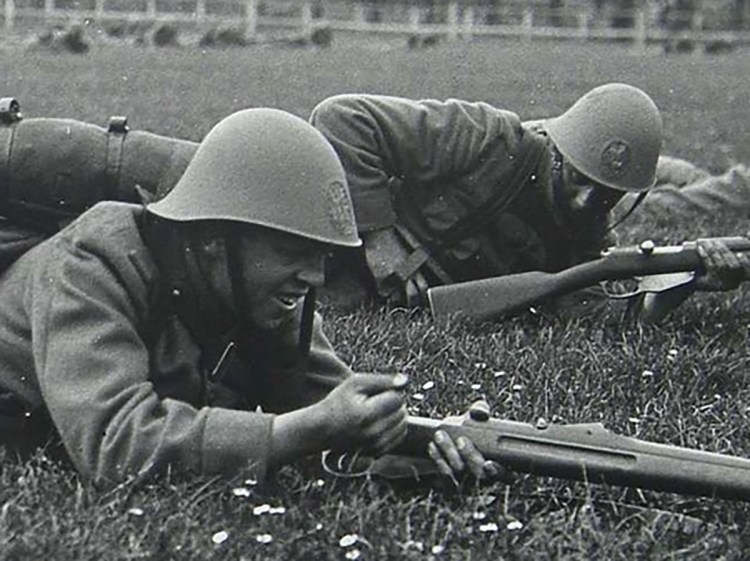
The new helmet was comfortable to wear, but soldiers complained that it produced bothersome noise in windy conditions and obstructed hearing. These defects led to the development of the M34 (See Dutch M34).[1] These two helmets, the M27 and the M34, were what members of the Dutch armed forces were using in May 1940 when the Germans invaded their country.
Displayed Example: I acquired this helmet in a trade with Dutch collector friend in 2026. It is a classic example of the type. The liner band is marked “D.P. DE BOOY,” which stands for Weduwe D.P de Booij firm. This is the first company that supplied liners for the M27. The helmet is complete but for two pull throughs on one of the liner pads where the drawstring attaches to the tongues of the liner pad.
Collector Notes: The Dutch M27 is less commonly found in collectors’ markets than the M34. Because of the small size of the Dutch armed forces, fewer of the M27/34s were produced relative to the production of steel helmets in larger countries. Because of these factors, a Dutch M27 can be a challenging thing to acquire. When they appear, however, the prices for this helmet type tend to be in middle range for Second World War helmets.
* Photo courtesy National Archief. www.nationaalarchief.nl.
[1] de Joode, Kevin. 2007. pp.40-49 and pp.58-59