
Historical Background: On the 30th of November 1939 Russia invaded Finland. Part of the Russian rationale for the invasion was that Finland had been part of Russia before the disintegration of the Russian empire, and by rights should be part the Imperial Russia’s successor, the Soviet Union. An ostensible aim of Russian aggression was toContinue reading “Finnish/Hungarian M38*”
Category Archives: Uncategorized
French M15 Medical*
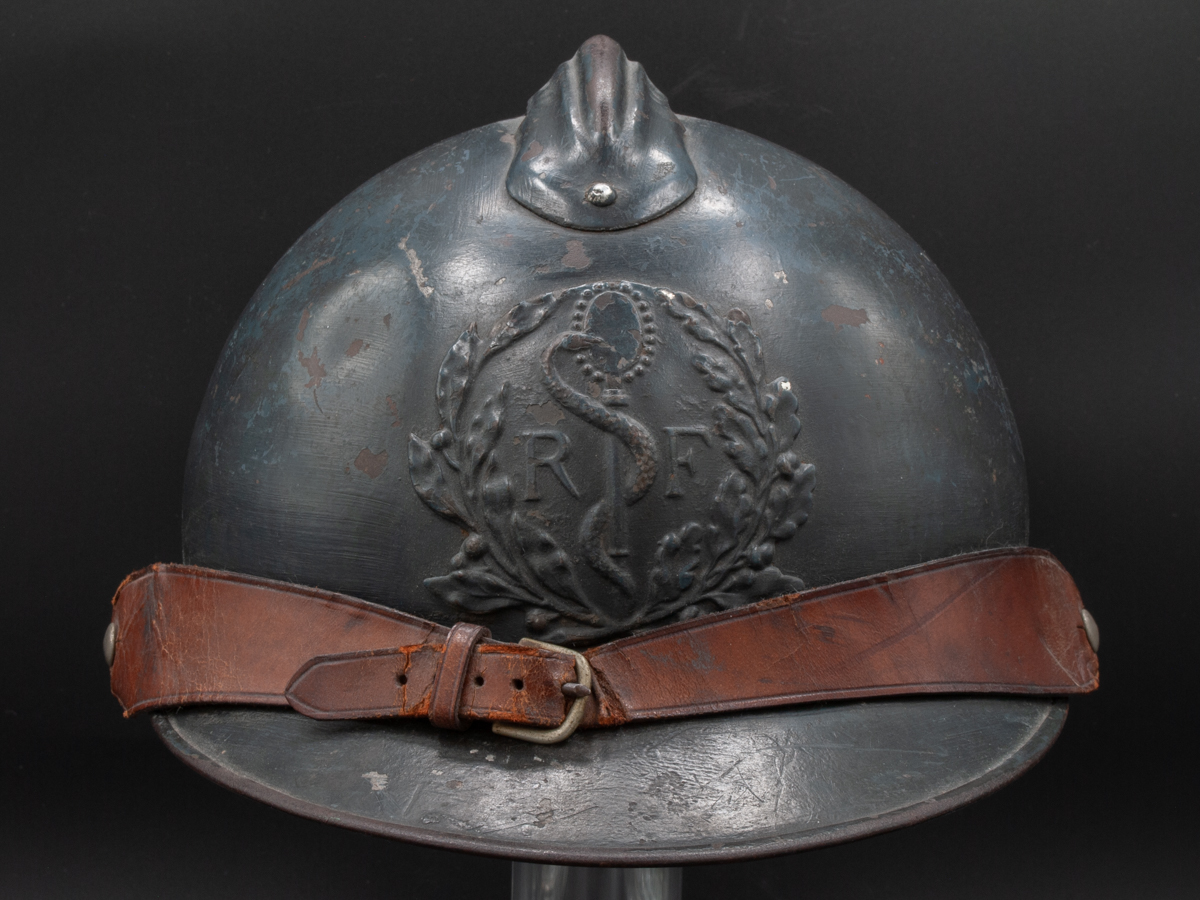
General Information: The badge with the rod of Asclepius was for medical services (service de santé). (See French Model 1915). This badge was one of eight statutory badges authorized for use by different branches of the French armed forces. An interesting side note is that the French medical services used the rod of Asclepius, theContinue reading “French M15 Medical*”
Serbian M15*

$1,995 SOLD
British MKIII*

General Information: The British Mark III was designed to address deficiencies of its predecessor, the Mark II, which was basically the same helmet used in the First World War. That helmet had been effective in preventing injuries in trench warfare conditions where shrapnel falling from above was the main hazard. From the earliest stages ofContinue reading “British MKIII*”
Italian M15*
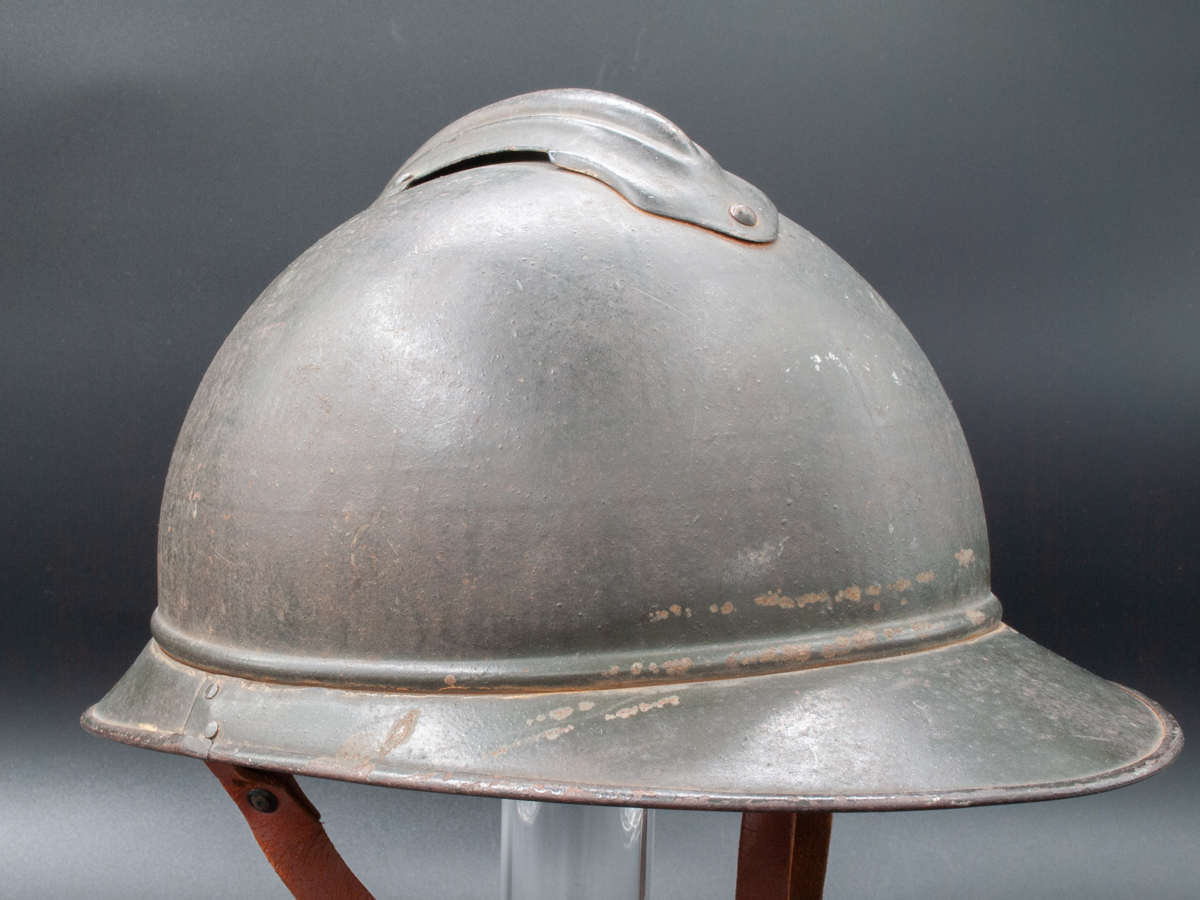
General Information: The first steel helmet widely distributed to Italian soldiers was the French Model 1915. Deliveries of these helmets began in the fall of 1915 and were the standard type painted blue with French infantry badges. Subsequently, the French produced for export to Italy helmets without badges or badge holes. The earliest versions ofContinue reading “Italian M15*”
USMC*
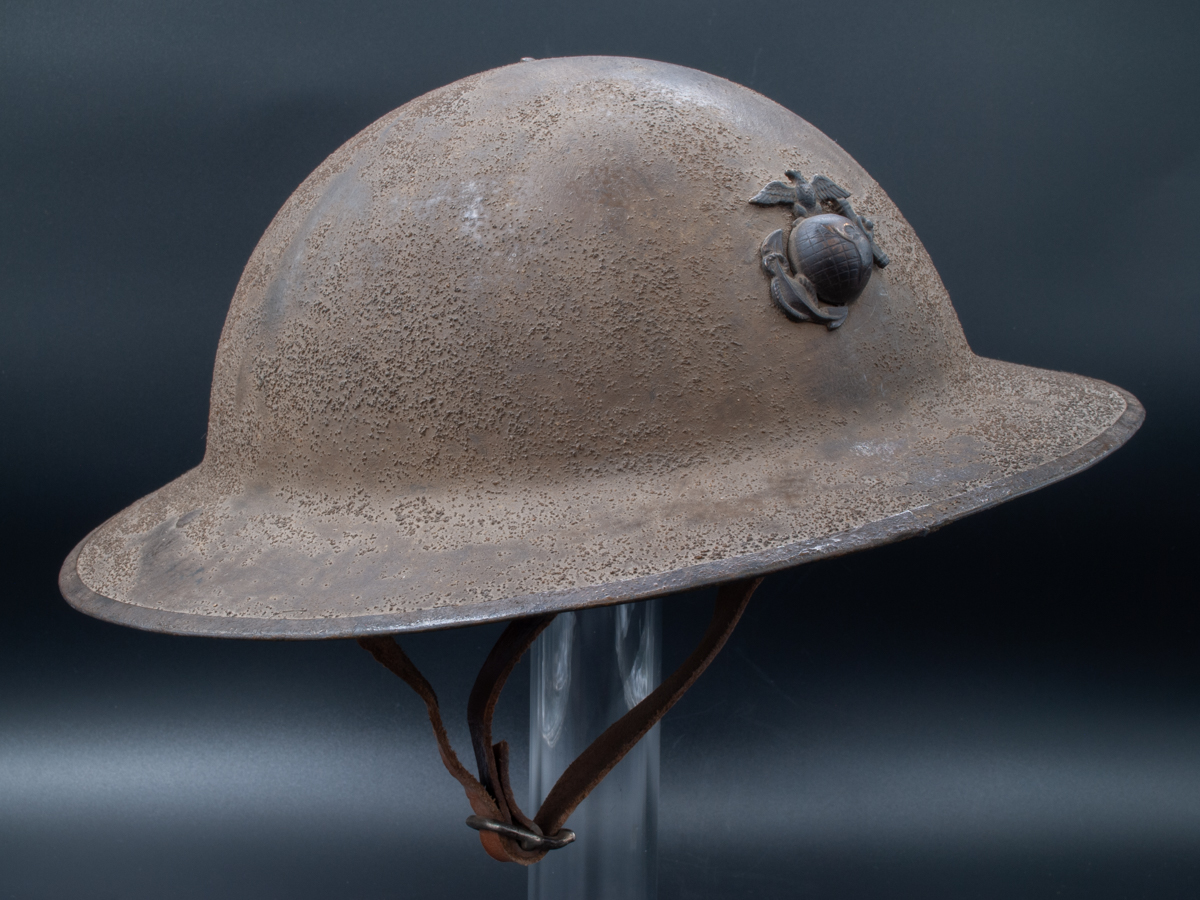
General Information: The application of US Marine Corps cap badges to steel helmets was a common practice in the post-World War One period, but was this was also done, to a lesser extent, during the conflict. The debate among collectors about whether EGA (Eagle, Globe, and Anchor) badges were used during the First World WarContinue reading “USMC*”
 Steel Helmets of the World Wars