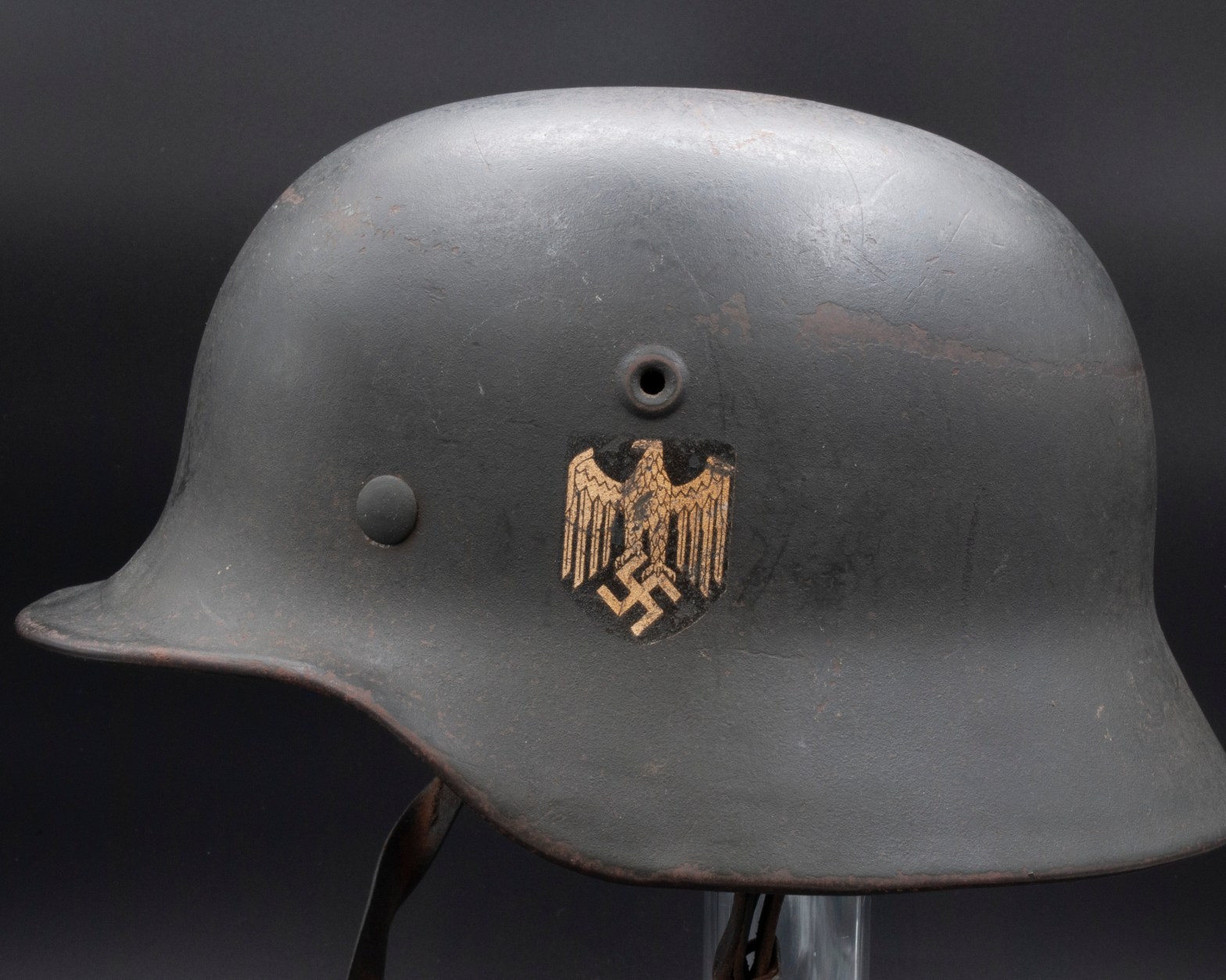
General Information: The German “Model 1940” is a collector term to describe a wartime modified version of the Model 1935. In March of 1940 the German Army issued a bulletin that mandated “helmets of the army will receive a coating of slate-grey paint, the exterior of which will be slightly roughened.” In addition, the bulletinContinue reading “German M40*”
Monthly Archives: March 2022
German M17*

General Information: The German Model 1917 is identical to the Model 1916 but for one thing; the liner band is metal rather than leather. These were authorized in May of 1917.[1] The chinstrap is the same M91 type used on the M16s and on pickelhaubes, but the chinstrap hardware is more frequently steel or zinc-likeContinue reading “German M17*”
Austro-Hungarian Berndorfer*

General Information: The Berndorfer was the first steel helmet produced by Austro-Hungary. It was referred to as the “Stahlhelme nach inländischem Muster” or “Steel helmets of domestic pattern,” which is commonly translated these days as the “domestic model.” It was also simply called “Berndorfer Stahlhelme,” or “Berndorfer steel helmet.” “Berndorfer” is the name most typicallyContinue reading “Austro-Hungarian Berndorfer*”
FJ M38*

General Information: The Model 1938 helmet was the standard helmet of the German fallschirmjäger (paratroopers) in the Second World War. It was preceded by the now very rare Model 1936 and Model 1937 paratroop models which can be readily identified by the slots in the shell which were intended for a chinstrap configuration. Early M38sContinue reading “FJ M38*”
Russian M17*
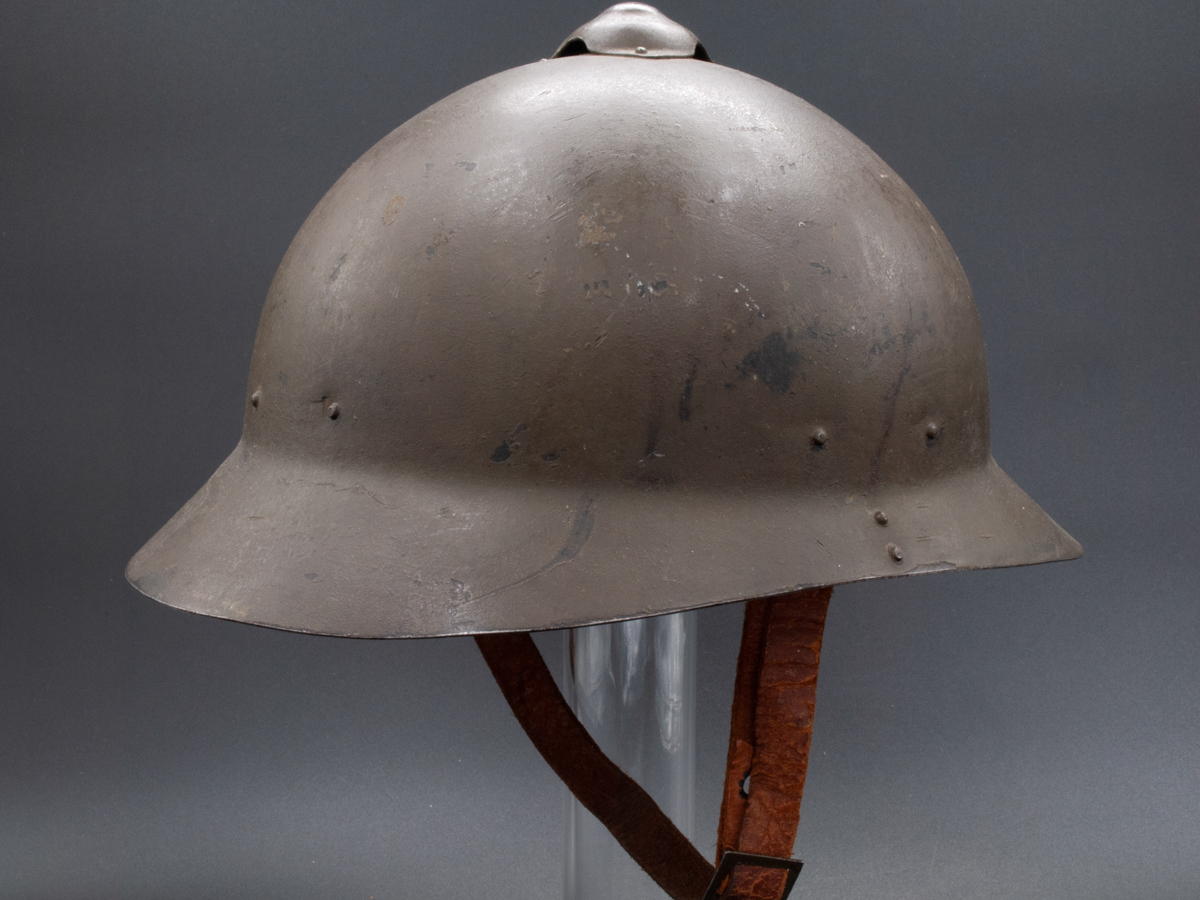
General Information: There was never an official designation for this helmet. Because it was produced in 1917, “M17” seems a good name. In contemporary documents it is sometimes identified as “Russian model helmet with shovel steel” or “ShLS” using the Russian abbreviation. This refers to the type of steel chosen for the helmet’s manufacture. InContinue reading “Russian M17*”
British MKI*

General Information: The first helmet used by British soldiers in the First World War, the War Office Pattern Helmet (see “British Brodie”) had deficiencies that needed to be addressed. Chief among these were the raw edge which could cause injury. Other problems included reflective paint, and complaints about the liner being hot and slippery. ToContinue reading “British MKI*”
 Steel Helmets of the World Wars