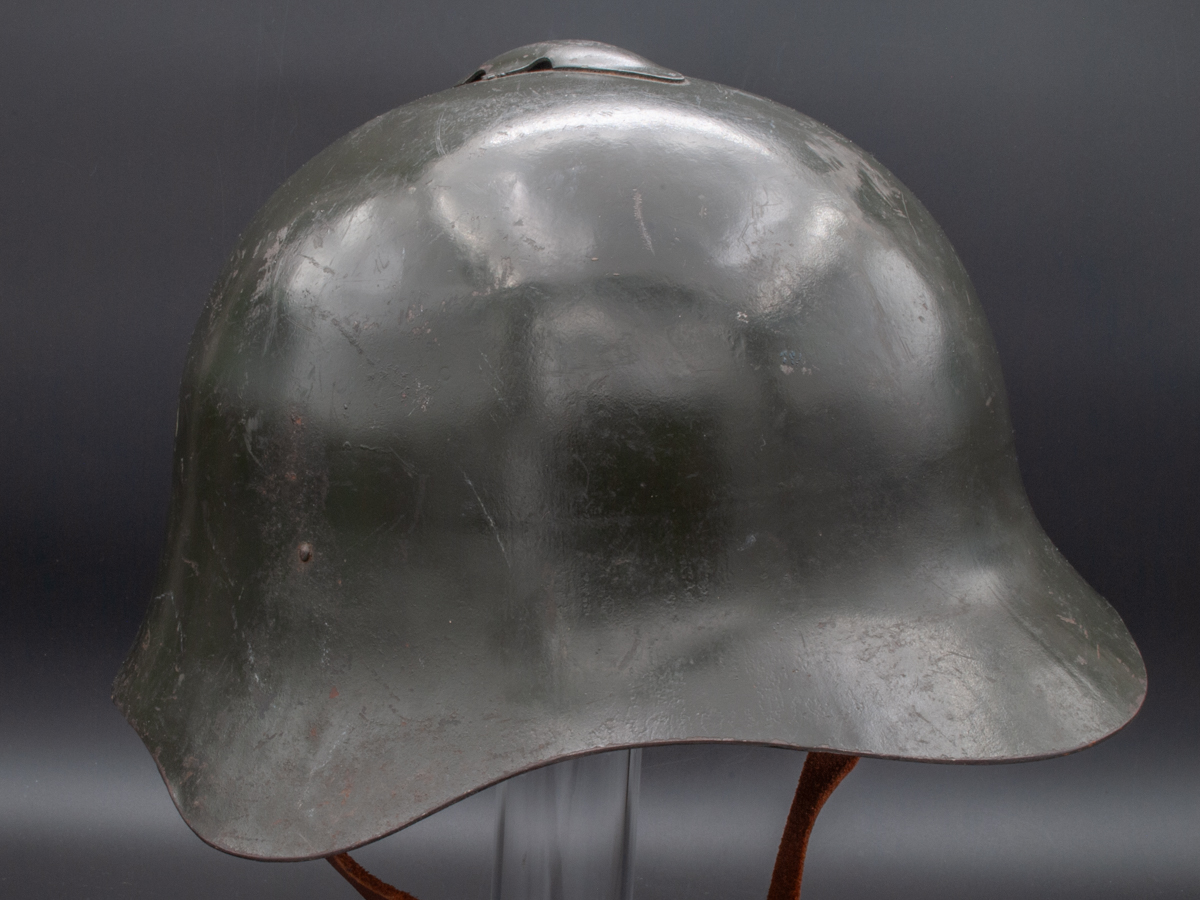
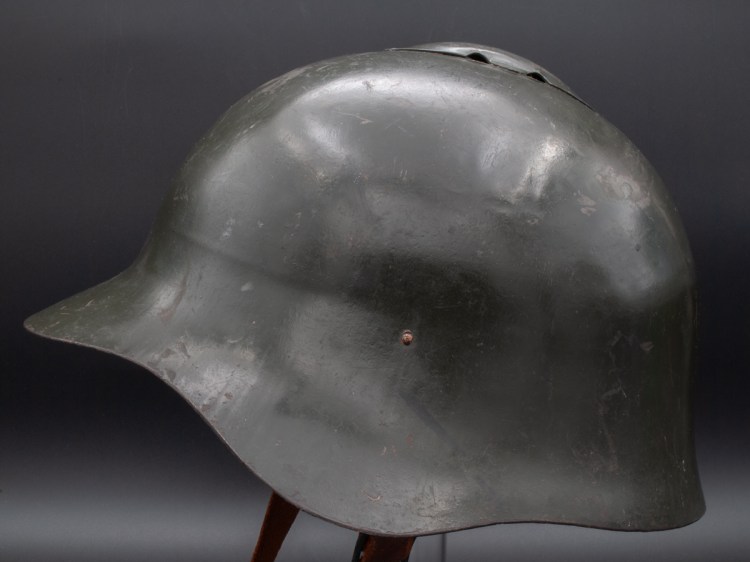
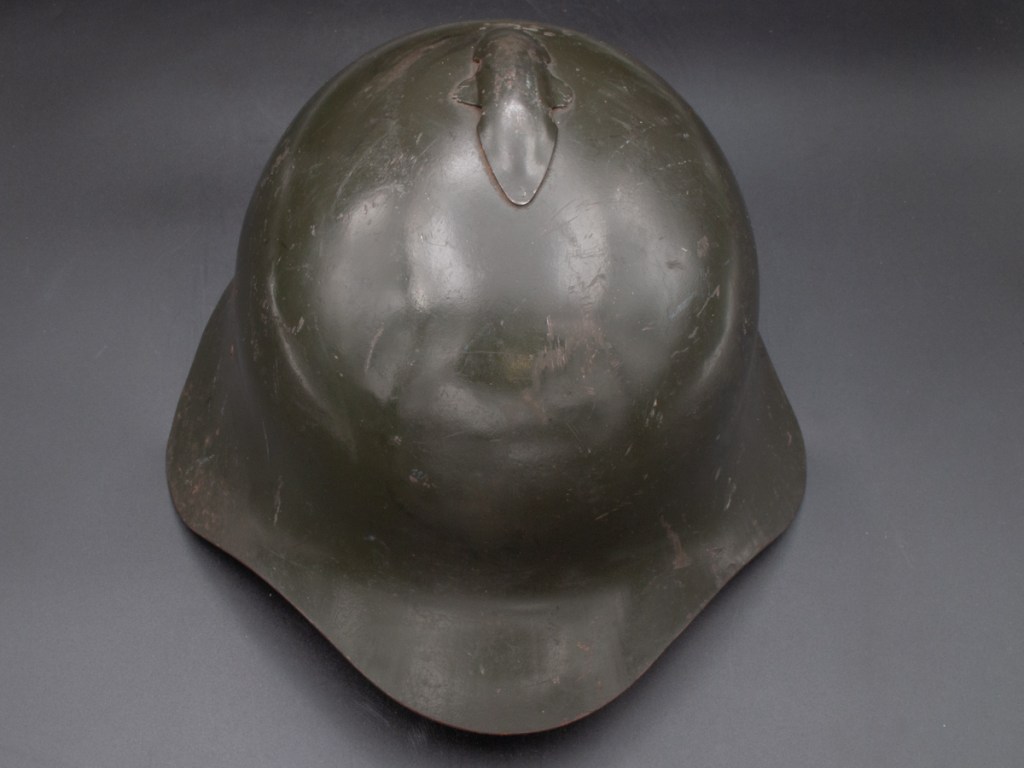
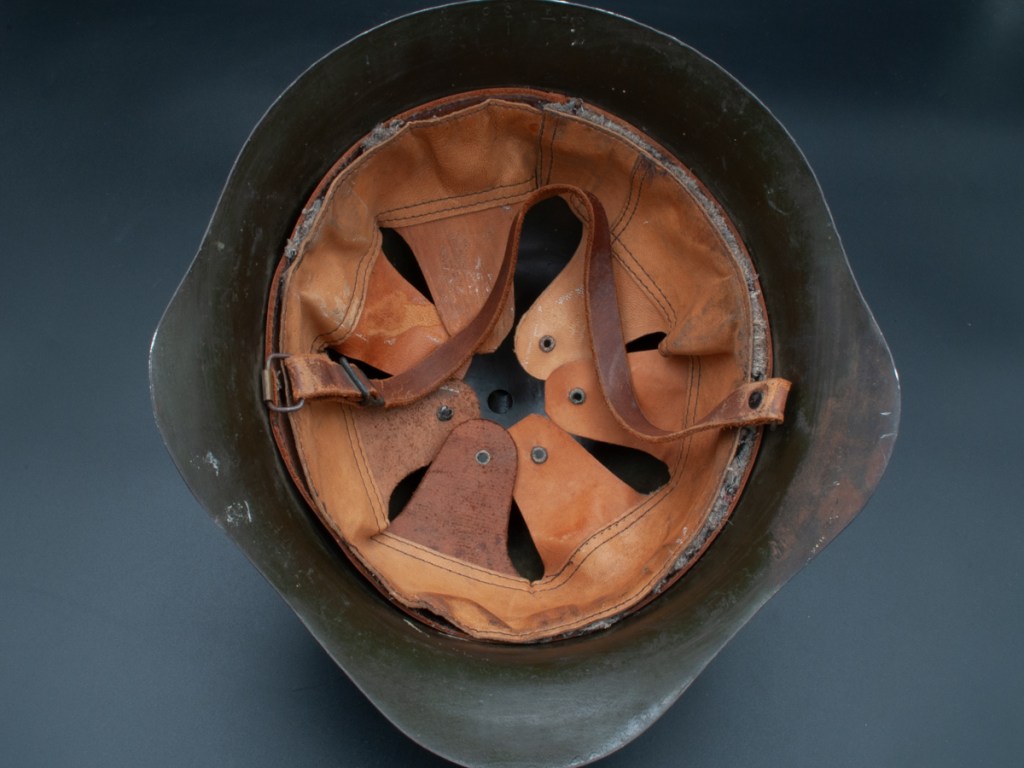
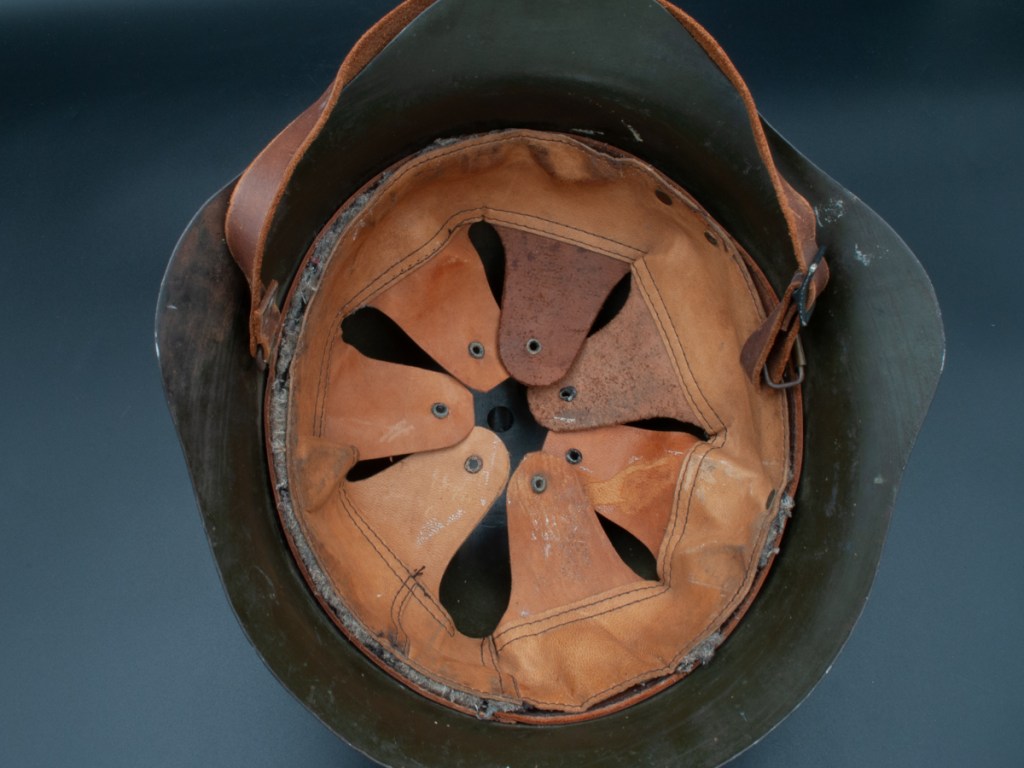
General Information: This version of the SSh-36 has long been a puzzle for collectors with various theories espoused as to why these helmets are configured differently from the typical helmets issued to Soviet soldiers in the late 1930s (see SSh-36). The differences are that the helmet shown here has a leather liner, leather chinstrap, semigloss dark green paint and lacks ink stamps whereas the SSh-36s normally had cloth liners with a liner band made of a synthetic materiel called “gralek,” cloth chinstrap, matte olive drab paint, and ink stamps indicating the year of manufacture and the helmet size. One odd aspect of these helmets is the liner design which featured a piece of felt sandwiched between the liner band and the liner with the leather components sewn to the felt but not to each other. This design was prone to failure and most surviving examples of this helmet have breaks in the liner where the felt has come apart, or sometimes the liners are completely missing.
It is generally agreed that these were among a small number of helmets exported by the Soviet Union to the Republican forces during the Spanish Civil War. In 1938 the Lysva factory received an order to produce an additional 200,000 SSh-36s, apparently to supply Spanish Republicans. Lysva was unable to comply with this order due to limits of production capability. Instead helmets were withdrawn from reserves of the People’s Commissariat of Defense for shipment to Spain and could not have arrived in Spain until the latter half of 1938 close to the end of the Civil War.[1] It is possible that these helmets never arrived in Spain because there is no record in ship manifests from the Soviet Union documenting delivery of helmets to the Republicans in 1938. An analysis of ship manifests to Spain during the war show only one shipment of helmets from the Soviets to the Republicans. These arrived in Republican Spain on June 21st, 1937, on a ship named the “Aldecoa.” The number acquired from the Aldecoa vary according to two translated sources of the same ship manifest, but was either 10,000 or 7,000.[2]
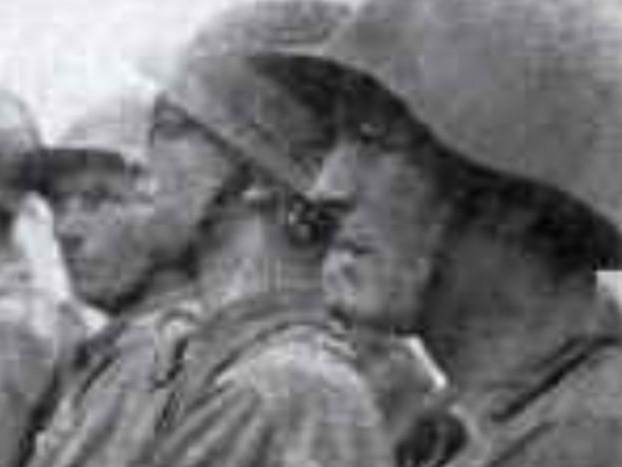
The SSh-36s were used by soldiers from the International Brigades.[3] According to Ivan Karabanov’s comprehensive 2016 study of Russian helmets, at end of the Spanish Civil War the surviving SSh-36 helmets fell into the hands of the Nationalists and were repaired and stored in depots.[4] We may presume that the repairs involved removing the battle worn liners and chinstraps, repainting the helmets and refitting them with the type of Spanish-made liners and chinstraps shown here.[5]
Umberto Pappini, in his 2016 book on the helmets of the Spanish Civil War, describes a somewhat different story of the SSh-36s. He asserts that the Soviets sent unpainted SSh36 shells to Spain and that these were subsequently painted and equipped with locally made liners and chinstraps. In addition, he claims these were not reconditioned after the war.[6] One reason to cast doubt on this claim is that there are known examples of SSh-36s that were used in the Spanish Civil war that were equipped with the Soviet-made liners and chinstraps.[7] It seems, therefore, that at least some, or perhaps all SSh-36s, arrived in Spain with Soviet-made liners and chinstraps.
Robert Clawson, in his pioneering book on Russian helmets,[8] states that the type of liners and chinstraps discussed here were the first type of liner installed on the SSh-36s. Even though this idea has been disproven,[9] the mistaken idea that these were a kind of prototype liner is sometimes repeated in collector forums or by militaria dealers.
Neither Pappini nor Karabanov cite sources for their claims about the Spanish-used SSh-36s and it is possible that both are merely restating theories that have been circulating among collectors. The true story of these interesting helmets, therefore, remains unsettled. Because surviving examples appear to be unissued and have stacking marks from poor storage, my sense is that Karabanov was likely correct to say that these SSh-36s were refurbished post-war and put into storage.
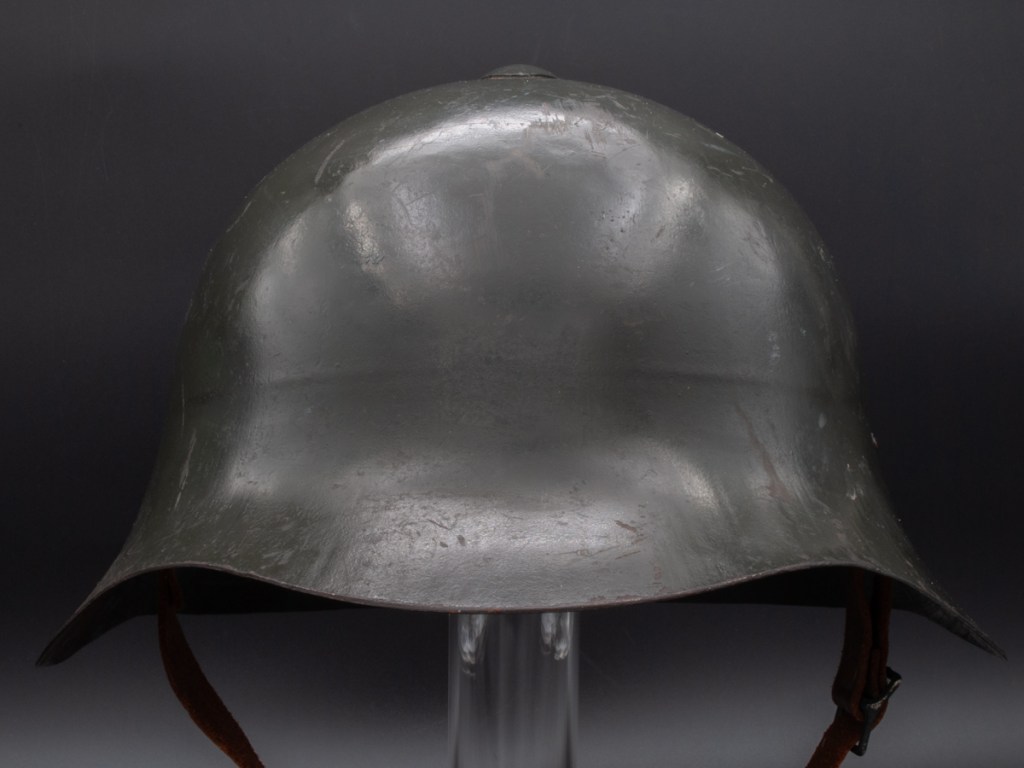
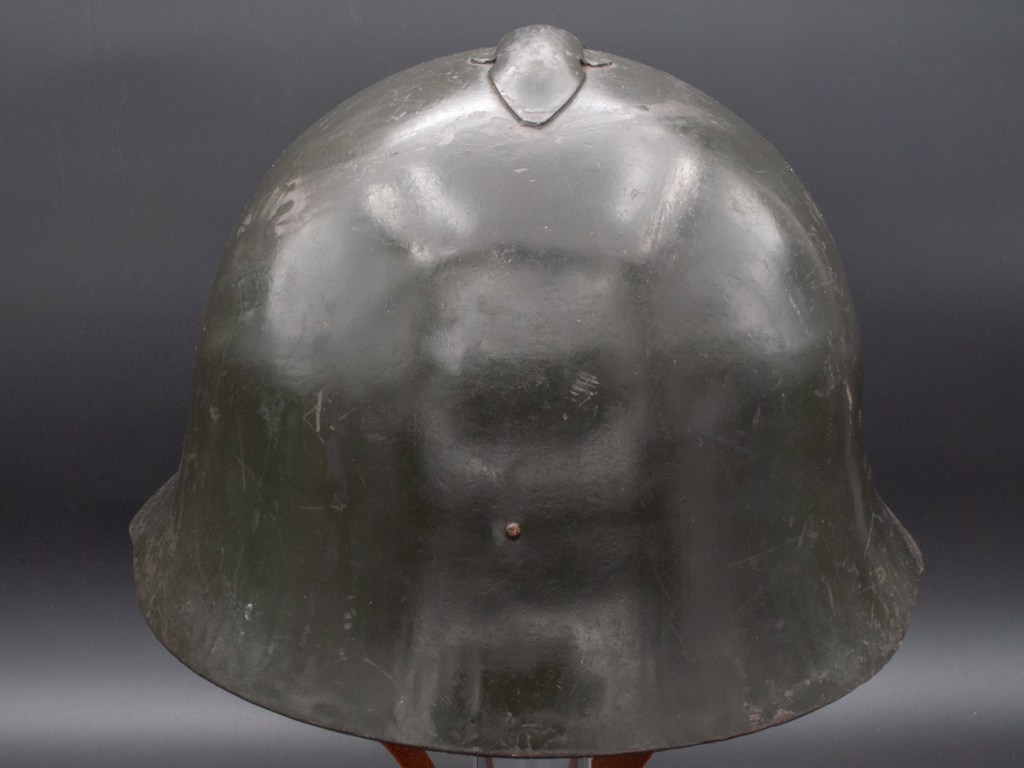
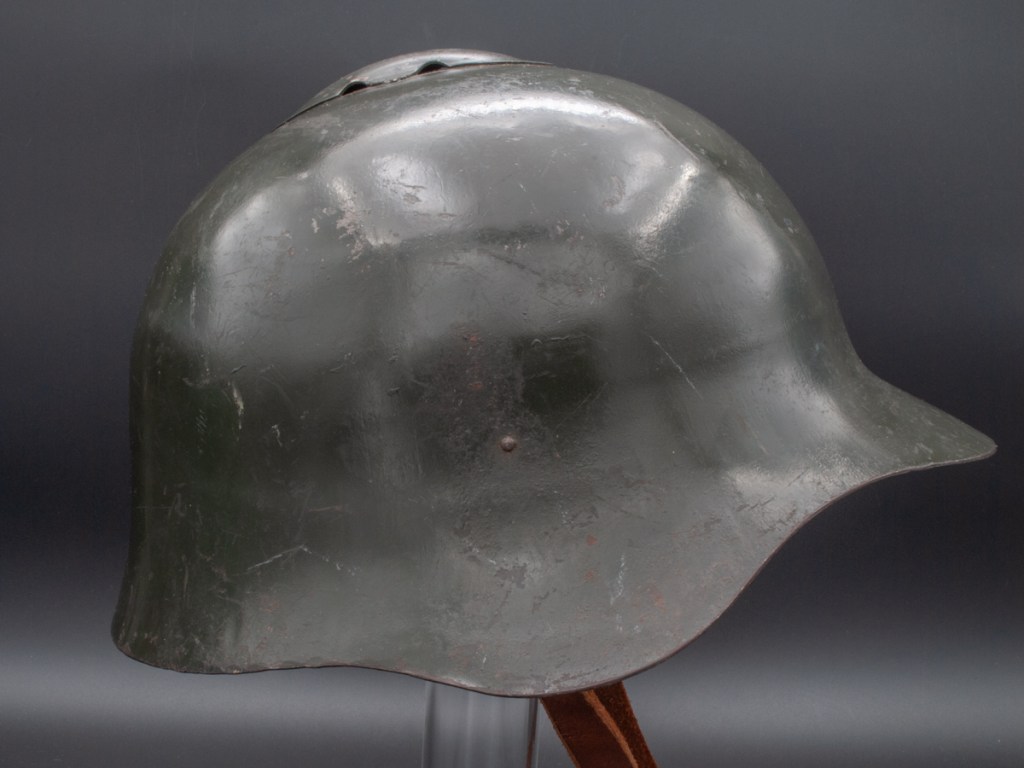
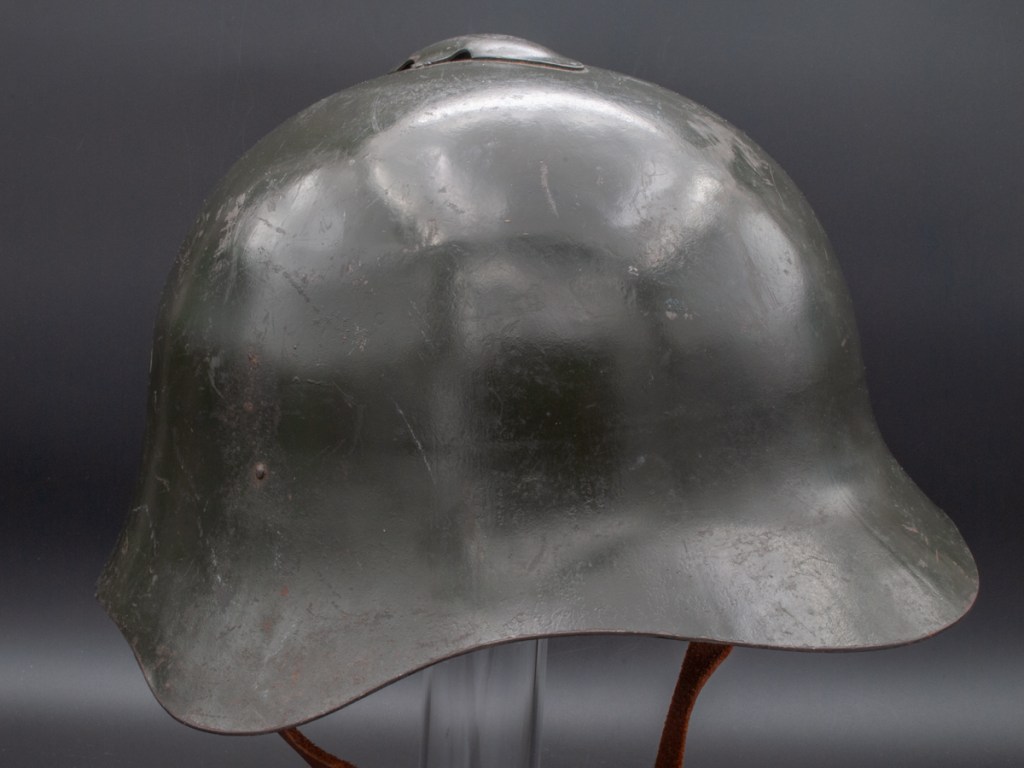
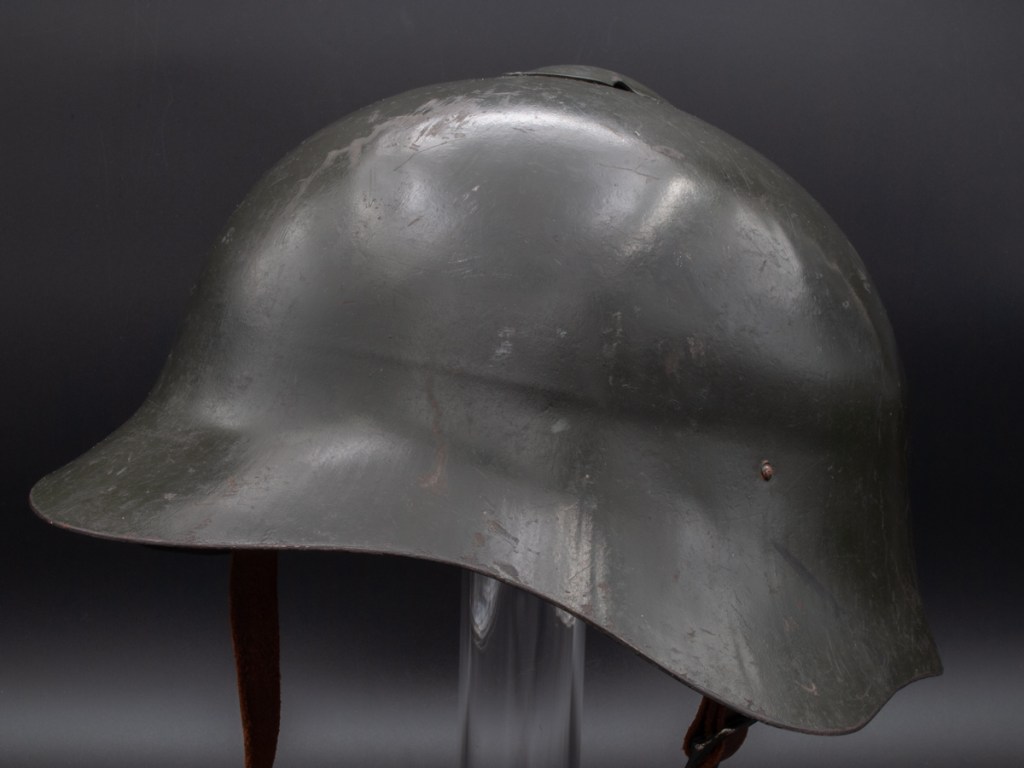
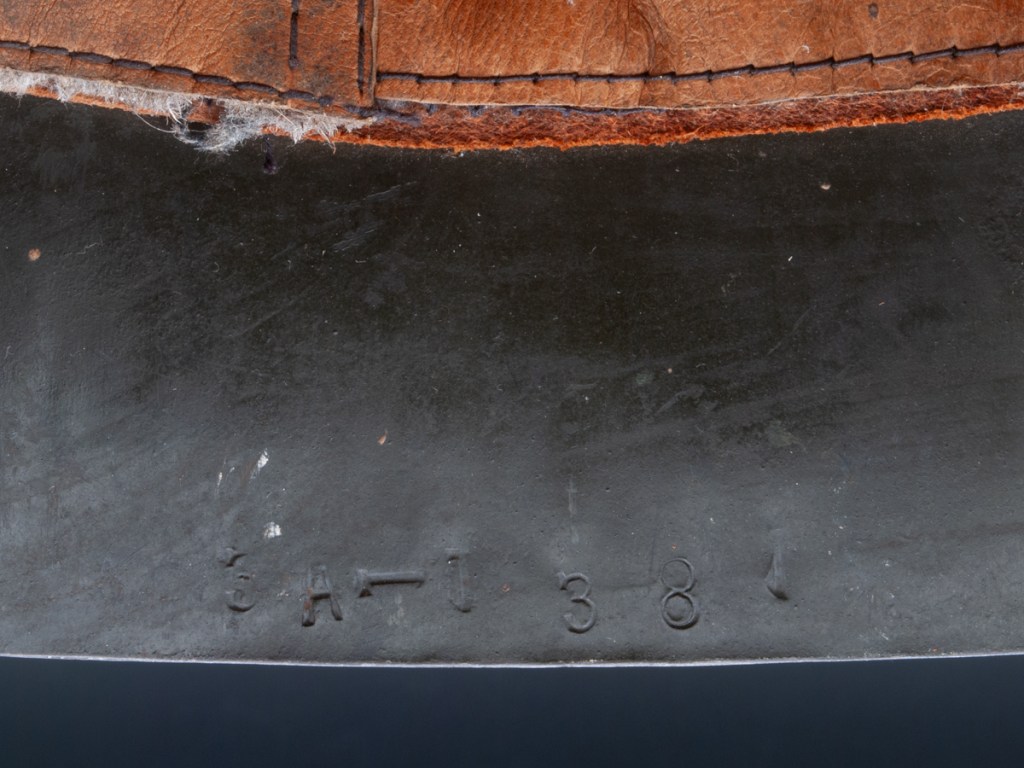
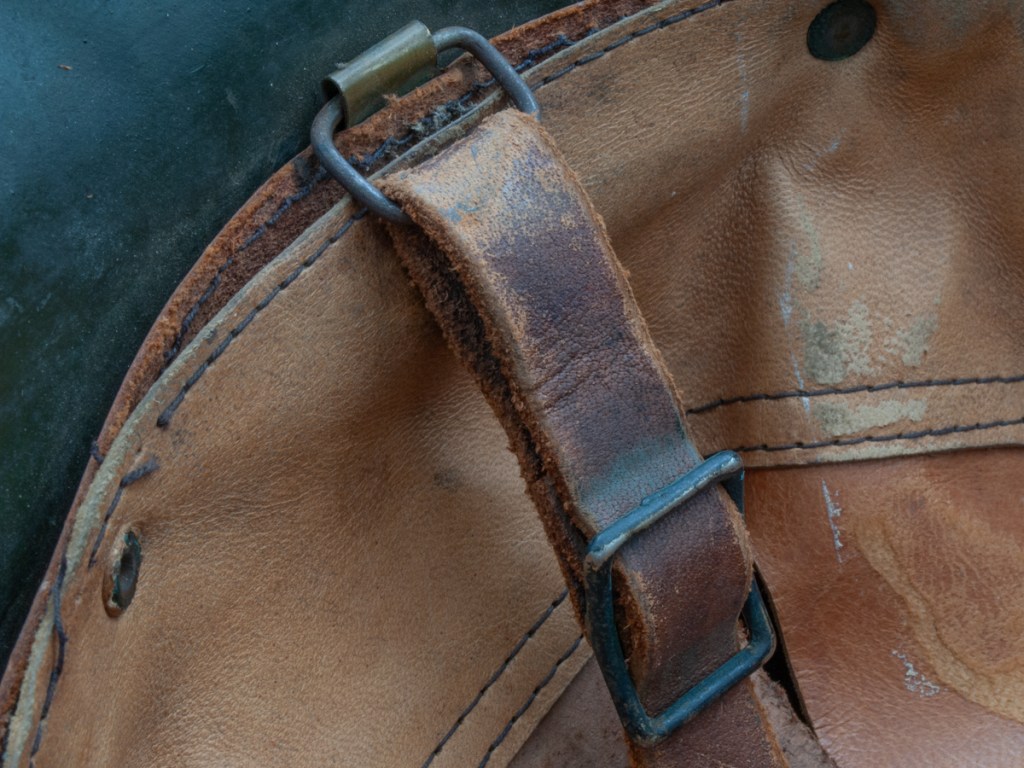
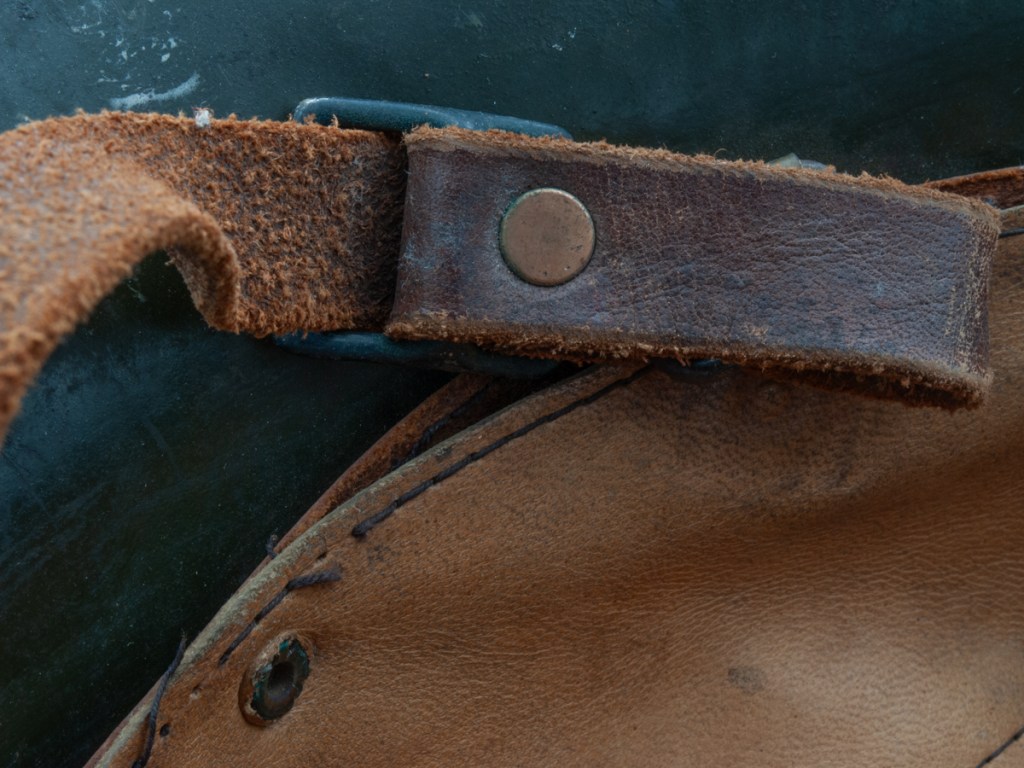
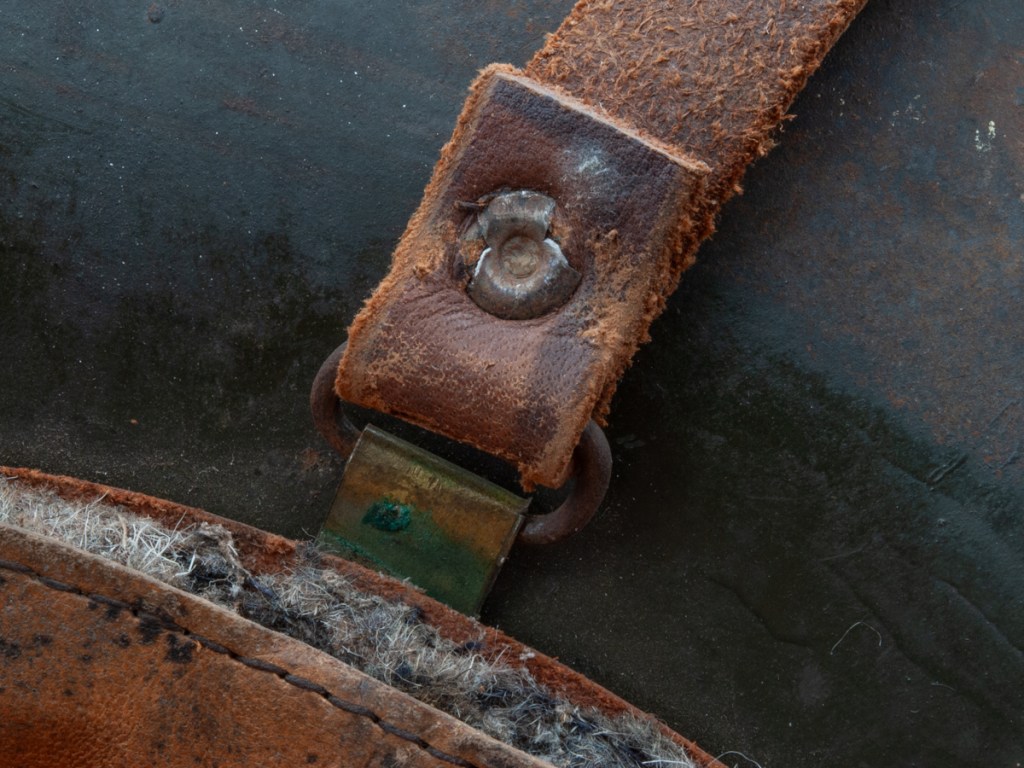
Displayed Example: I won this helmet in an auction from Herman Historica at the end of 2025. It is a classic example of the type. It has dark green semi-gloss paint throughout, locally made Spanish liner and chinstrap, and lacks the ink stamps found on SSh-36s used by the Soviets. The liner is reinforced at the point where it joins the liner band with three rivets, strangely placed on one side rather than being distributed evenly, which would seem to be a more logical way of assembling this component. This rivet placement is a feature of other surviving examples of this helmet type. There are faint stacking marks, which is another common feature of the surviving Spanish SSh-36s. The rear visor has numbers stamped in the metal. The “3A” at the beginning of the number sequence is the helmet size which was intermediary between “3” and “4” and corresponds to the next largest shell size.[10]
Collector Notes: These helmets are rare, but they surface in collector markets occasionally. When they are offered for sale, they are often misidentified. Despite their relative rarity, the prices tend to be lower than comparable SSh-36s used by the Soviets at the start of the Second World War.
* Photo courtesy “abilix” (aka). “Casco ruso ssh-36 guerra civil española.” Todocoleccion.com. https://en.todocoleccion.net/military-spanish-civil-war/casco-ruso-ssh-36-guerra-civil-espanola~x348929505. Accessed January 6, 2026
[1] Karabanov, I. 2016. pp. 437
[2] There are surviving ship manifests of Soviet shipments of arms and material to Republican Spain. Only one of these document shipments of helmets from the Soviet Union. The manifest from a ship named the “Aldecoa” dated June 21, 1937, indicated a shipment of either 10,000 or 7,000 helmets depending on the source of the translation. Gerald Howson, in his book “Arms for Spain: The Untold Story of the Spanish Civil War” 1999, translates the manifest as “Tin helmets – 10,000” whereas the website www.shipsnostalgia.com gave the numbers from the same manifest as “7.000x helmets.”
[3] Marzetti, P. 2003. pp. 354
Pappini, U. 2015. pp. 66
Karabanov, I. 2016 pp. 434
[4] Karabanov, I. 2016. pp. 437
[5] My assumption.
[6] Pappini, U. 2016. pp.65-66
[7] Karabanov, I. 2016. pp. 430-431
Algami Coleccion (aka). “CASCO RUSO SSH 36 GUERRA CIVIL CON INTERIOR COMPLETO – BRIGADAS INTERNACIONALES” Totocoleccion. https://www.todocoleccion.net/militaria-cascos/casco-ruso-ssh-36-guerra-civil-interior-completo-brigadas-internacionales~x220297082. Accessed January 13, 2026.
Militaria Barcelona. “Spain. Soviet helmet Ssh-36 with emblem of Medical Corps of the Spanish Civil War.” https://www.militariabcn.com/en/espana-casco-sovietico-ssh-36-con-emblema-de-sanidad-militar-de-la-guerra-civil-espanola. Accessed February 3, 2026
[8] Clawson, R. 2002. pp.30
[9] Buck, Tom. Personal communication. January 6, 2026.
[10] Karabanov, I. 2016. pp.229.
The reason for the “3a” designation is lost to history. Why not make the shell sizes 1,2,3,4 and 5 rather than 1,2,3,3A, and 4?
 Steel Helmets of the World Wars