Updated June 6, 2025
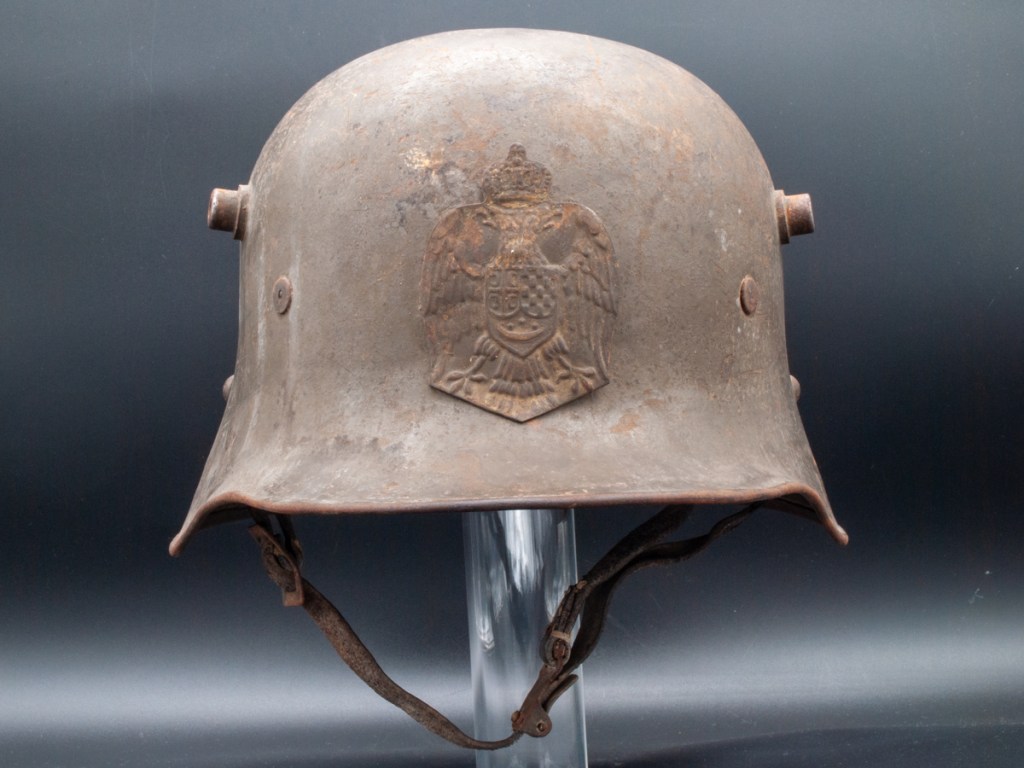
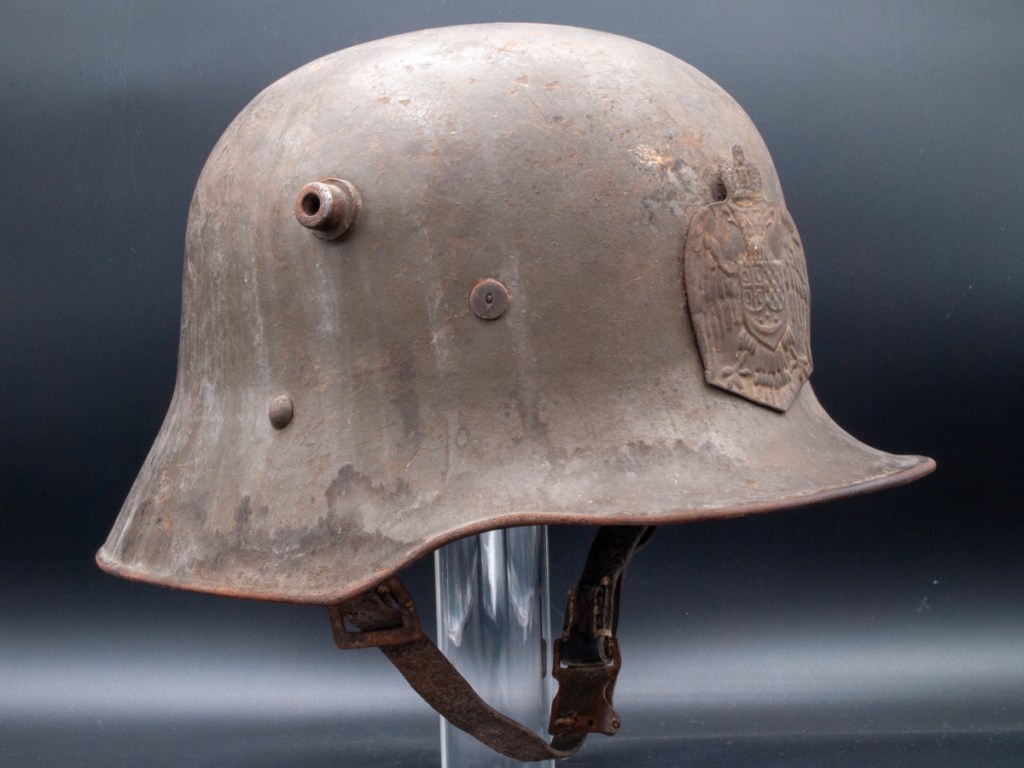
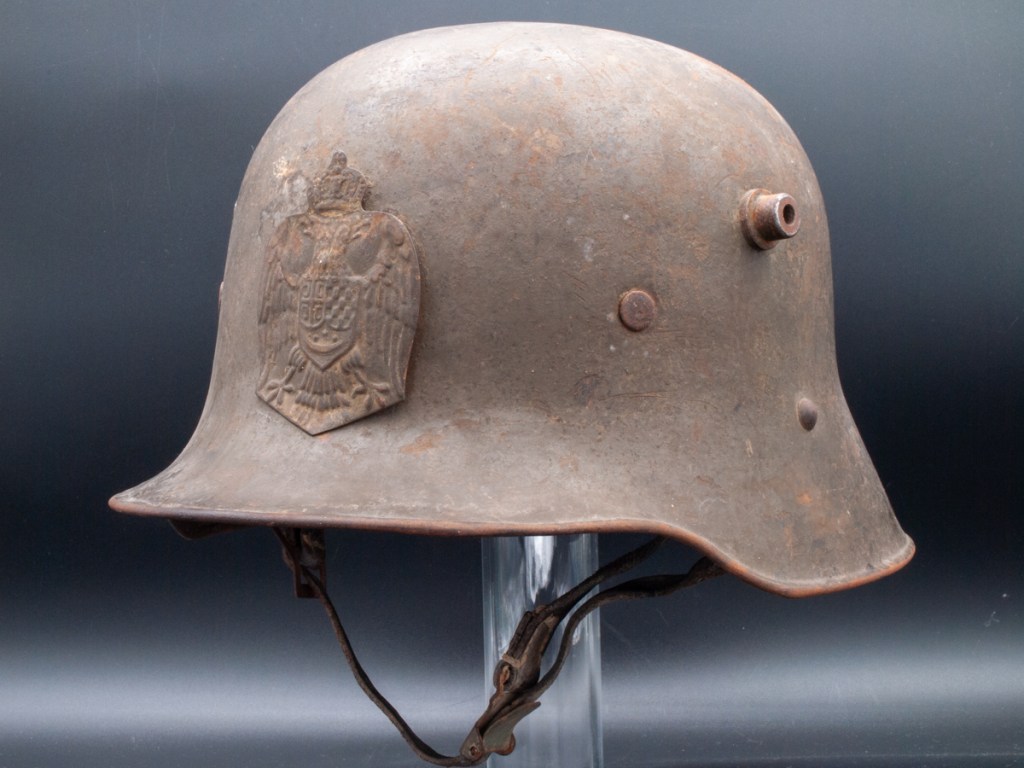
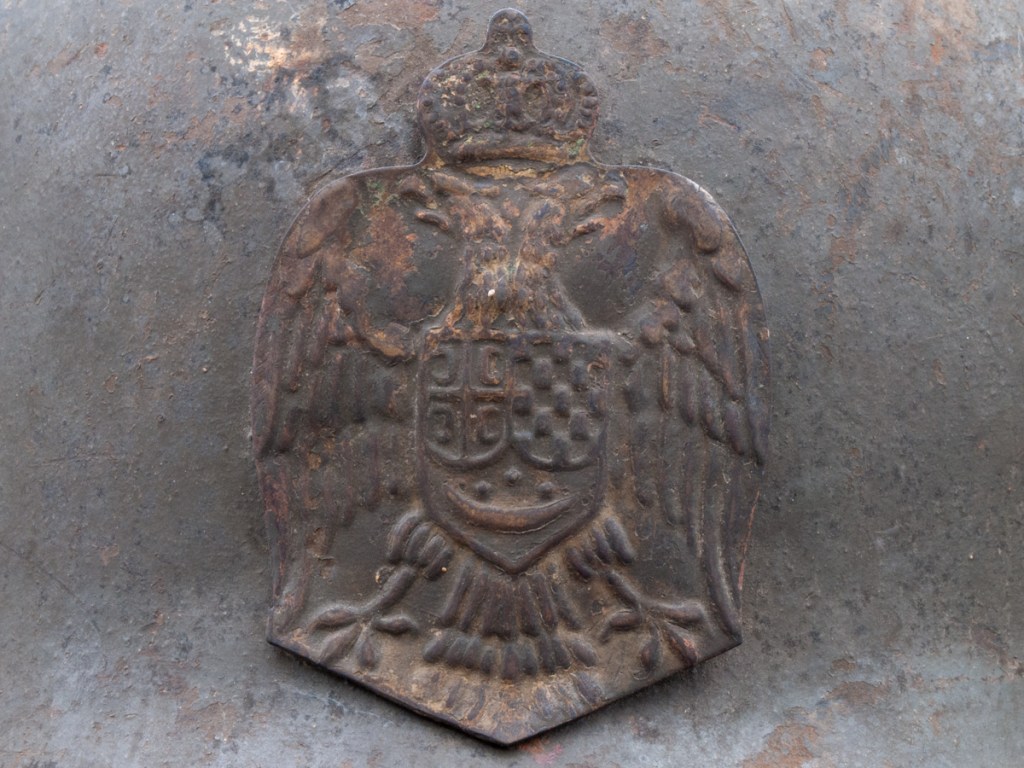
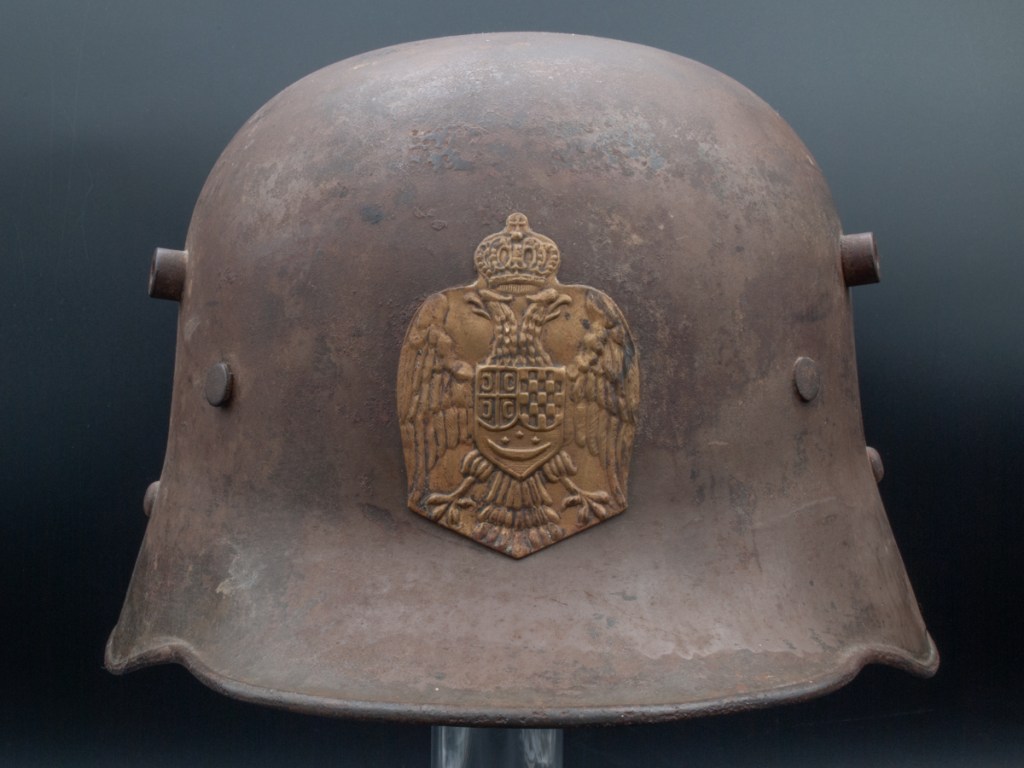
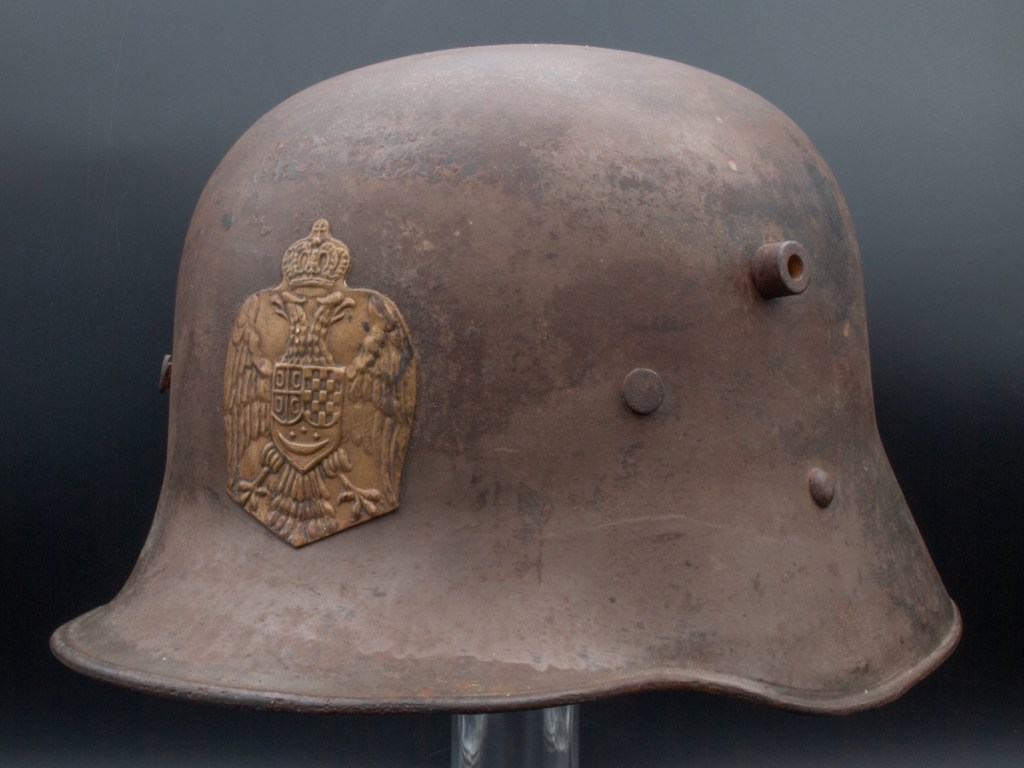
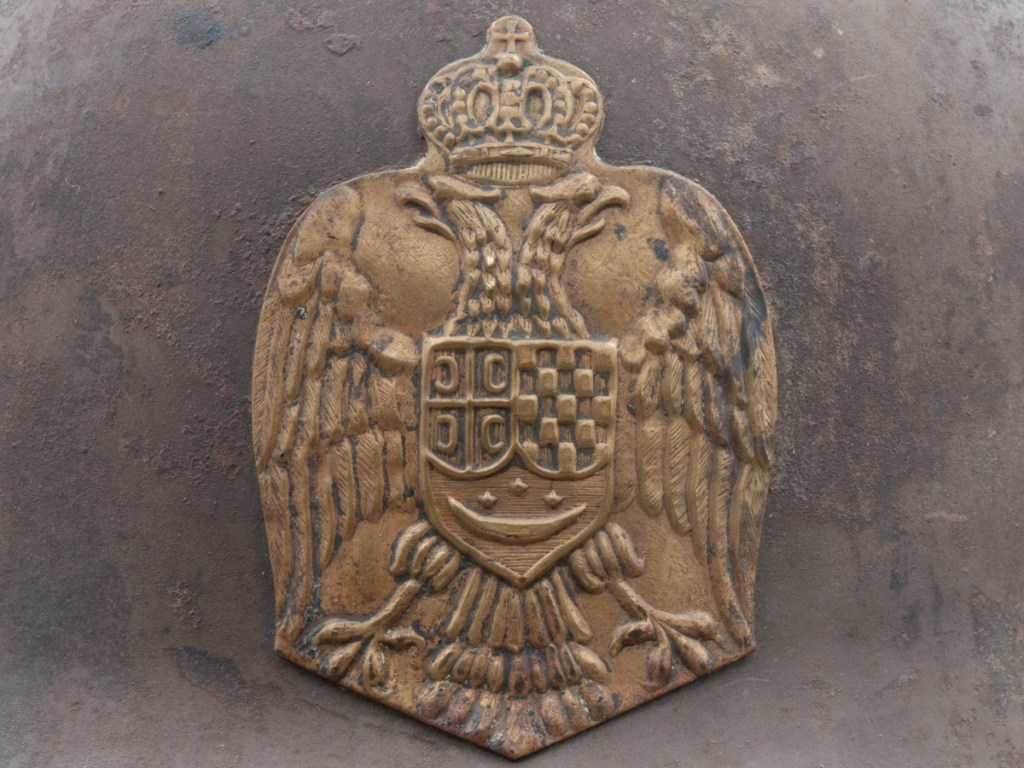
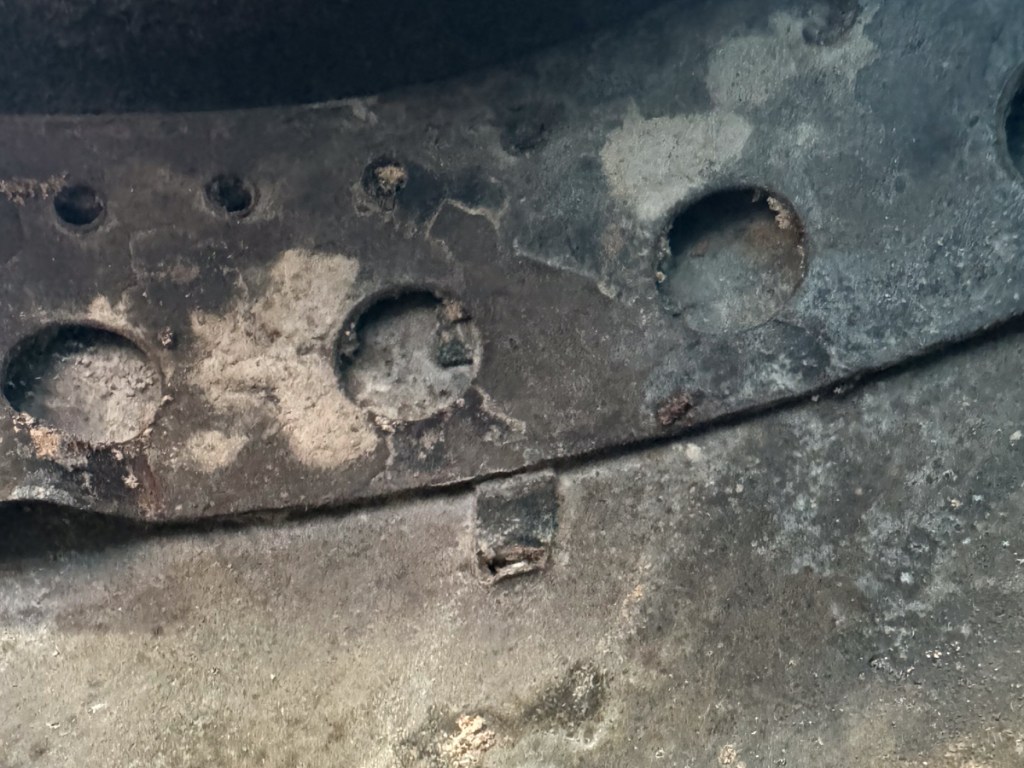
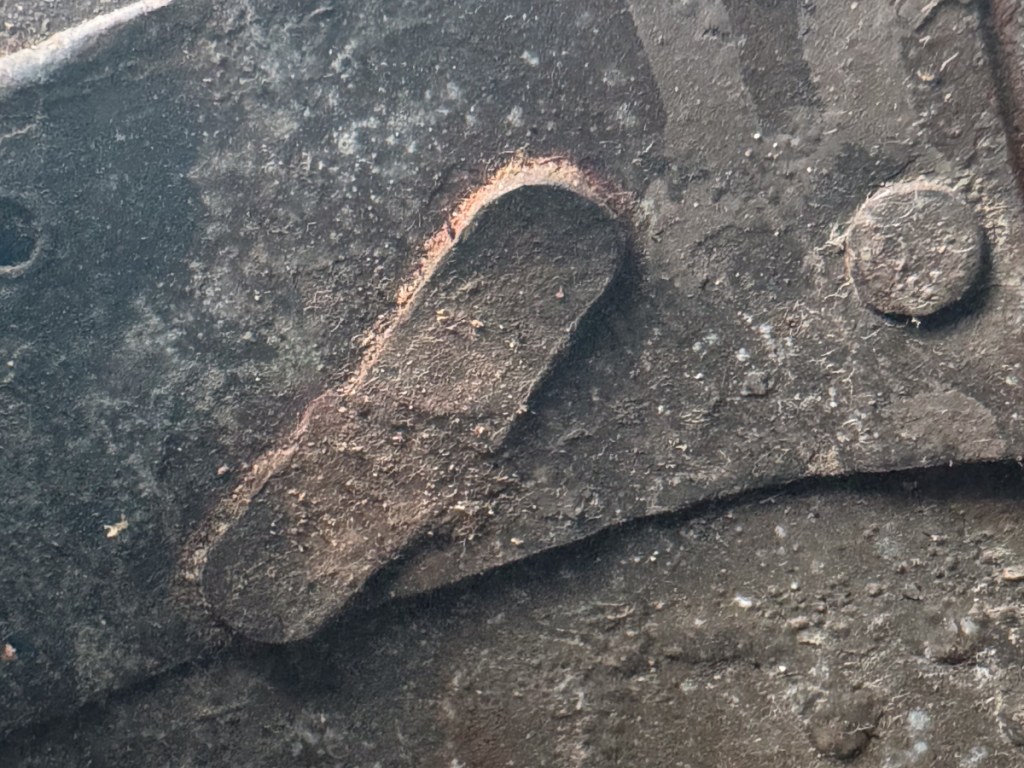
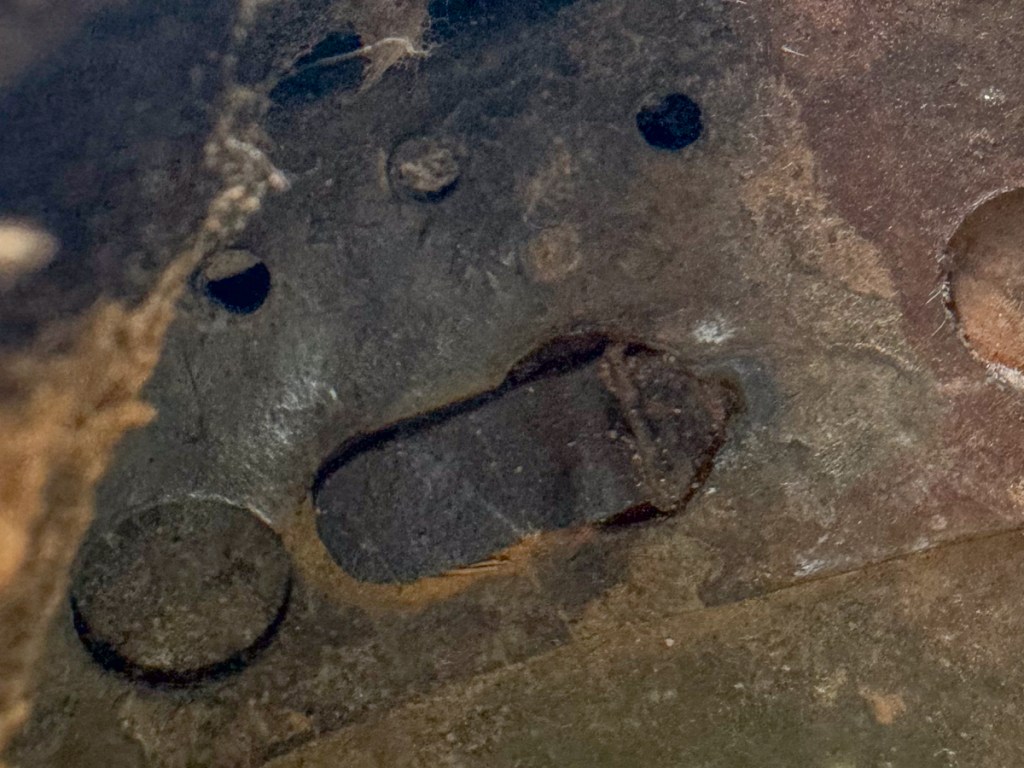
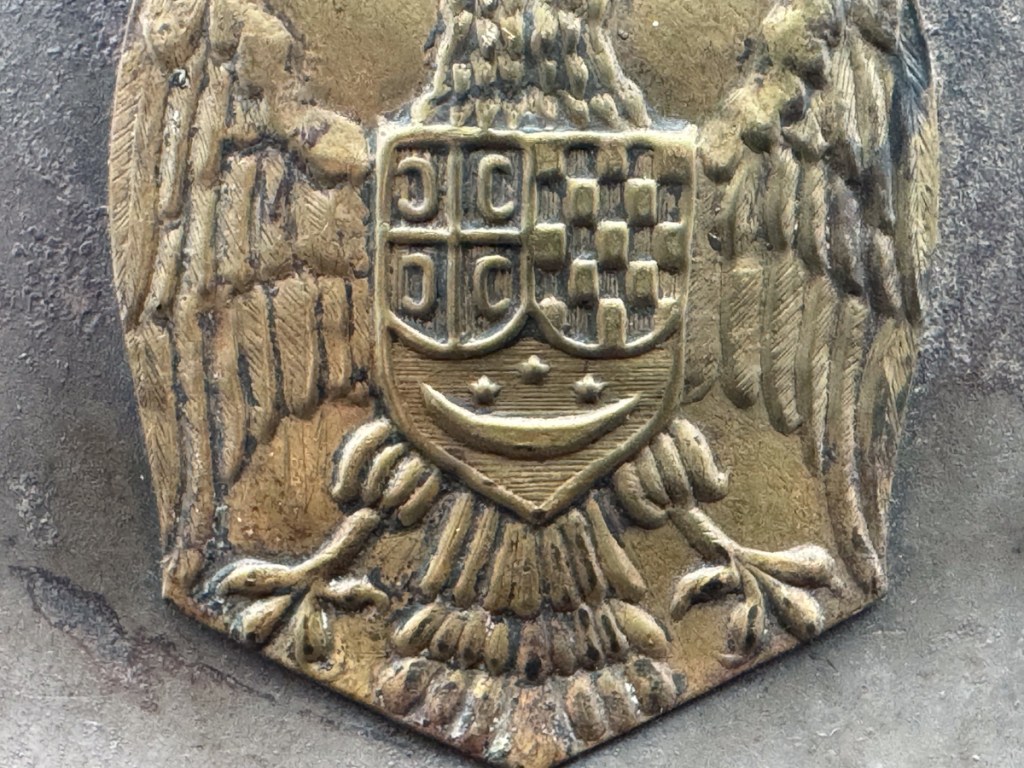
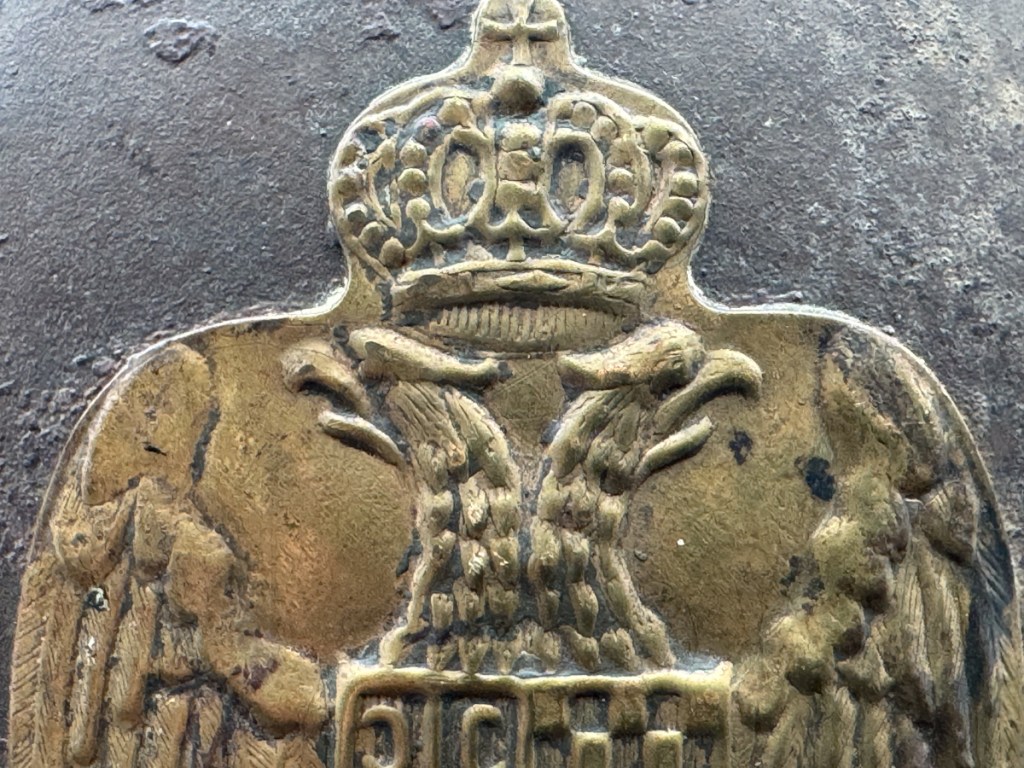
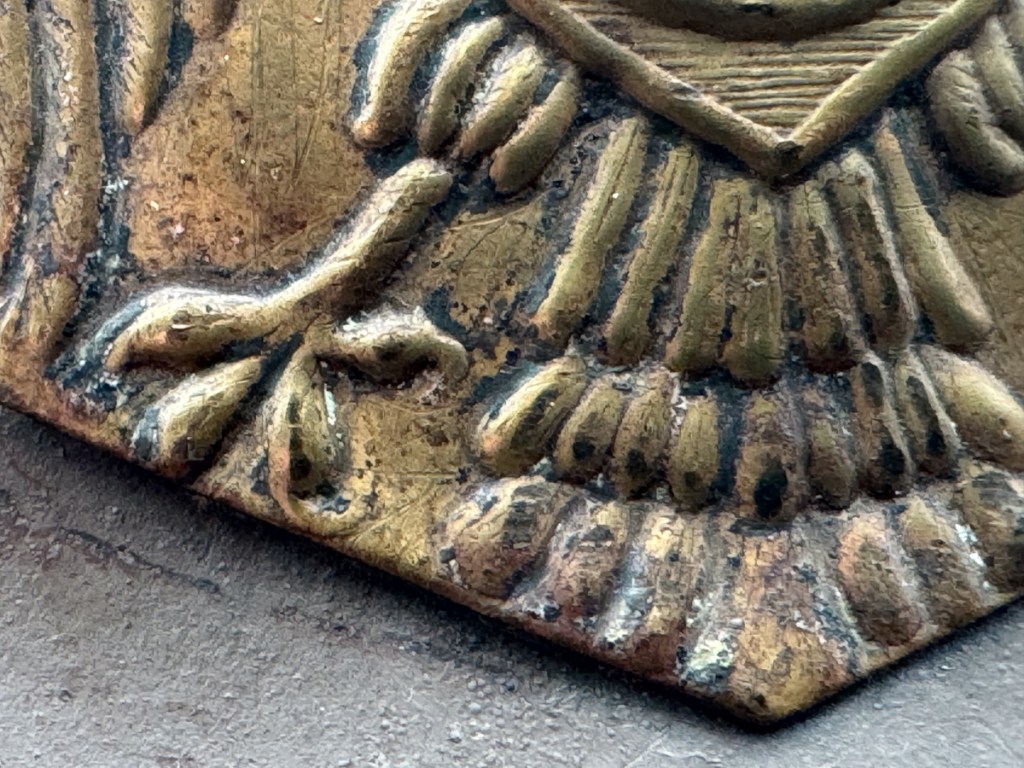
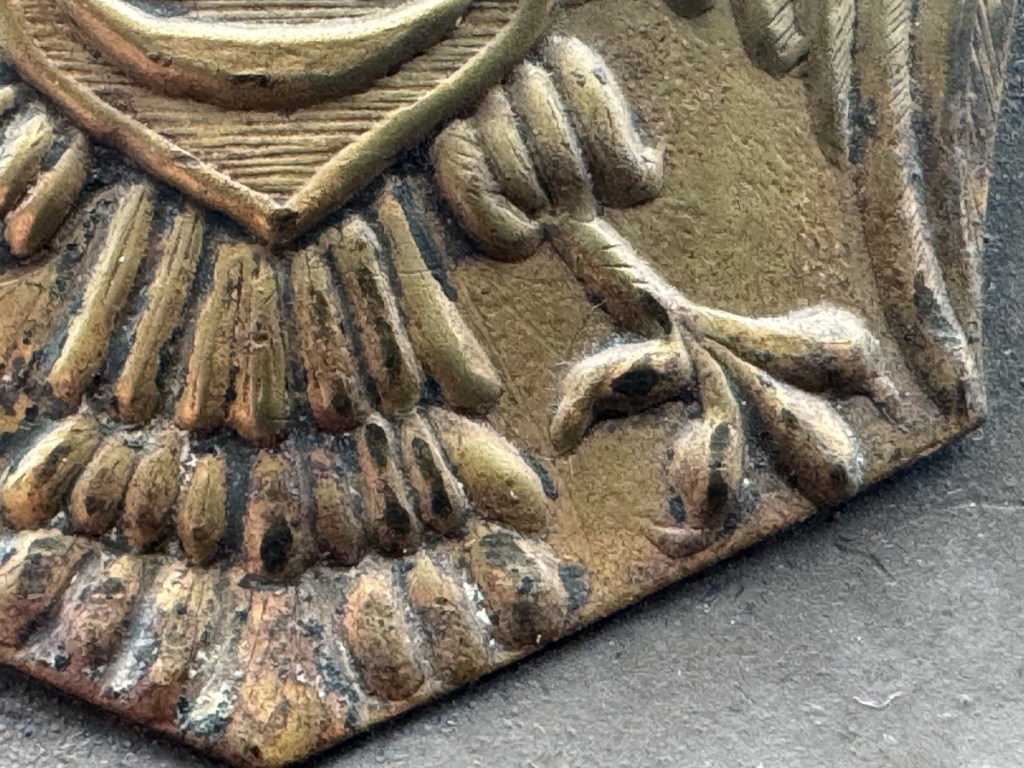
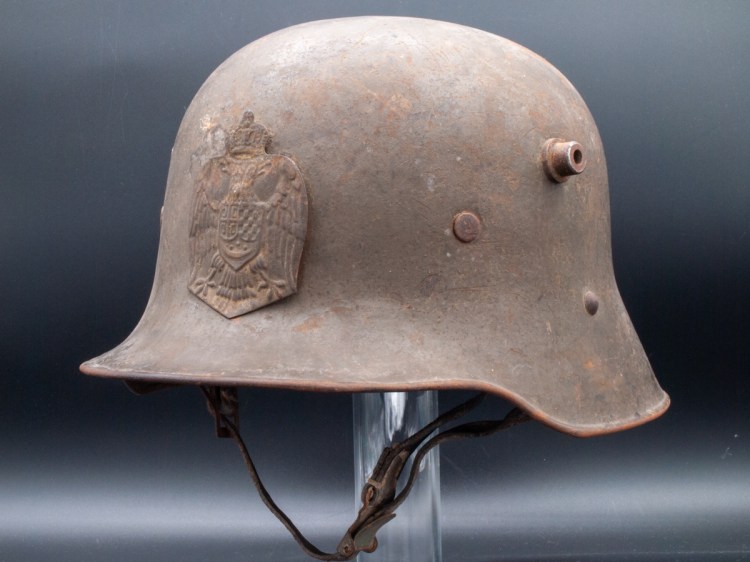
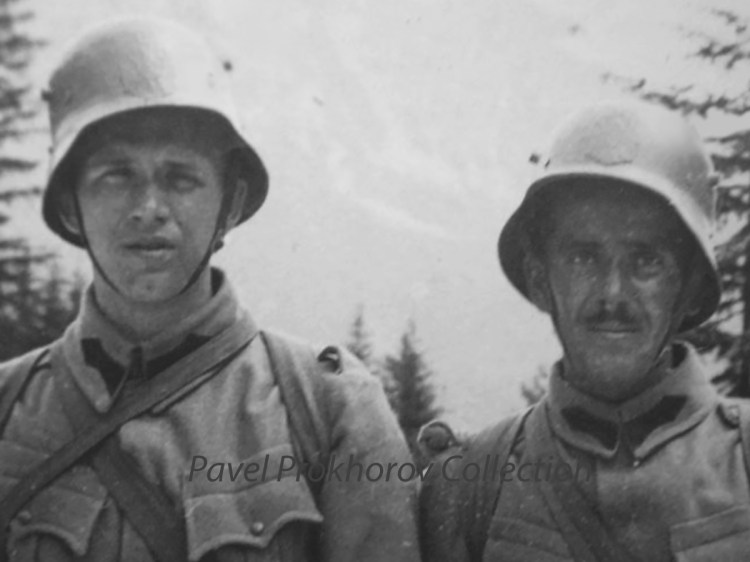
General Information: After the end of World War One armed forces of the newly created Kingdom of Slovenes, Croats, and Serbs (renamed Kingdom of Yugoslavia in 1929) used stocks of helmets acquired from former Austro-Hungarian depots in Croatia, Slovenia, and Vojvodina. These were mostly Austro-Hungarian M17 German model helmets, but some German produced helmets and domestic model Berndorfers (see Austro-Hungarian Berndorfer) were also used.[1] [2] [3] [4] These helmets had metal badges made of brass or pressed steel.[5] The badges consisted of a double headed eagle traditional for the Kingdom of Serbia (see Serbian M15), but with three shields on the eagles breast representing the three main peoples that made up the new country: Serbs, Croats, and Slovenes (see also Yugoslavian M23). The patterns used to press the badges varied in detail, but most had flat bottom sections whereas the similar badges applied to Yugoslavian used Adrian helmets had concave bottom sections.[6] The badges were either soldered or attached via a pair of brackets like the badges French helmets.[7] Two small rectangular holes were made in the brow section of the helmet to accommodate the brackets for helmets with badges mounted in this manner. The helmets were painted a greenish-brown color over the original Austro-Hungarian brown.
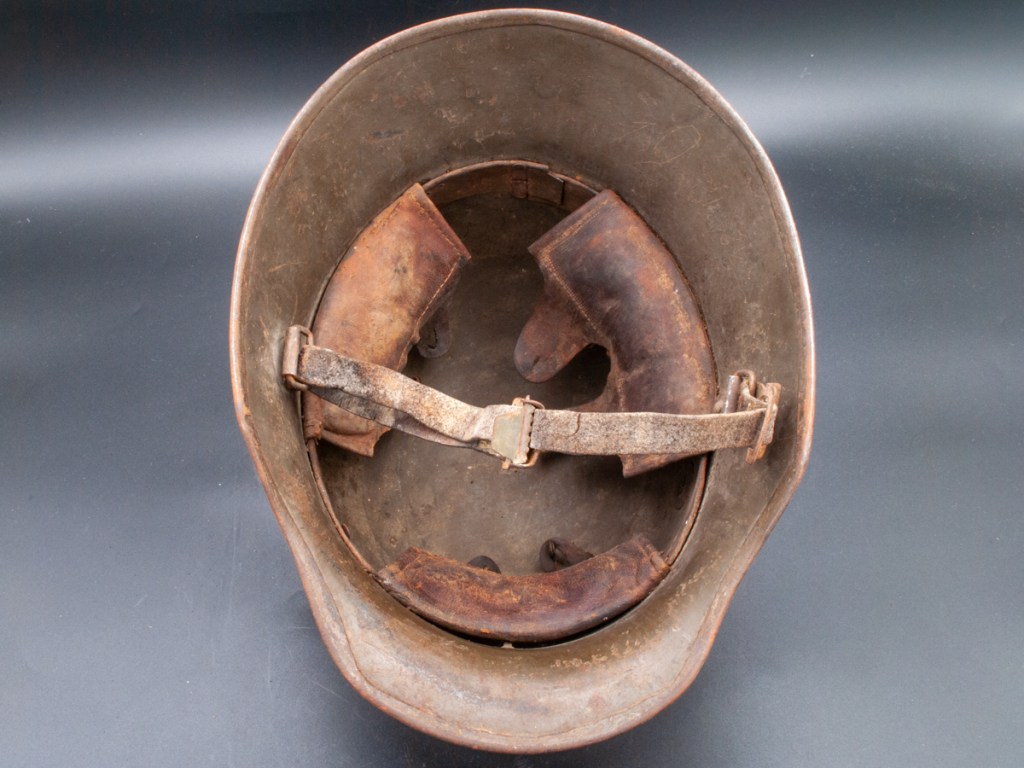
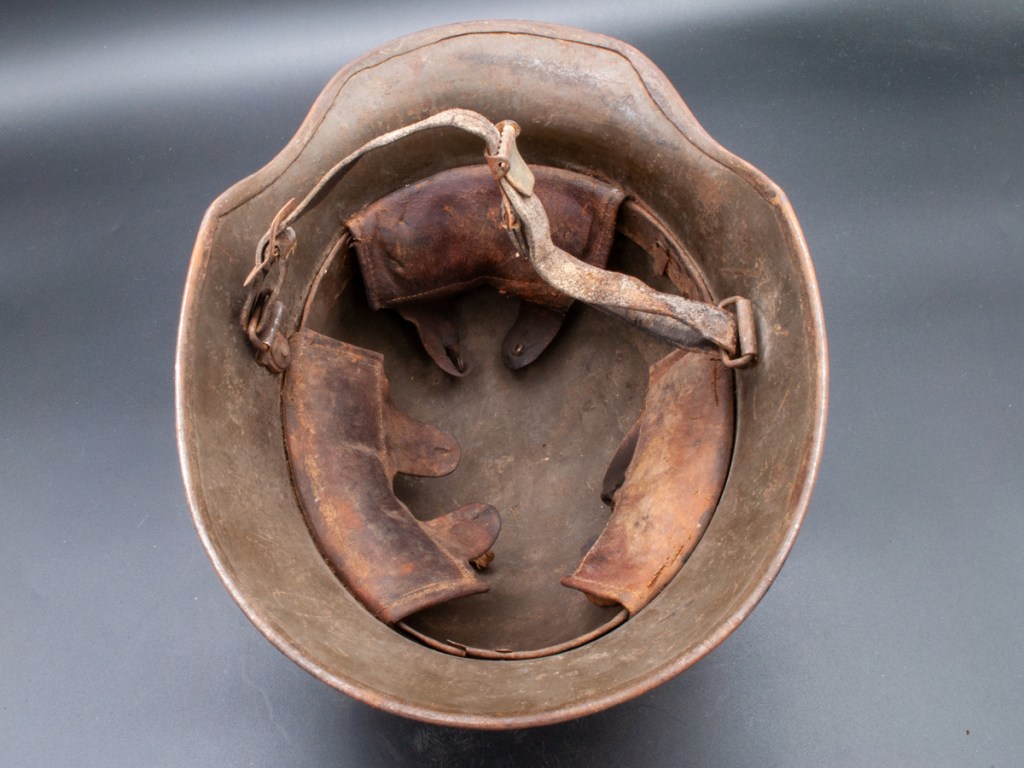
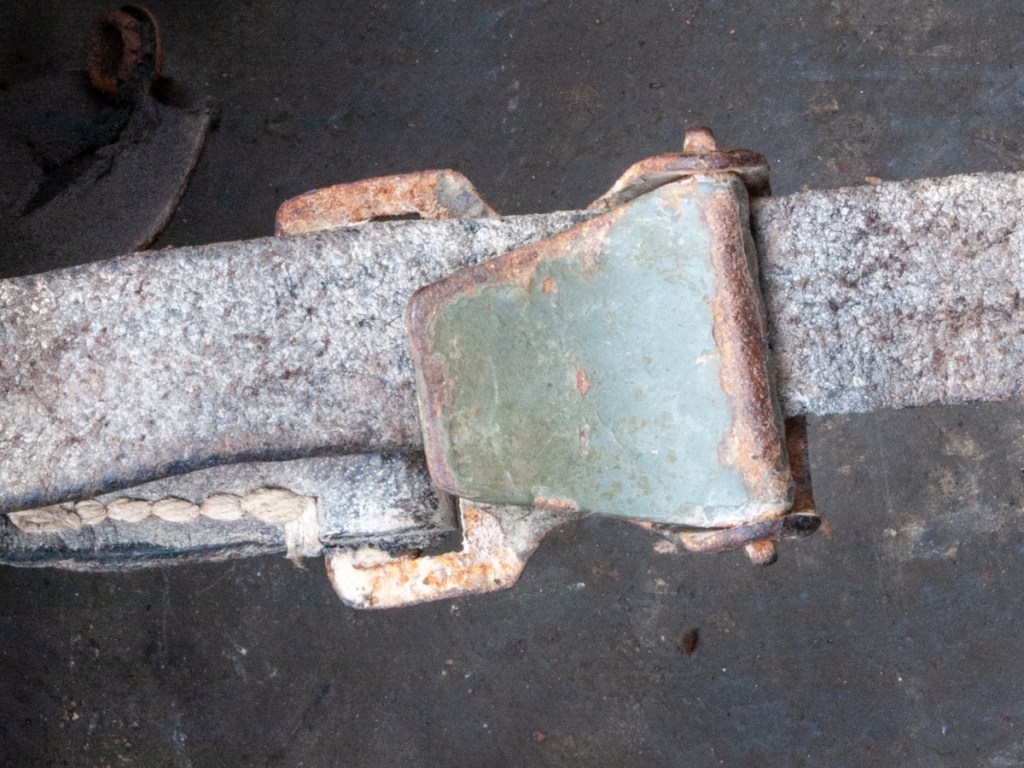
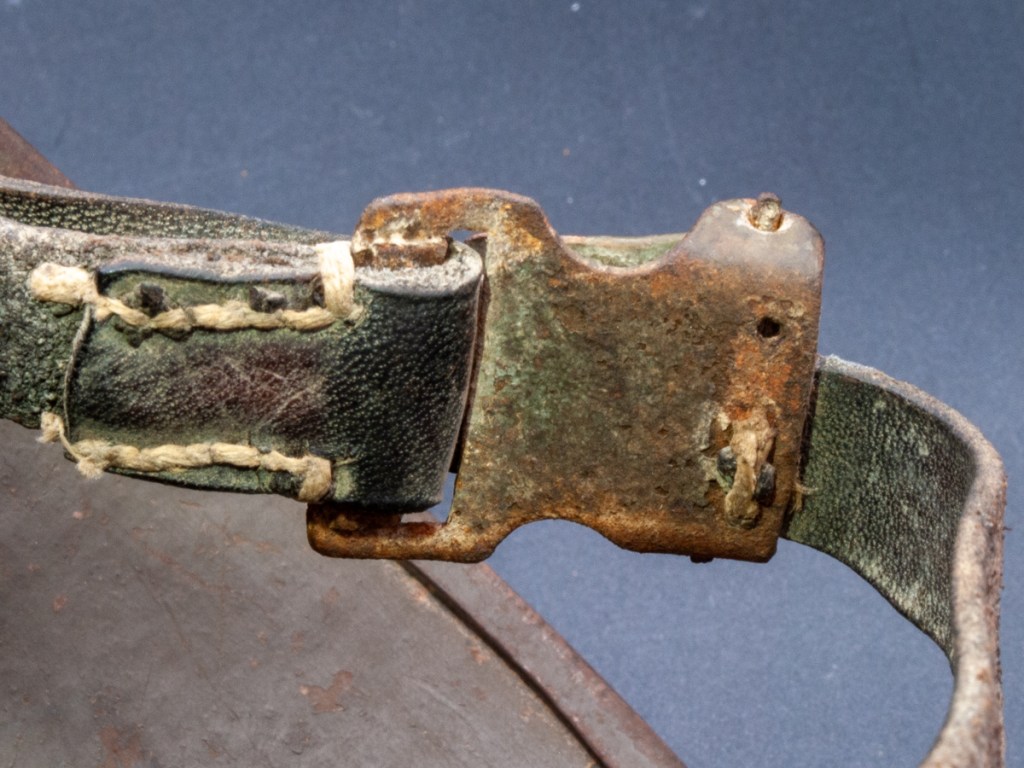
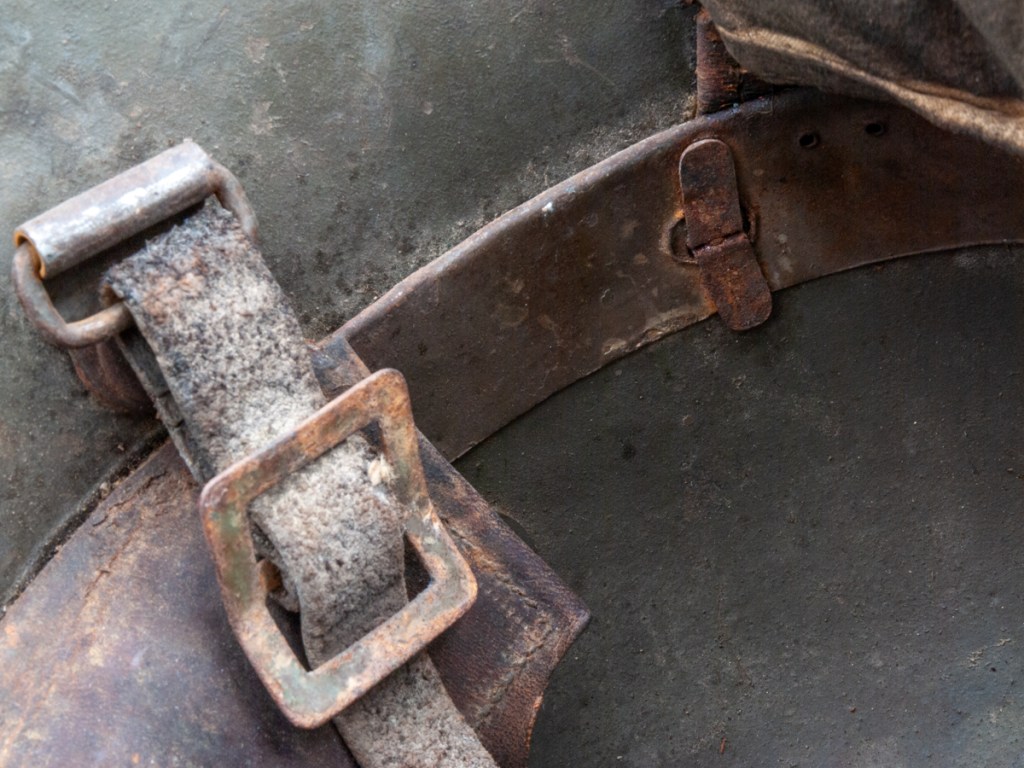
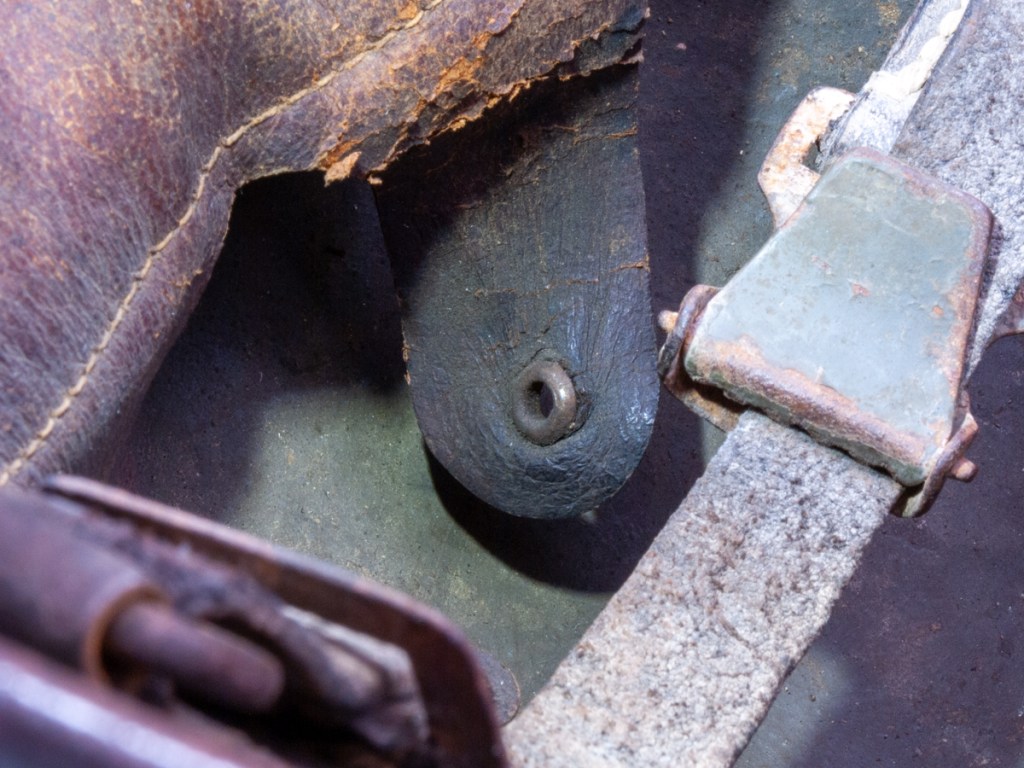
The liners were either original KuK manufactured ones, or they were replacements. The replaced liners typically lacked the metal reinforcing eyelets for the drawstring that were features of the wartime produced helmets from Austro-Hungary, but there are exceptions. Different types of chinstraps are found on these helmets. Some were made from a single piece of leather that was tightened by means of a sliding buckle.
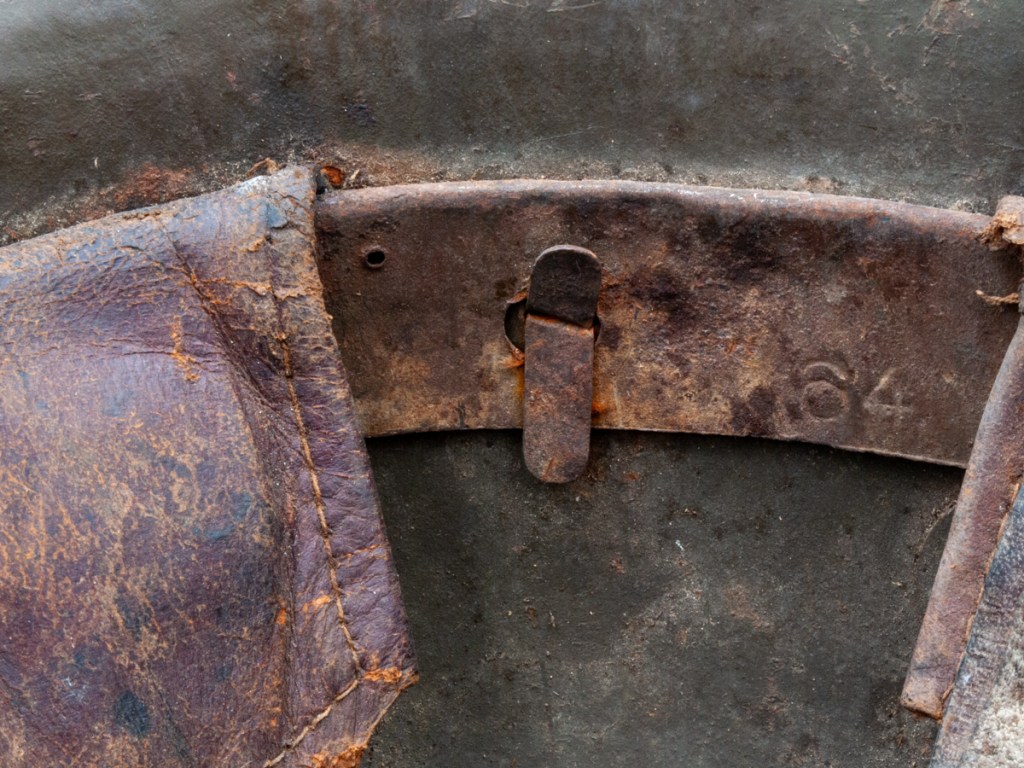
Displayed Examples: The helmet in the first photo gallery below[8] has signs of being of Czechoslovakian origin. The main indication of this provenance is the chinstrap which was unique to some helmets used by the Czechoslovakian army and helmets exported by Czechoslovakia (see Afghan). The helmet shell appears to be a reissued Austro-Hungarian helmet. There were only two Austro-Hungarian companies that made size 64 helmets. One was the A . Western Cilli which used the code “AW.” The code strikes on the AW helmets, however, were often faint and this specimen has no legible manufacturer code. When a size 64 KuK helmet has no visible manufacturer code collectors assume it is an AW M17. It is not a Czechoslovakian vz.20 as these were all size 66 with side lugs that lacked a step (see Czechoslovakian vz.20). The leather liner pads had metal reinforced holes for the drawstring like KuK and Czechoslovakian helmets, but unlike other observed Yugoslavian M17s. My best guess is that this was a surplus Austro-Hungarian helmet refurbished by the Czechoslovakians and exported to Yugoslavia. Another possibility, however, is that this was a helmet retrieved from former Austro-Hungarian stocks within Yugoslavia and refitted with a chinstrap and possibly other components imported from Czechoslovakia. Supporting this hypothesis is the fact that the A.W. Cilli company was located in what is now Slovenia but following the First World War was part of Yugoslavia. Conceivably, therefore, the helmet could be left over stock from A.W. Cilli, which was appropriated by the Yugoslavian army.
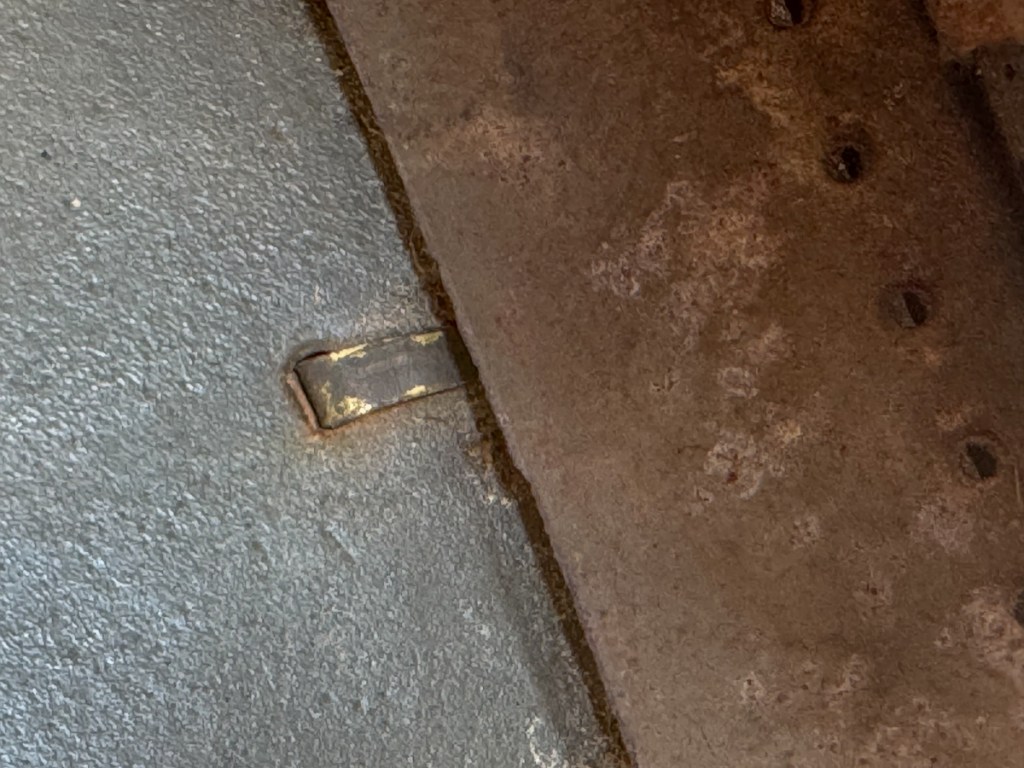
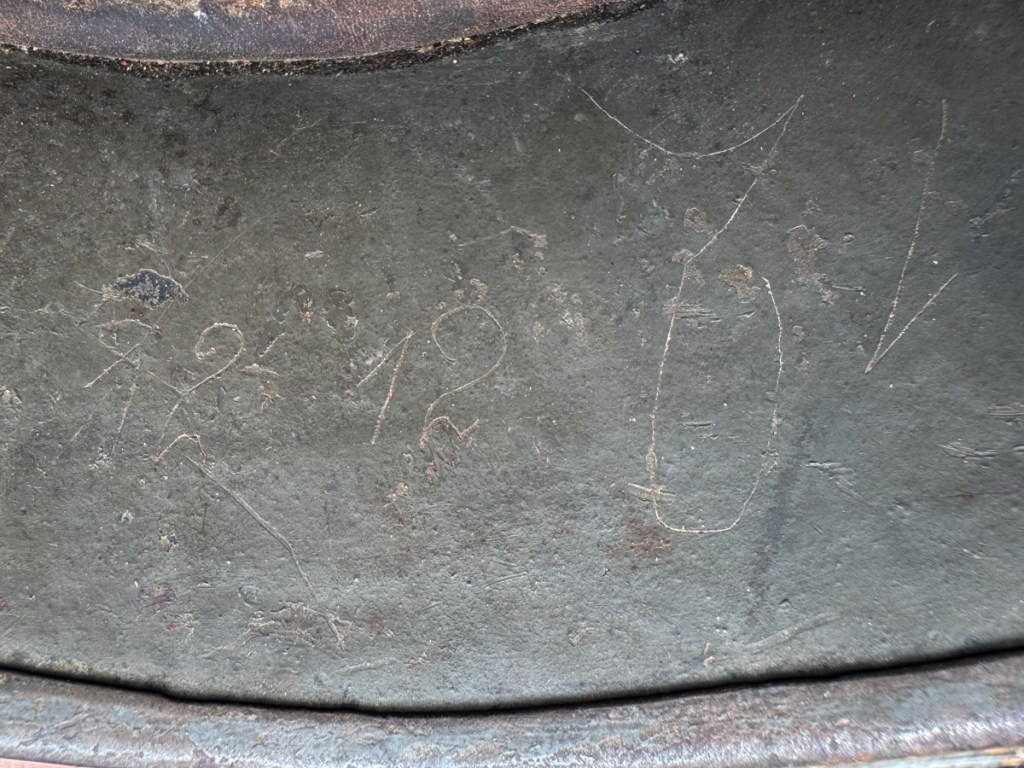
The thin metal plate with the Yugoslavian coat of arms is attached via two brackets that go through two small rectangular shaped holes like the French Adrian helmets. The helmet is painted green throughout and this seems to be the original color. If the helmet were indeed originally from Austro-Hungarian stocks, the factory brown paint would have been stripped off before repainting. The number 12 is etched three times into the rear skirt section. This may be a unit number.
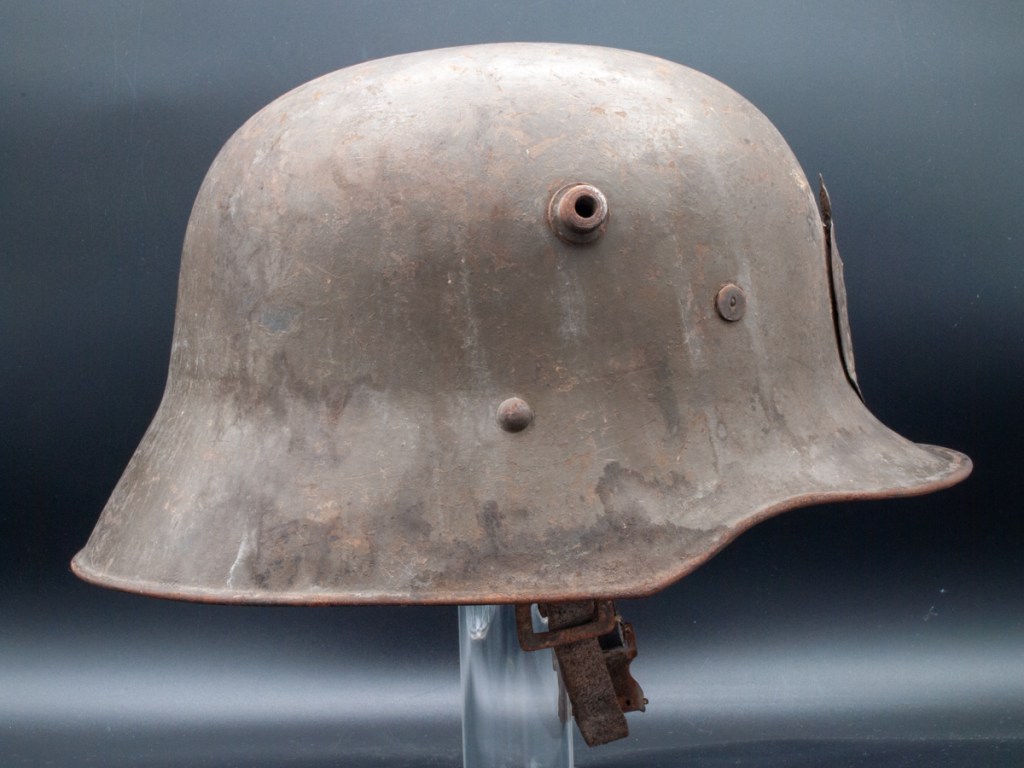
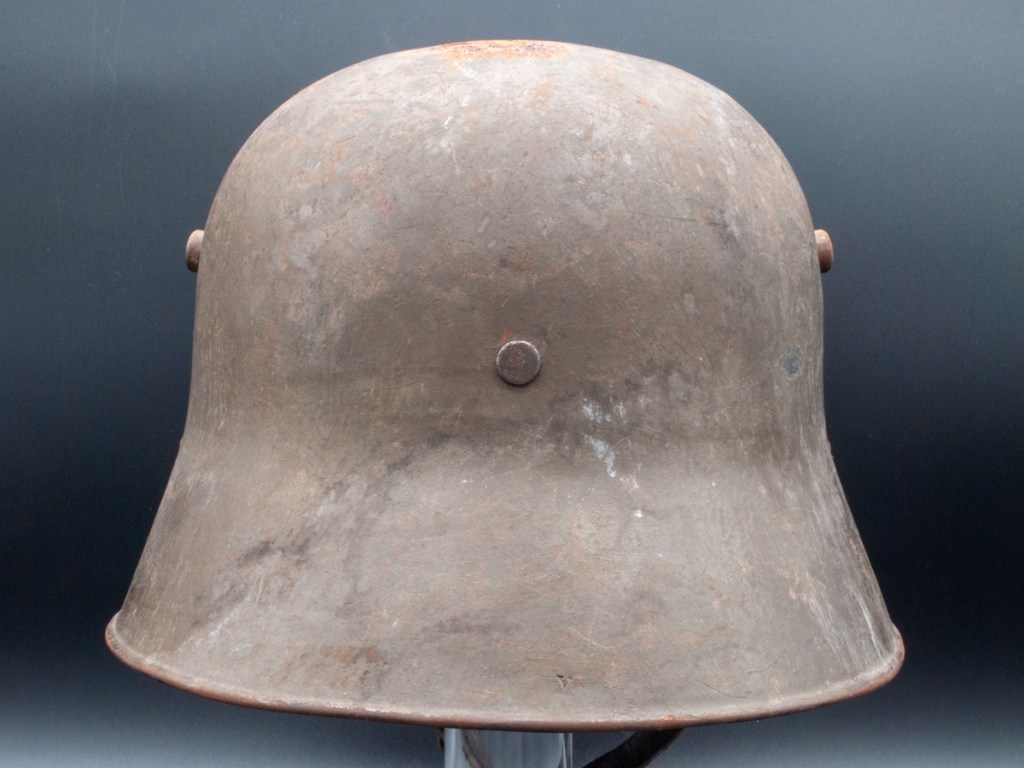
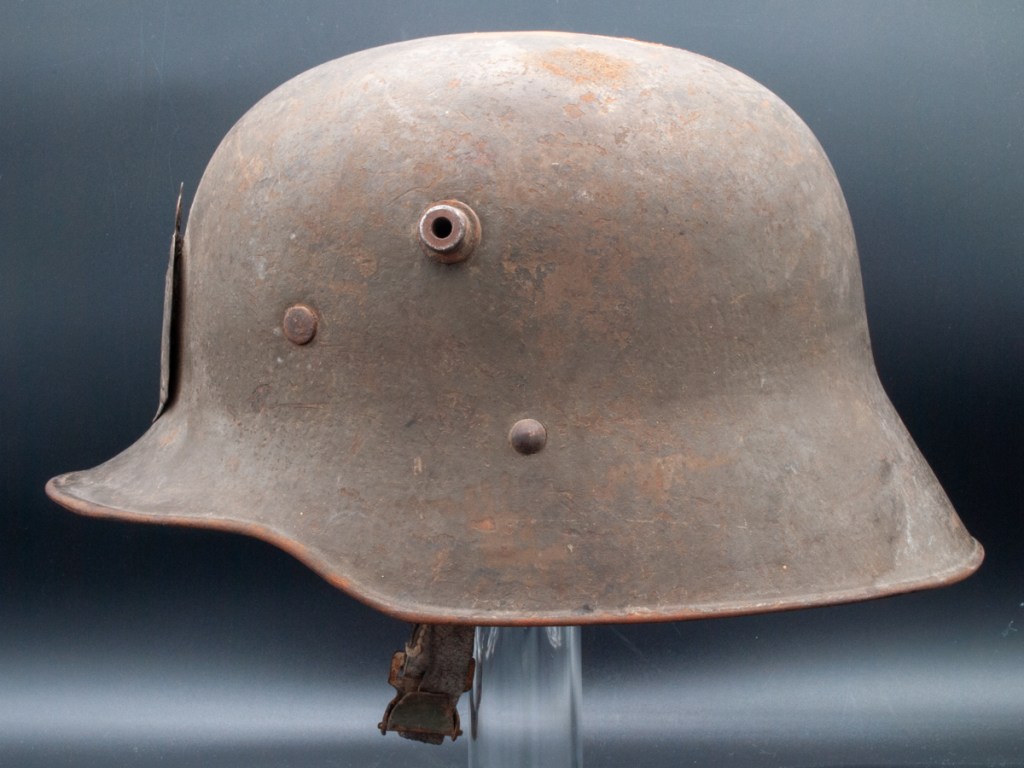
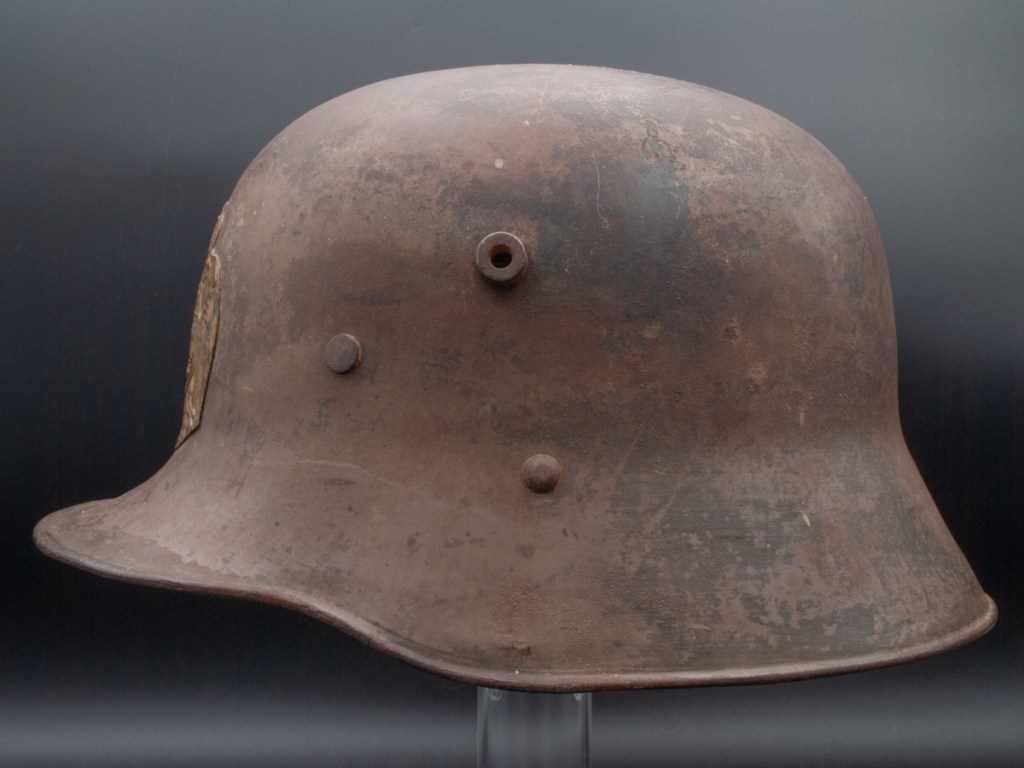
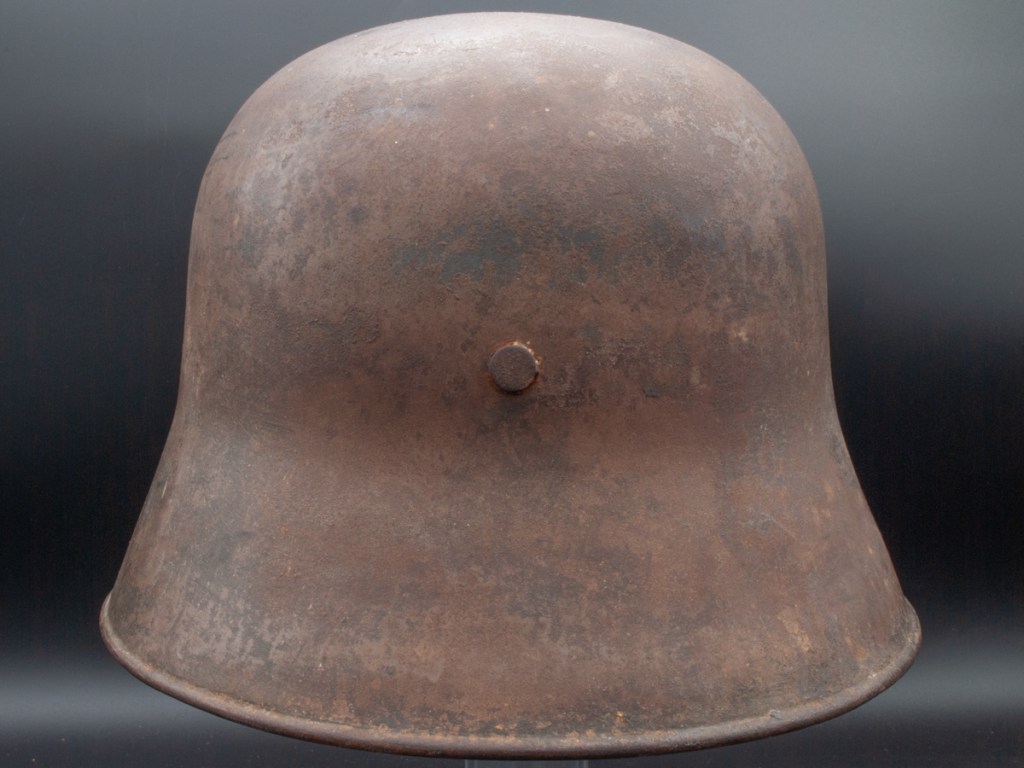
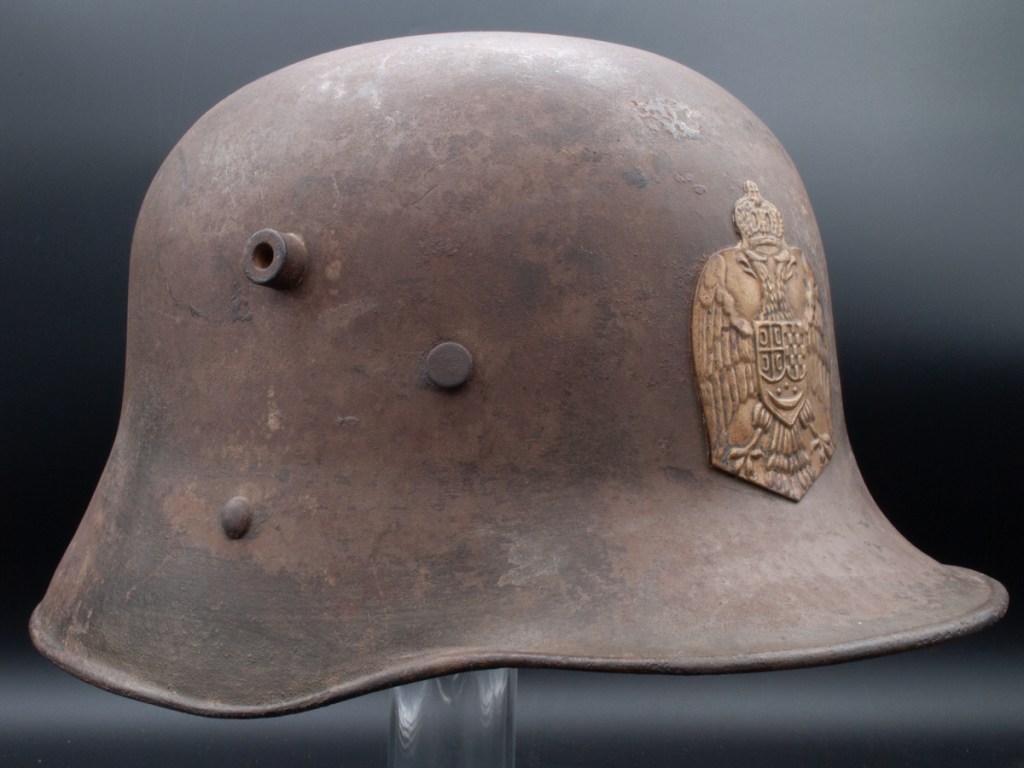
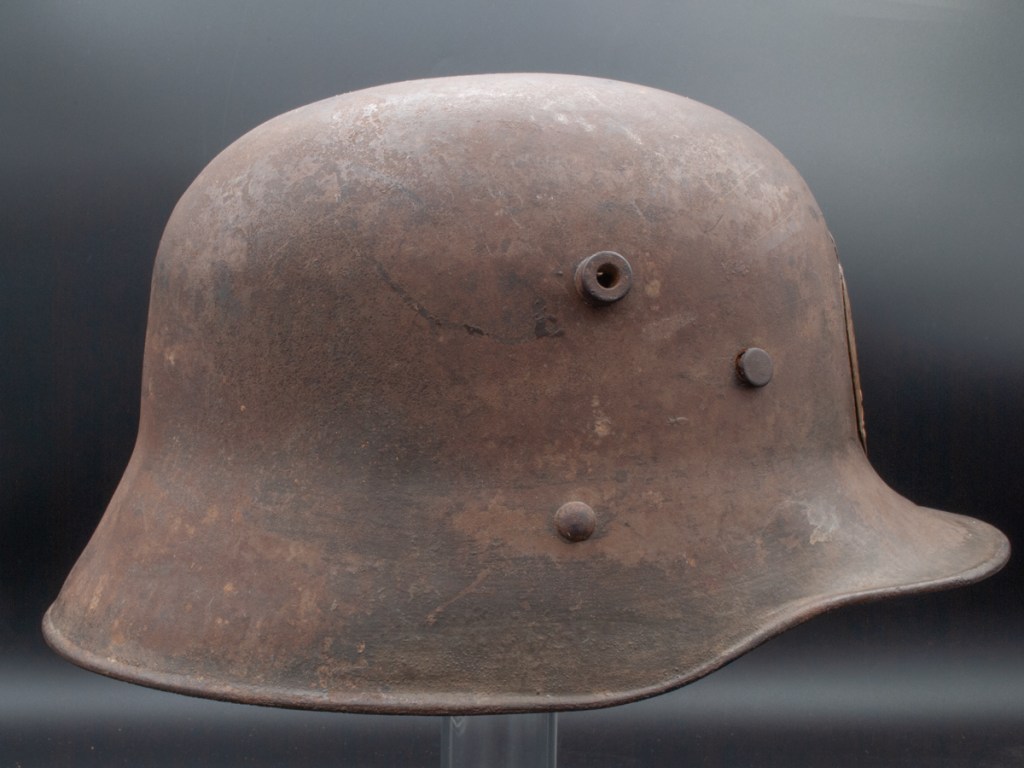
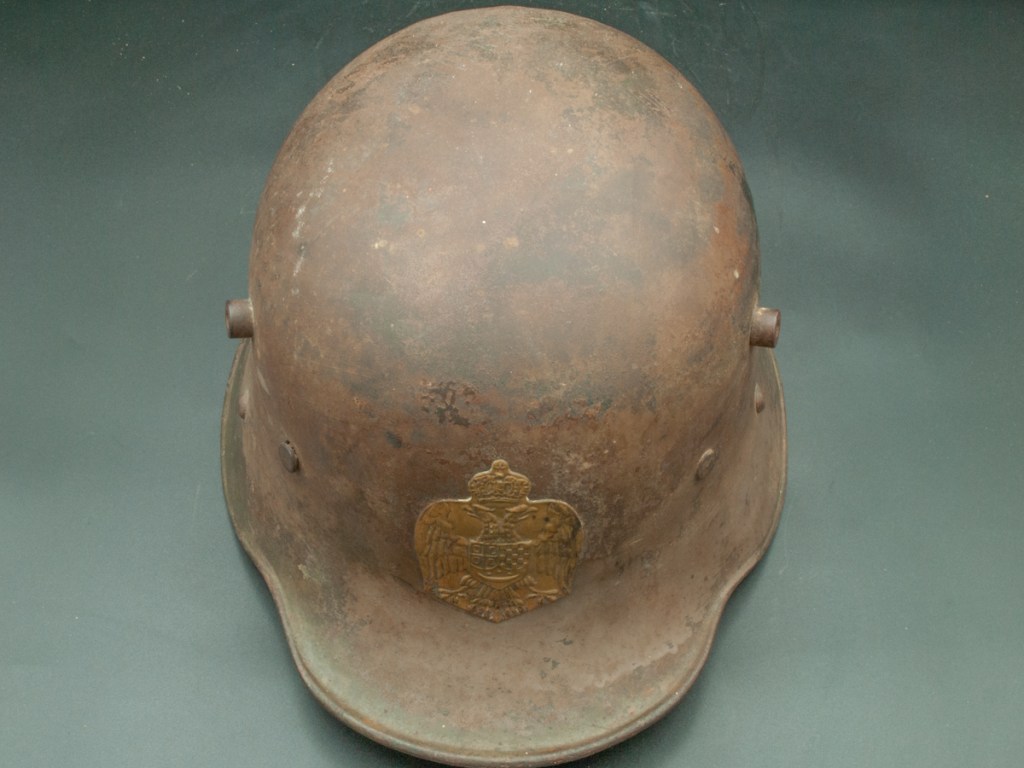
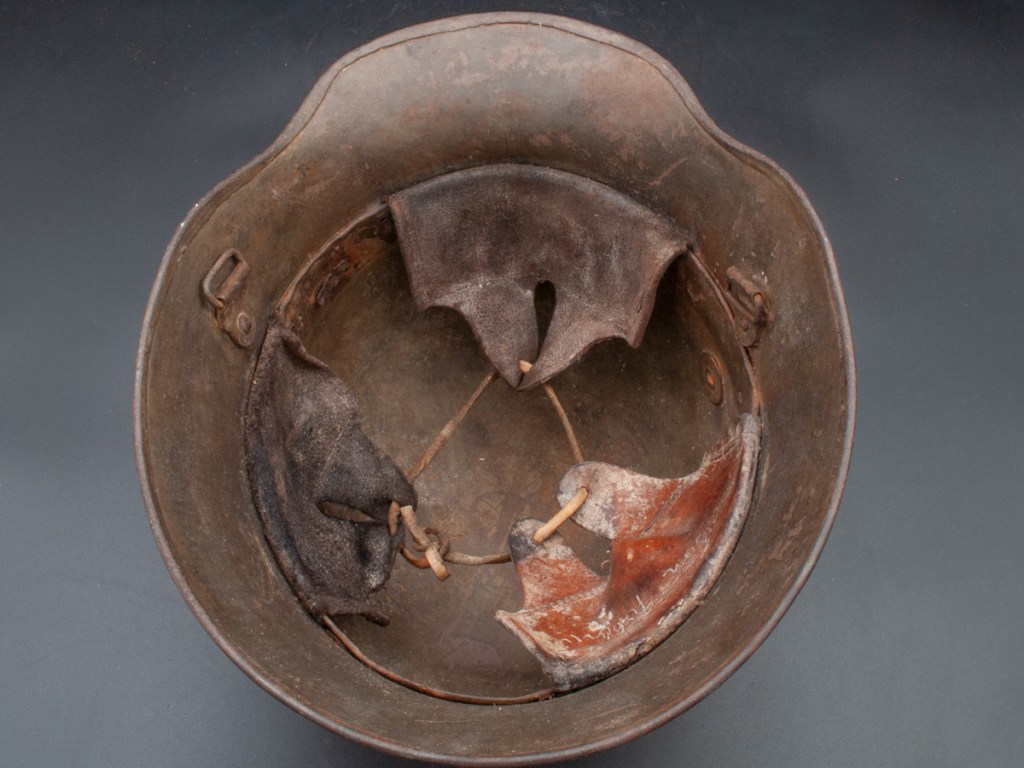
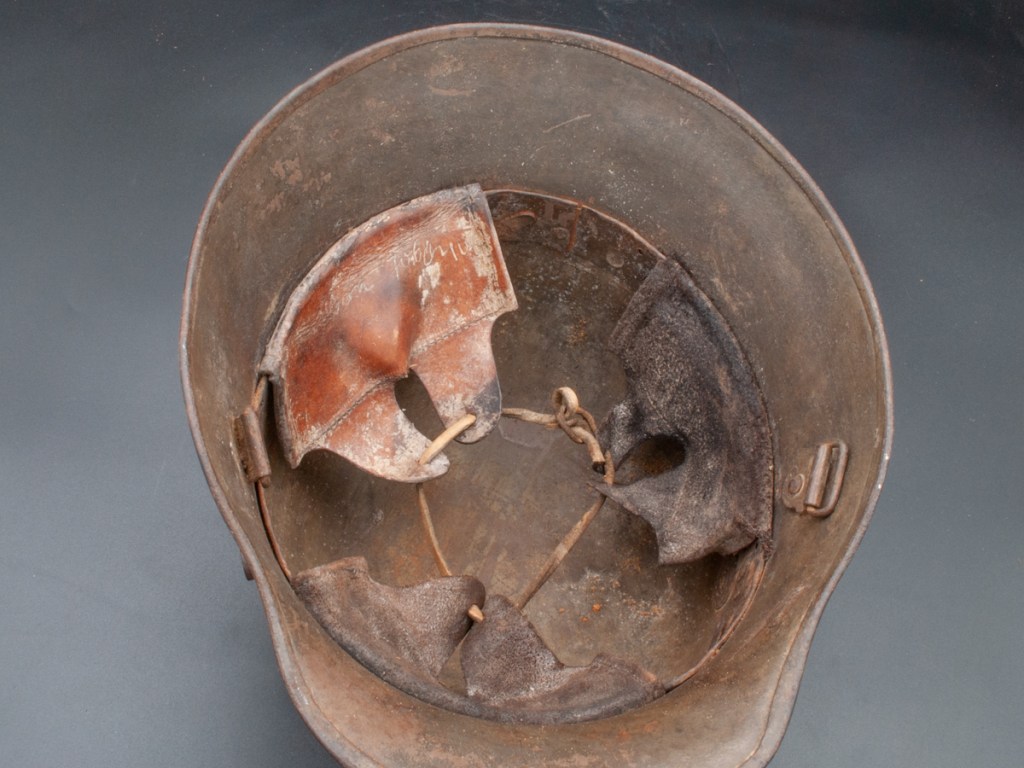
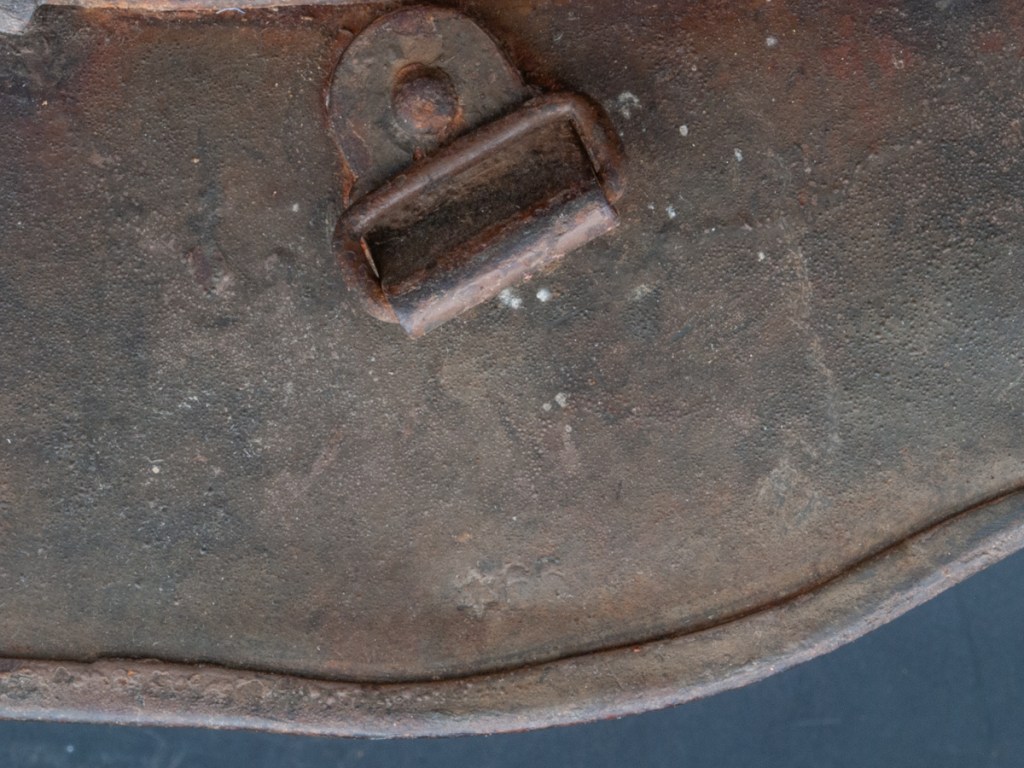
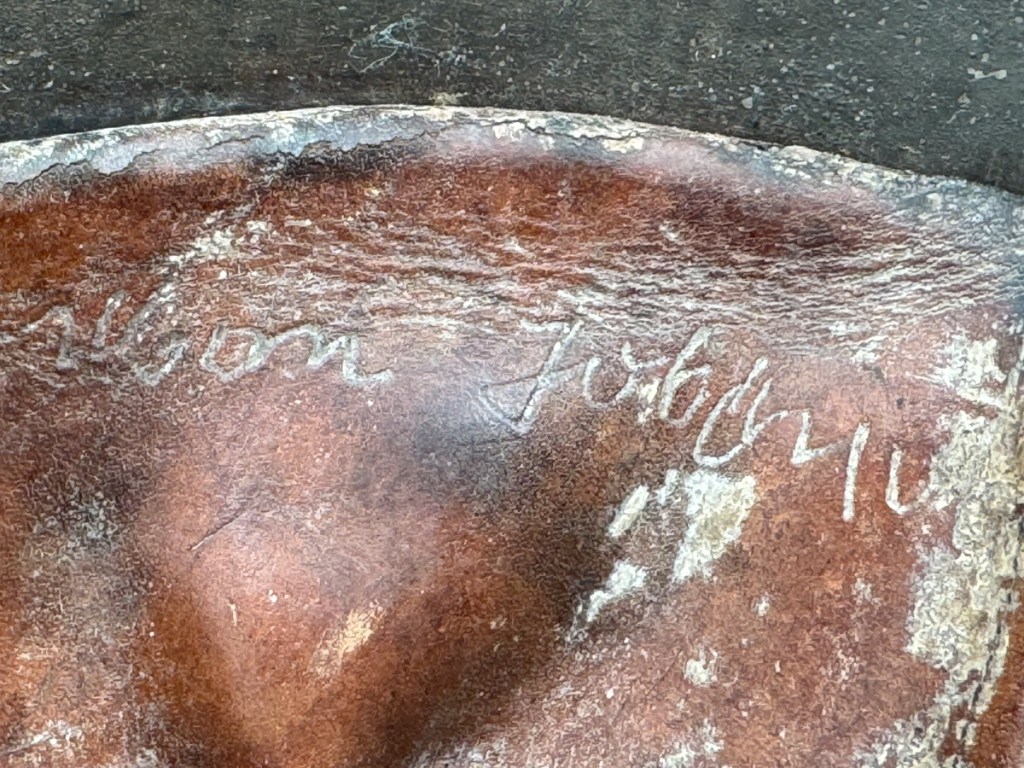
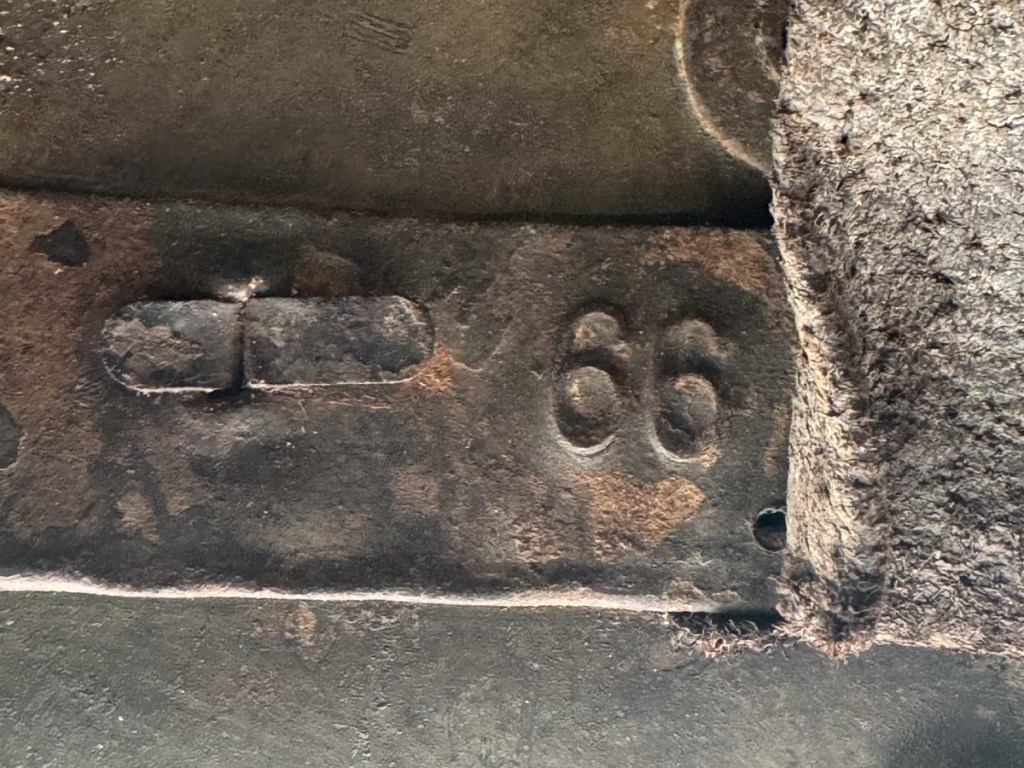
The helmet in the second photo gallery below is something that I acquired in a trade with a collector friend. It has the star shaped logo that the Gebrüder Böhler & Co. used. This company, based in the Austrian city of Kapfenberg, only produced size 66 helmets. The original KuK era liner was replaced with a similar type of liner but like others of this type it lacks the metal reinforced holes for the drawstring. The drawstring is rawhide. The liner pads are missing on this specimen. These were sometimes removed to accommodate a larger head size, or to fit over a winter cap.
Like all Austro-Hungarian produced German model helmets, this one was originally painted brown. Yugoslavian armed forces subsequently painted the helmet green, although most of the green paint has worn off. The brass badge would originally have been painted green as well, but at some point, in the helmet’s history the green paint was mostly removed. This may have been done to make for an attractive display piece.
Collector Notes: These are exceedingly rare helmets and they seldom surface in collector’s markets. For that reason, there is no well-established value for Yugoslavian M17s, although you may expect to pay a relatively high price. There are fakes circulating, so exercise caution.
* Photo courtesy of Pavel Prokhorov. No reproduction without permission.
[1] Dagnas, J-G. 1991. pp281
[2] Baer, L. 2001. pp354. (Baer’s book on this page shows a photograph of a German model helmet and a Berndorfer domestic model helmet with Yugoslavian badges. No accompanying text)
[3] Marzetti, P. 2003. pp243
[4] Of the observed examples of Austro-Hungarian helmets reissued by the Yugoslavians four were stamped C.A.S. 66 for the Carl August Scholtz factory in Slovakia and two had the star shaped logo and 66 used by the Gebrüder Böhler & Co. which was based in Kapfenberg, Austria and one had no legible manufacturer stamps.
[5] Based on my observation of surviving examples.
[6] Based on my observation of surviving examples.
[7] Dagnas, J-G. 1991. pp281-282
[8] Loan from a private collection