
General Information: The Greeks formally adopted the French Adrian model helmet in 1918. In collector circles it is usually referred to as the “Greek Model 1915/18.” The helmets were generally painted brown, but less commonly were painted green as well. Based on period photographs, it appears that most of the helmets supplied to the GreeksContinue reading “Greek M15/18*”
Tag Archives: WWI
French M15 Engineer*
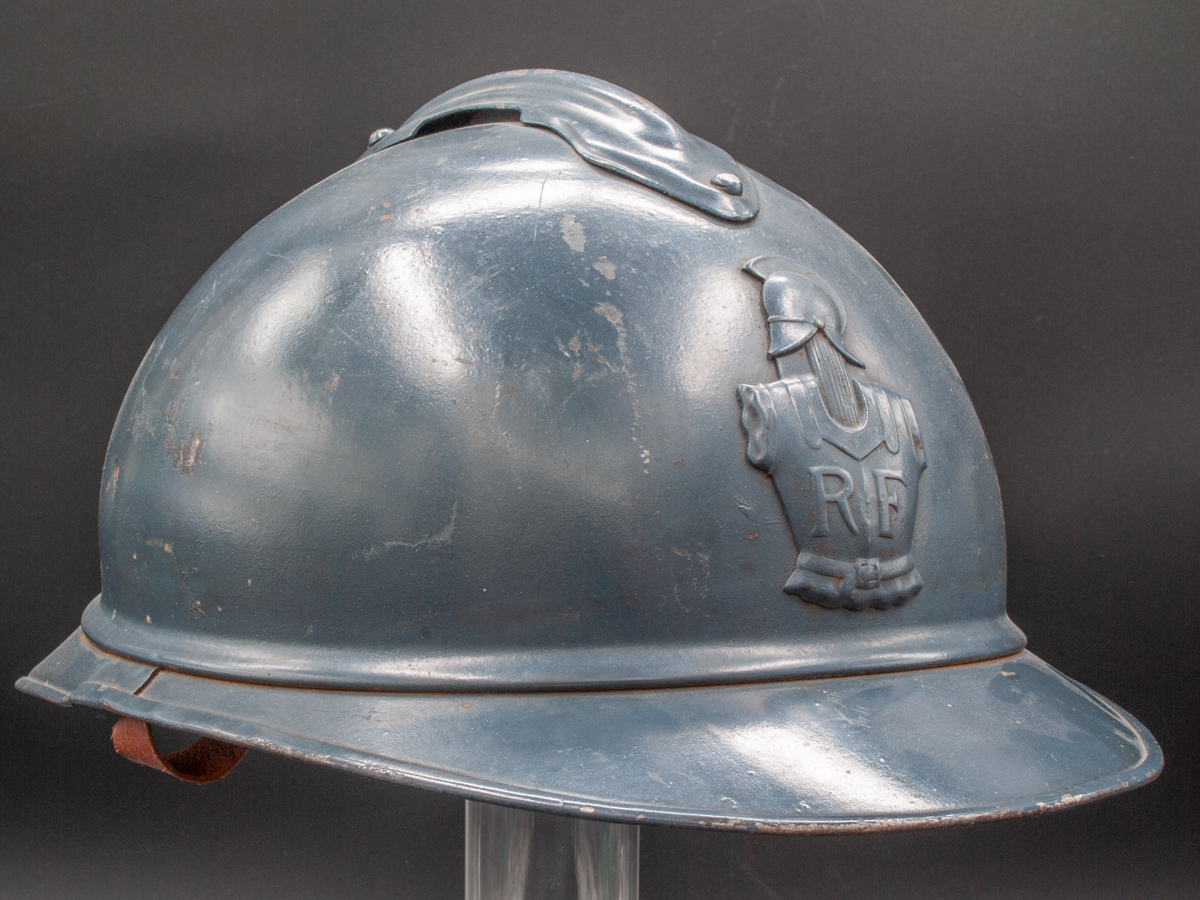
General Information: There were eight statutory badges authorized for use by different branches of the French armed forces in the First World War. The badge with a breast plate and helmet was for engineers (“genie”). (See French Model 1915) Displayed Example: I purchased this helmet this helmet in 2007 from Le Beret Vert in France.Continue reading “French M15 Engineer*”
Romanian M15*
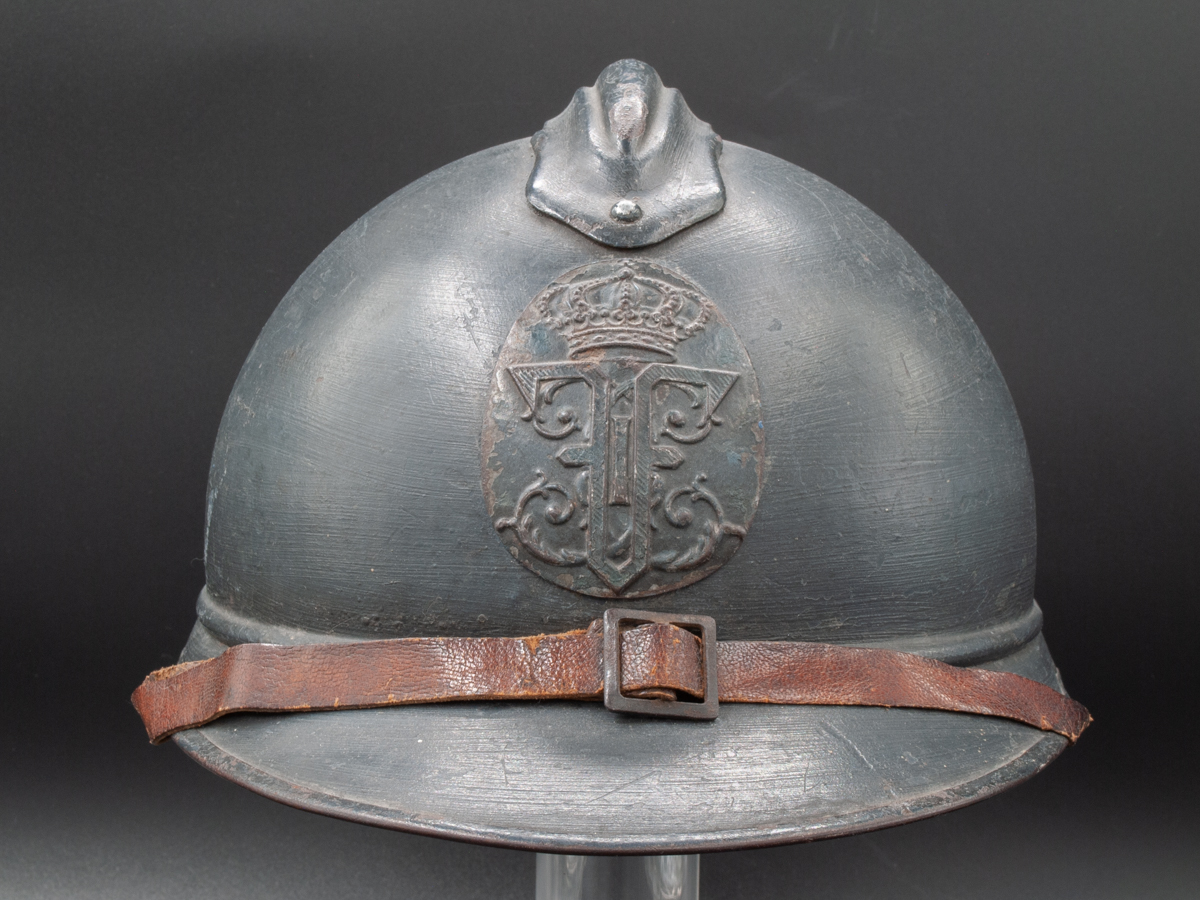
General Information: In late 1916 the Romanians ordered 200,000 Model 1915 helmets from the French, but only 90,000 were delivered. The helmets were painted blue and had the cipher of King Ferdinand I. The cipher consisted of a crown on top of two “Fs” placed back-to-back with a Roman numeral “I” in the middle. InContinue reading “Romanian M15*”
Serbian M15*

$1,995 SOLD
Belgian M15*

General Information: Starting in November of 1915 the French supplied the Belgians with brown painted Model 1915 helmets.[1] These had lion head badges attached to the front. Unlike the French armed forces, which used helmets with different badges to represent distinct service branches, the Belgians had only one badge. According to one source, the BelgiansContinue reading “Belgian M15*”
Russian M15*

General Information: The French shipped 1,977,000 Model 1915 helmets to Russians for use in the First World War.[1] The helmets were painted khaki brown and had an Imperial Russian badge affixed to the front. This headgear was subsequently used extensively by both sides during the Russian Civil War. The Red Army used modified, reissued versionsContinue reading “Russian M15*”
Italian M15*
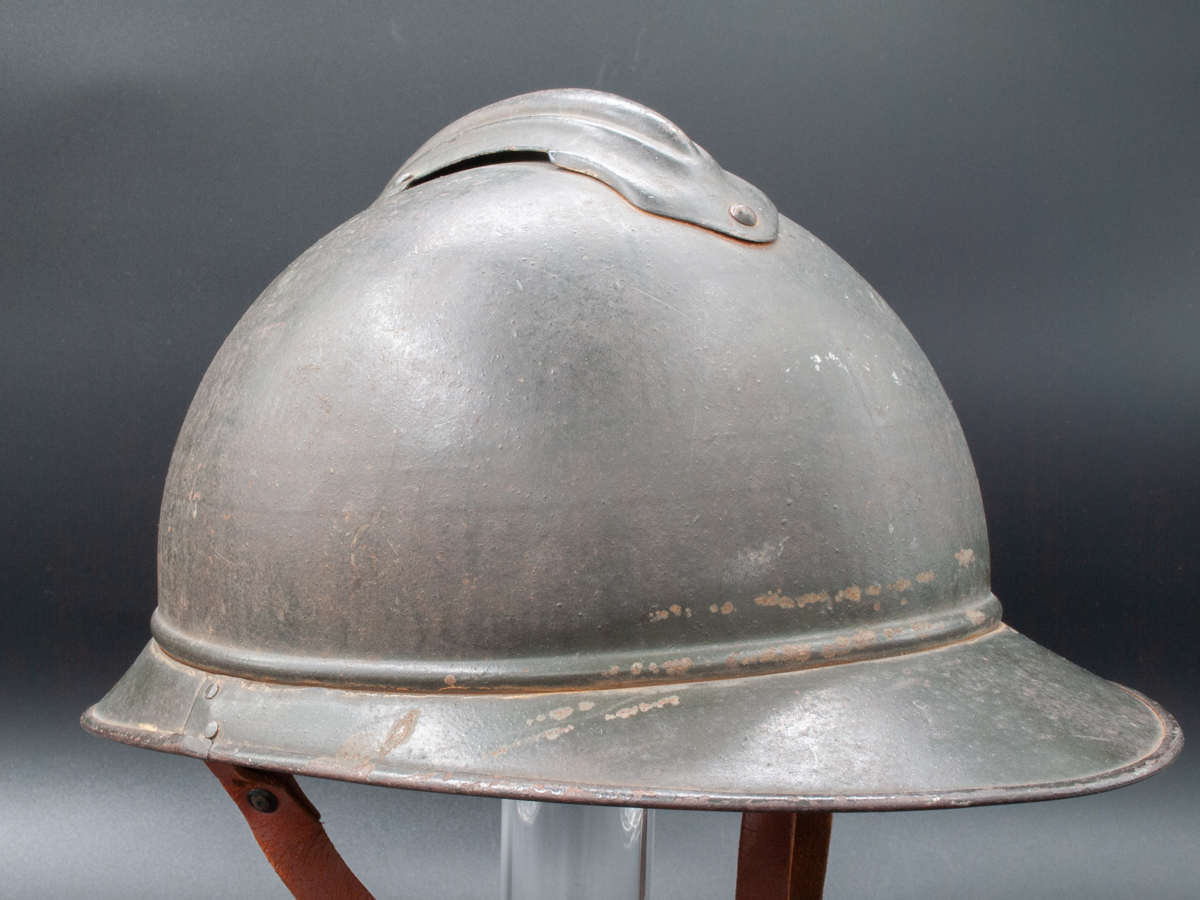
General Information: The first steel helmet widely distributed to Italian soldiers was the French Model 1915. Deliveries of these helmets began in the fall of 1915 and were the standard type painted blue with French infantry badges. Subsequently, the French produced for export to Italy helmets without badges or badge holes. The earliest versions ofContinue reading “Italian M15*”
USMC*
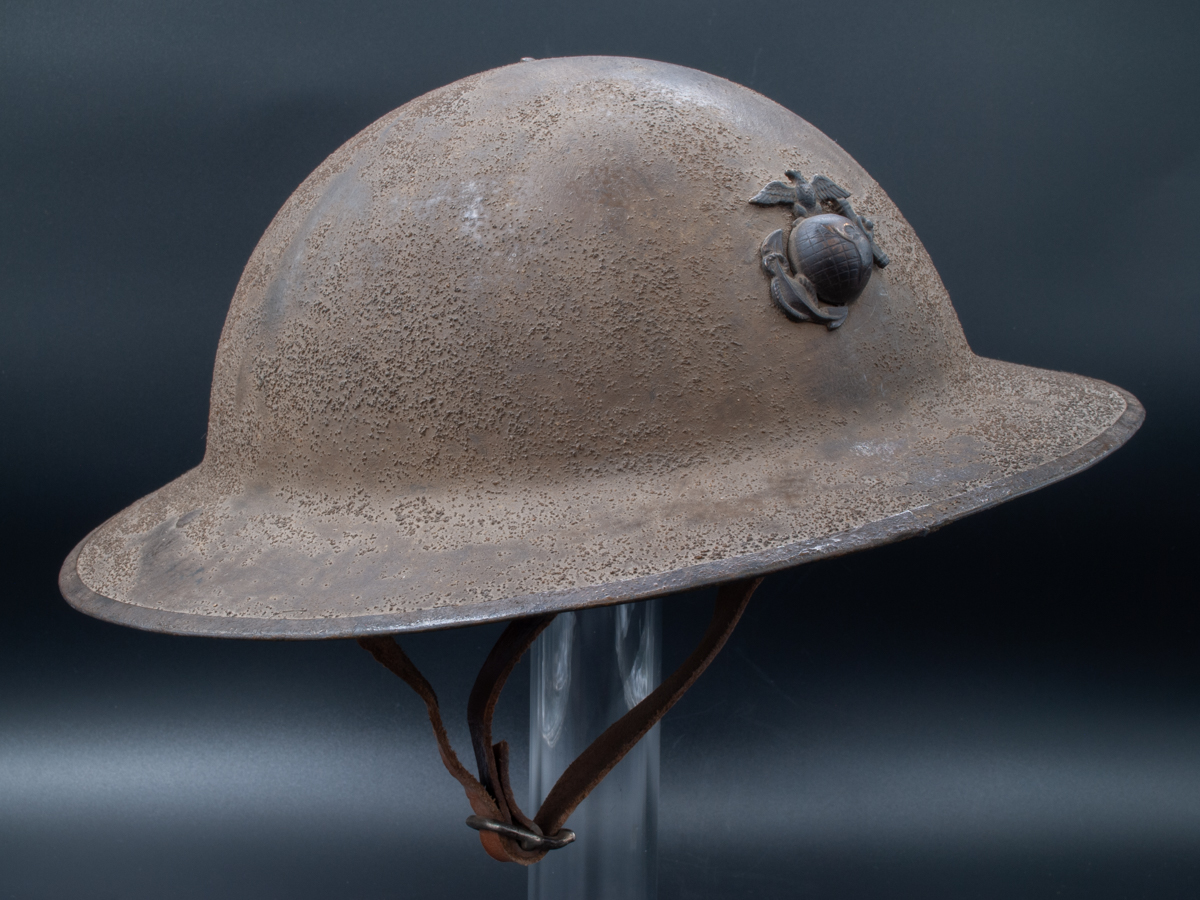
General Information: The application of US Marine Corps cap badges to steel helmets was a common practice in the post-World War One period, but was this was also done, to a lesser extent, during the conflict. The debate among collectors about whether EGA (Eagle, Globe, and Anchor) badges were used during the First World WarContinue reading “USMC*”
US Model 1917*

General Information: The US Model 1917, along with the British Mark I, was the standard headgear of the American Doughboy in the First World War. It is a near identical copy of the British MKI. One quick visual differentiator between the two types is the method of attaching the chinstrap mechanism to the shell; TheContinue reading “US Model 1917*”
German M17*

General Information: The German Model 1917 is identical to the Model 1916 but for one thing; the liner band is metal rather than leather. These were authorized in May of 1917.[1] The chinstrap is the same M91 type used on the M16s and on pickelhaubes, but the chinstrap hardware is more frequently steel or zinc-likeContinue reading “German M17*”
 Steel Helmets of the World Wars