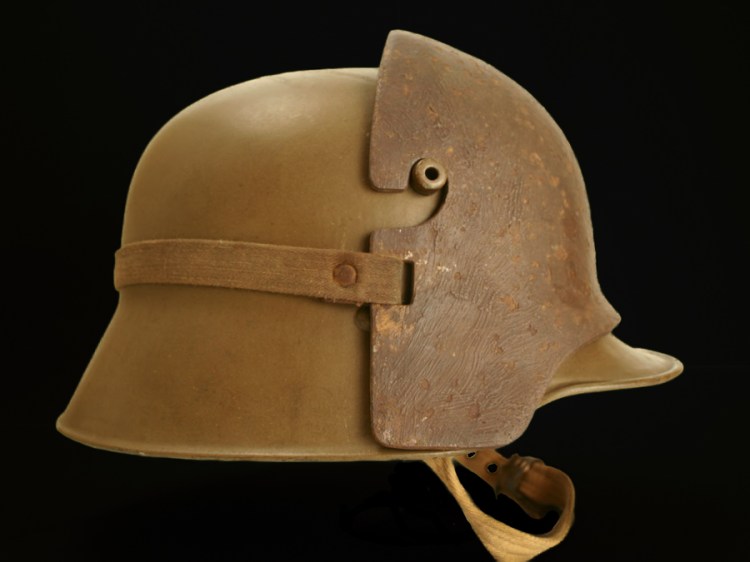
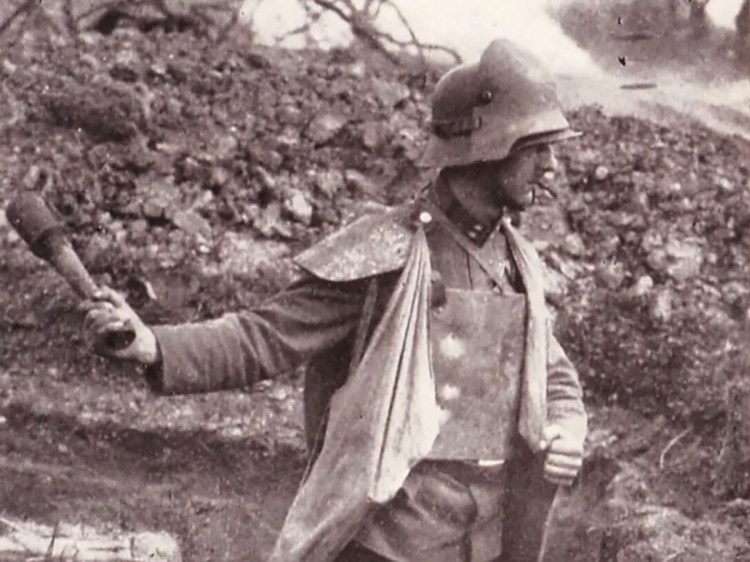
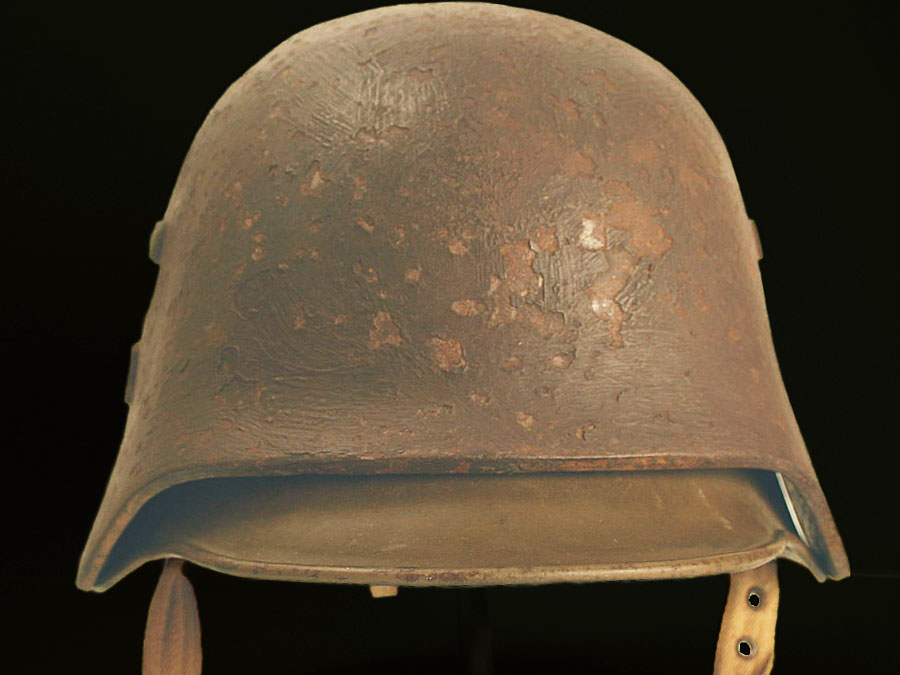
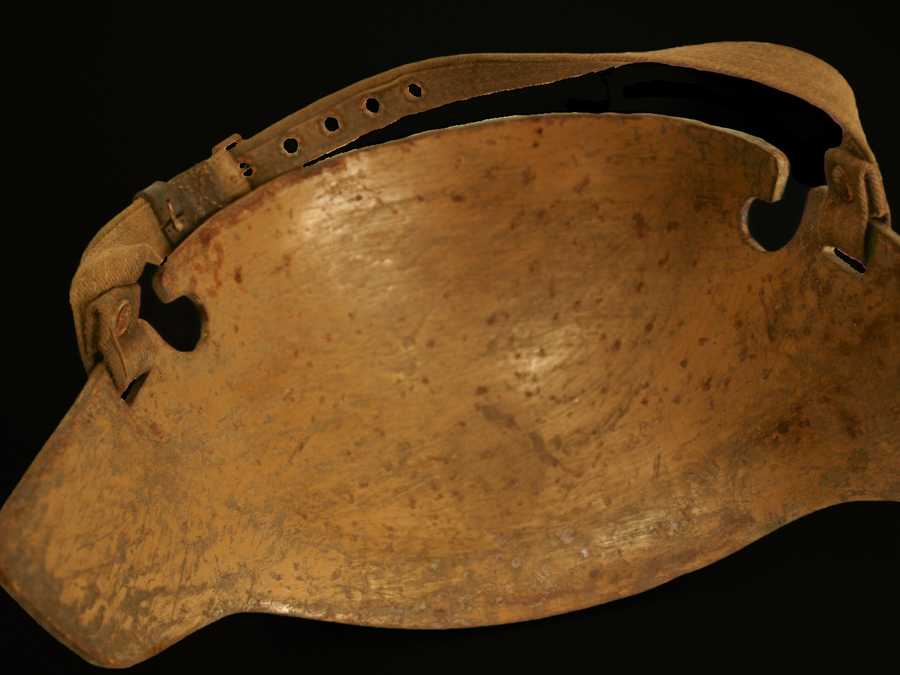
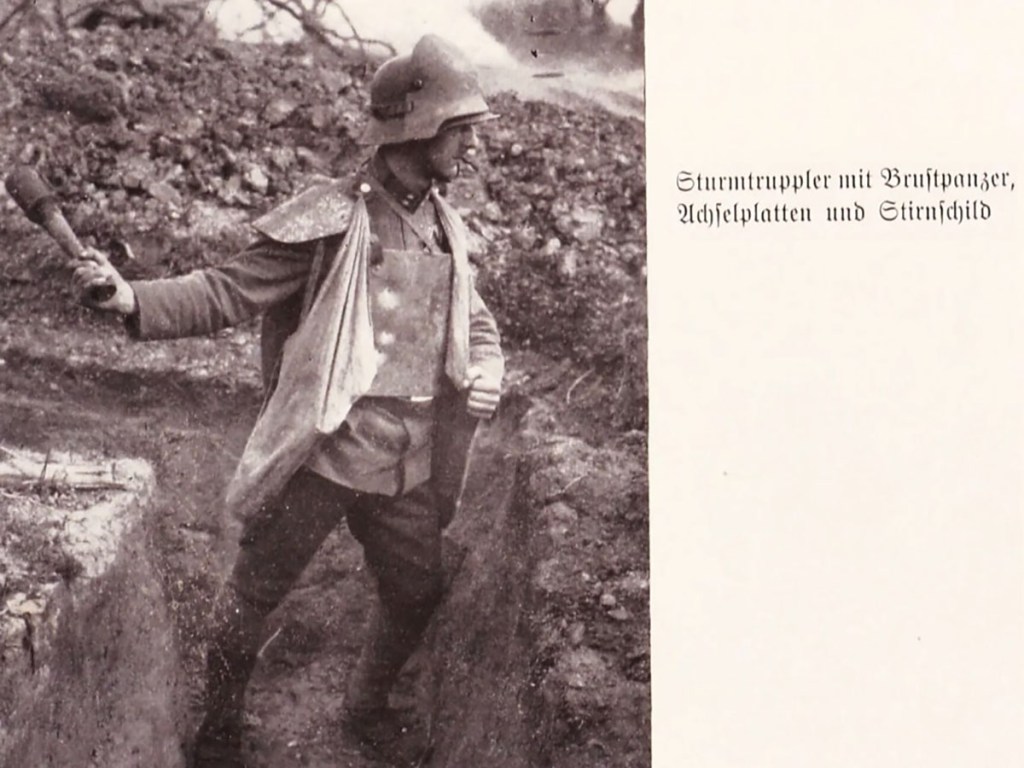
General Information: Like the German army, the Austro-Hungarian army issued protective shields, or Stirnpanzers, to be used on steel helmets as extra protection for soldiers with particularly hazardous duties such as snipers or sentries (see also: Stirnpanzer). Four companies manufactured Austro-Hungarian Stirnpanzers[1] [2]:
- Phönix Stahlwerke Johan Bleckmann of Mürzzuschlag
- Gebrüder Böhler & Co. of Kapfenberg
- Poldihütte of Kladno
- Manfred Weiss of Csepel near Budapest
The Austro-Hungarian Stirnpanzers were basically identical to their German counterparts, but there were a few differences:
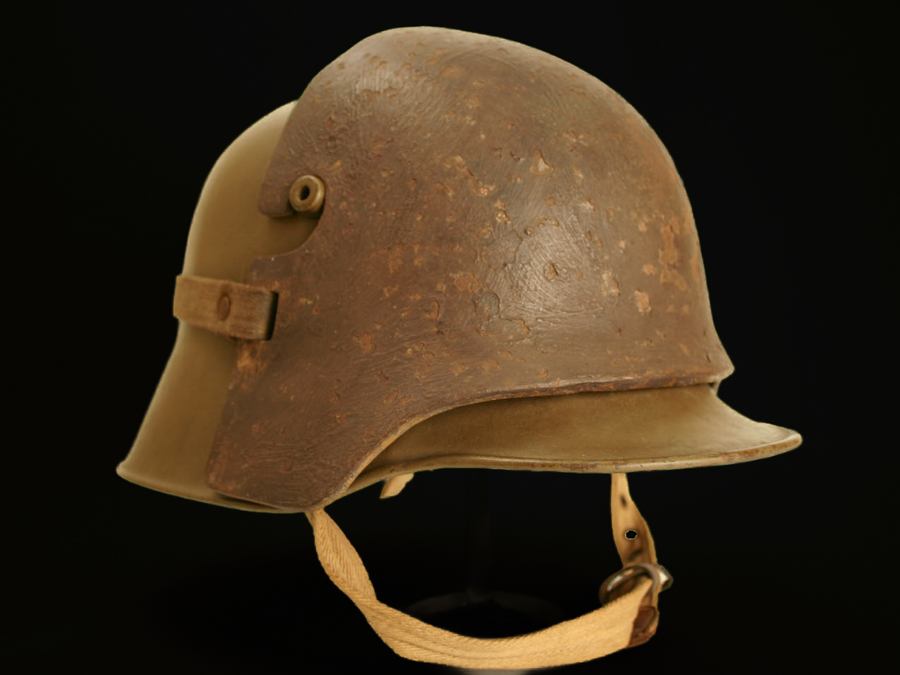
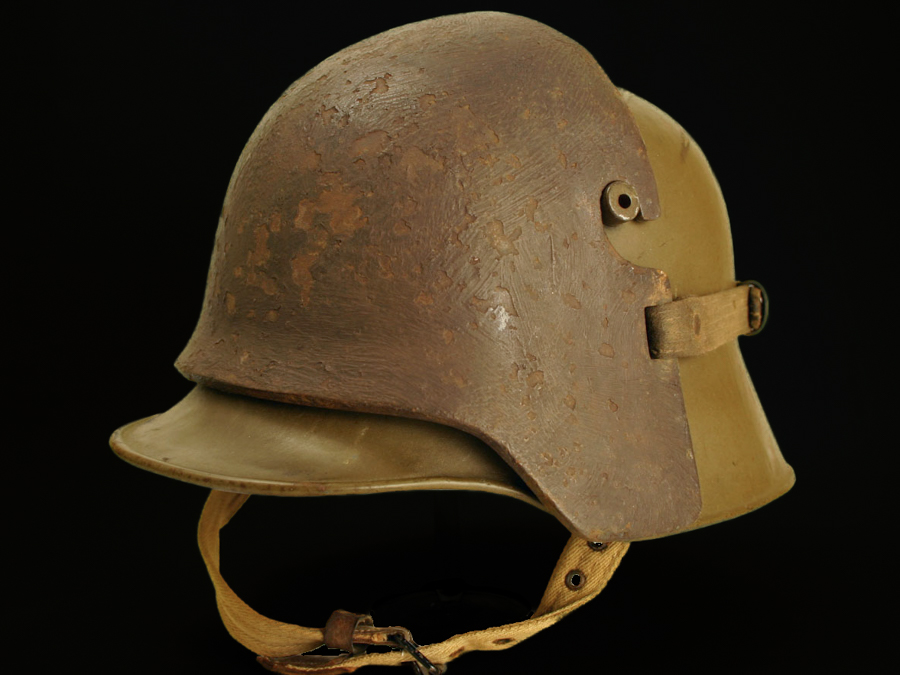
- KUK Stirnpanzers were painted brown rather than field grey.
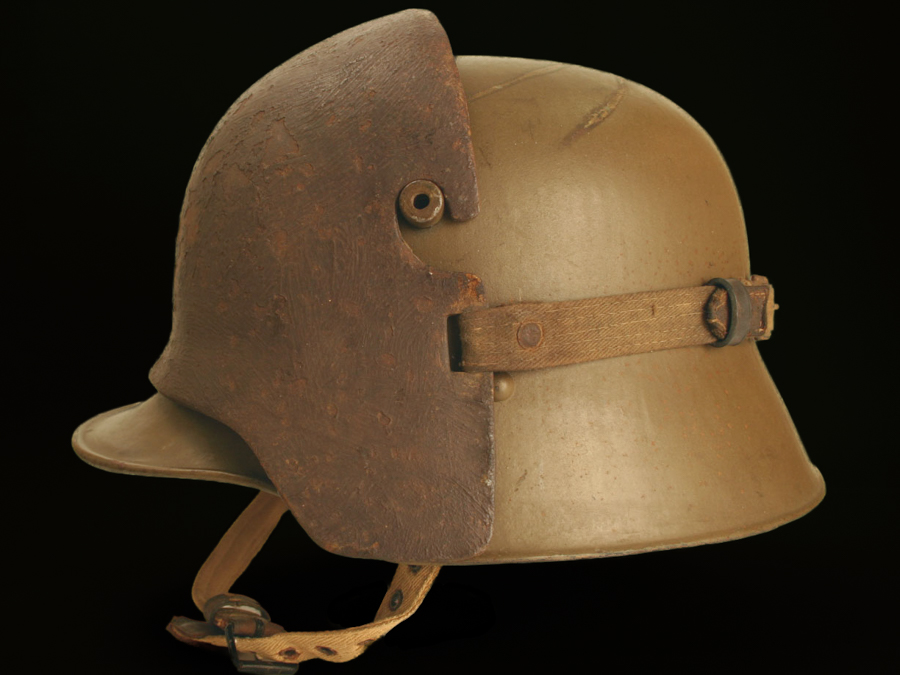
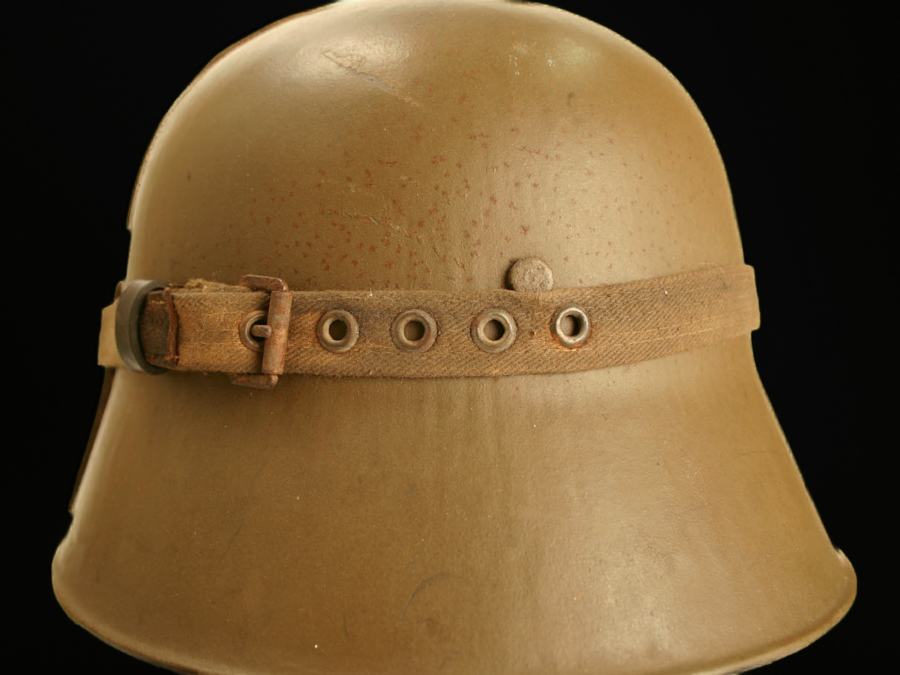
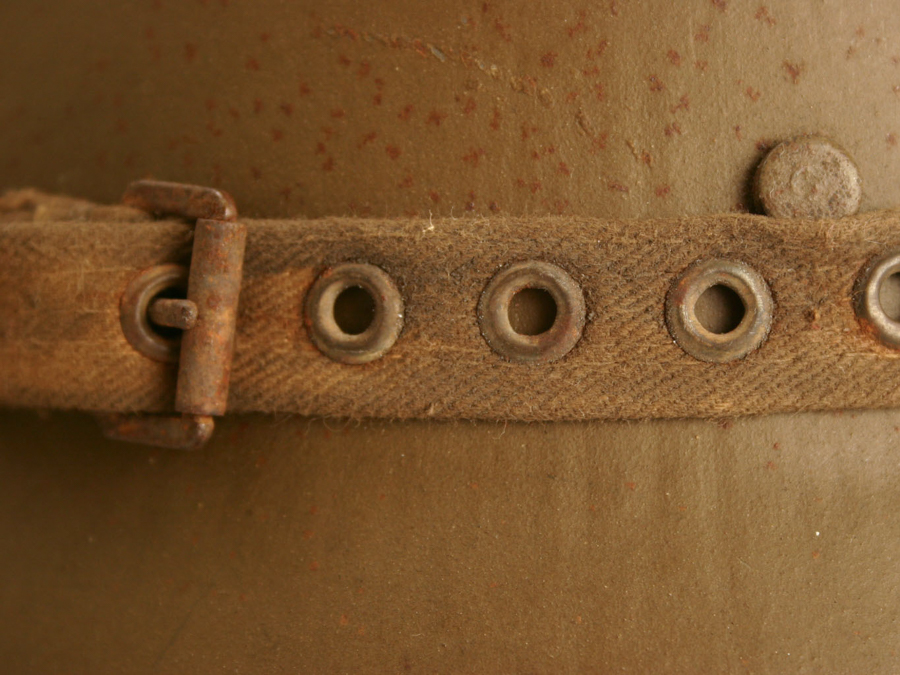
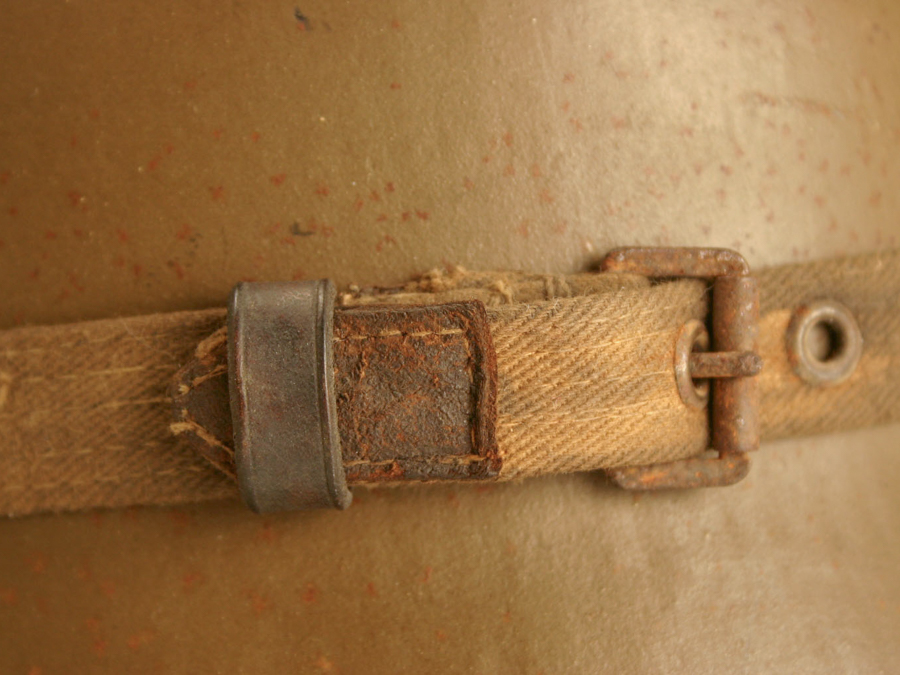
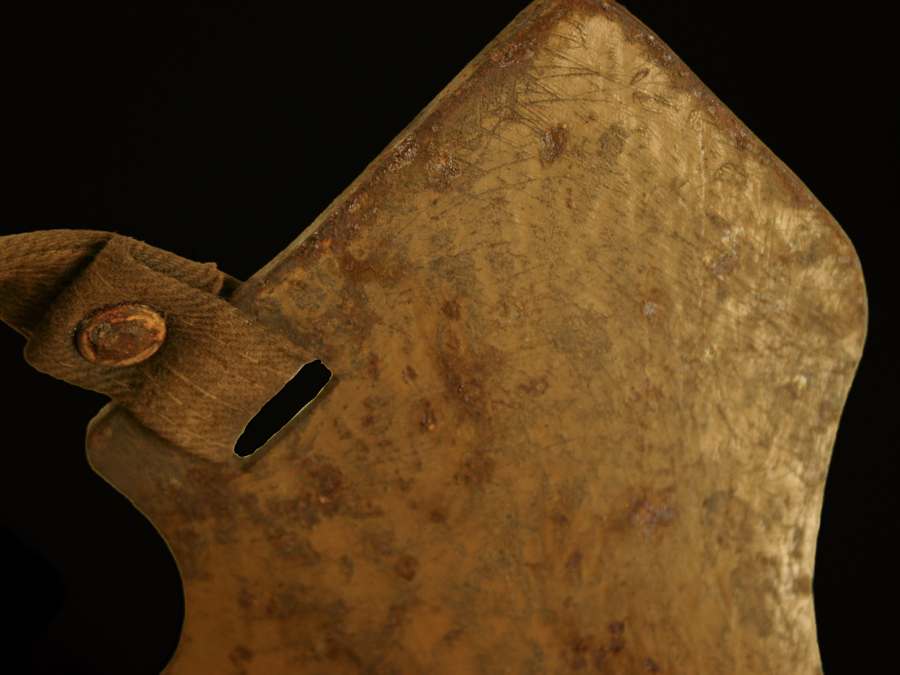
- KUK Stirnpanzers had textile straps rather than leather straps.
- KUK Stirnpanzers lacked punched stamps with factory code and lot numbers. Instead they had ink stamps with manufacturers’ information. On surviving examples the ink stamps are usually worn off.
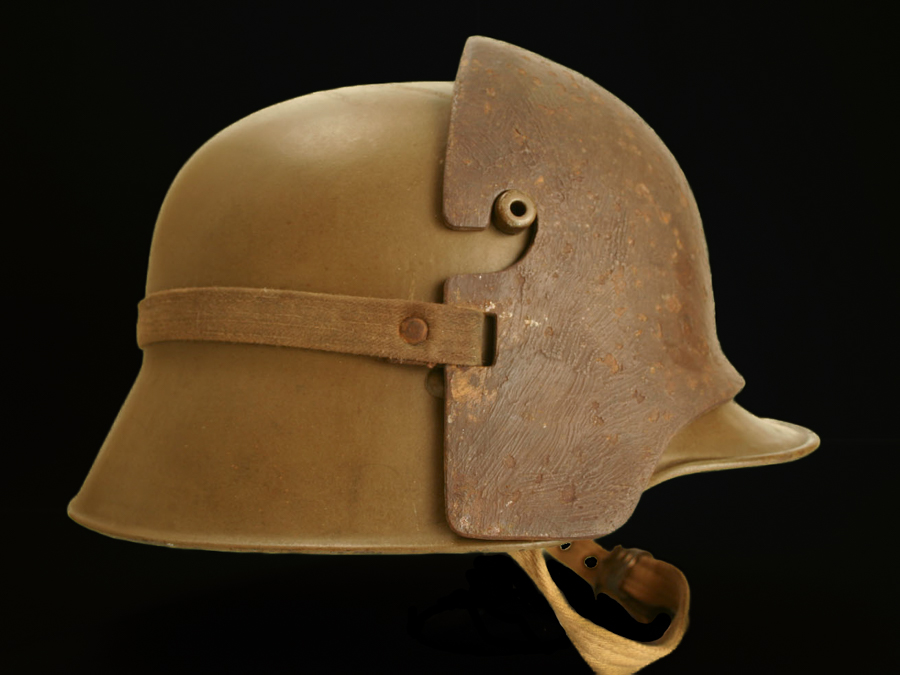
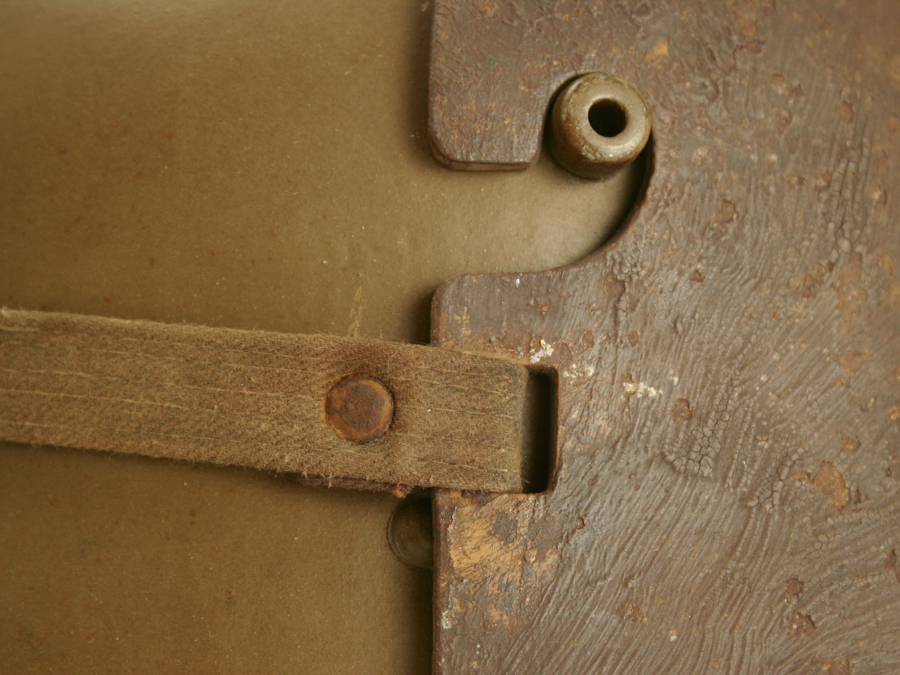
- The slots for attaching the straps are slightly longer for KUK Stirnpanzers compared to German models (almost 22mm vs almost 18mm).[3] The difference was due to the need to accommodate the slightly wider straps used by the Austro-Hungarians.
When the manufacturer’s ink stamps are worn off, which is normally the case, there are features that are distinctive for some of the Stirnpanzer makers. The Phönix company used a unique yellowish field brown type paint. The Böhler company used rivets rather than stitches to attach their straps. Weiss attached pieces of leather trim to the back of the straps at the ends to protect the textiles from wear at the point of attachment to the metal shield. The Böhler Stirnpanzers were thicker and heavier than the Phönix and Weiss Stirnpanzers.[4][5]Information about Stirnpanzers made by Poldihütte was lacking at the time of writing this post.
In addition to the German model Stirnpanzers, the Phönix company also made its own unique shield. This is sometimes referred to in collector circles as the “linear model.” It was basically a trapazoid that curved around the front to the helmet and attached by means of a circular hole on the left side that fit over the ventilation lug and an oval hole on the right side that slid over the ventilation lug on the other side of the helmet. The straps were the same as used on conventional models of Stirnpanzers. The domestic model Berndorfer helmets (see: Austro-Hungarian Berndorfer) had their own unique protective shields.
Displayed Example: I purchased this helmet in 2009 from Der Rittmeister, a prominent dealer of Imperial German relics. I sold it shortly after which is something I have since regretted as these items are hard to find. The manufacturer’s ink stamp is long gone, but we know it was a Böhler made piece because of the riveted straps. The back of the piece has its original factory paint while the front was repainted by hand. The aging on the hand painted front is natural and the repainting appears to be something done in the period.
Collector Notes: Approximately 5% of the Austro-Hungarian helmets were to be equipped with Stirnpanzers. The chronic shortage of nickel, an essential ingredient for both Stirnpanzers and helmets, however, resulted in the need to return to foundries already manufactured Stirnpanzers to make helmets.[6] The production target for German Stirnpanzers was the same: 5%. Because many more German helmets were made in the First World War than Austro-Hungarian helmets, the actual number of Stirnpanzers to be made by Austro-Hungary was significantly smaller than it was for Germany. That together with the fact that many of the Austro-Hungarian Stirnpanzers were melted down means that surviving examples Austro-Hungarian models are scarcer than their German equivalents.
* Citation pending
[1] Osio, Ari. WW1 AUSTRO-HUNGARIAN HELMETS. Facebook. March 9. 2018. https://www.facebook.com/groups/867675893394241. Accessed March 17, 2026
[2] Cocianni, Pierpaolo. 2025. pp.295
[3] Somers, Johan. 2023. pp295
[4] Böhler’s were 7 mm thick and weighed 2,627 grams total with chinstraps. Weiss’ were 2,287 grams total and 5.8 mm thick. Phönix’s were 2270 grams total.
[5] Cocianni, Pierpaolo. 2025. pp.295-297
[6] Cocianni, Pierpaolo. 2025. pp.293
 Steel Helmets of the World Wars