General Information: After the First World War, the Republic of Austria equipped the Polizei of Vienna and the gendarmerie in other parts of the country with German style steel helmets (see: Austrian Gendarme). The Treaty of Saint-Germain-en-Laye (1919) prohibited the use of steel helmets for use by forces other than the Austrian federal army.[1] Despite this limitation, due to armed insurrectionist movements, the need arose for the gendarmerie and police to be equipped with better protection and the treaty limitation on steel helmets was overlooked.
These helmets came from a variety of sources.[2] In the early 1930s, the Austrian army lent helmets to the gendarmerie and police.[3] In mid-1934, 1,100 helmets confiscated in the Heimwehr Putsch of September 13, 1931 were distributed to gendarmerie units.[4] Eventually the police awarded two Viennese trading companies, Viktor Becherf and Michael Sajowitz, with contracts to supply helmets.[5] It is not clear where exactly these helmets and their components came from and where they were assembled, but 450 helmets destined for gendarme use from Sajowitz came from “demobilization stocks” (“Sachdemobilisierung”)[6] which suggests that some were left over First World War supplies. A May 1934 letter from the Sajowitz company describes the helmets in one procurement as “almost new,”[7] again suggesting that these were from old and possibly wartime stocks. Many of the helmets, perhaps most, from these two early contracts came from the Brüder Gottlieb und Brauchbar company of Brünn. This company supplied helmets to the Austro-Hungarian army during the First World War. Following the demise of the Austro-Hungarian empire, the city of Brünn became part of Czechoslovakia and was renamed “Brno.” After the helmet contracts were awarded, the company Emailwerk und Metallwarenfabrik wrote a letter of complaint to the contracting authority.[8] According to the complaint, the steel that Brüder Gottlieb und Brauchbar used for these helmets of “foreign origin” were of inferior quality and lacked the antiballistic qualities of the chromium-nickel steel helmets that they had produced for the Austro-Hungarian army.[9] In mid-1934 two factories, Emailwerk und Metallwarenfabrik and Berndorfer Metallwaren-Fabrik made offers to produce domestically made helmets for the police and gendarmerie using high quality chromium-nickel steel. These offers were accepted and subsequent production was awarded to these two companies.[10]
The total number of gendarme and police helmets produced is unknown, but at the time of the Anschluss the combined police/gendarmerie had a force of 58,000 men, all of whom theoretically should have had helmets.[11] The total number of helmets used by the Austrian Gendarmerie was small. A post-Anschluss report by the new Nazi police authority dated November 11, 1938, reported a total gendarmerie strength of 6,654 officers and men and an inventory of 7,142 helmets.[12]
Often the surviving examples of these helmets have the Berndorfer bear logo, so we know that Berndorfer manufactured many of these pieces. Frequently, however, the helmets lack manufacturer markings, so it is unclear which company made these. The Emailwerk und Metallwarenfabrik company manufactured some, but there may have been other sources. Emailwerk und Metallwarenfabrik helmets, at least some, have a logo with the word “Steg” in a circle (see footnote 9).
The gendarmeriehelmets were painted iron grey (“Eisengrau”) and had two holes to accommodate attachment prongs for a brass flaming grenade badge or Korpsabzeichen. The Polizei helmets were painted police green (“PolizeiGrün”) and lacked holes for the badges.
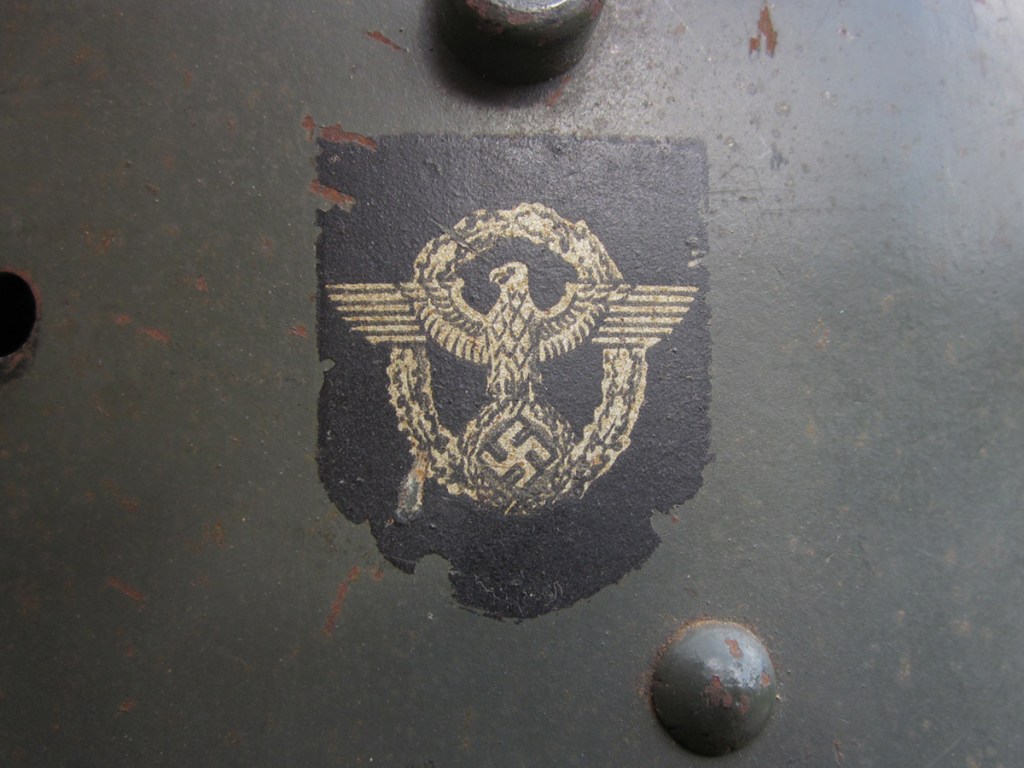
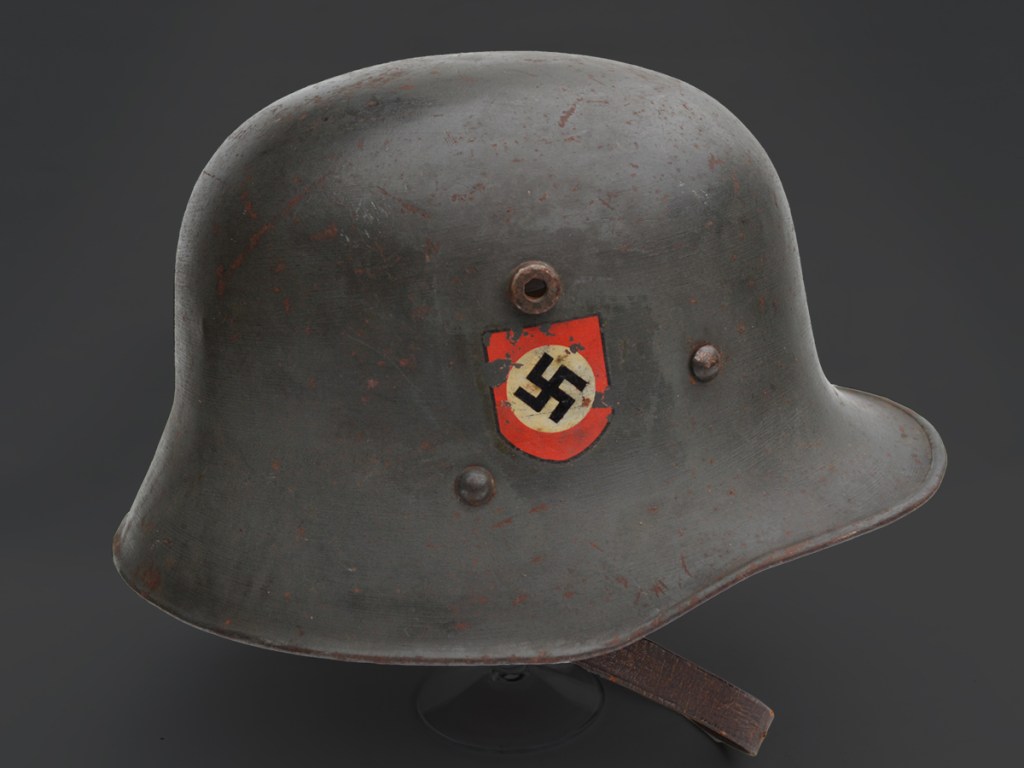
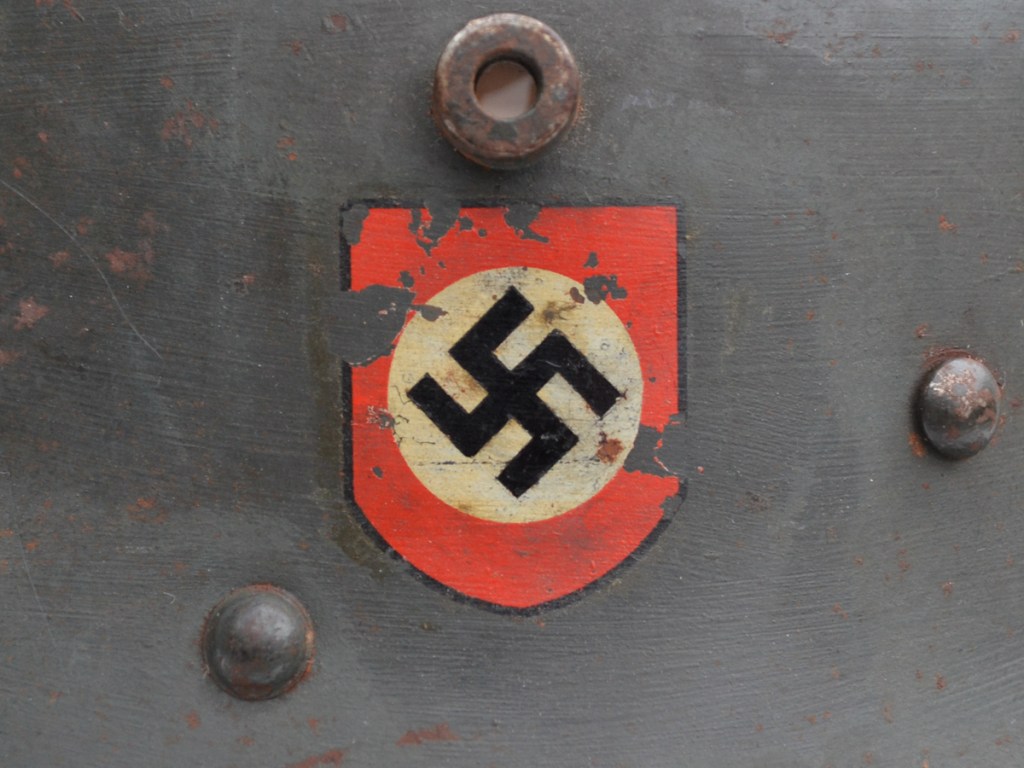
Following the Anschluss, Nazis incorporated the Austrian gendarmerie and police into regular German police units (Ordnungspolizei). This required a change in uniform including the helmets. The Korpsabzeichen were removed and Nazi police double decals were applied to sides of the helmets. Gendarmerie helmets converted in this manner had holes on or near the police decal. Nazi converted Polizei lacked these holes. The original liners and Model 1925 chinstraps were typically left intact and not replaced, although some received the German M31 liners and/or chinstraps.
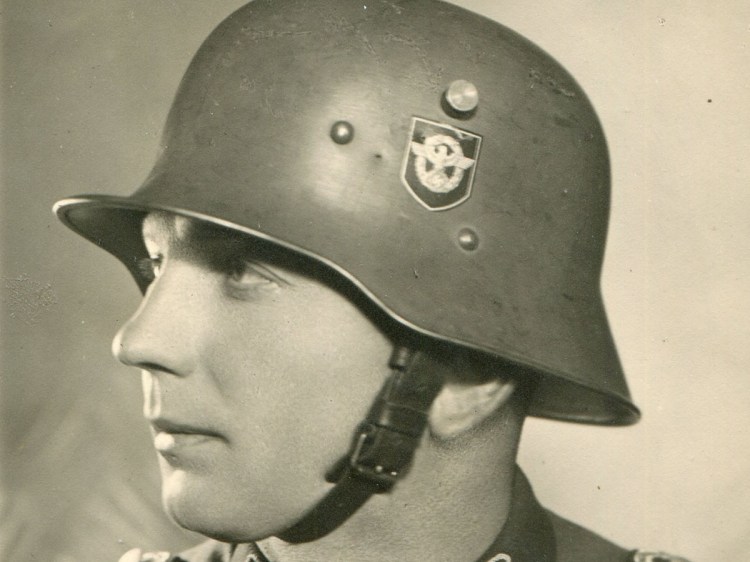
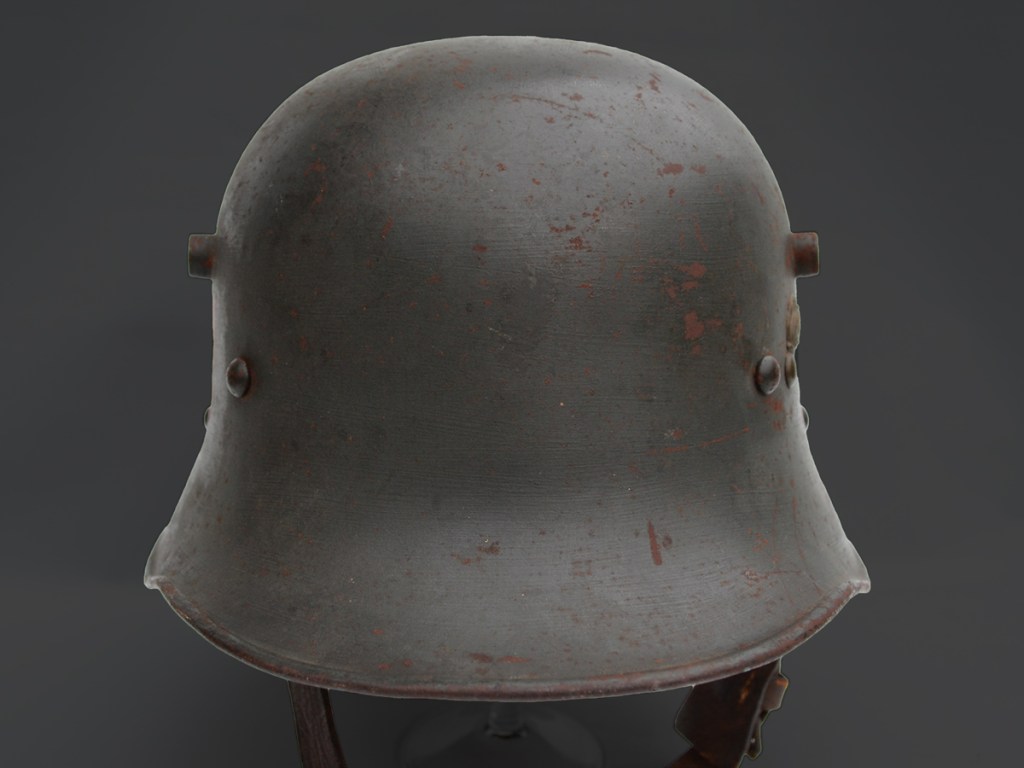
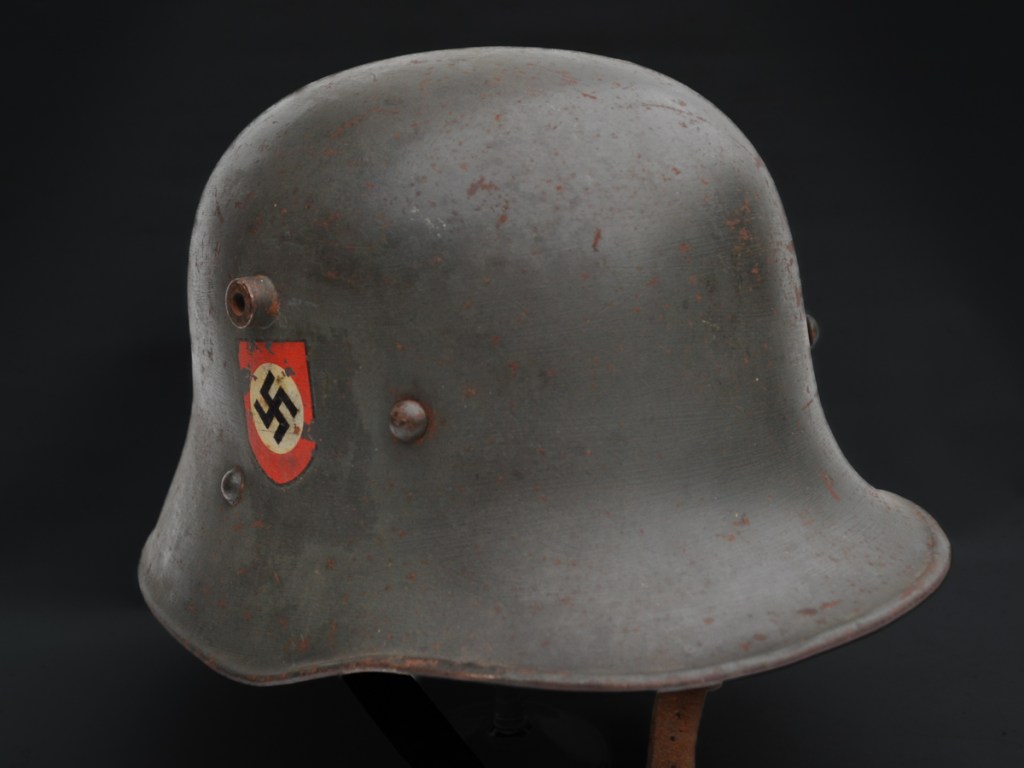
Displayed Examples: The helmet in the period photo above is classic example of the type. It was an Austrian gendarme helmet fitted with holes on the left side to accommodate prongs for a Korpsabzeichen. After the Nazi annexation of Austria, the Korpsabzeichen was removed and German police decals were applied. It is interesting to note that the helmet is equipped with a brass screw called a feldzeichenschraube attached to the ventilation lug. The purpose of this device was to secure a feldzeichen (field badge) made of three artificial white oak leaves which were worn during parades and special ceremonies (see Austrian M17). The chinstrap is an Austrian Model 1925.
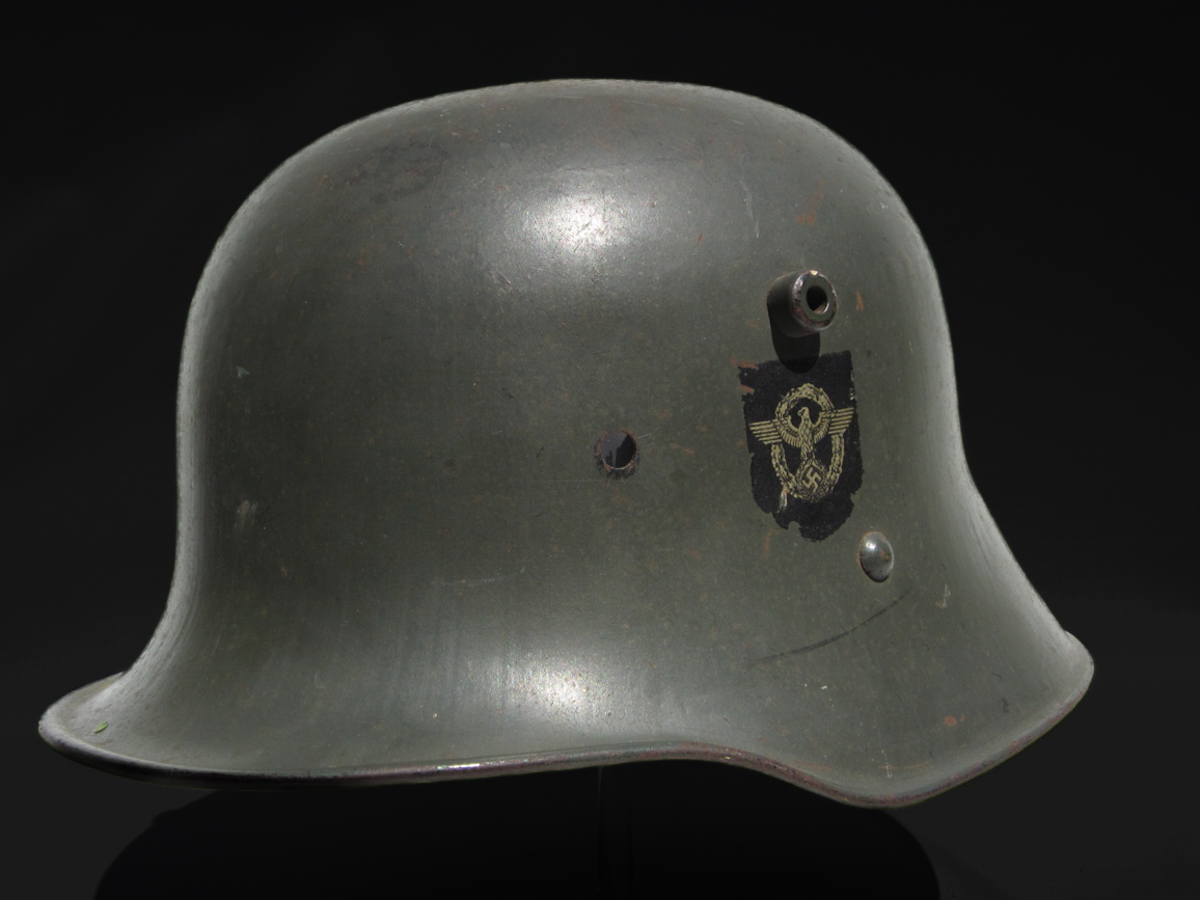
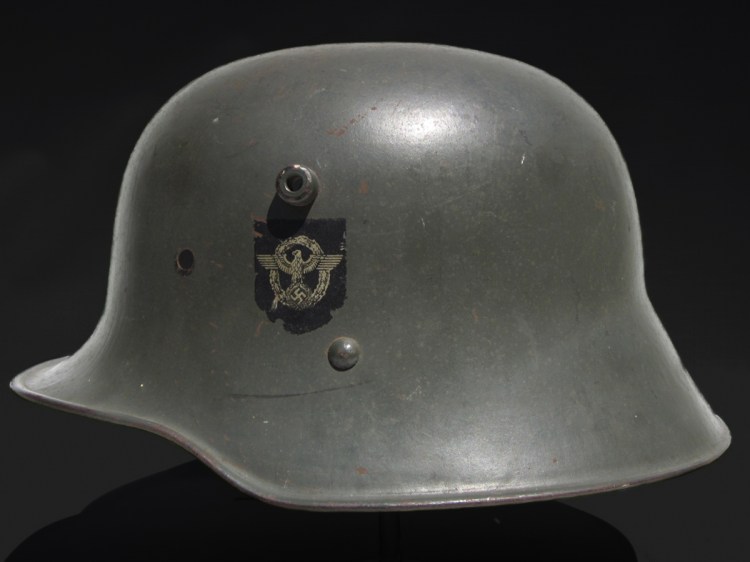
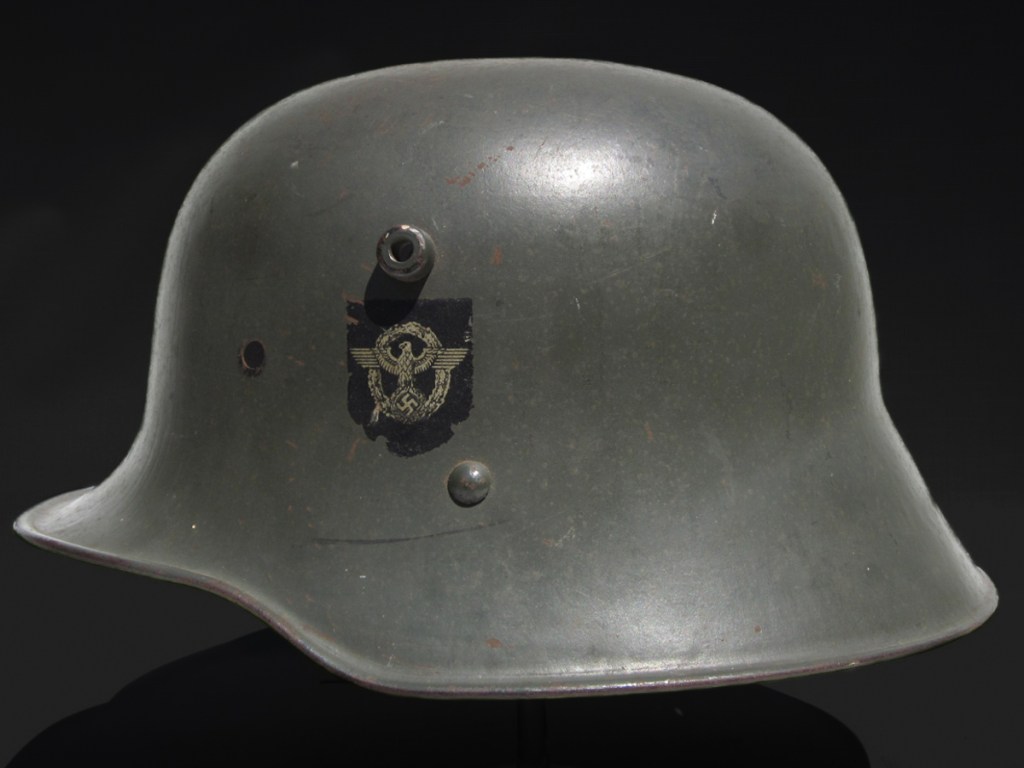
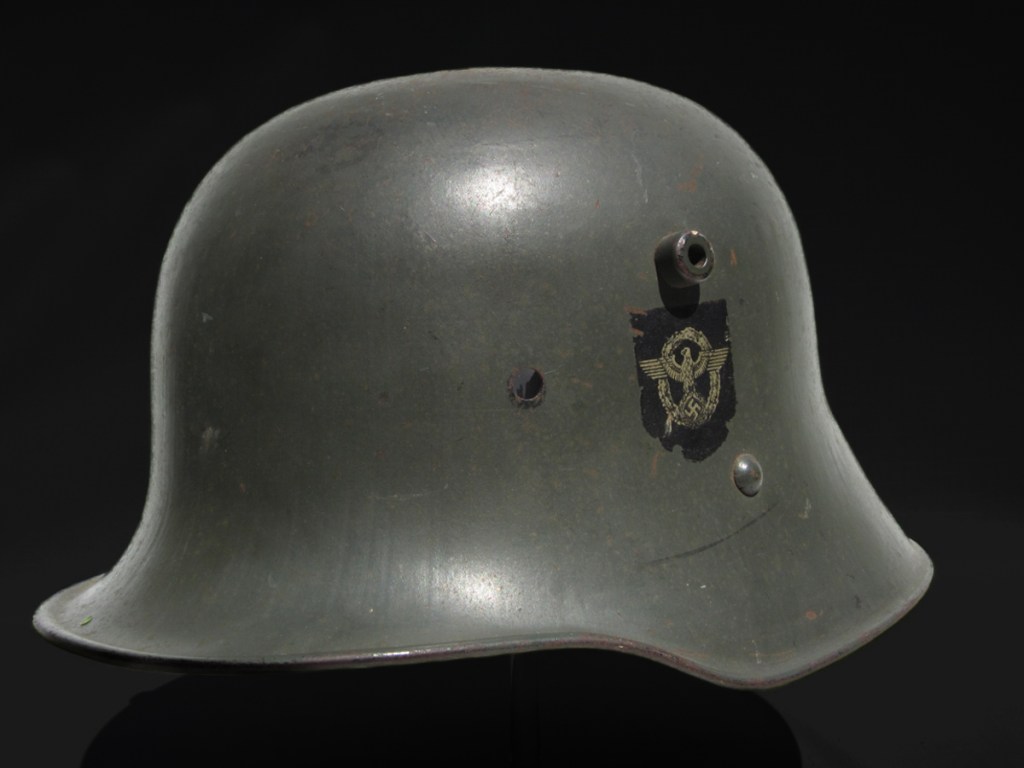
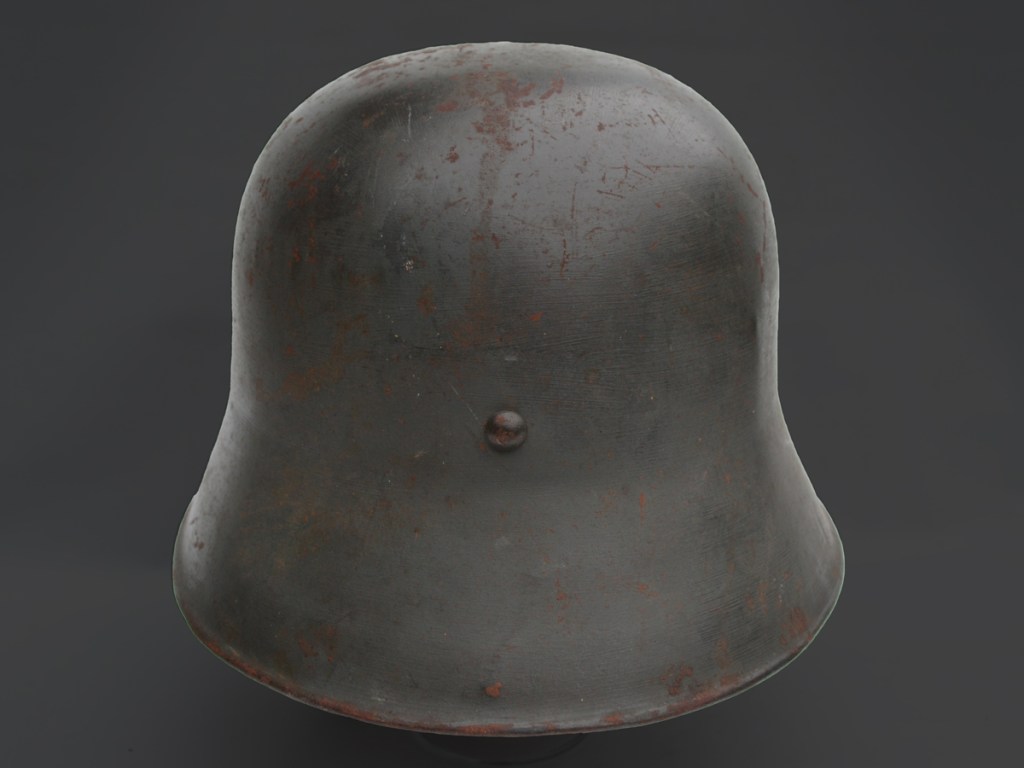
The helmet in the first set of gallery photographs below is an out-of-the-woodwork piece that I owned briefly in 2012. Unlike Austro-Hungarian helmets, this one has no size or manufacturer markings, nor lot number. Helmets configured in this manner were made post-WWI in Austria or possibly Czechoslovakia, but, as explained above, it is not clear which company or companies made these unmarked helmets. Because it is a police helmet, it most likely came from a pre-Anschluss Austrian Polizei procurement rather than from Austrian army stocks. The lack of a pair of holes on the left side of the helmet and the apparently original factory green color mark this as likely being a converted Viennese Polizei helmet rather than a former gendarme piece.
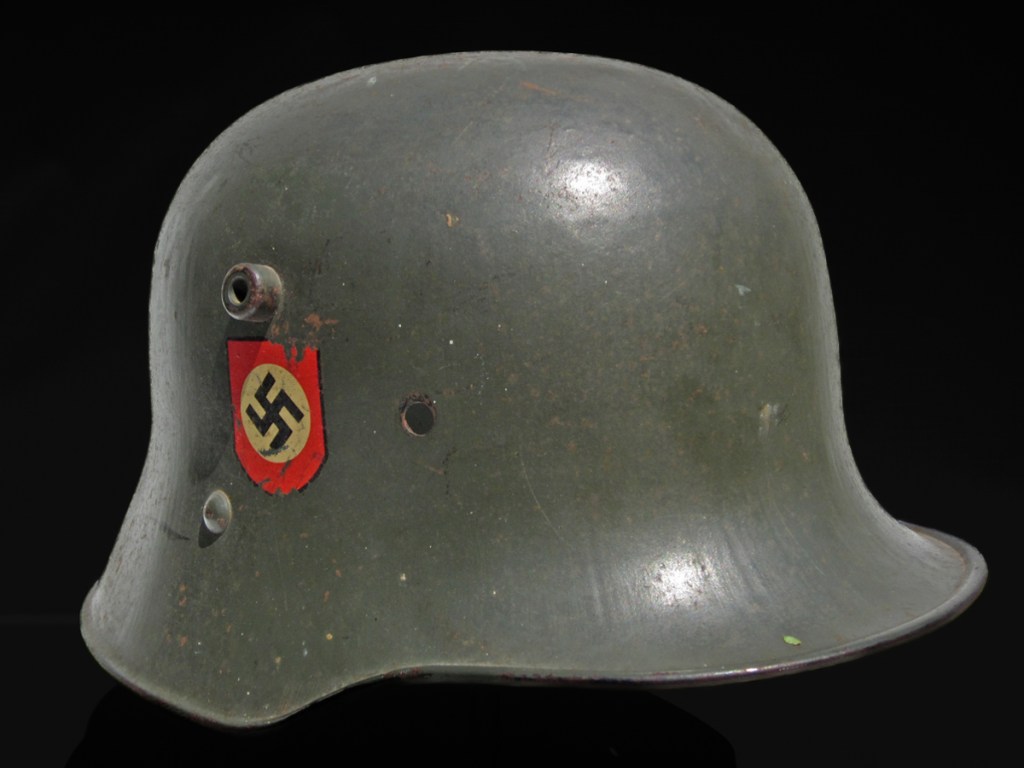
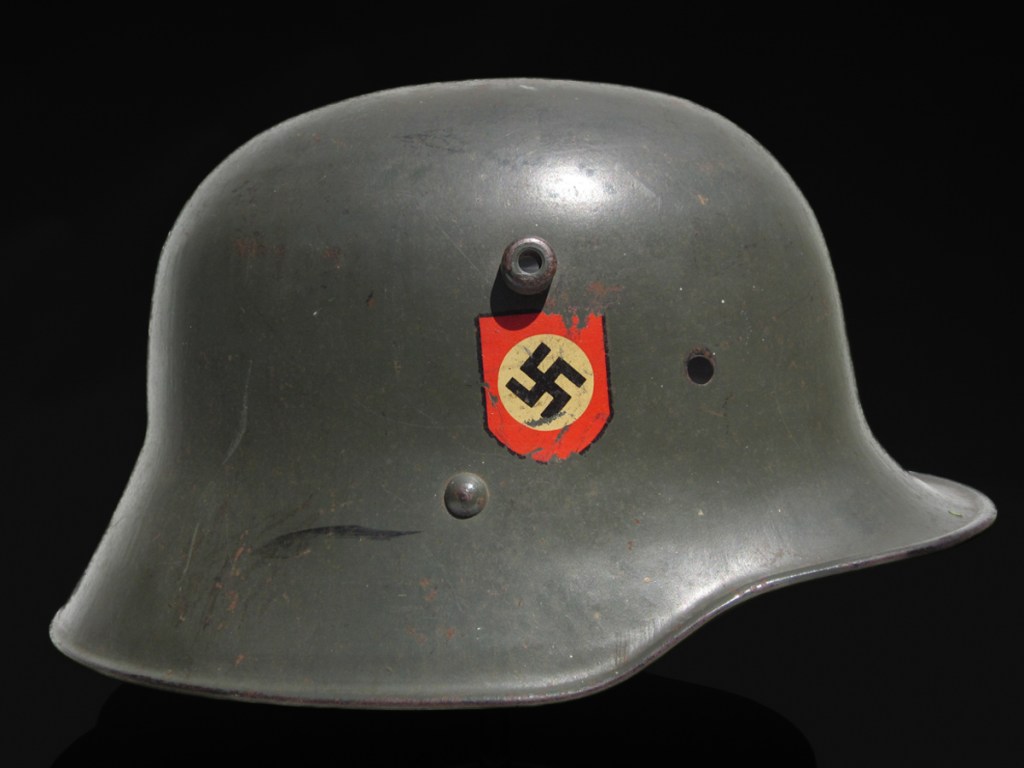
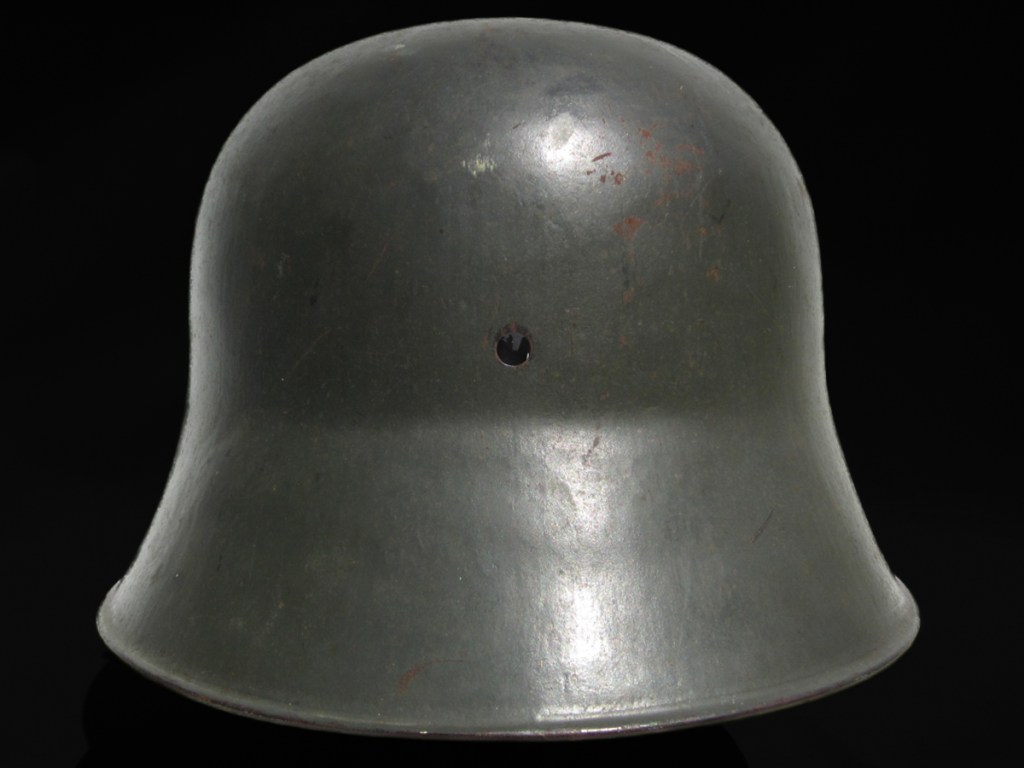
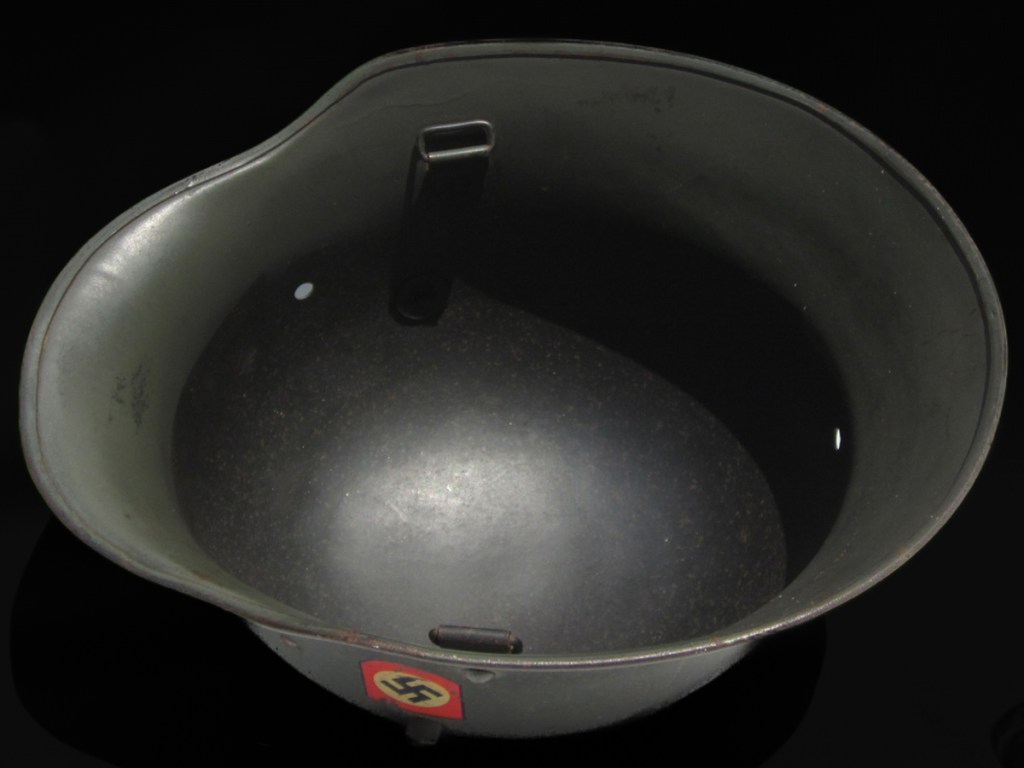
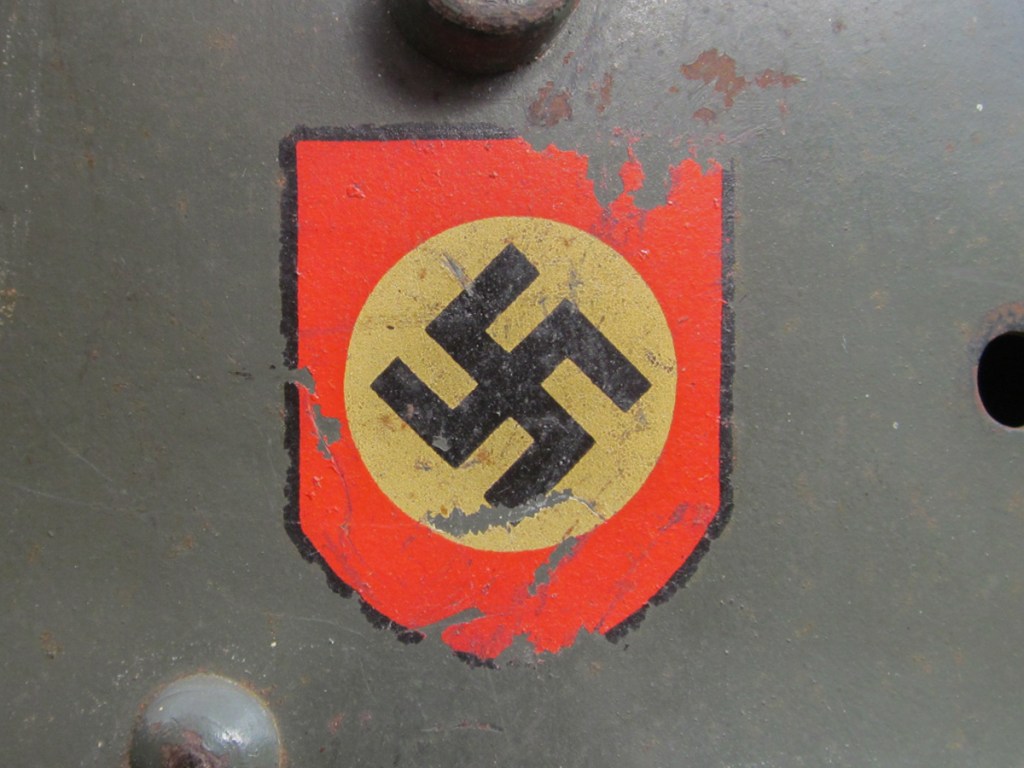
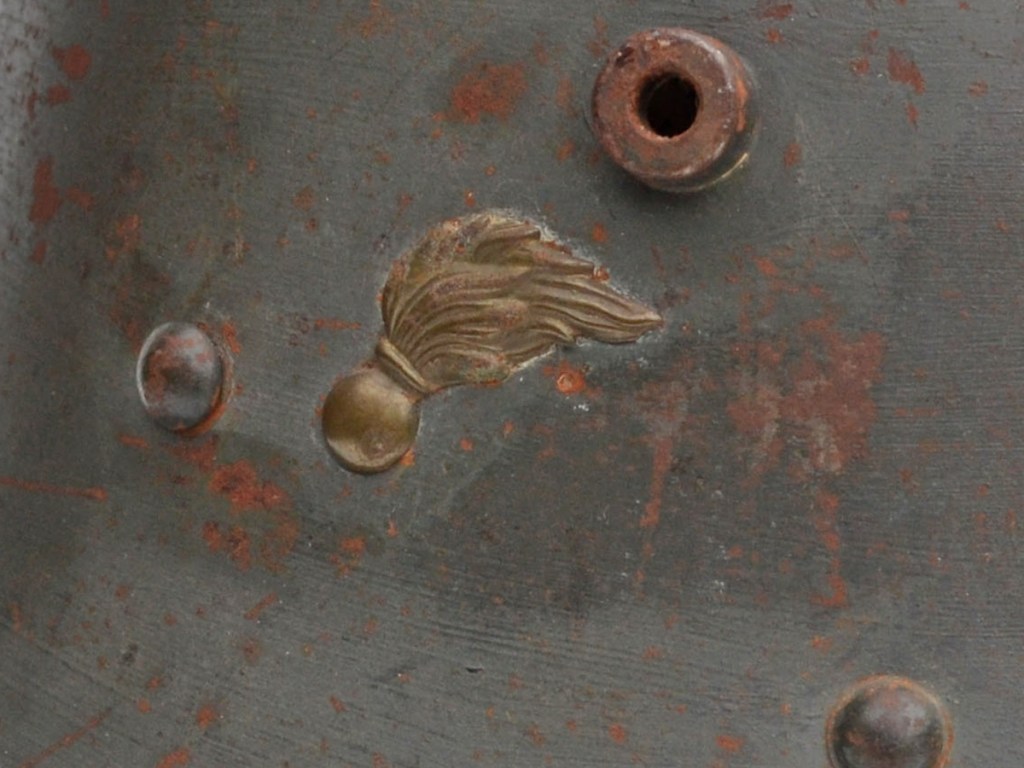
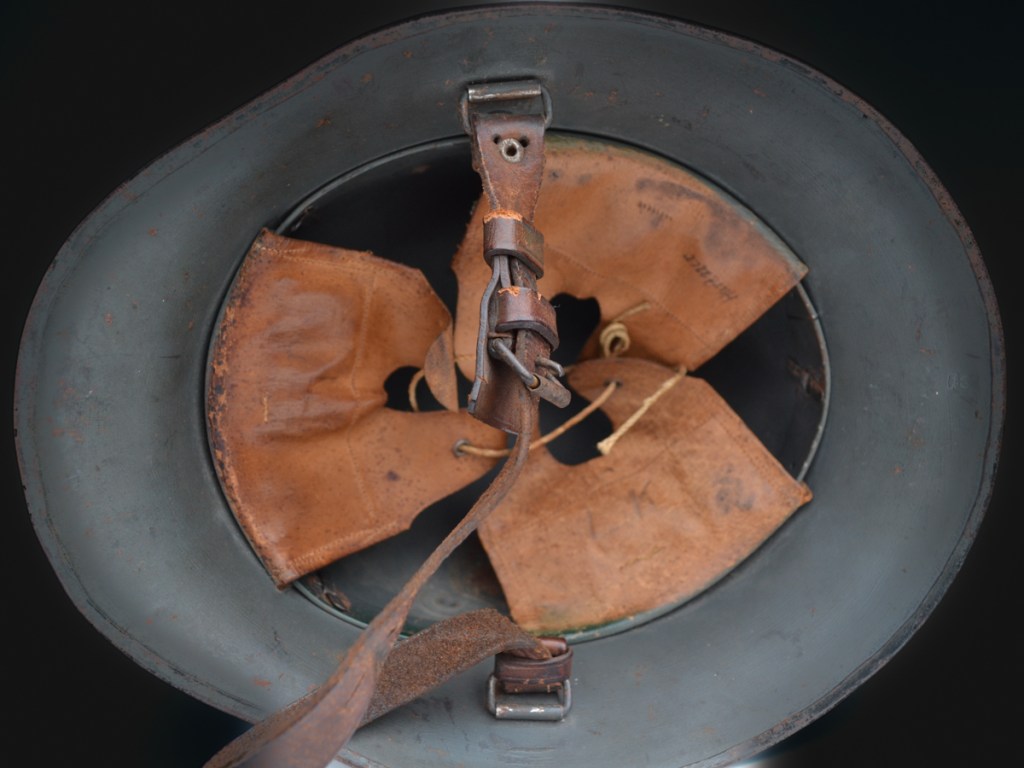
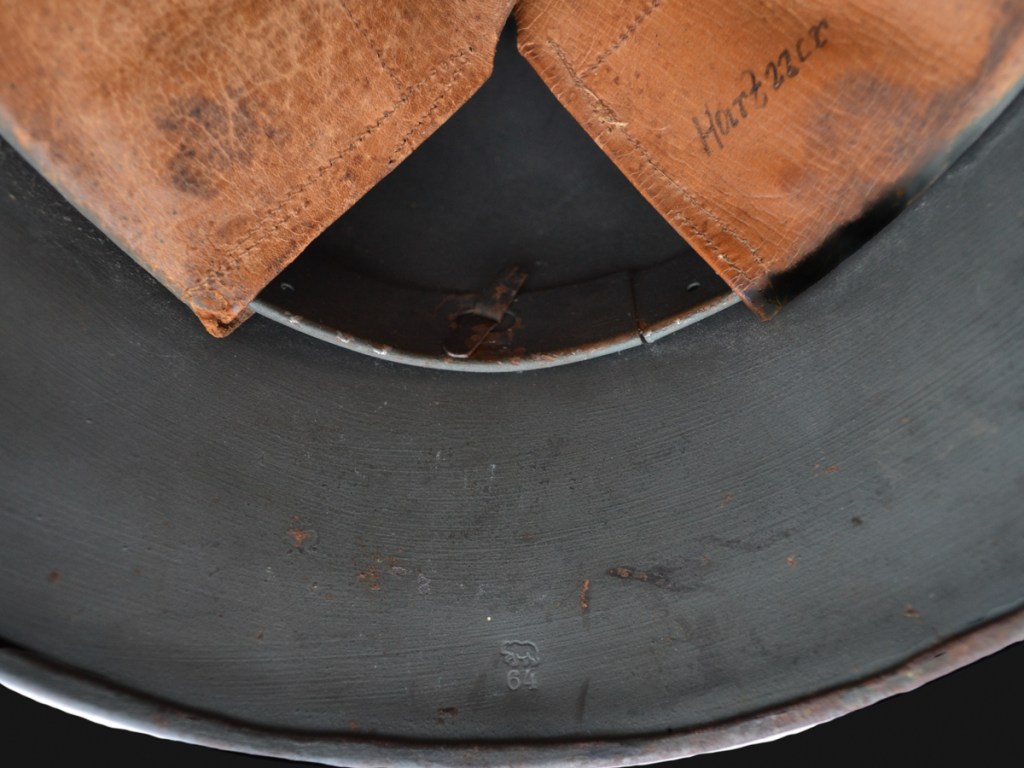
A WWII US GI brought back the helmet in the second set of gallery photos as a souvenir. I bought it from his nephew in 2012. In most ways it is a textbook example of its type. It is grey-painted Berndorfer factory made piece with the Berndorfer logo and a stamp to indicate the size, 64. The liner and M25 chinstrap are the type usually found on these helmets. It has a post-Anschluss Nazi state decal on the right side. What’s unusual about this helmet is that rather than removing the Korpsabzeichen and replacing it with a police decal, the Korpsabzeichen was retained and there is no police decal. It is the only reissued Austrian gendarme helmet that I have seen configured in this manner.
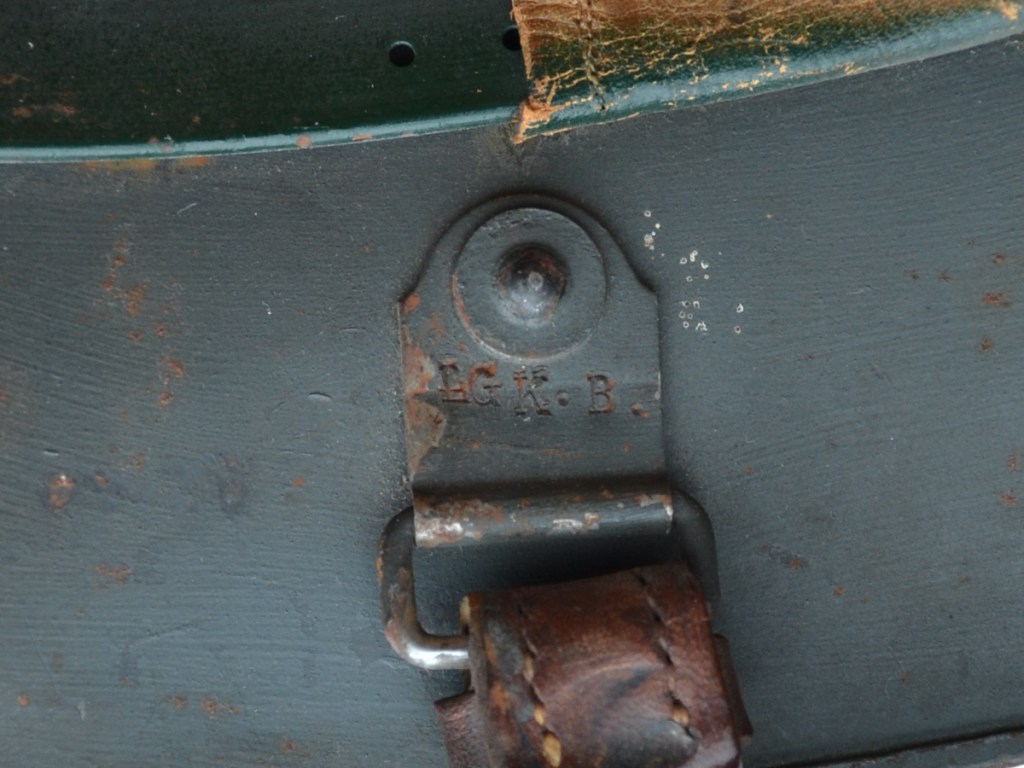
The chinstrap loop is stamped “LGK.B.” This would have been an abbreviation for Landesgendarmeriekommando Bregenz, or Landesgendarmeriekommando Burgenland which were two of eight regional gendarme units in Austria. The other chinstrap loop is marked “305,” which would be a unique production number of the individual helmet or possibly an arsenal inventory number.
The Berndorfer stamp is on the rear skirt area of the helmet just above the helmet size stamp: 64. The size 64 helmets of WWI vintage had stepped lugs for the stirnpanzer (see: Stirnpanzer). The lugs without steps started at size 66. This one is a size 64 with non-stepped lugs, so it is different in that way from the First World War helmets.
The “L.K.” written on one of the liner pads would have stood for “Landesgendarmeriekommando” I presume. (Wouldn’t this have been obvious?). The original owner’s name, “Hartzner” is neatly written on the other liner pad.
Collector Notes: These interesting and historical helmets are rare and command relatively high prices, particularly in their Nazi era configurations. They would be difficult to fake, so that is one consolation for collectors. Occasionally, an original, non-reissued Austrian Polizei or gendarme surfaces with fake Nazi decals, but these are typically older, easy to detect forgeries.
* Photo courtesy Peter Whamond, The Collector’s Guild
[1] Baer, L. 2006. pp.65
[2] Baer, L. 2006. pp.123
[3] Baer, L. 2006. pp.66
[4] Baer, L. 2006. pp.67
[5] Baer, L. 2006. pp.128
[6] Baer, L. 2006. pp.72
[7] Baer, L. 2006. pp.112
[8] Baer, L. 2006. pp.124
[9] Emailwerk und Metalllwarenfabrik der priv. öster.-ungar. Staatsseisbahngesellschaft (Steg) bought the Warchalwoski, Eisser & Co of Vienna in 1925 and subsequently produced helmets bearing the logo “Steg 66” with “Steg” in a circle.
[10] Baer, L. 2006. pp.129
[11] Baer, L. 2006. pp.132
[12] Baer, L. 2006 pp.86

 Steel Helmets of the World Wars