
updated 10/9/2025
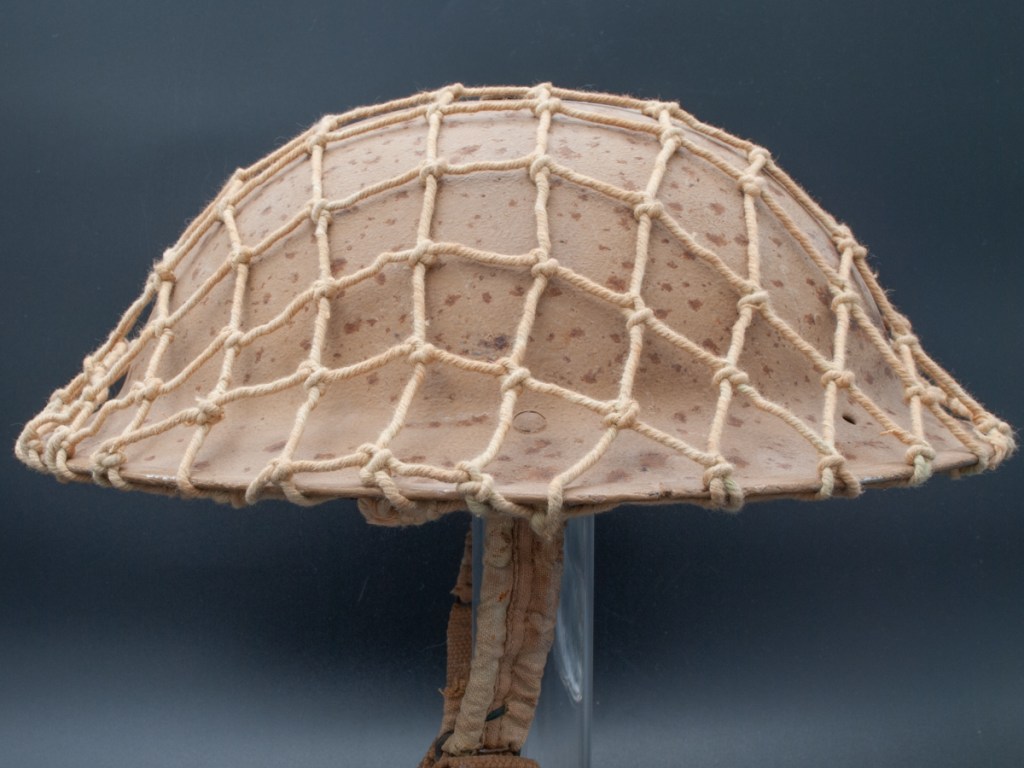
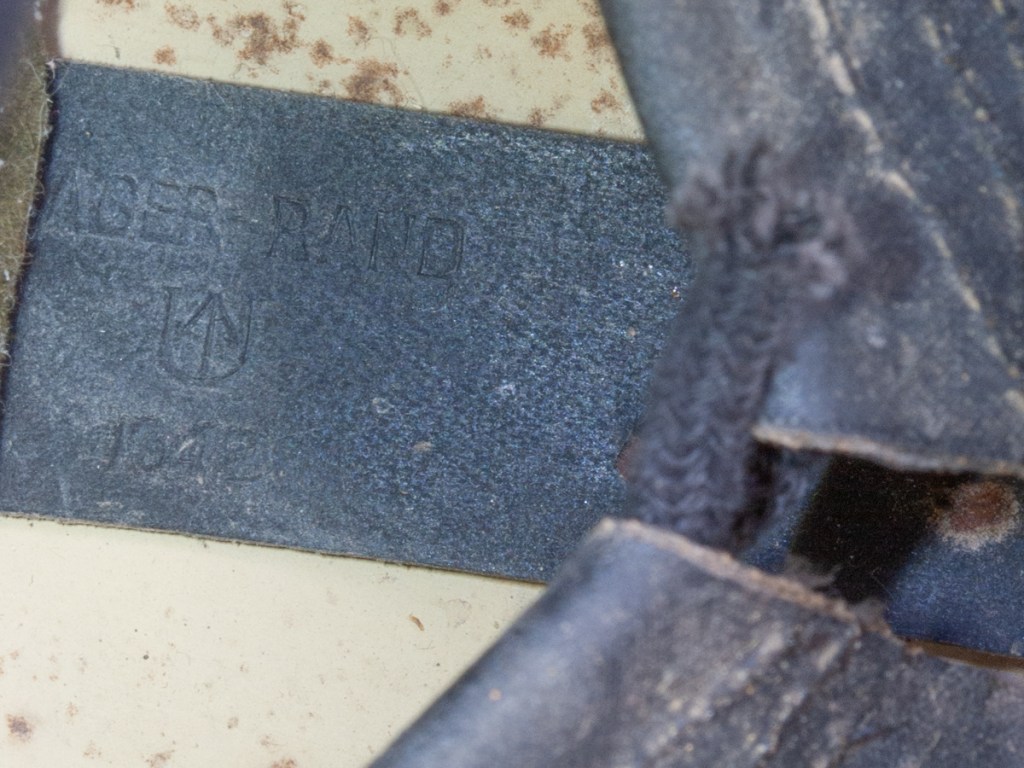
General Information: The South African Mark II was basically a clone of the British MKII. It can be readily distinguished from its British cousin by the three holes punched into the back rim. The purpose of the holes was to accommodate a neck flap, but there is little period photographic evidence of the MKIIs being used with this accessory. The Transvaal Steel Pressing Syndicate (TSP) produced 1.5 million of these helmets. The liner bands are marked Jager-Rand along with the year of manufacture and the liner size.[1] The helmets were most often finished with a rough textured sand color paint, but some were also painted green.
Some interesting information about the production history of the South African MKIIs came to light thanks to an article written by Richard Henry, a former curator at the Ditsong National Museum of Military History in South Africa.[2] At the time of the outbreak of the Second World War there was only one company in South Africa that had the potential to press helmets. This was the Transvaal Steel Pressing Syndicate (TSP) which was owned by Oluf Larsen, a Danish immigrant. In the prewar period, TSP had pressed milk cans and buckets, but lacked the presses needed to manufacture helmets. In September/October of 1939 Larsen visited Great Britain and purchased the needed presses. He also purchased 60,000 blank manganese steel disks to convert into helmets. It is believed the presses Larson bought were for the old World War One MKIs which were redundant after the development of new presses for the MKII.[3] This first batch of 60,000 lacked the distinctive three holes found on later production helmets. These early helmets were probably painted light/medium green, which was the standard paint the South African military used on the first armored cars and other military equipment. Production of these helmets from the blank manganese steel disks sourced from Great Britian was completed in May 1940.
The liners were made by the Jager Rand (Pty) Ltd. Company. In the Ditsong National Museum of Military History collection of 66 MKII helmets, 14 liners (21%) were dated 1940 and 52 (78%) were dated 1942. None were dated 1941 or after 1942. The reason there are no 1941 dated South African MKIIs has to do with production challenges. While Jager Rand continued to make liners in 1940, TSP was unable to source the necessary manganese steel disks for their presses. Beginning in March 1941 the South African company Iron and Steel Company (ISCOR) was able to produce these plates and helmet production resumed using the liners made by Jager Rand in 1940. When these supplies were exhausted, 1942 production liners were used to complete the helmets. The chinstraps are thought to have been made by the D.I Fram company which produced webbing for the Union Defense Forces.
ISCOR provided steel plates for 250,000 helmets. Subsequently, from early 1942, steel industries from the United States supplied the needed plates. In this second round of production, the helmets had the distinctive three holes punched in the back rim. Initially these helmets were painted a medium/dark green color, but subsequently they were painted the sand color more familiar to collectors.
Some of the first batch of South African MKIIs were issued to Union Defense Forces, but due to the exigencies of the British Blitz which began in September 1940 most were sent to Great Britian for use by fire fighters, police, and civil defense personnel.
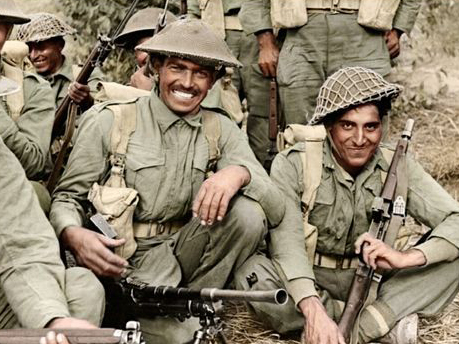
On the 9th of April 1945 TPS pressed its one-and-a-half millionth and final helmet. This production greatly exceeded the requirements of the size of the South African army which at its height in WWII numbered 334,000 volunteers.[4] The excess production was intended to supply other members of a wartime entity called the Eastern Group Supply Council (EGSC). This group included Australia, Burma, Ceylon, Hong Kong, Kenya, New Zealand, Northern Rhodesia, Palestine, South Africa, Southern Rhodesia, Tanganyika, and Uganda. It is not currently known precisely which of the EGSC countries received South African MKIIs, but New Zealand 2nd Division troops who embarked without helmets were equipped with British MKIIs and some South African MKIIs.[5] The Indian military used large numbers of the South African MKIIs both during and after the war. Elements of the South African military continued to use the helmet up until 1970.
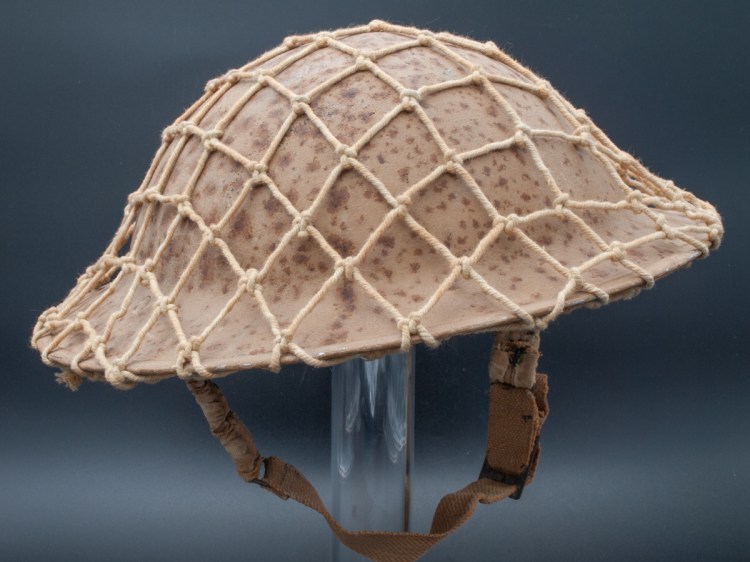
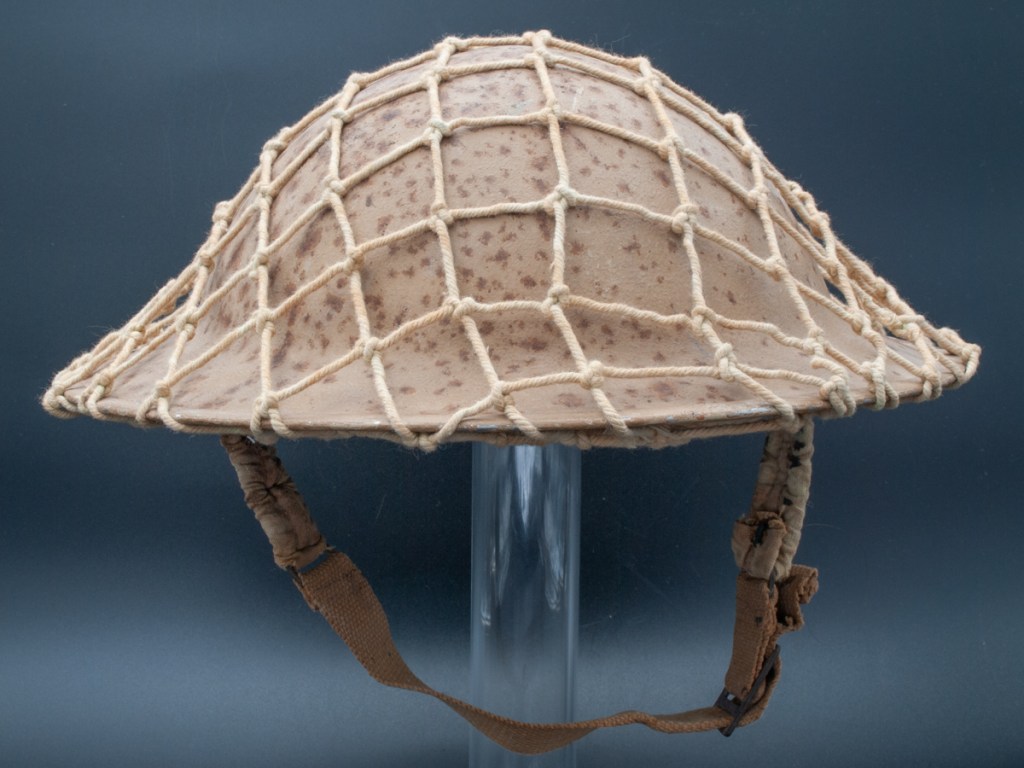
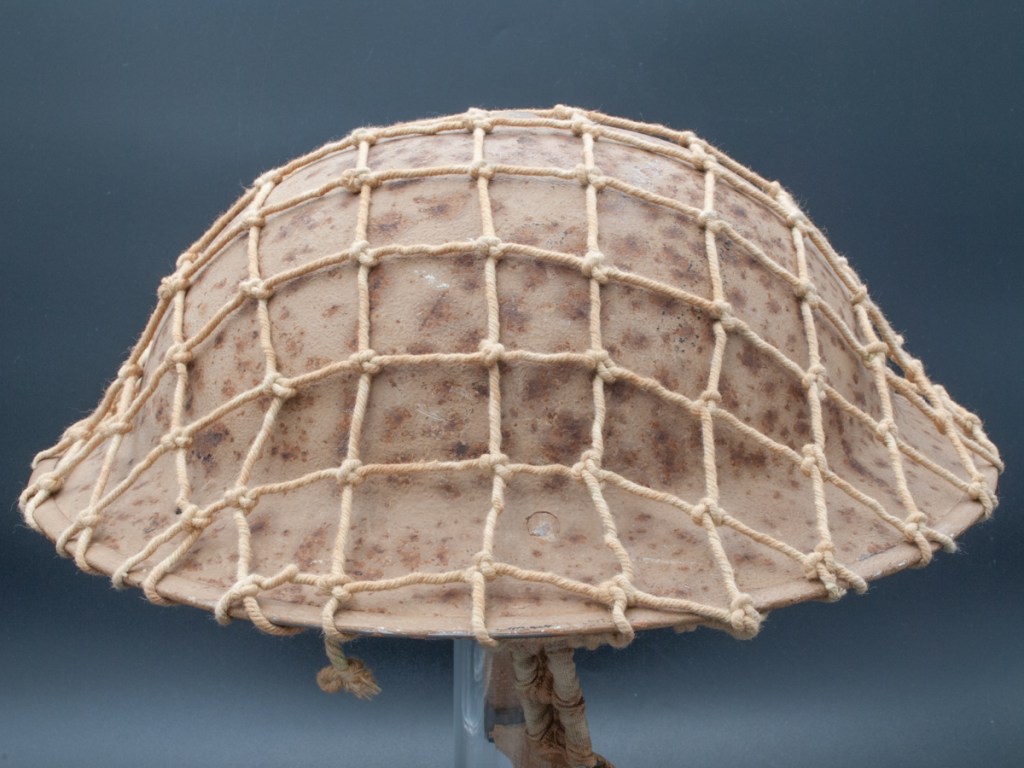
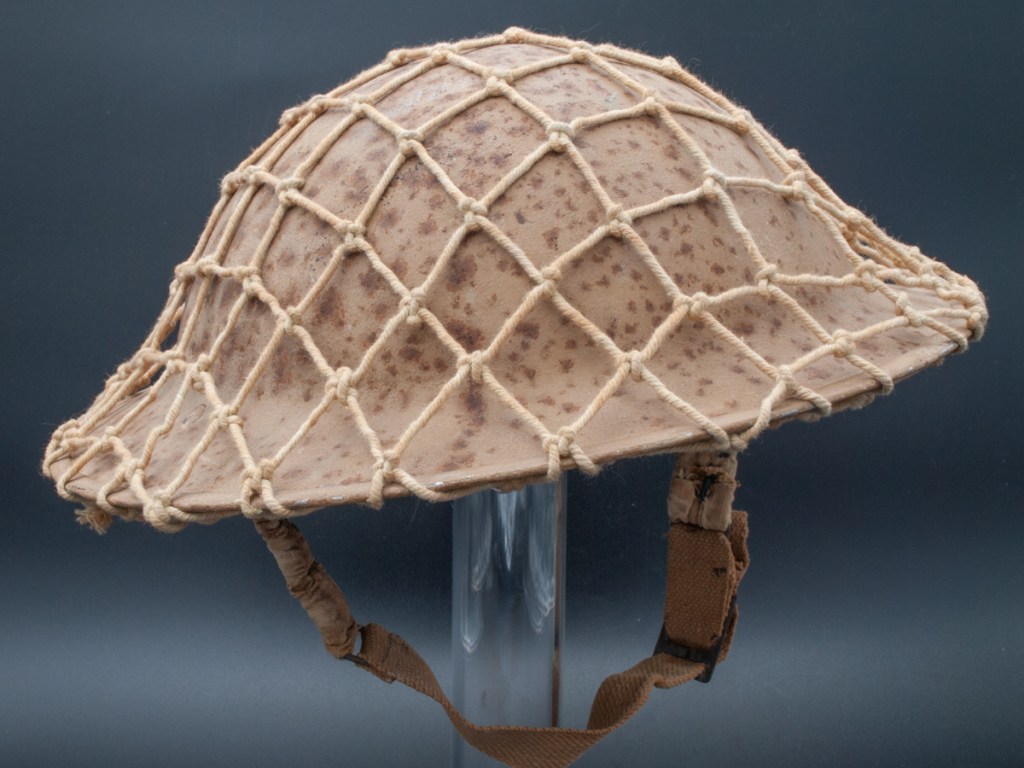
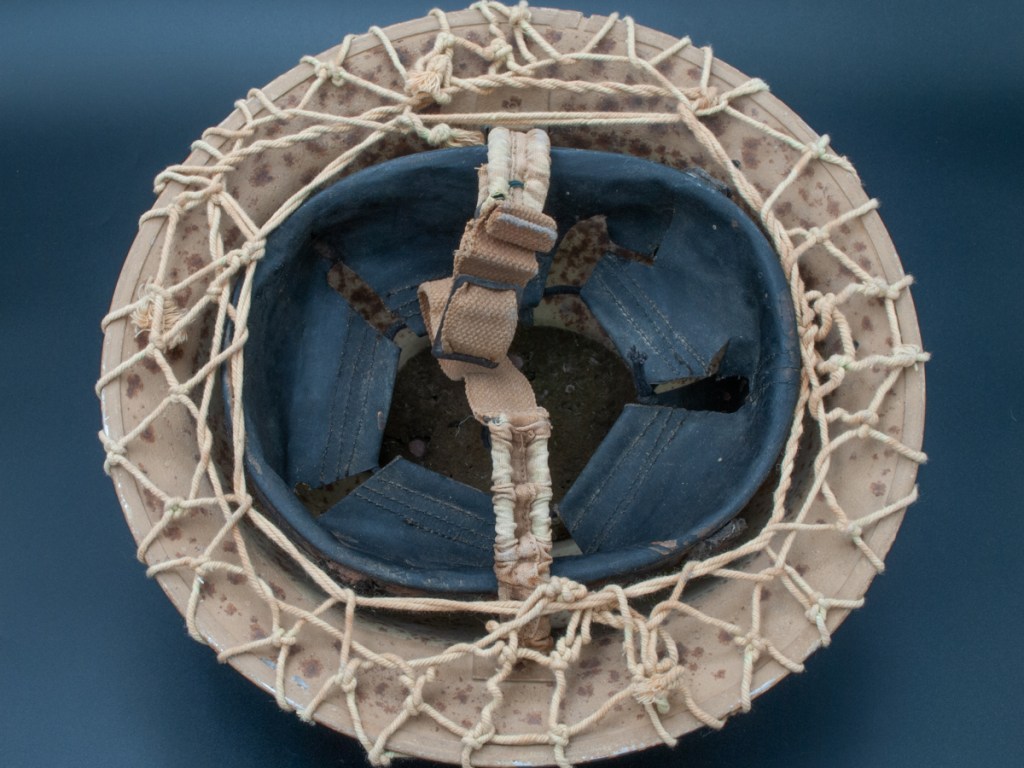
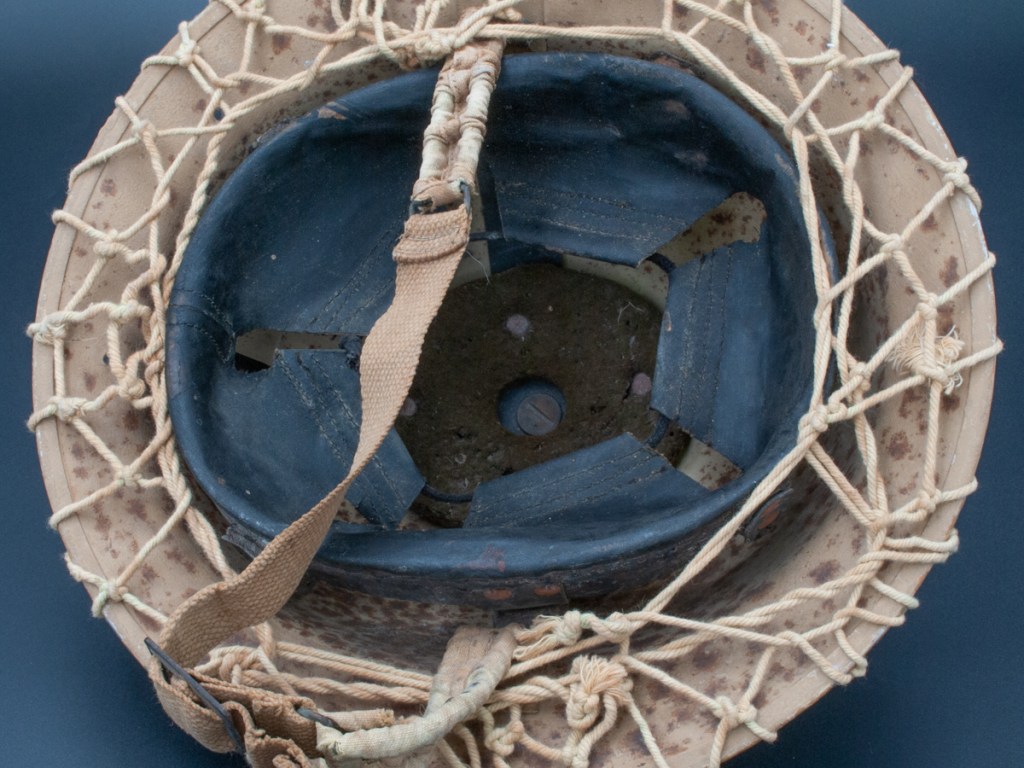
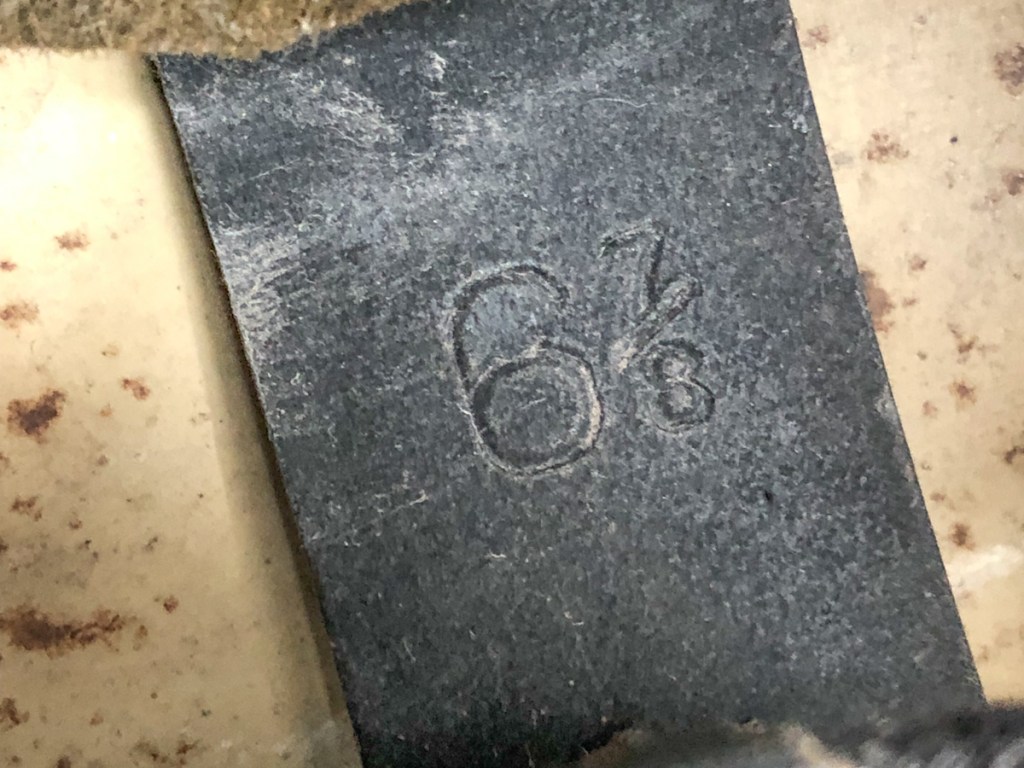
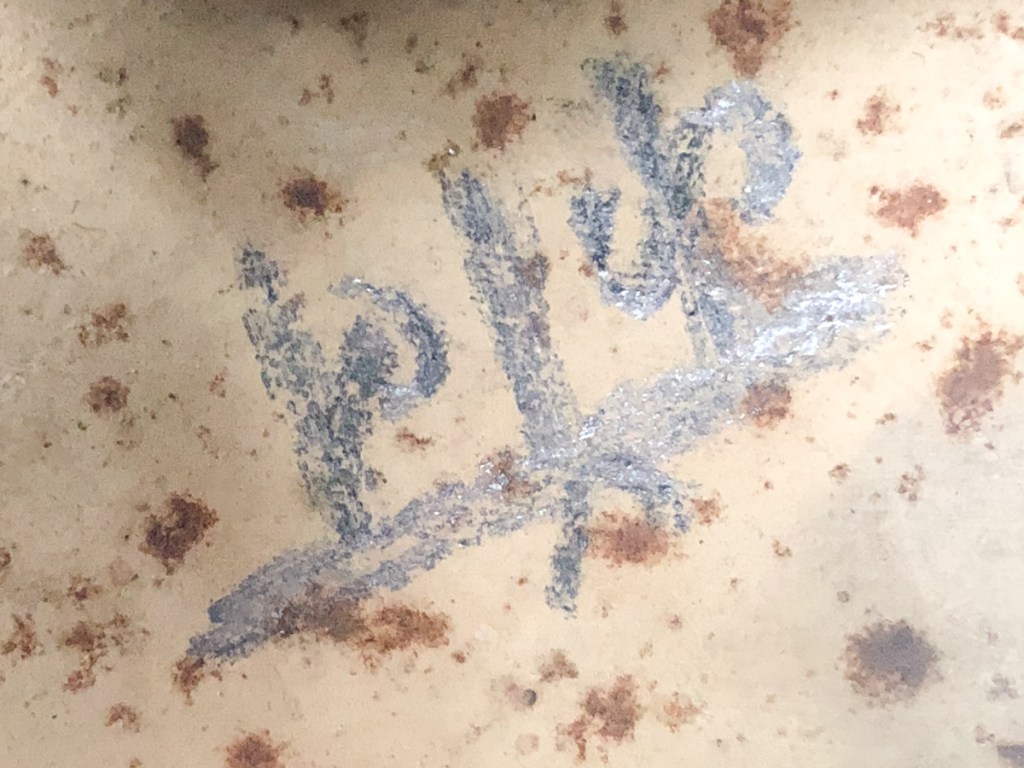
Displayed Example: This is a classic example of a South African MKII in its factory original condition. The liner band is marked “1942” and bears the size stamp “6 7/8.” The net is an Indian made type. Interestingly, the original owner of the helmet wrote his name in Hindi script in the interior dome section. This MKII, therefore, was issued to an Indian soldier. I was drawn to this piece because to me it represents the vital and generally underappreciated role of troops from the Indian subcontinent in World War II.
Collector Notes: Large numbers of these helmets were manufactured and they are not difficult to find. The prices tend to be at the lower end of spectrum for helmets of the Second World War. As recently as 2014 I bought two MKIIs from an army surplus store in South Africa. The cost of the postage was almost as much as I paid for the two helmets. These helmets are often identified as “British Desert Rat” helmets, which is true enough because both South African and Indian Army soldiers serving in the British 8th Army would have worn this type. It should be pointed out, however, that the South African MKIIs were not used by soldiers from Great Britain.
[1] Marzetti. 2003. pp 363
[2] Henry, Richard. “The Development, Production and History of the South African Steel Helmet Mark I.” Military History Journal Vol. 20 No. 3 December 2024.
[3] Due to the type of presses used, Richard Henry suggests that the nomenclature “Mark 1” or MKI should be used for the South African WWII helmets.
[4] “Military history of South Africa during World War II.” Wikipedia. July 27, 2025. https://en.wikipedia.org/wiki/Military_history_of_South_Africa_during_World_War_II. Accessed October 8, 2025.
[5] Anderson, Terry. “NZ Lt Colonel Mk II Helmet.” 10th post. HelmNet (private website). August 21, 2022. Accessed October 6, 2022.

 Steel Helmets of the World Wars