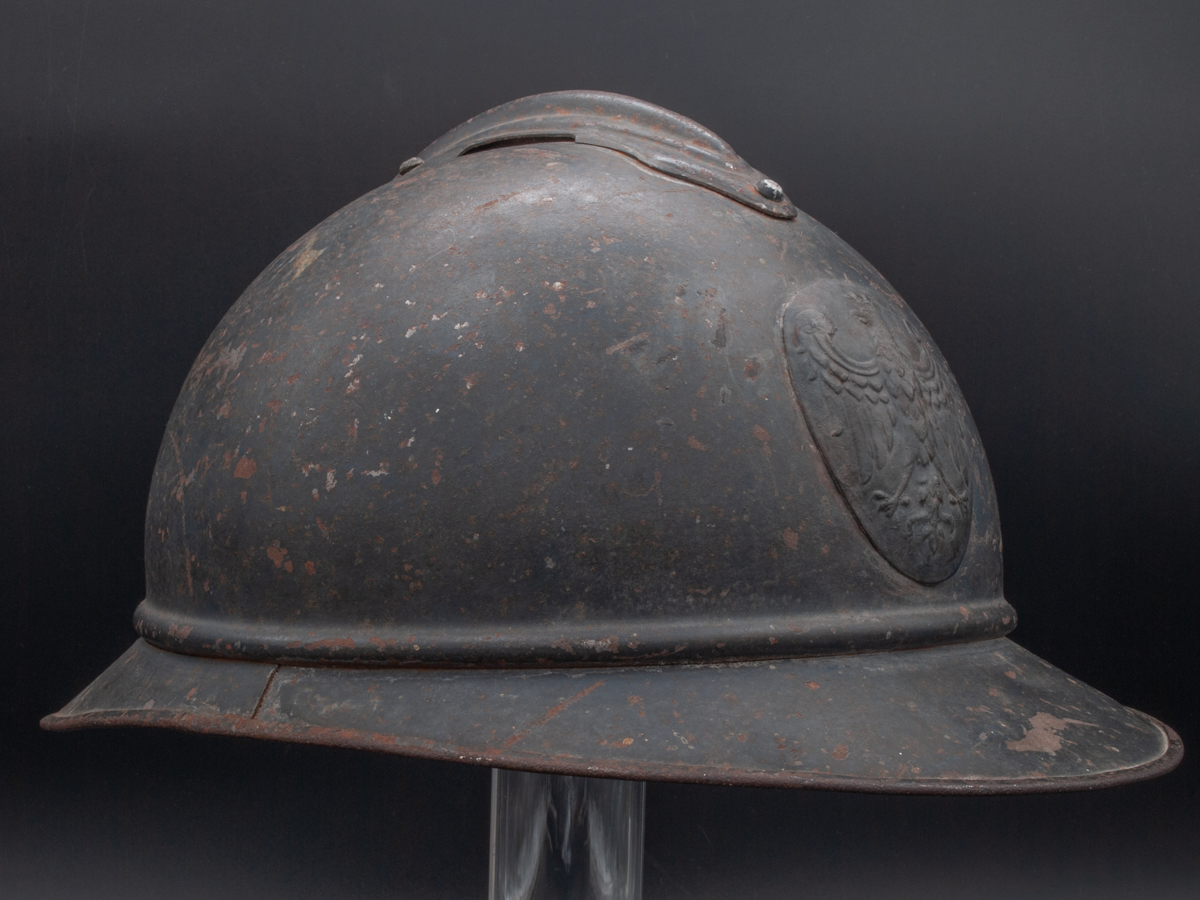

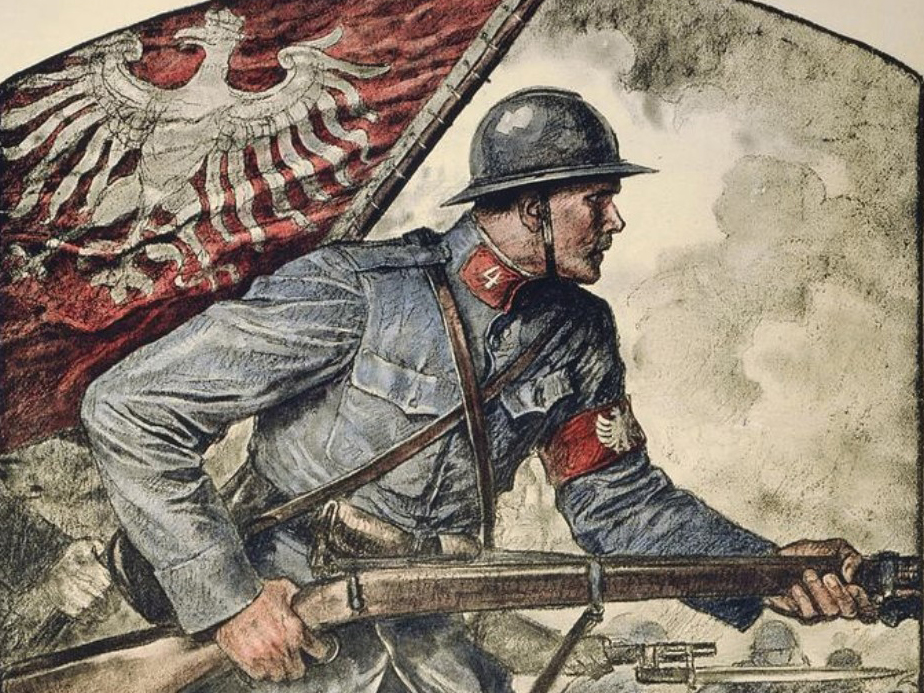
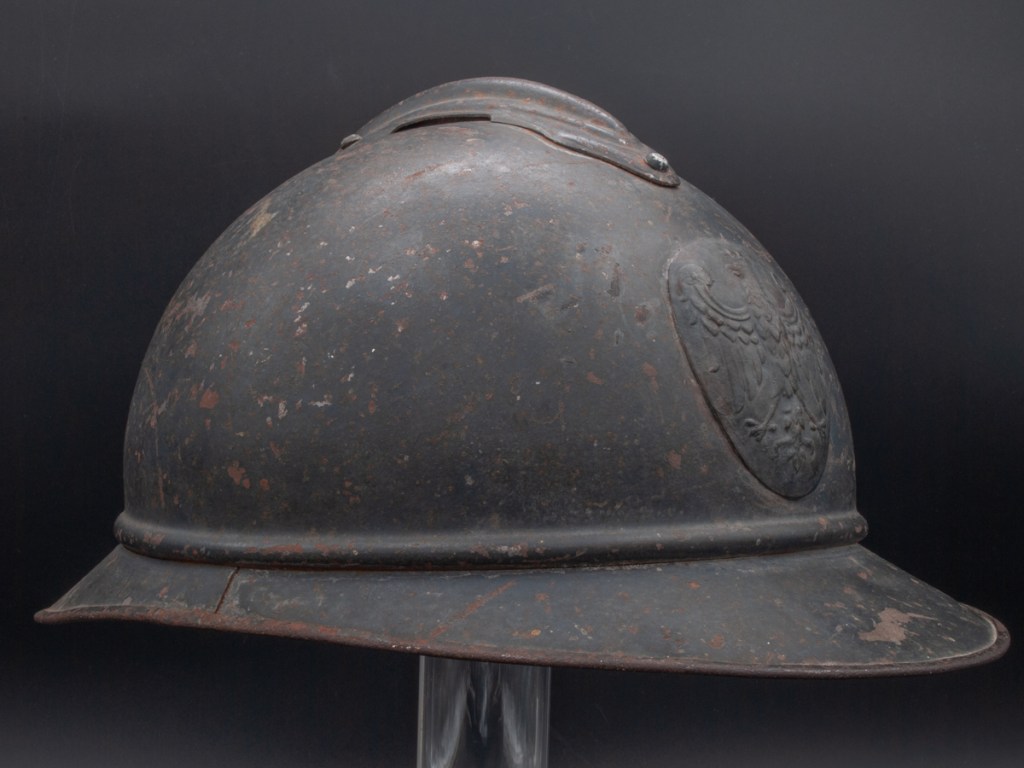
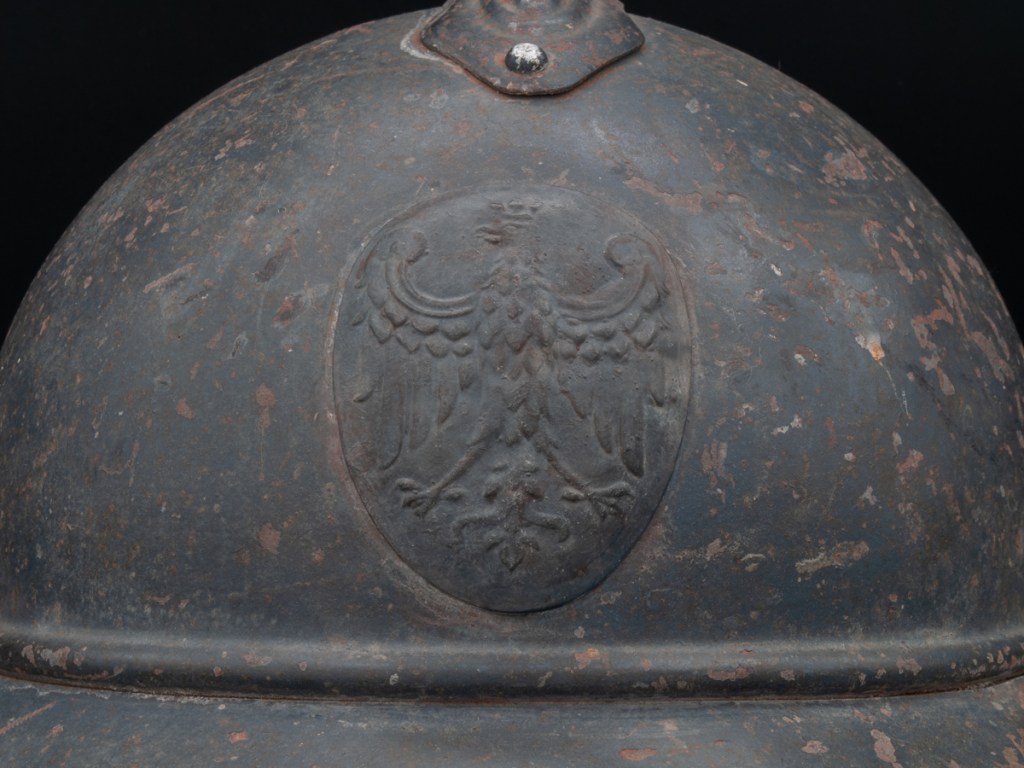
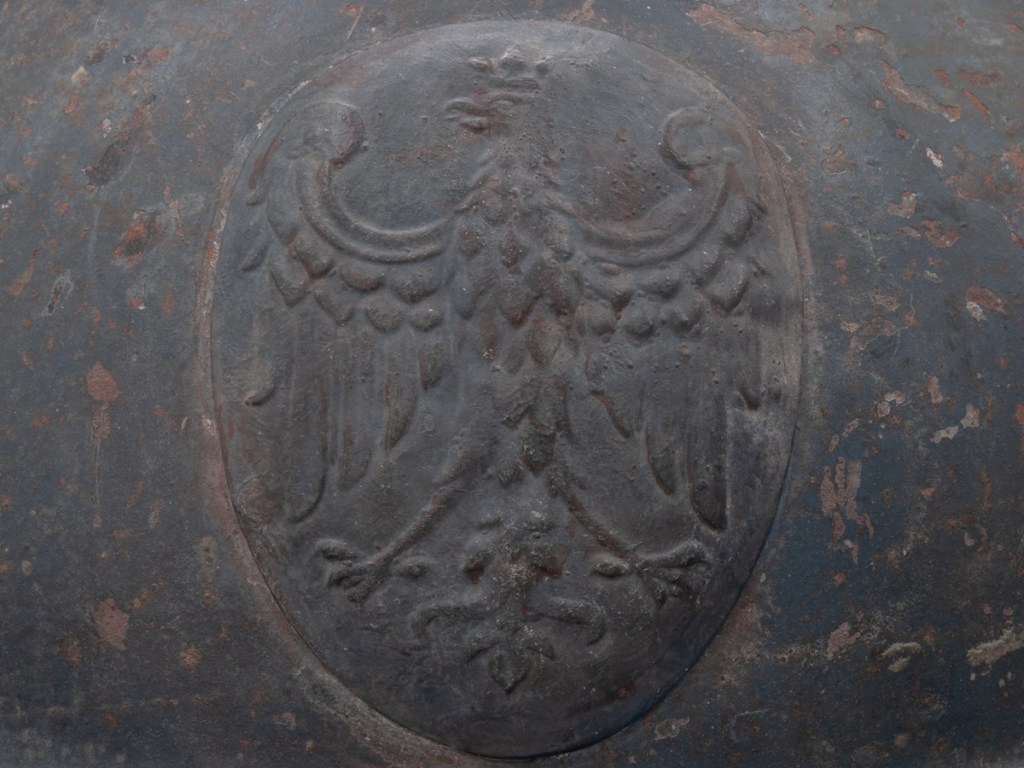
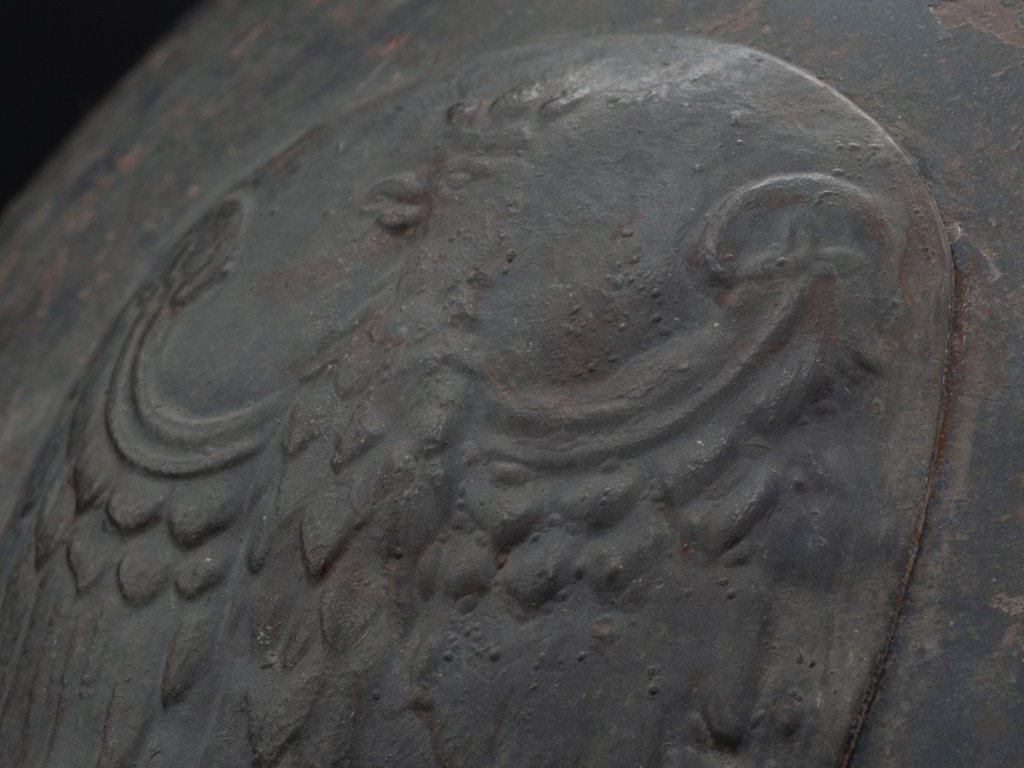
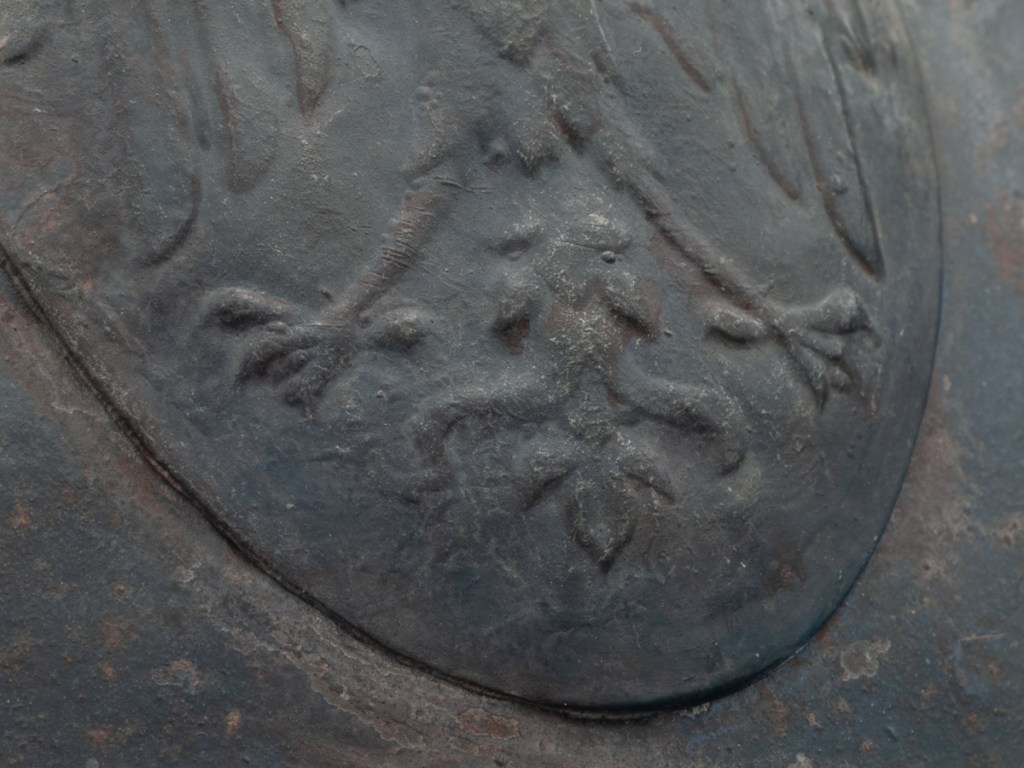
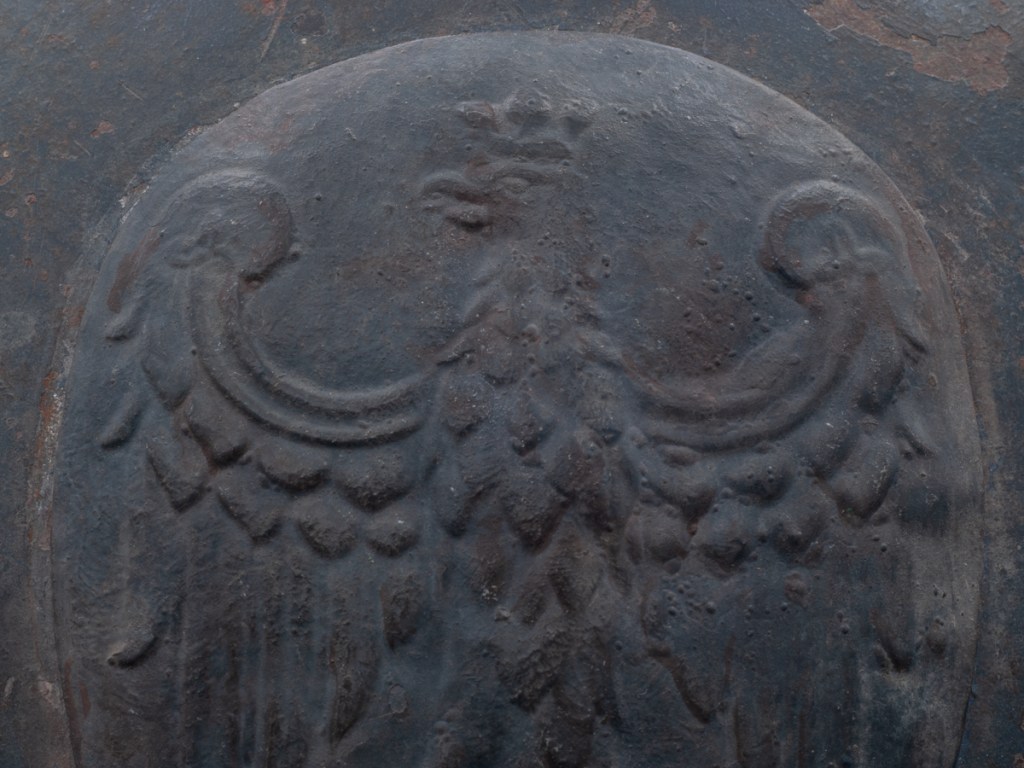
General Information: Sometime after the introduction of the chasseur’s badge with the Polish eagle (see Polish Model 1915) a new oval shaped badge embossed with the Jagiellonian eagle was issued members of the Polish Army in France[1] for use on the French Model 1915 helmet. While the light infantry[2] elements within Polish Army continued to use the helmets with the chasseurs style badge, the oval badge was supplied to soldiers in other arms and services. This new element was associated with a political change that took place on September 28, 1918, when the French government recognized the Polish National Committee’s full political control over Polish armed forces in France and granted the Polish Army in France the status of a national army as an allied member of the Entente powers. Whereas the Polish chasseur’s badge was a modified French badge, the Jagiellonian eagle on the new oval shaped badge was a powerful unifying symbol of the sovereign Polish army.[3]
The Jagiellonian dynasty ruled Central and Eastern Europe from the late 14th century to the 16th century. It derives its name from Wladyslaw II Jagiello, the Grand Duke of Lithuania who founded this empire in 1386.[4] According to legend, Poland’s mythical founder, Lech, saw a white eagle defending its nest against the red background of a setting sun. Inspired by this, he established Poland’s first city Gniezno (meaning ‘nest’) and adapted the white eagle on a red background as his symbol. Jagiello, in turn, appropriated this symbol to represent his dynasty.[5]
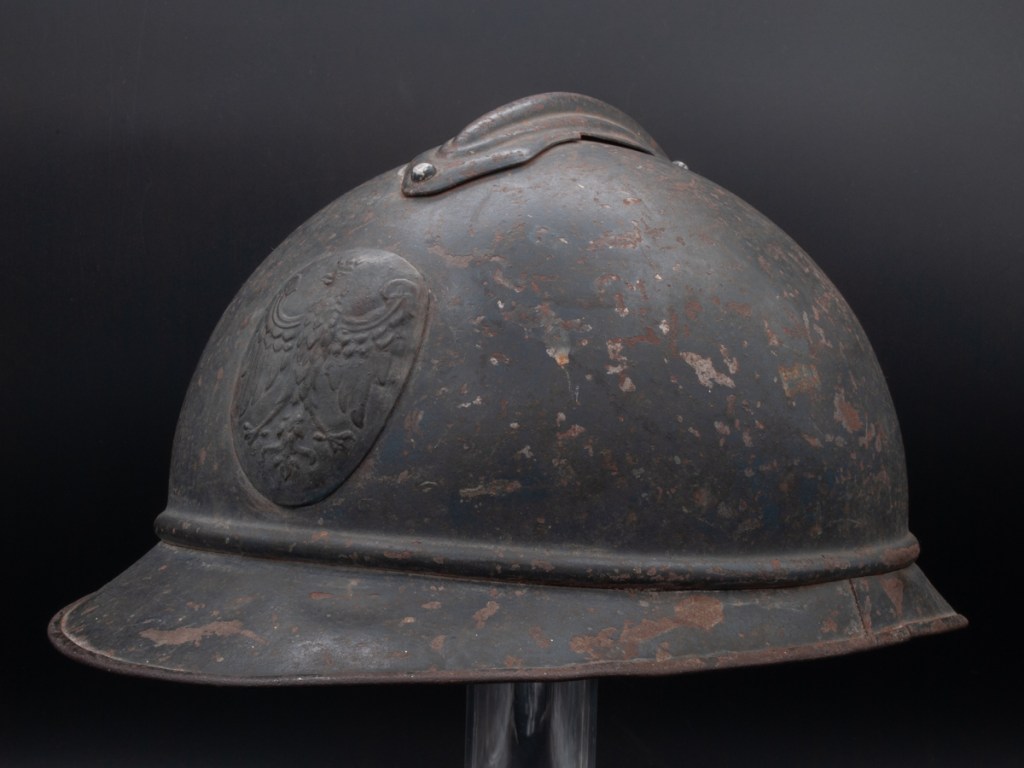
The makers of the new badge apparently used the same egg-shaped metal template as used for the Romanian badges (see Romanian M15) but in upside down position relative to the Romanian badges. There are at least three different versions of the badge and the image can also vary depending on the thickness of the metal used, the wear on the stamping used after multiple pressings, and the location and imprint of the welds used to attach the attachment brackets.
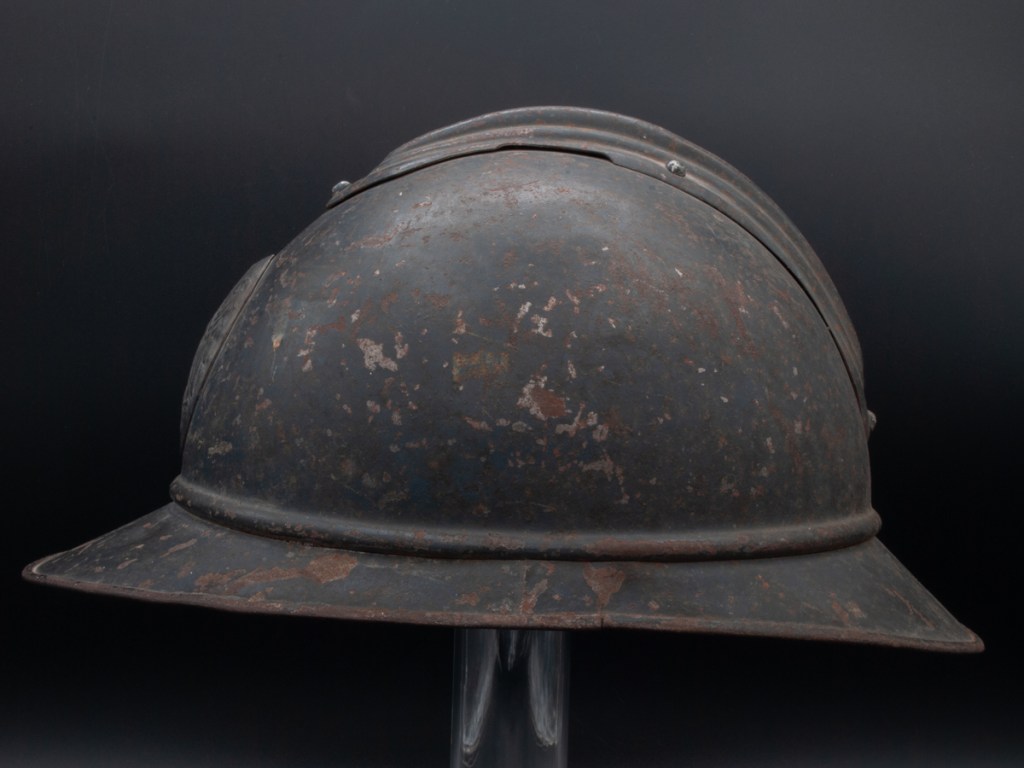
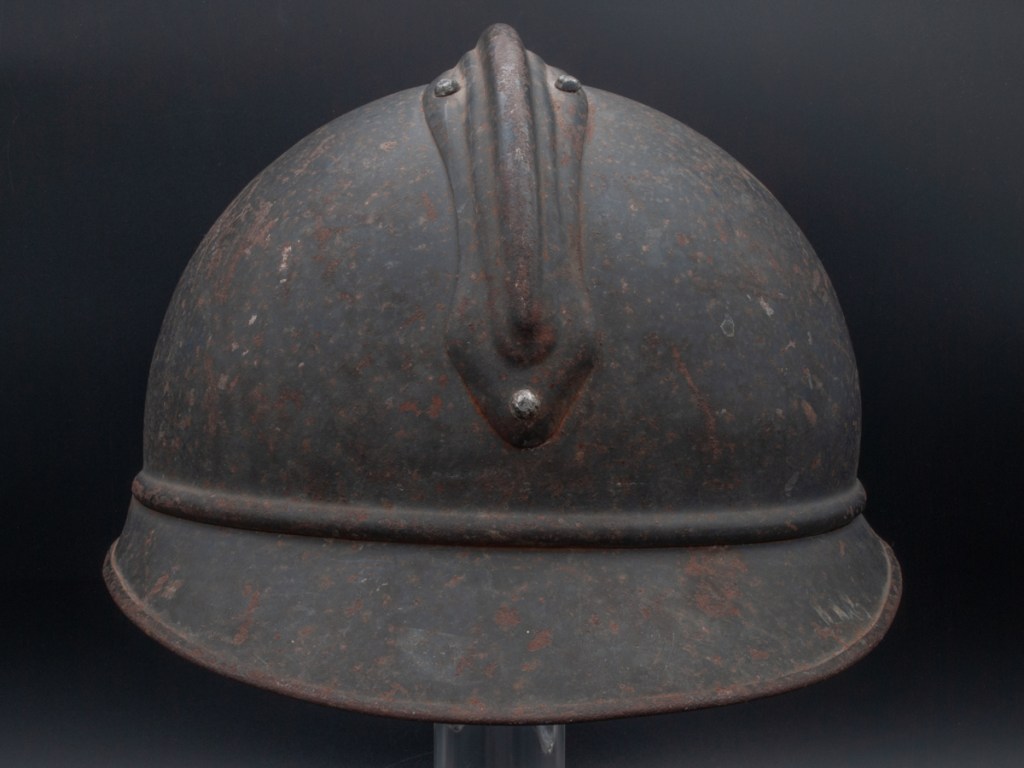
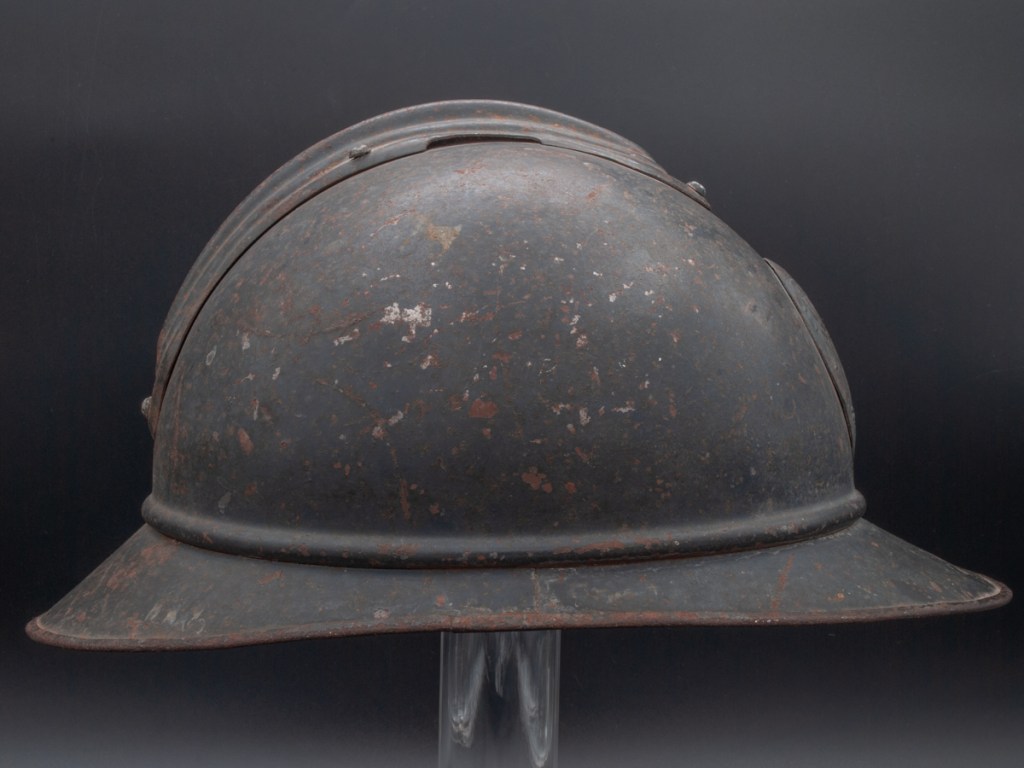
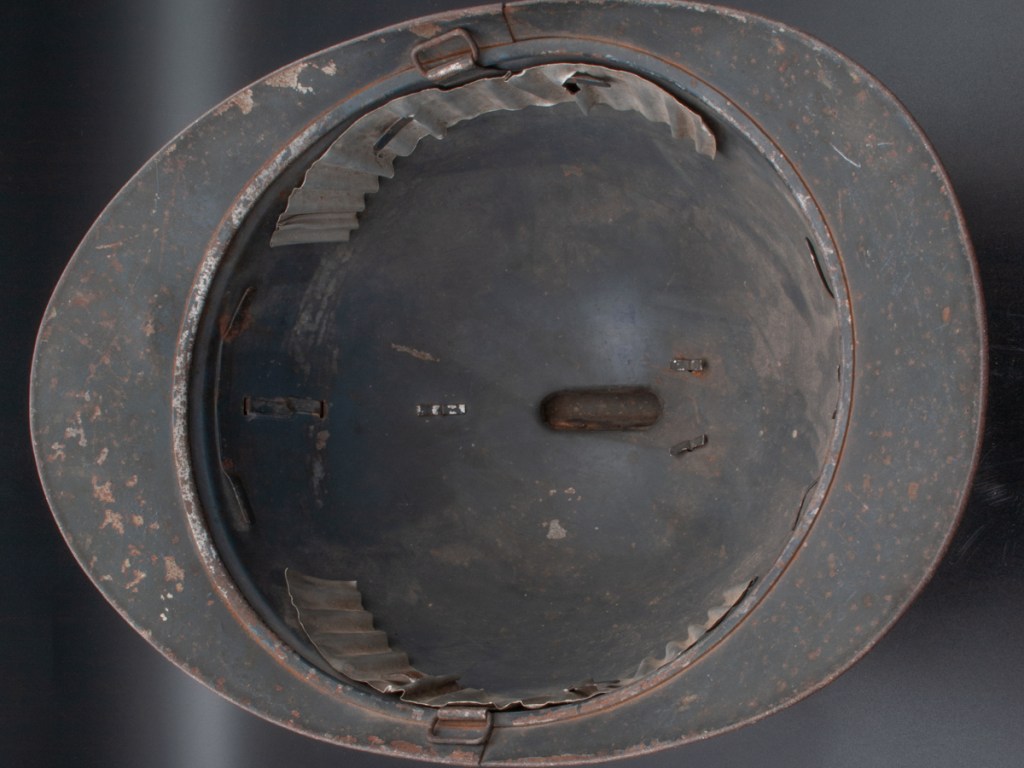
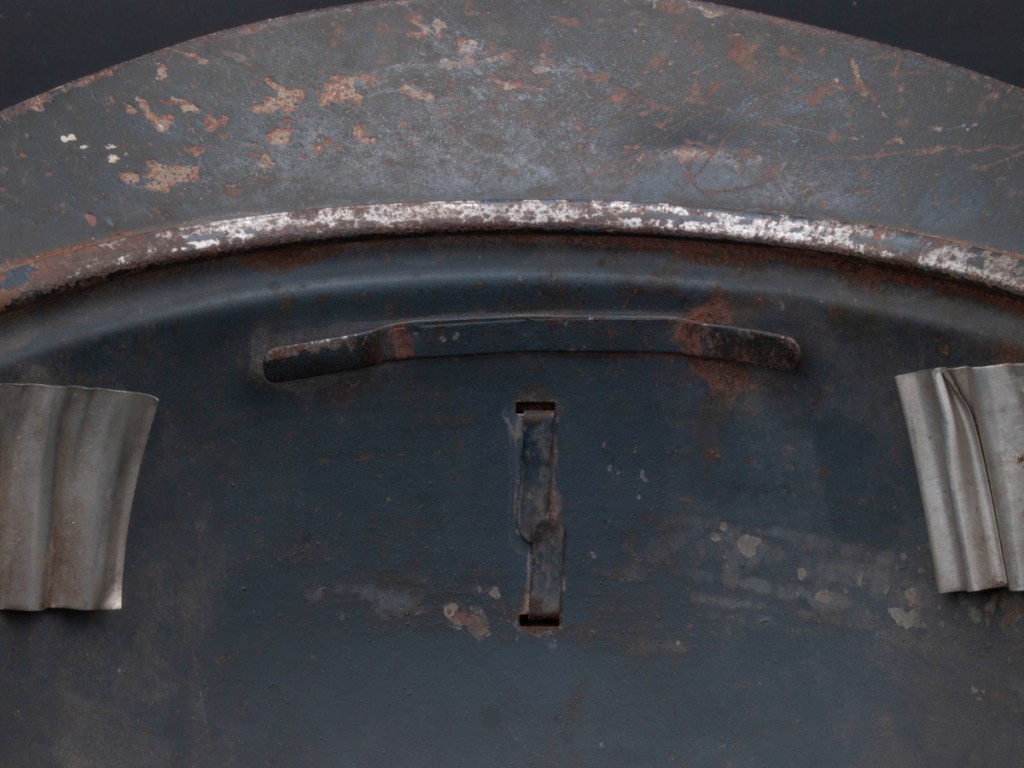
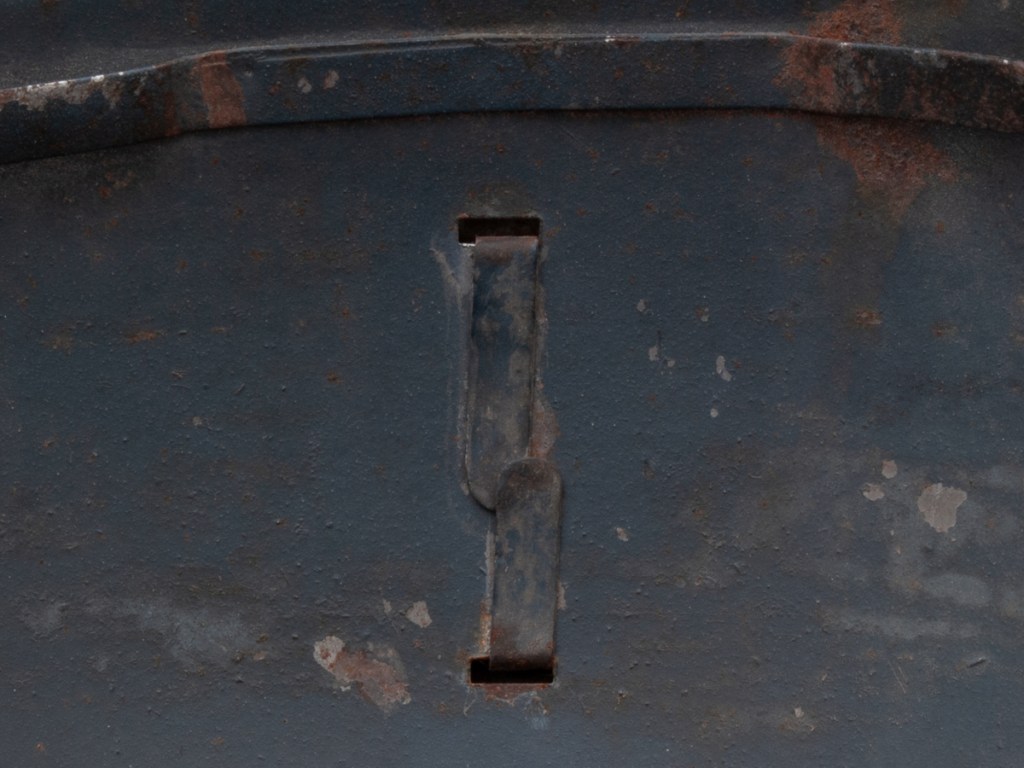
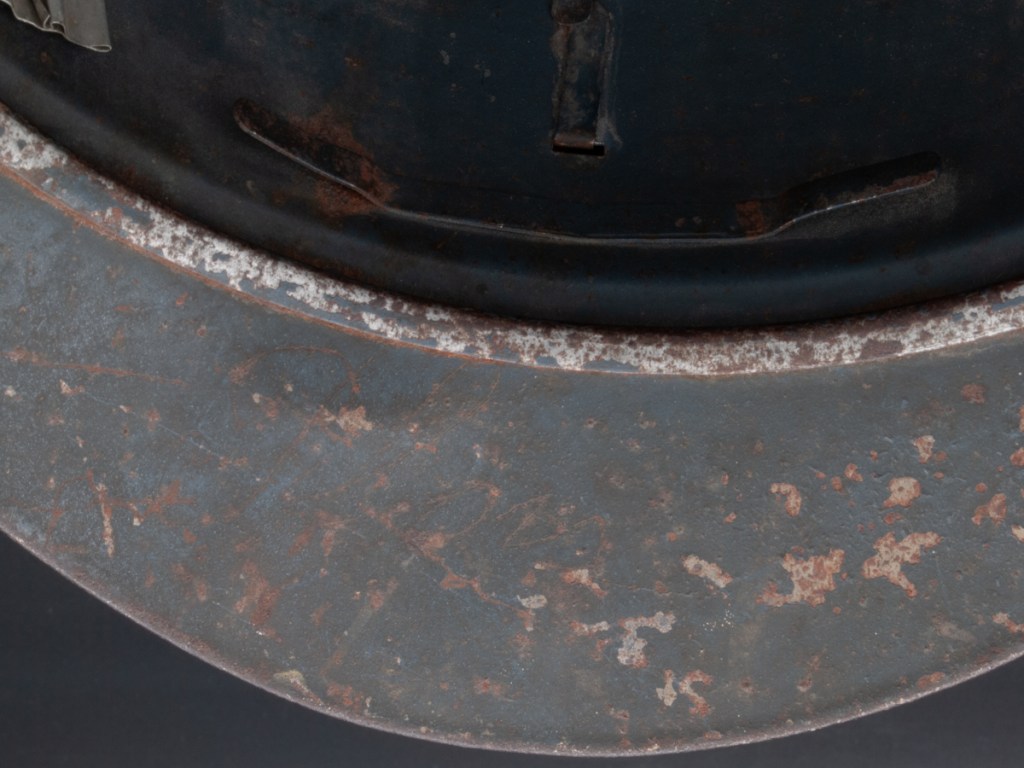
Displayed Example: I purchased this helmet from Regimentals in 2025. It came from a venerable, well-known collection. The helmet is a size C, which was the largest size for Adrian helmets of the First World War. The liner and chinstrap are missing on this specimen, although the aluminum spacers are still present and the attachment prongs for the liner are intact. The original owner scratched his now illegible name in the front visor. The helmet has its original factory dark blue paint that was a feature of later-production M15s.
Collector Notes: Model 1915 helmets with Jagiellonian eagle badges are exceedingly rare and do not surface often in collector markets. They were produced in limited quantities to begin with and the ones with oval badges appeared only at the very end of the First World War and had a short production run. After the conclusion of the Bolshevik-Polish war in 1921 new regulations mandated that all helmets be equipped with Polish metal eagle badges. The Jagiellonian eagle badges were compliant with the new regulations, but the chasseur type badges were not and were removed. It is assumed that the Jagiellonian eagle badges remained in limited use until 1930 when an order was issued to remove all eagles from helmets. Because of the attractiveness of the Jagiellonian eagle badge and due to its symbolism as an expression of patriotism and national unity, the badges were often saved after removal from helmets and reused as decorations for memorials and patriotic items such as picture frames, flower garlands, and album covers.[6]
There are many more fakes of this helmet type circulating in collector markets than surviving original specimens. As always, buy from reputable dealers and exercise caution.
[1] Called the ‘Blue Army’ in Poland and after October 4, 1918 when General Józef Haller became the commander-in-chief, the ‘Haller Army.’
[2] The light infantry units were organized as rapid reaction forces usually used in offensive capabilities. They were traditionally better trained in marksmanship. These are sometimes referred to a ‘rifle’ units in English. In the French army they were called ‘chasseurs.’
[3] Kloskowski, Krzysztof P. 2022. pp 91-92.
[4] “Jagiellonian dynasty.” Wikipedia. Last edited: August 20, 2025. https://en.wikipedia.org/wiki/Jagiellonian_dynasty#:~:text=The%20Jagiellonian%20(US:%20/%CB%8C,Country . Accessed August 20, 2025.
[5] “The Polish Eagle and everything it means to Poland.” Expats Poland. October 3, 2003. www.expatspoland.com/polish-eagle-means-poland/. Accessed August 20, 2025
[6] Kloskowski. Ibid.


 Steel Helmets of the World Wars