
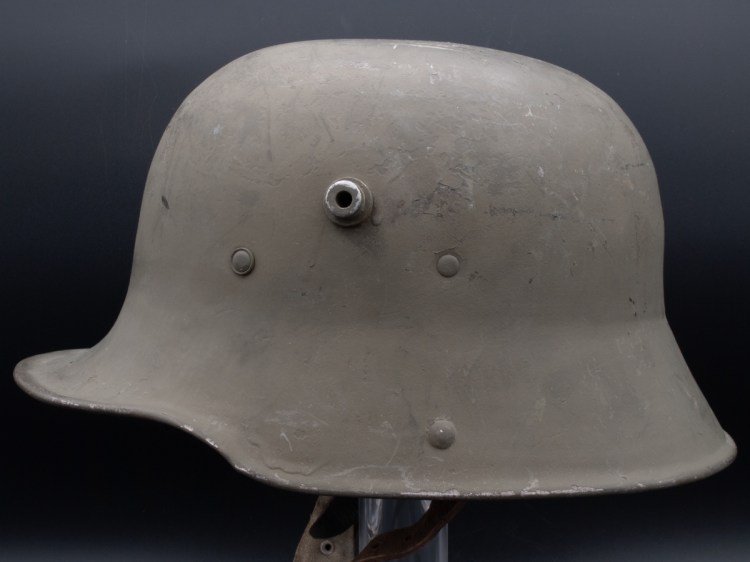
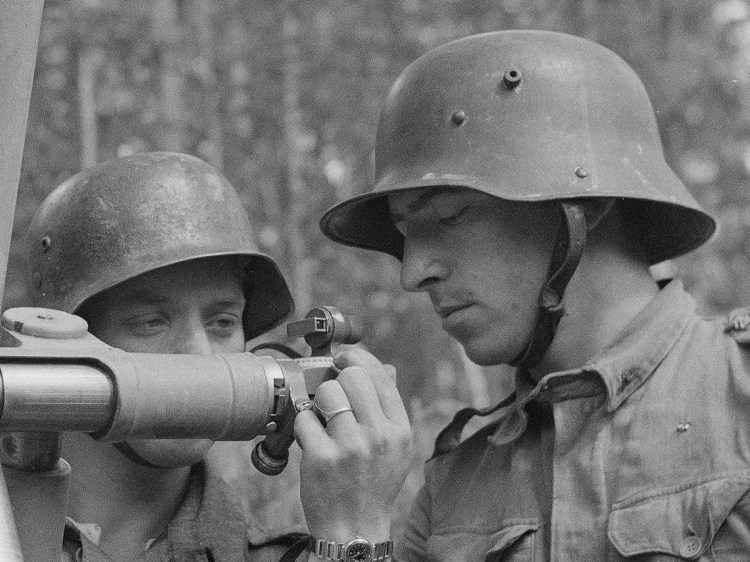
General Information: The Finnish military used German Model 1916 type helmets from the 1920s through the Second World War and into the post-WWII era. They were the principal type of helmet used in the Winter War of 1939-40. (See Finnish/Austrian M17). After the end of World War Two, the Finns refurbished their stocks of German type helmets, including the WWI style helmets. The Finnish army started to phase out the use of these helmets in the early 1970s, but they continued to be used occasionally by reservist troops into the 1990s.[1] [2] After this period, the Finnish army put the helmets into storage.
Sometime in the 2000s a Finnish military surplus dealer purchased several thousand German style helmets directly from the Finnish army. He kept these in a storage facility in Estonia until 2012 when New Jersey-based International Military Antiques (IMA) purchased a large portion of this cache. Most of the helmets were the German M40/55 type sourced from West Germany. About 20% were the Hungarian Model 1938s, which were a copy of the German M35s (see Hungarian M38 and Finnish/Hungarian M38).[3] Two years later IMA purchased an additional cache of Finnish surplus helmets stored in Estonia. This second cache included approximately 700 German WWI style helmets.[4]
The German M16 helmets in this lot were sizes 62, 64, and 66, with the majority being size 66. There were also hundreds of German M18 helmets in the same sizes plus many in the less common size 68. In addition, there were hundreds of Austro-Hungarian WWI helmets.[5] [6]
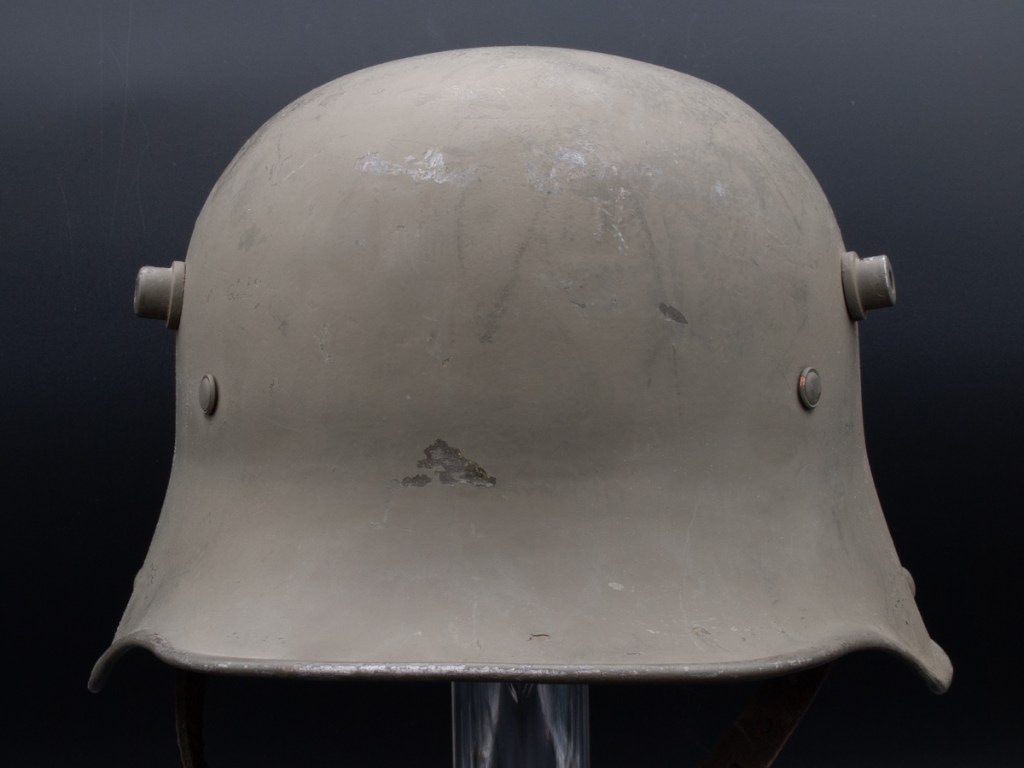
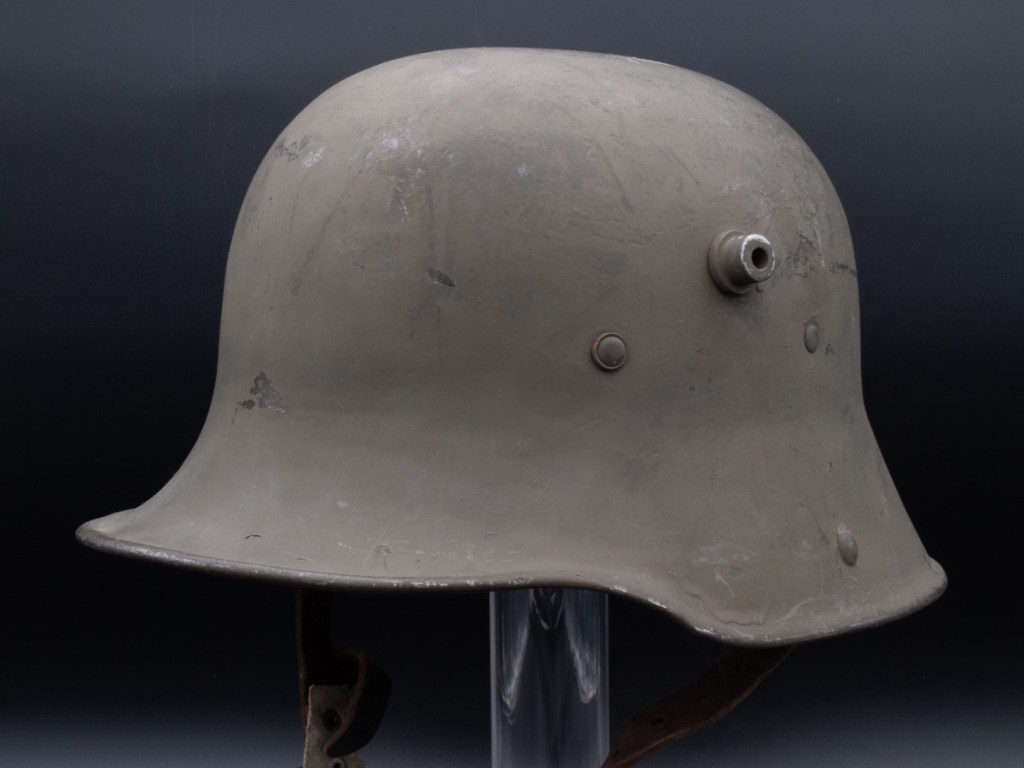
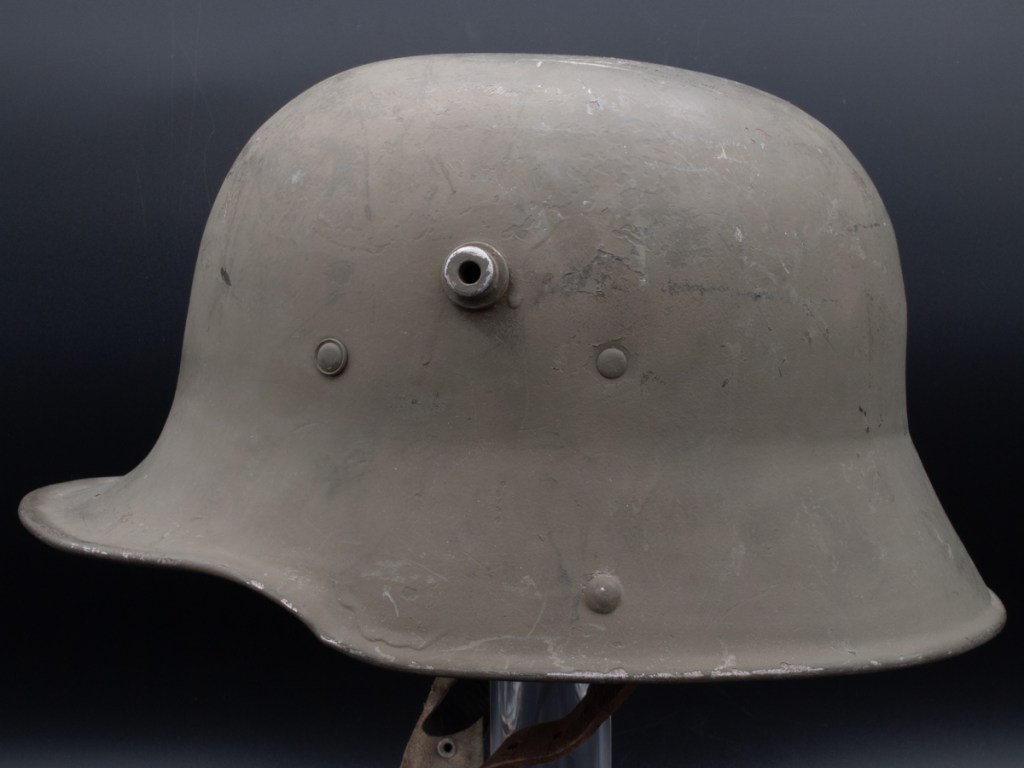
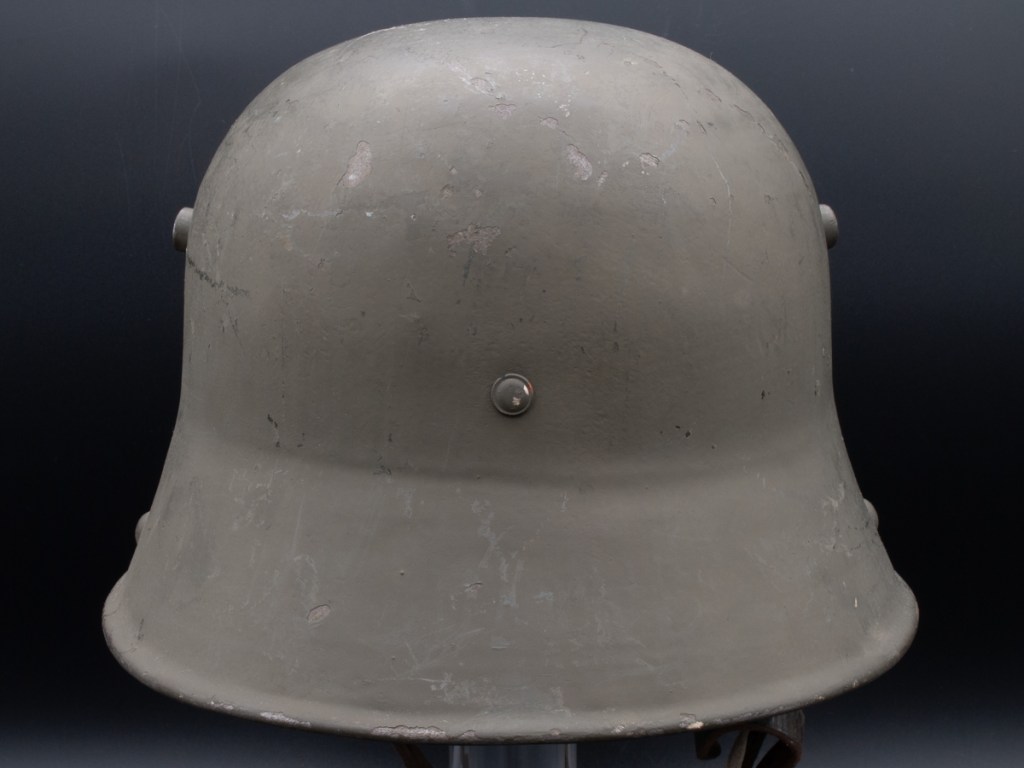
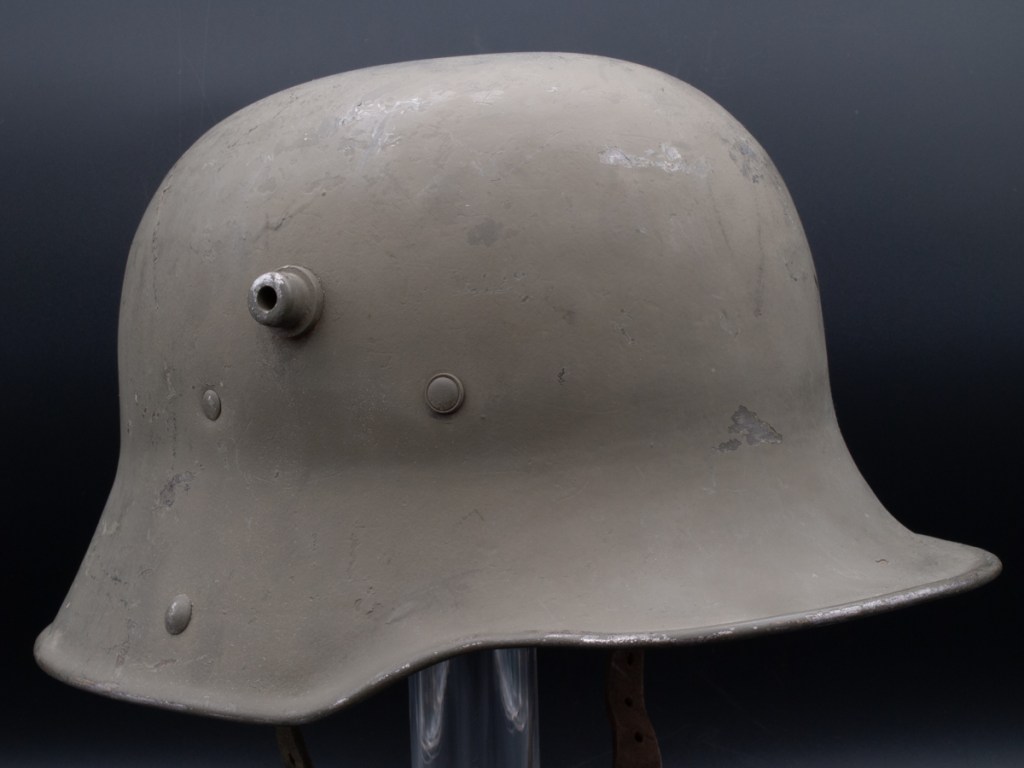
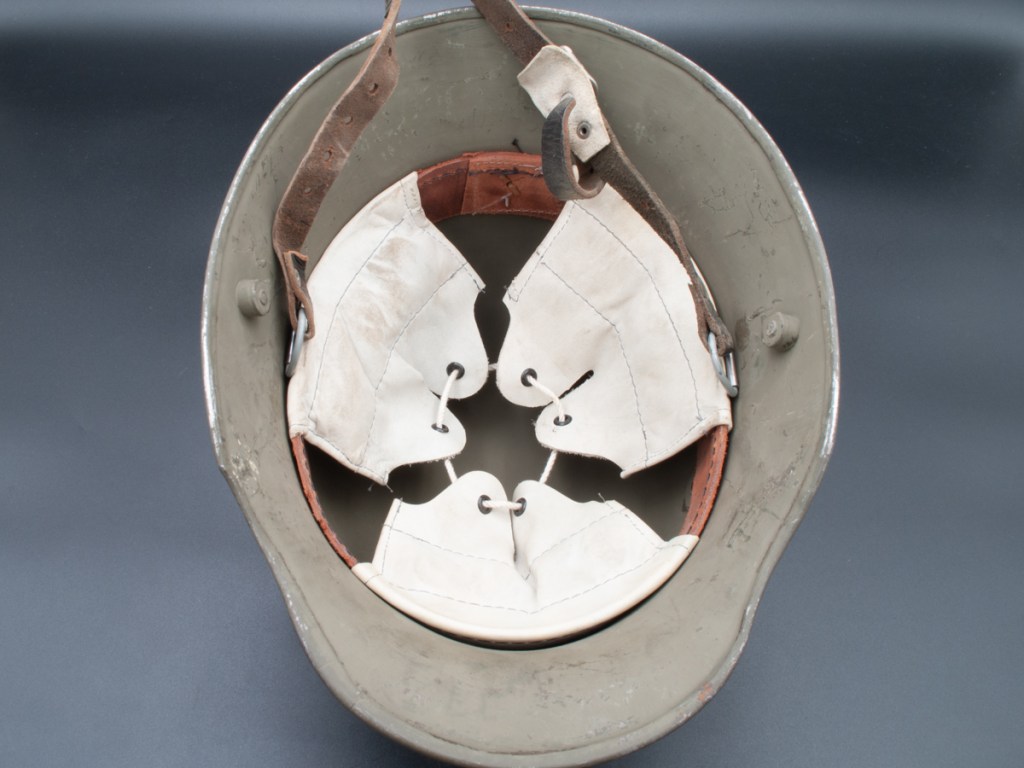
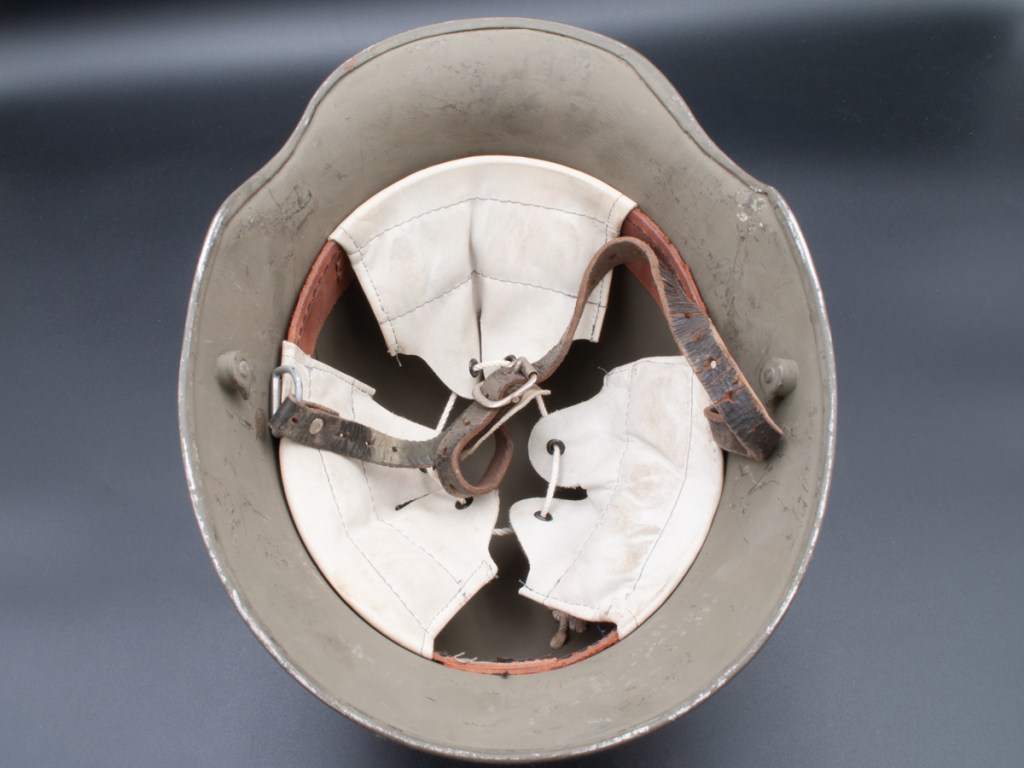
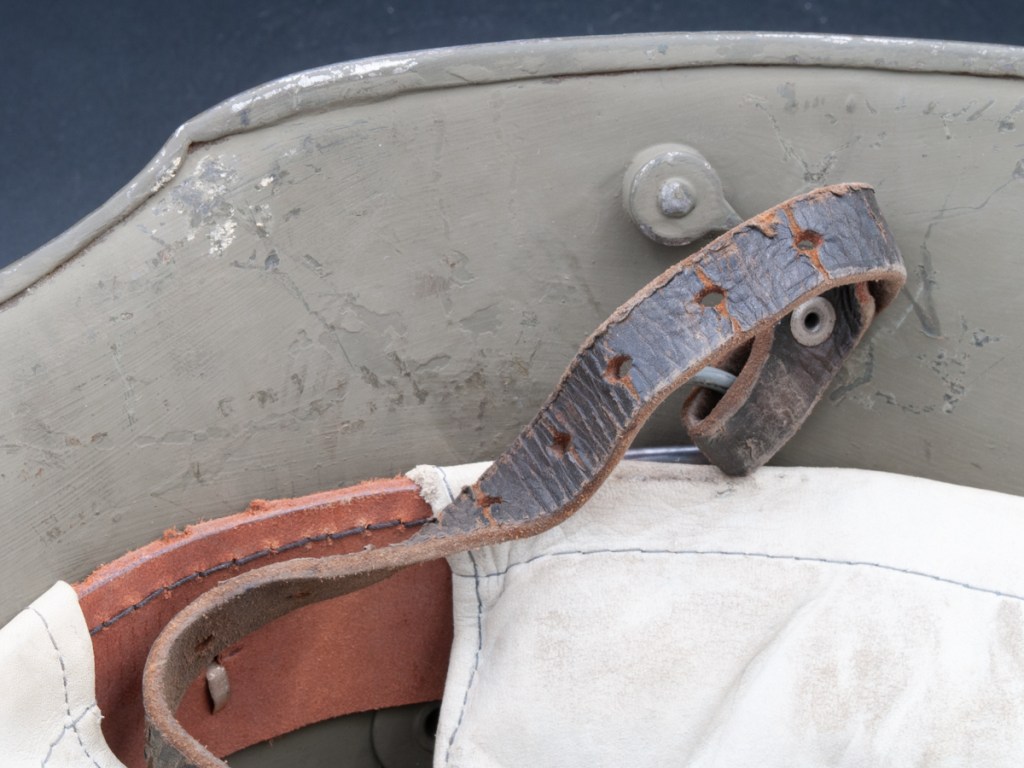
After the Second World War, the Finnish army refurbished its stocks of German style helmets. Starting in the late 1940s and continuing until the late 1950s, the post-WWII refurbished German type helmets had three two-tongued leather liner pads attached to a leather liner band similar to the liners on German First World War helmets. From the late 1950s until the 1980s refurbished helmets were equipped with West German style liners.[7] These are like their WWII counterparts but have a set of perforations in a rectangular pattern in the forehead section. The WWI type helmets were occasionally refitted with this later style liner. The chinstraps are also leather. There are variations in the type of leather used for the liners (brown or white) and chinstraps (greenish/grey or black) and they vary somewhat in pattern. The liner bands were affixed using the original holes for the split rivets and the Finnish replacement split rivets are usually backed by washers. Two extra holes were drilled just behind the front rivets and rivets with smaller heads, not backed by washers, were used to help secure the liner bands to the helmet shell. The helmets were painted with a matte finish greenish/grey color or plain grey. The variations in paint color, liner configurations, etc. are because these modifications were done in different warehouses and depots in different time periods. The washer-backed split pins, the two extra split pins and the distinctive matte finish greenish/grey colors are quick differentiators to use to identify Finnish German-style helmets.
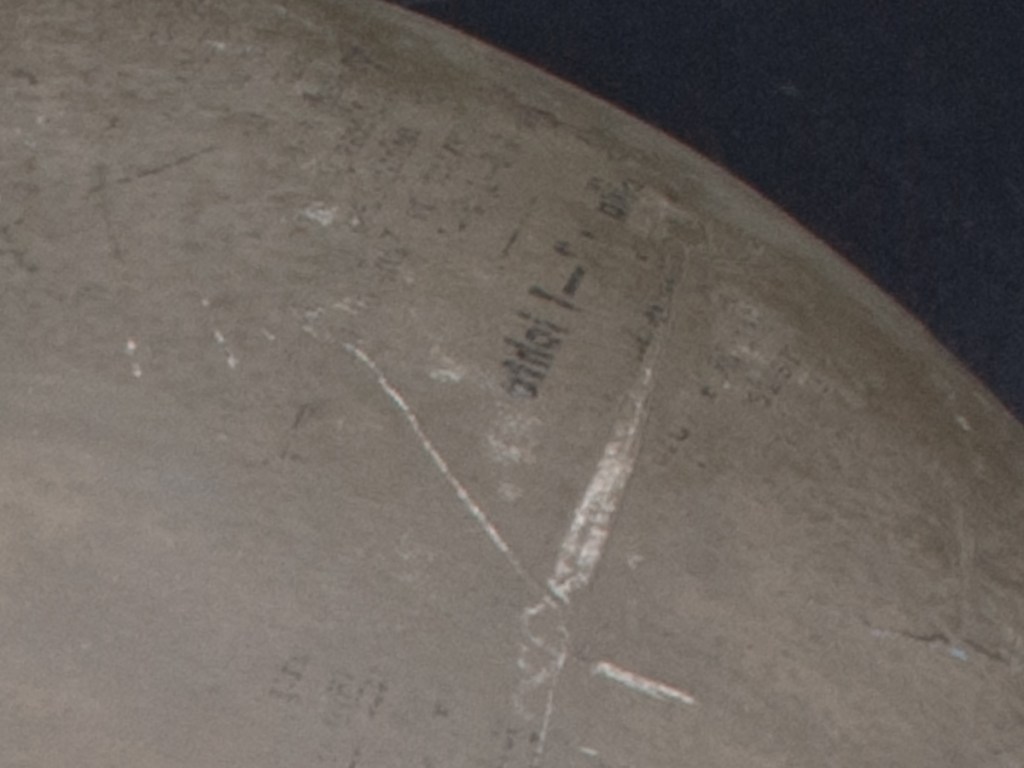
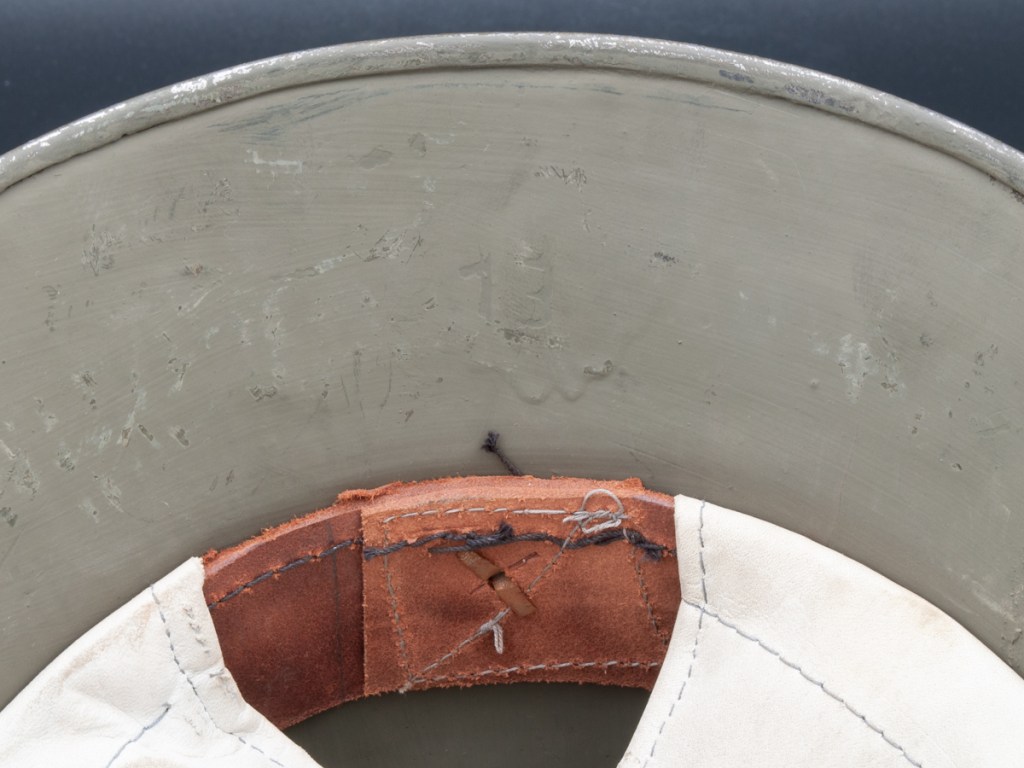
Displayed Example: By the time I decided that I wanted one of these helmets, IMA was sold out. IMA, however, had sold some of the helmets to other dealers and a Finnish military surplus dealer, Varusteleka, ended up with some of this cache. I purchased the one displayed here in 2023 for $260 + shipping cost. The helmet is a German WWI M16 or M17. It is a size 64 judging by the type of side lugs. The manufacturer stamps, size stamps and steel plate lot numbers are not visible. The only markings on the helmet are a number 13 scratched into the paint in the skirt section. The helmet appears to have been lightly used or unissued after being refurbished.
Collector Notes: Although military surplus sources for these helmets at IMA and Varusteleka have dried up, these helmets can still be found in collector markets and can be purchased at relatively modest prices. To my collector’s eye, these are extraordinary historical relics. Most saw service in the First World War, were used in combat in the Second World War, and survived intact to be released in what is certainly the last great cache to be discovered of German Great War stahlhelm. Sellers frequently misidentify the Finnish post-WWII refurbished German WWI style helmets as German First World War configured pieces or wartime issue Finnish army helmets. Beware. While it is true that the shells are WWI vintage most were used in the Second World War, the ones with the features described above are post-WWII helmets.
* Anuio. “From the Front Line to the Home Front 1939-1945.” SA-kuva-arkisto. Etulinjasta Kotirintamalle 1939-1945. Image 131589. Original photograph June 25, 1943. http://sa-kuva.fi/ Accessed February 14, 2025. Original caption: “The throw is being directed.” Archive note: “Finnish 120mm heavy mortar from 1940.” The location of the photograph is given in the archive as “Rajajoki,” which is the Finnish name for the river that separated Finland from Russia in the 1920s. The Russian name for the river is “Sestra.”
[1] Cranmer, Alex. Personal communication. https://www.ima-usa.com/. February 18, 2025.
[2] Soininen, Rami. Personal communication. https://www.dragoonmilitaria.com/home.php. February 19, 2025.
[3] Suciu, Peter. “Thousands of WWII German-made helmets discovered in Finland”. Military Trader. Updated: Aug 3, 2021, Original: Dec 11, 2012. https://www.militarytrader.com/militaria-collectibles/cache-of-dreams-thousands-of-german-made-helmets-discovered-in-finland. Accessed February 6, 2025.
[4] Cranmer, Alex. Ibid.
[5] Suciu, Peter. “IMA uncovers cache of WWI helmets.” Military Trader. September 16, 2014. https://www.militarytrader.com/militaria-collectibles/ima-uncovers-cache-of-wwi-helmets. Accessed February 14, 2025.
[6] I believe some of the Austro-Hungarian type helmets (with chinstrap rivets higher up than their German counterparts) may be post-WWI manufactured Czechoslovakian helmets. This is based on observation of surviving specimens.
[7] Soininen, Rami. Ibid.


 Steel Helmets of the World Wars