

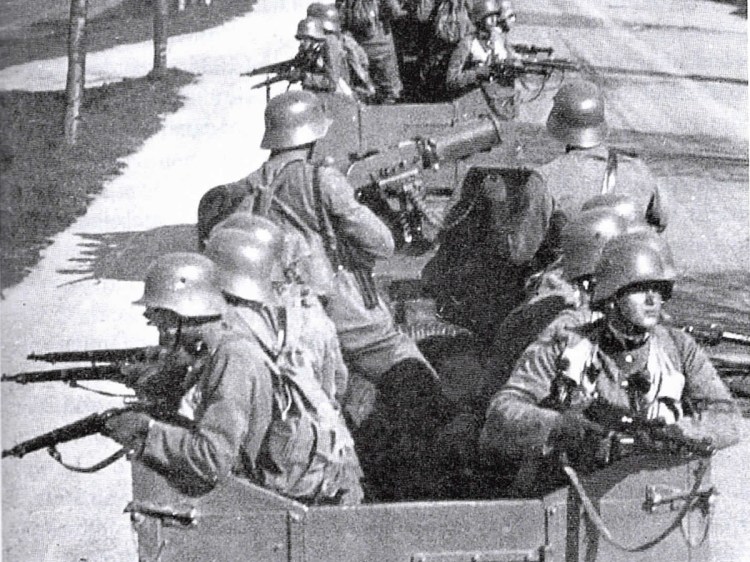
General Information: The Austrian gendarmerie was a militarized police force responsible for enforcing law and order. The gendarmerie was established in 1849 in response to the revolutions of 1849. After the First World War, the newly created Republic of Austria was divided into nine separate states, eight of which had Landesgendarmeriekommando (gendarmerie headquarters) while Vienna had Polizei.
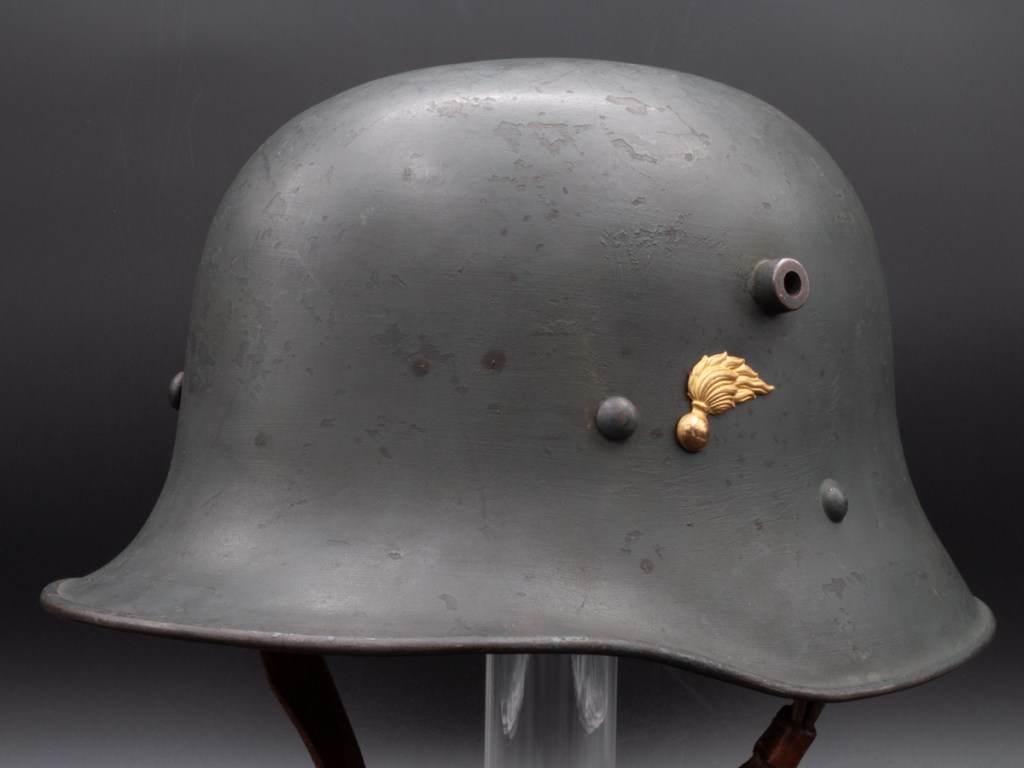
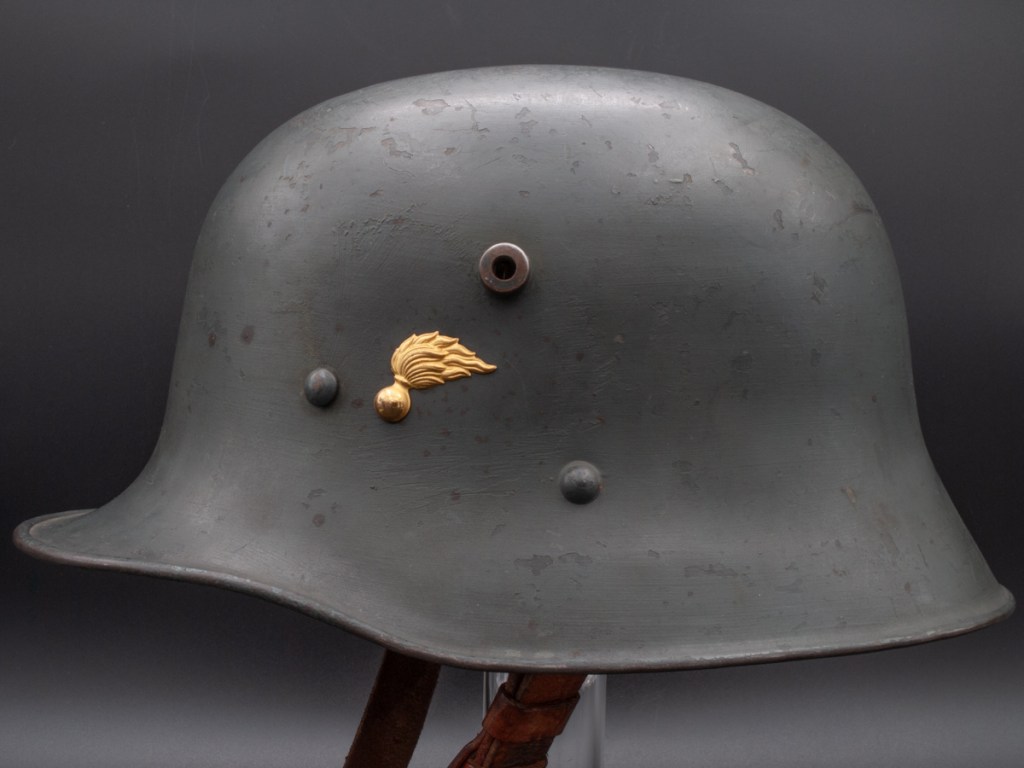
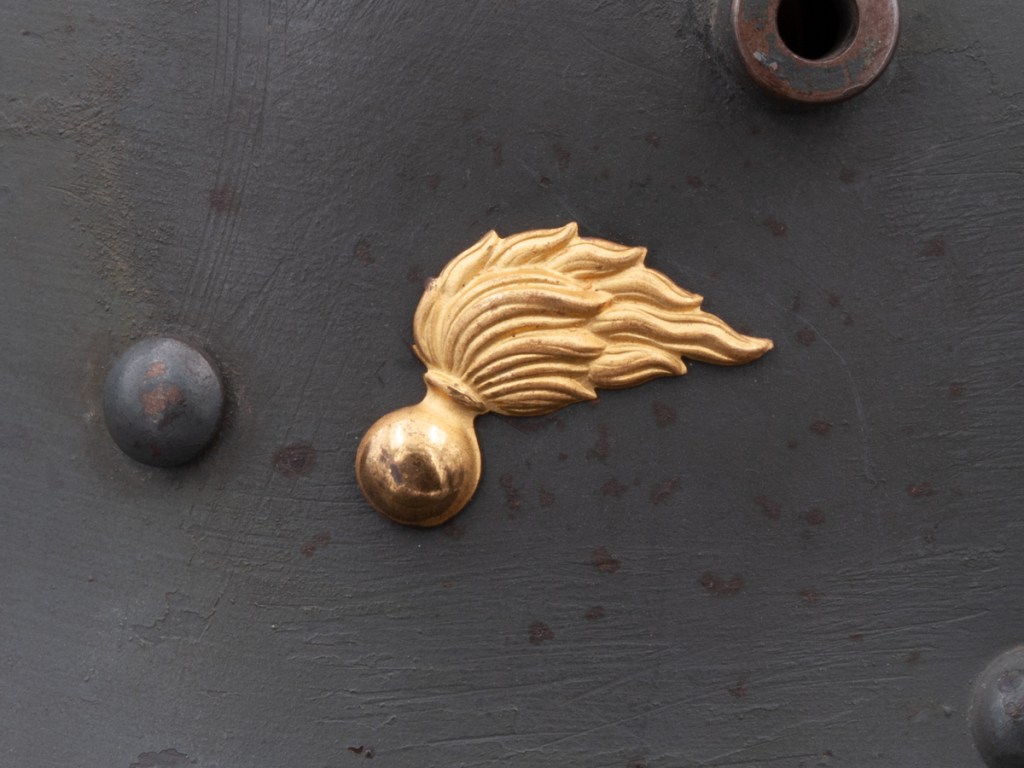
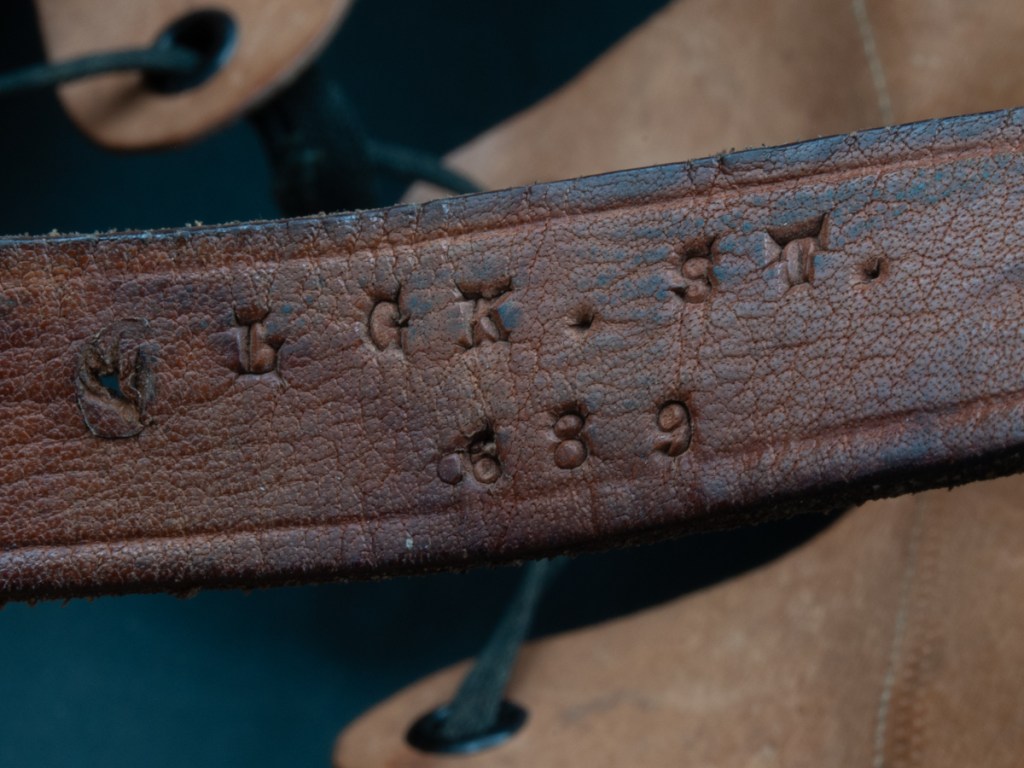
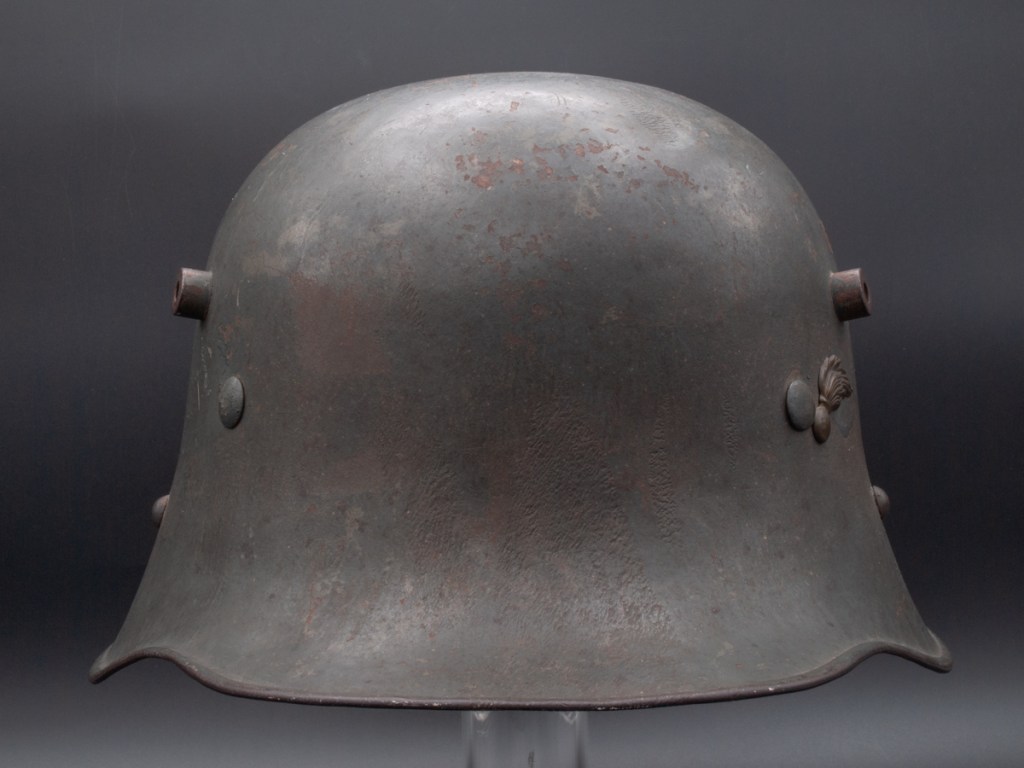
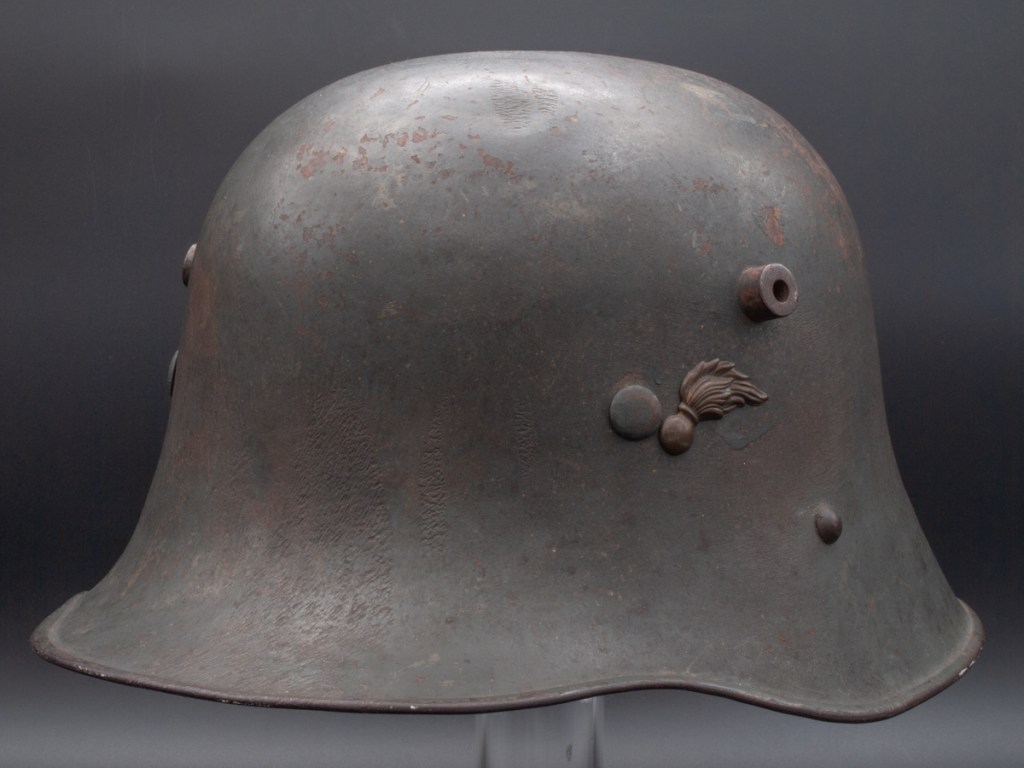
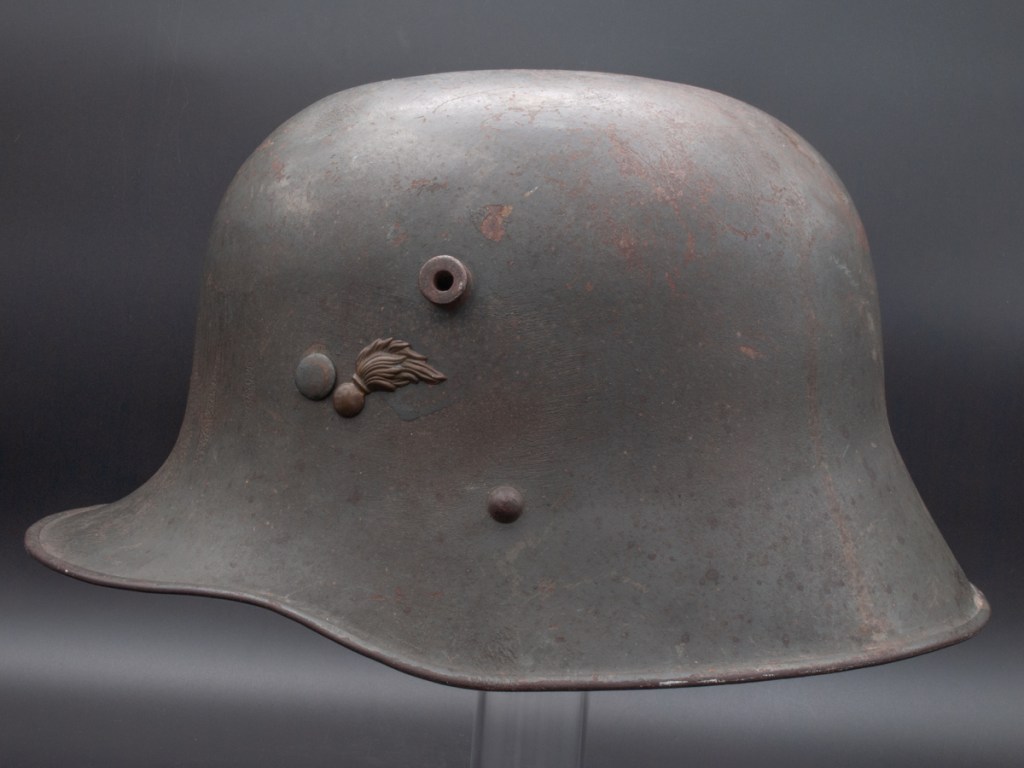
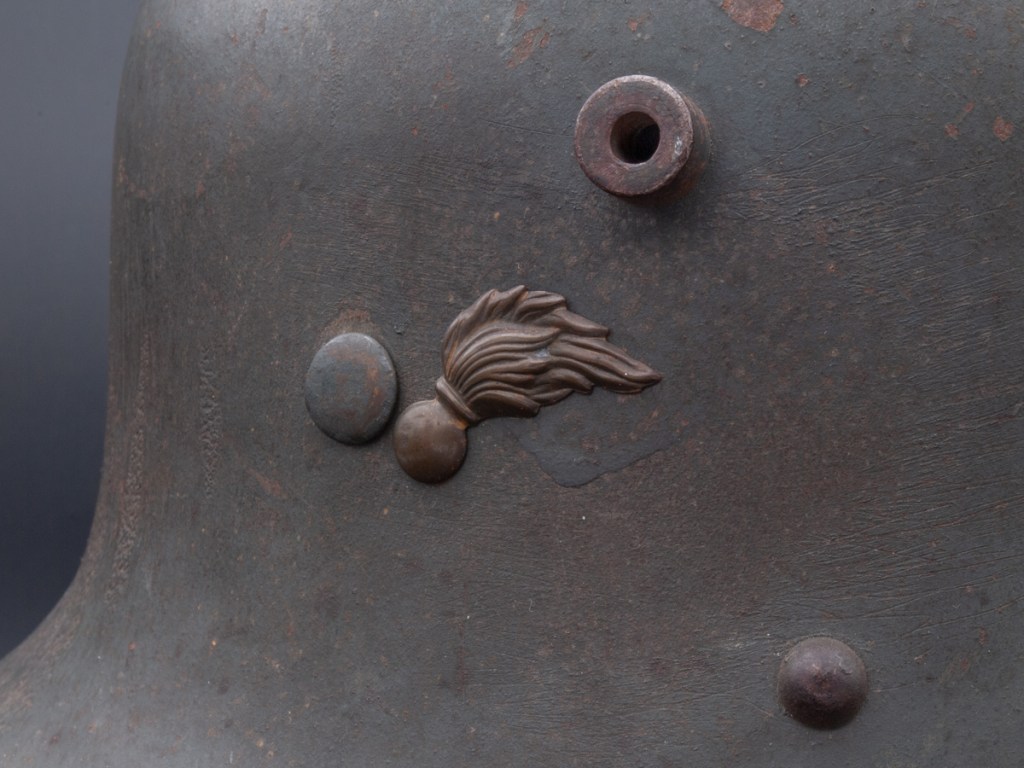
The Berndorfer company, which had manufactured helmets for the Austro-Hungarian army during the war, had a contract to produce helmets for both the gendarmerieand the Polizei. According to Ludwig Baer’s book, “Vom Stahlhelm zum Kampfhelm Teil 2”[1], Czechoslovakian dealers also sold helmets to these forces. The Czechoslovakian-made imports were less expensive, but also of lower quality. The gendarmeriehelmets were painted iron grey (“Eisengrau”) and had two holes to accommodate a flaming grenade badge or Korpsabzeichen. The Polizei helmets were painted police green (“PolizeiGrün”) and lacked holes for the badges. The liners on these helmets were basically the same as their WWI counterparts, while the chinstraps were the Austrian Model 1925 type (see also Austrian M17).[2] Surviving examples of this helmet are often marked for one of the eight Landesgendarmeriekommando units and may bear a unique arsenal inventory number. The initials “LGK” for Landesgendarmeriekommando followed by a letter like “B” or “S” representing the name of the Landesgendarmeriekommando region may be found on the skirt section, the chinstrap hardware attached to the shell, or the chinstrap. The unique arsenal inventory number may be found on the chinstrap hardware or elsewhere such as on the chinstrap. In addition to LGK-marked helmet, the following stamps may be found on post-WWI, pre- Anschluss helmets:[3]
SW – Sicherheitswache (Federal Security Service)
BP – Bundespolizei (Federal Police)
EB – Exekutivbediensteter (Civil servant or contract employee in administrative service. These are mainly employees of the security forces, federal police and prison guards)
Other markings on the Austrian interwar helmets include:
LNÖ – Sometimes found on the exterior ventilation lugs of Berndorfers. This is an abbreviation for – Land Niederösterreich (Land of Lower Austria), where the Berndorfer Metallwarenfabrik was located.
FM – Front Miliz (Front Militia). This was an Austrian paramilitary organization created in October 1936 as a replacement for the Heimwehr.[4]
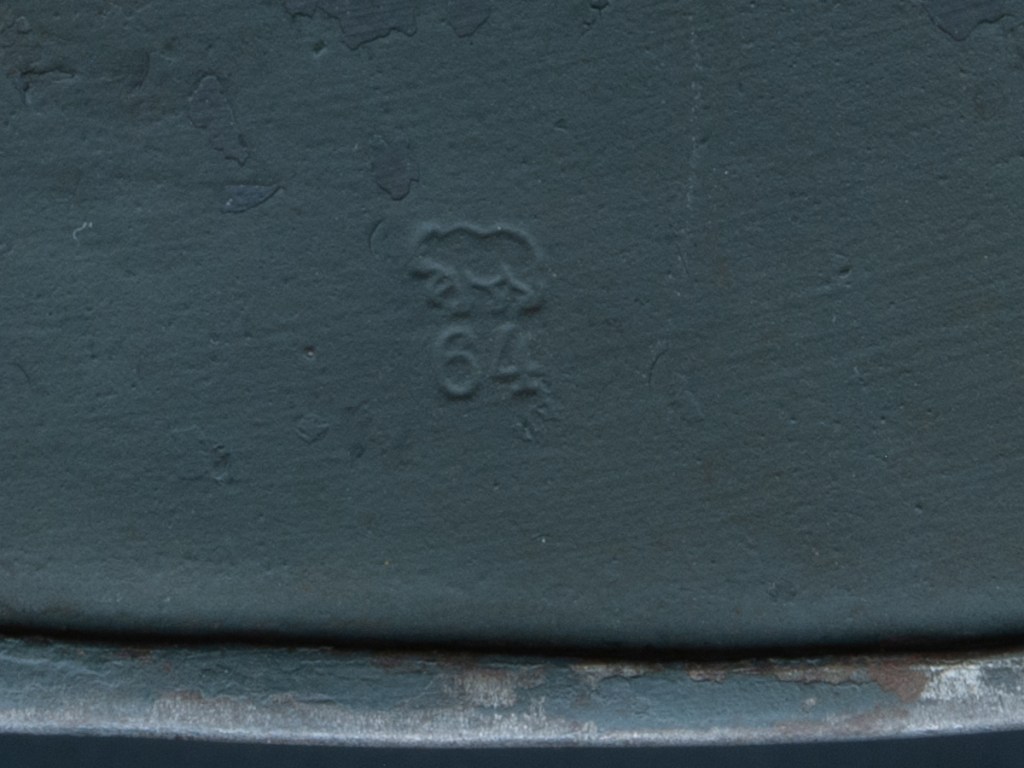
Like the helmet used by the Austrian army, the gendarmerie and police units sometimes used feldzeichen (field badge) made of three artificial white oak leaves. These were attached to a lug vent by means of a specialize brass screw called a feldzeichenschraube. The helmets that Berndorfer produced have the logo in the shape of a bear along with the helmet size.
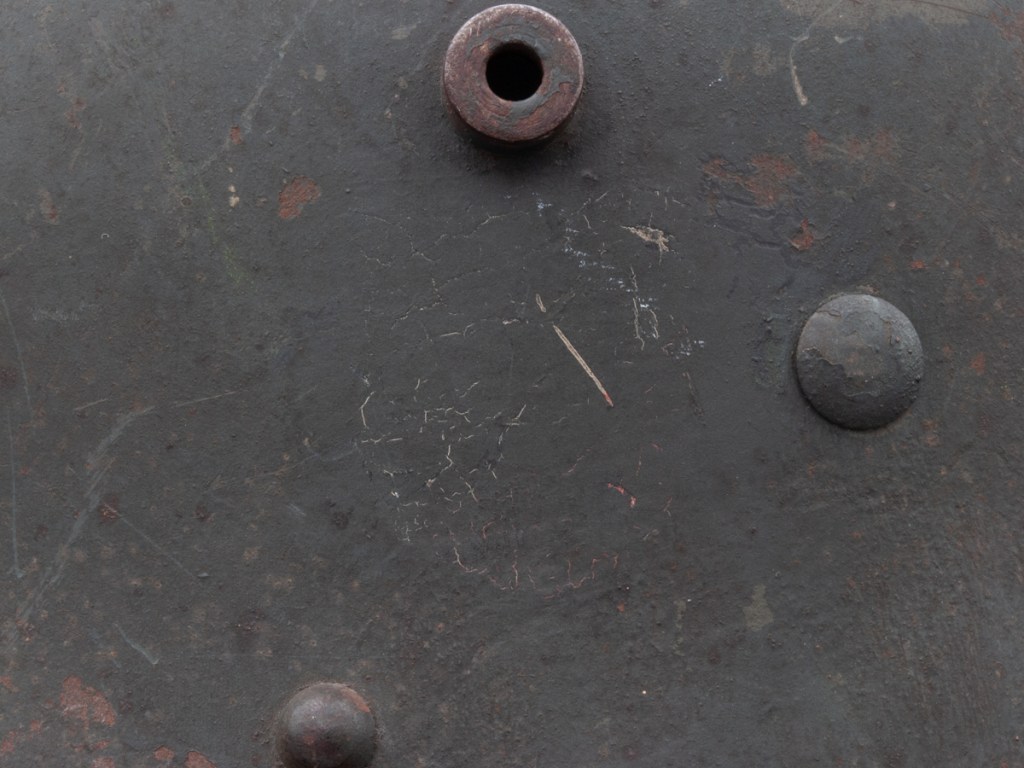
After the Anschluss, Nazis incorporated the gendarmerie and police into regular German police units (Ordnungspolizei). This required a change in uniform including the helmets. The Korpsabzeichen were removed and Nazi police double decals were applied to sides of the helmets. Gendarmerie helmets converted in this manner had holes on or near the police decal. The original liners and Model 1925 chinstraps were typically left intact and not replaced, although some received the German M31 liners and chinstraps. After the Second World War, the Austrians re-reissued some of these helmets. This involved removing the decals, repainting the helmets grey and attaching Korpsabzeichen via the holes on the side of the shell. These re-reissued helmets were identical to the pre- Anschluss versions and can be difficult to distinguish from one another. On the early post-WWII gendarmerie helmets there may be scratch marks where decals were removed and the helmets may be hand painted. Leftover M35/40/42 helmets were also refinished for gendarmerie in this manner (repainted grey and Korpsabzeichen sometimes attached to the sides).[5]
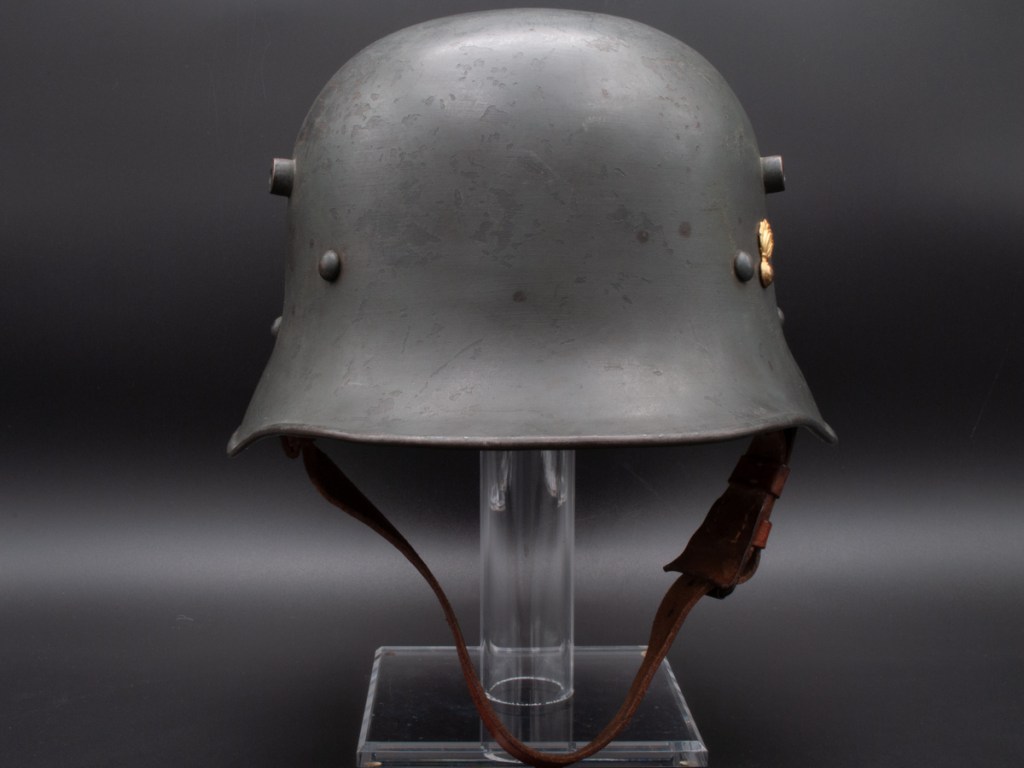
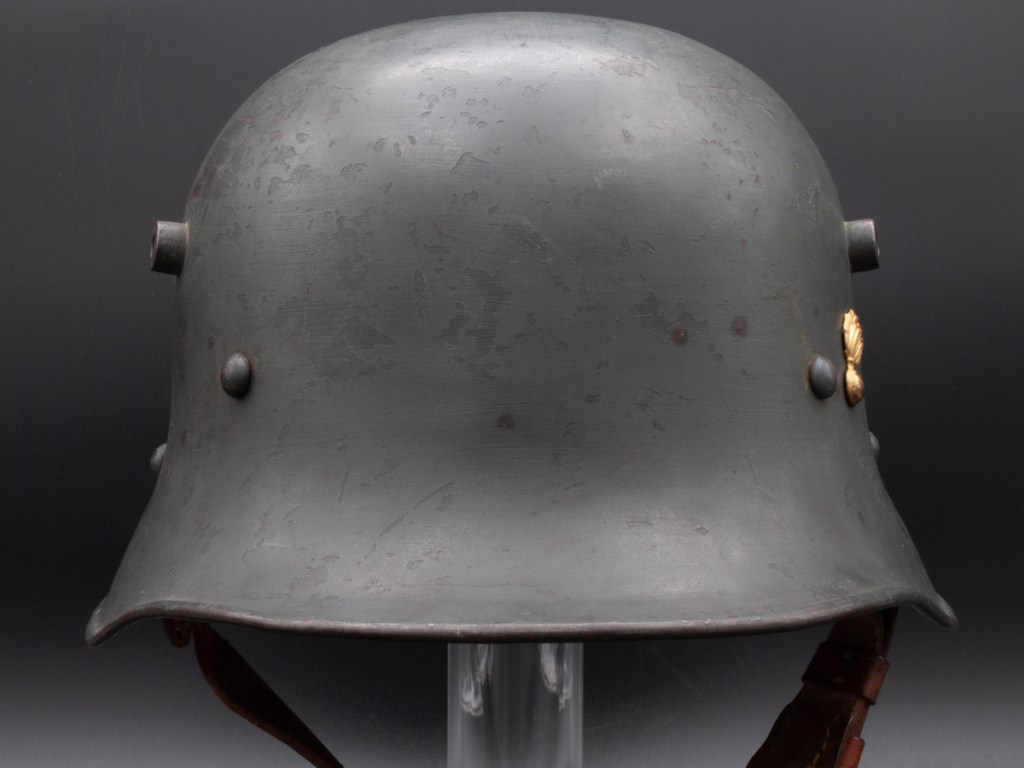
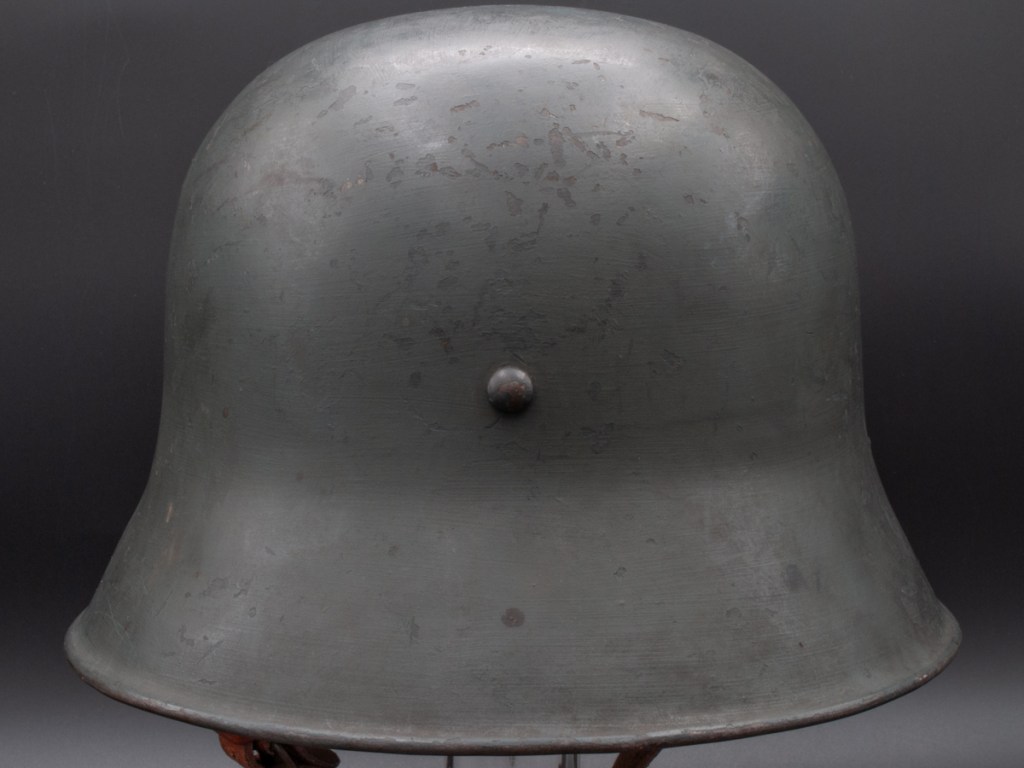
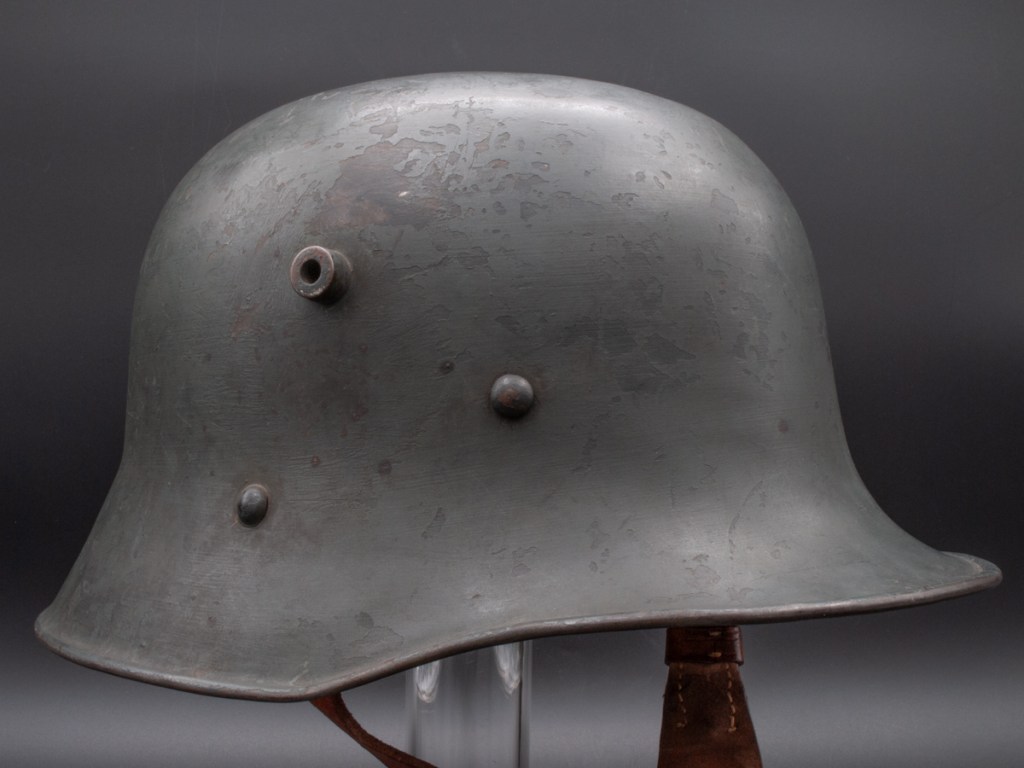
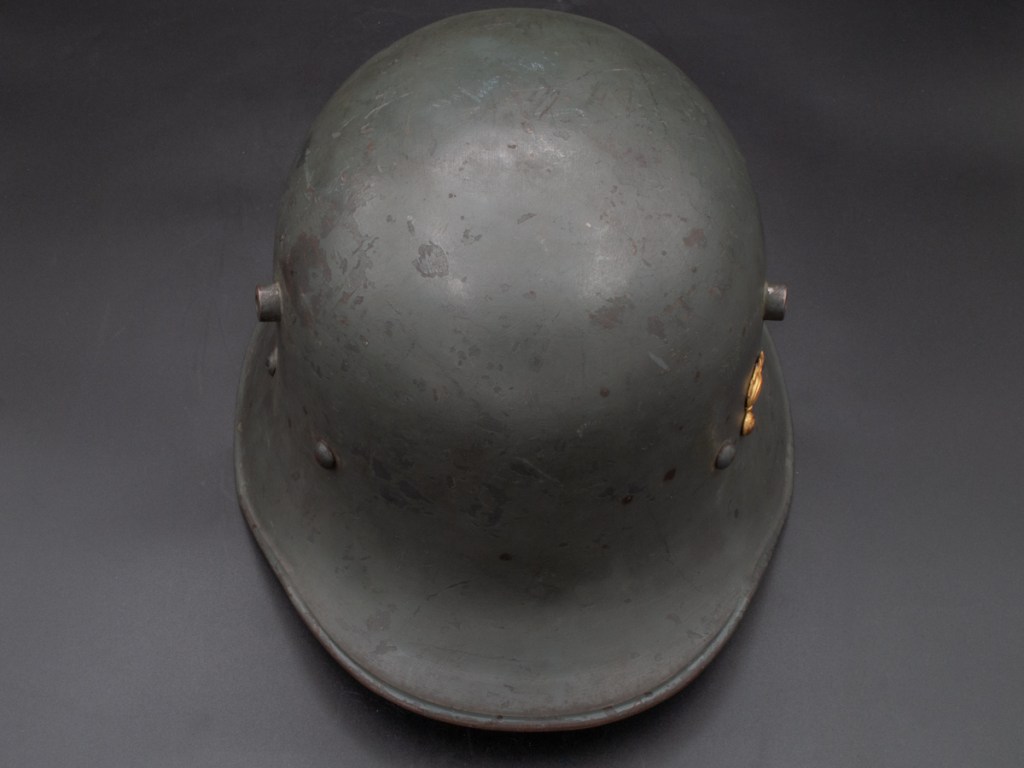
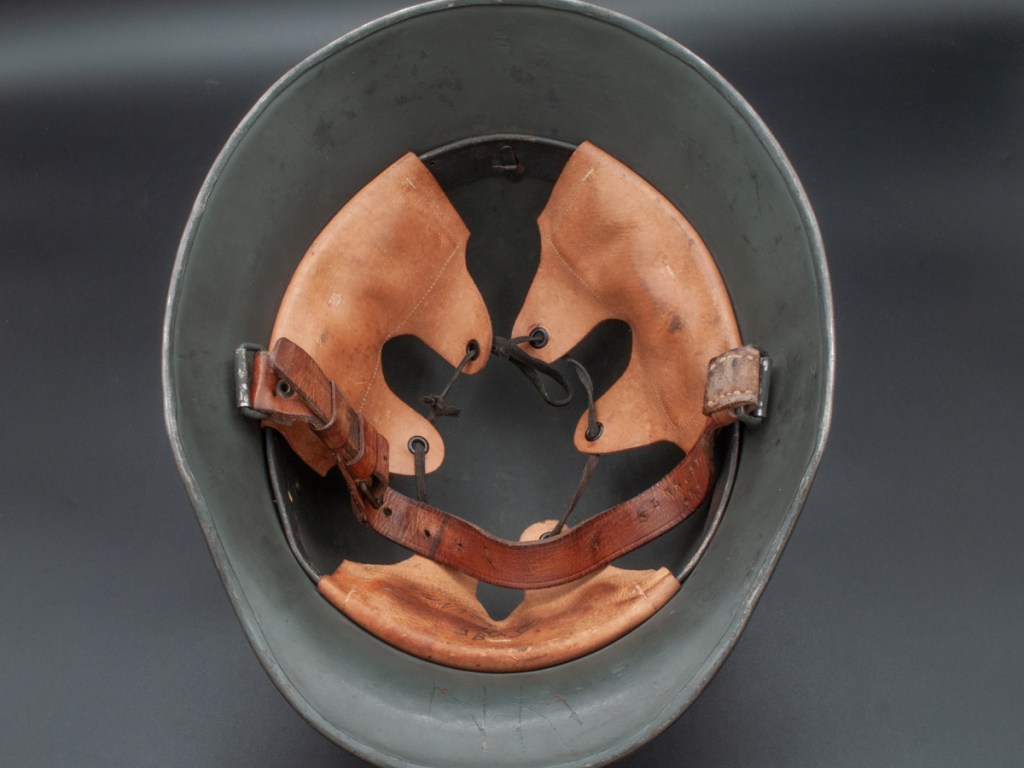
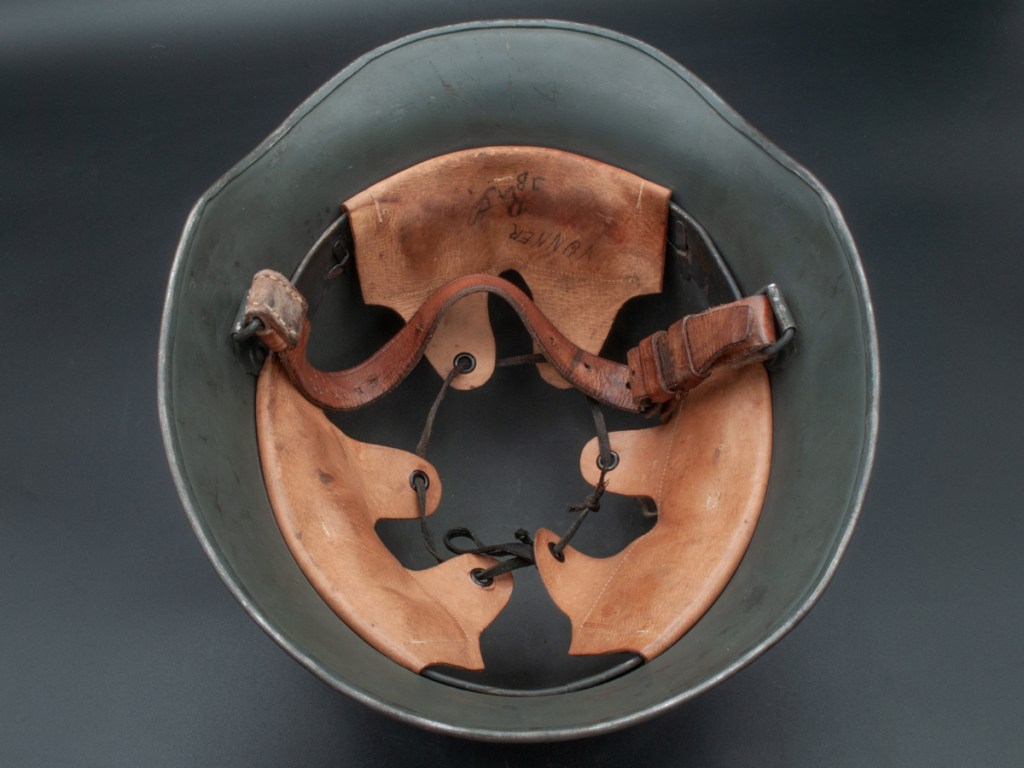
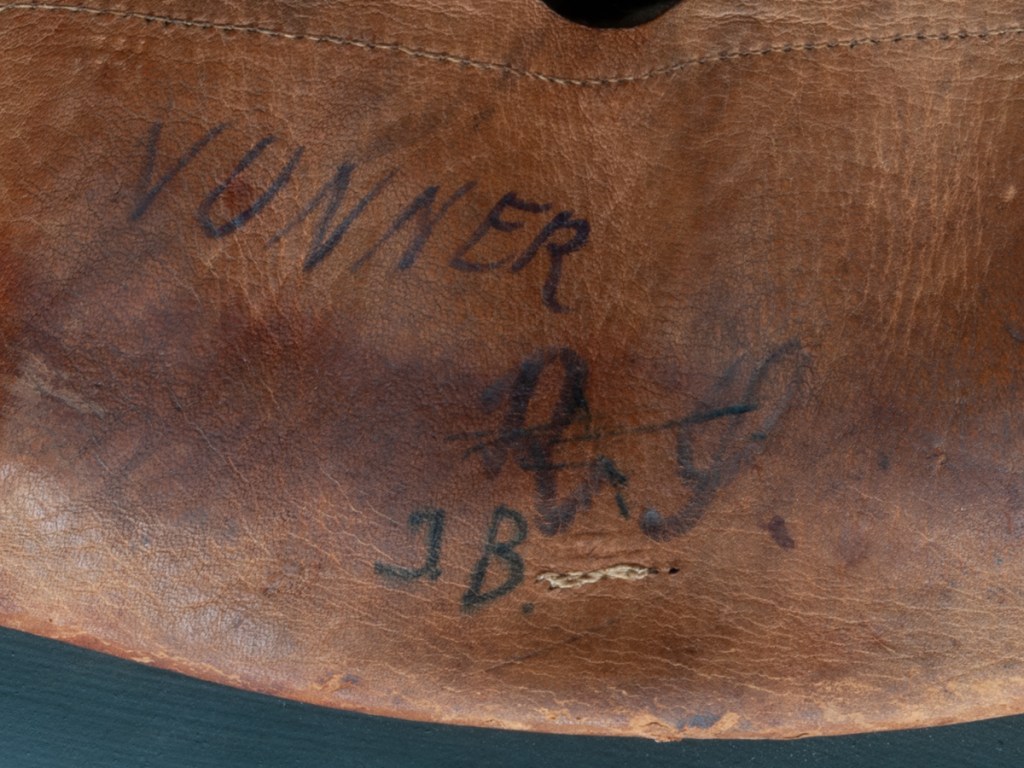
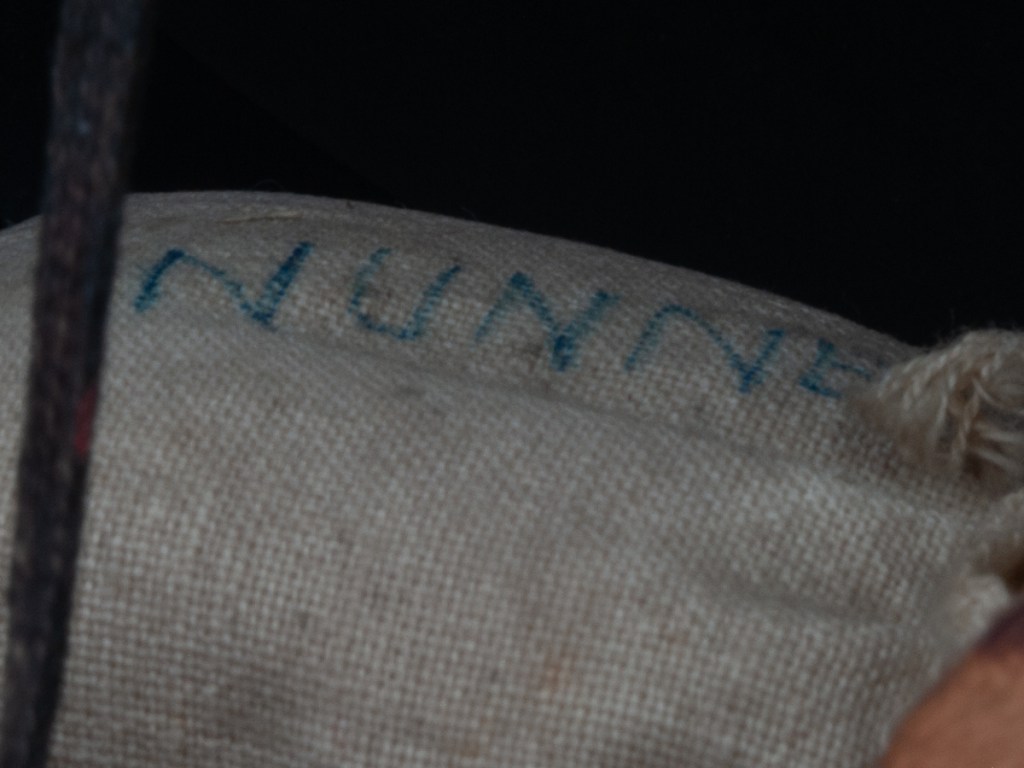
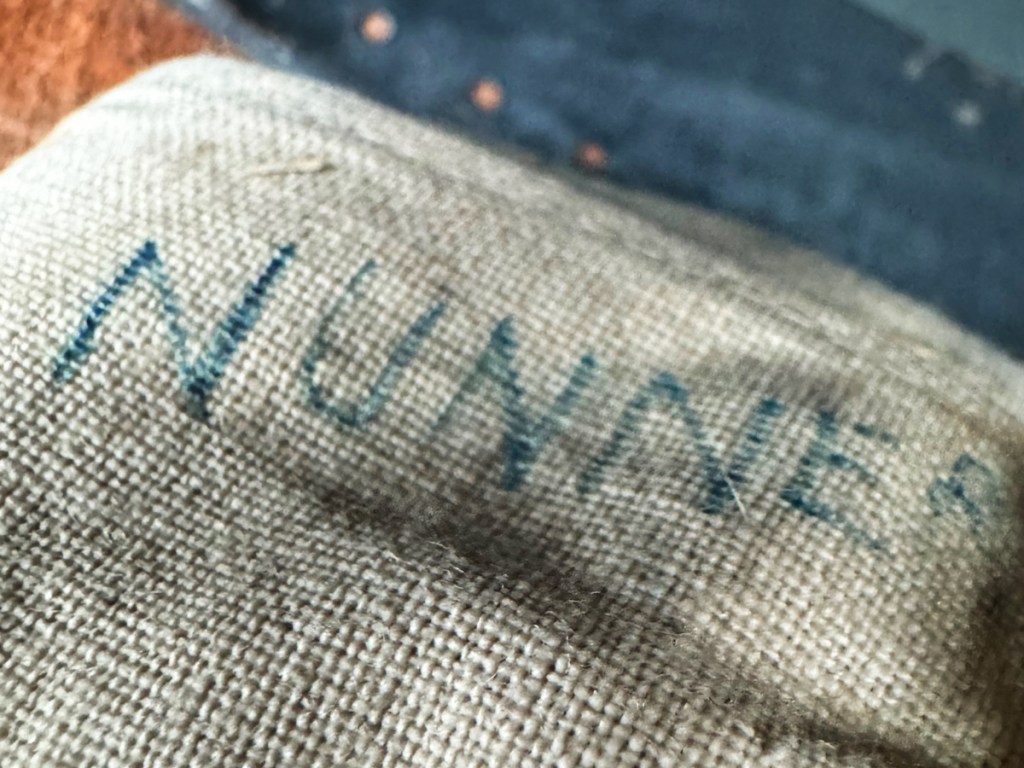
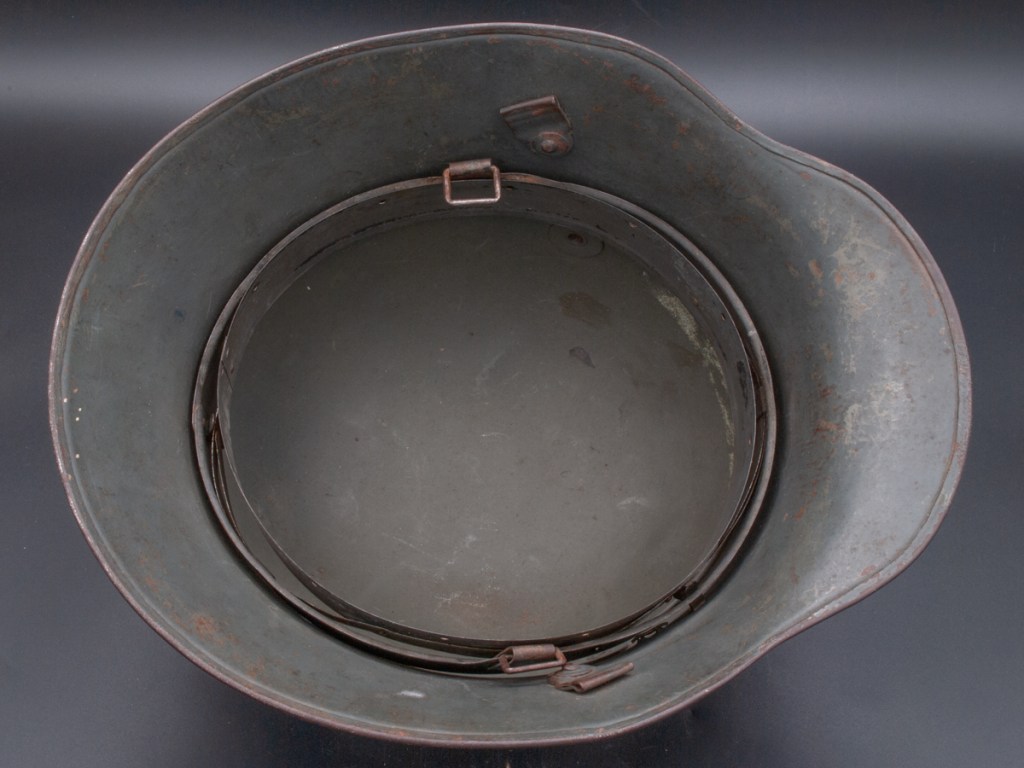
Displayed Example: I purchased the helmet in the first set of gallery photographs below in early 2025 from an eBay dealer. It is an exceedingly rare example of an Austrian 1930s vintage gendarme helmet in its original configuration. This example was reconfigured with Nazi police decals and then reconfigured once more in the early post-WWII era by scratching off the decals, repainting the helmet its original grey color and reattaching the Korpsabzeichen. The factory original M25 chinstrap is stamped “L.G.K. ST. 689.” This is an abbreviation for “Landesgendarmeriekommando Steiermark” which translates as “Headquarter of the Gendarmerie in Styria.” The “689” is a unique arsenal inventory number assigned to this particular helmet. The helmet has the Berndorfer logo and the helmet size, 64, stamped in the rear skirt section. Note that the side lugs lack the step which would have been used in a wartime version of the size 64 helmets. The step was designed to accommodate a one-size-fits-all stirnpanzer (frontal armor) on smaller sized helmets, but was likely omitted in the interwar models because the gendarmerie did not anticipate the need for stirnpanzers. The helmet apparently had three owners. Two are identified with initials only: “J.B.” and “R.G.” The third, “Nunner,” printed his last name on a liner pad and inside on one of the liner pillow pouches.
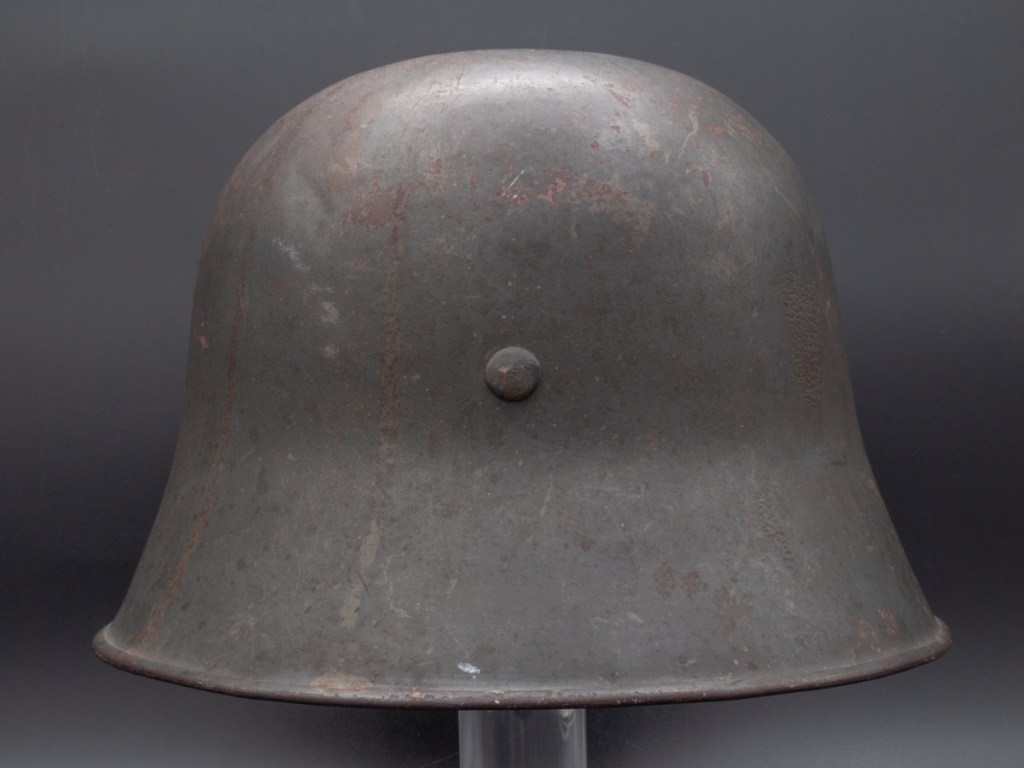
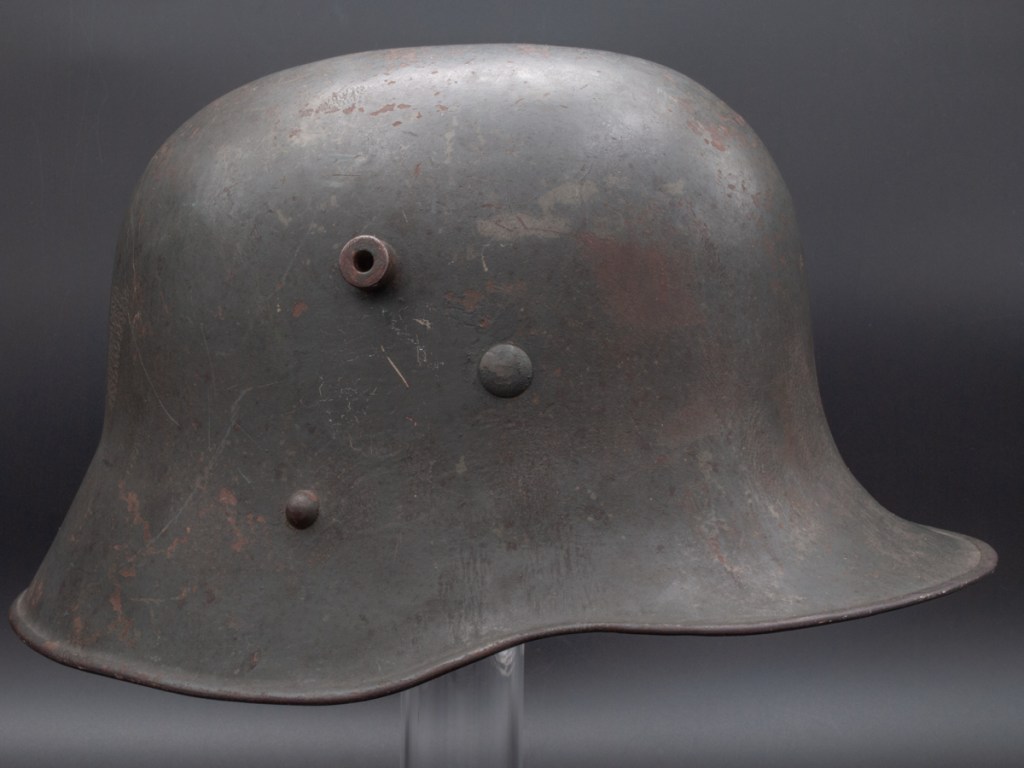
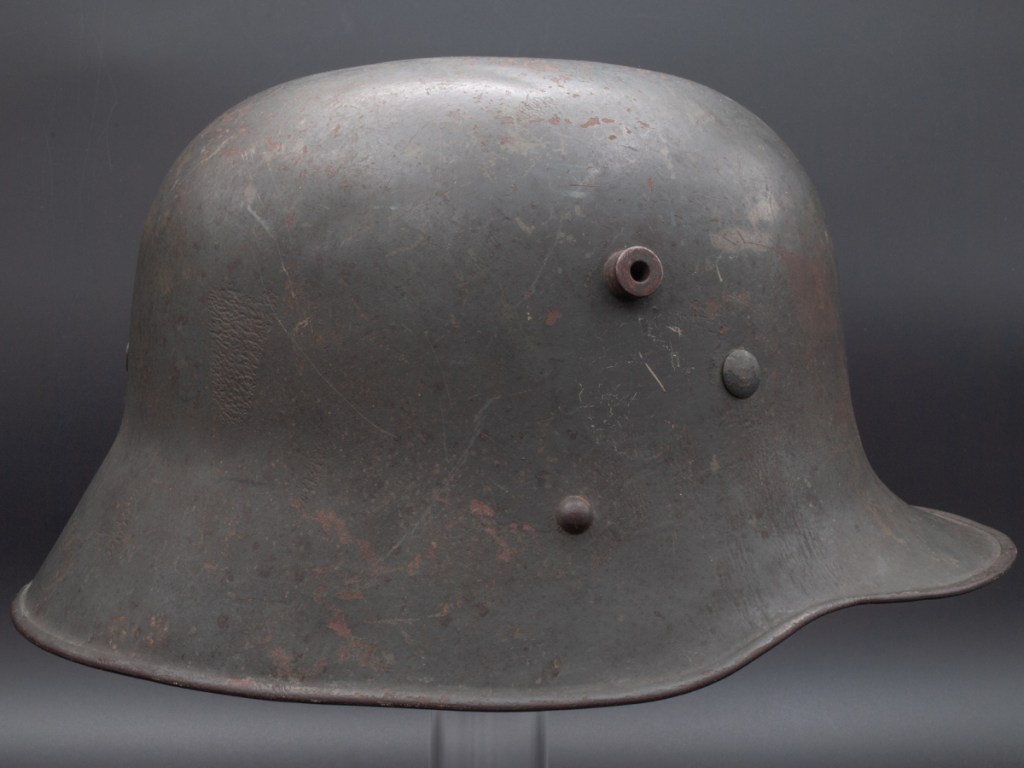
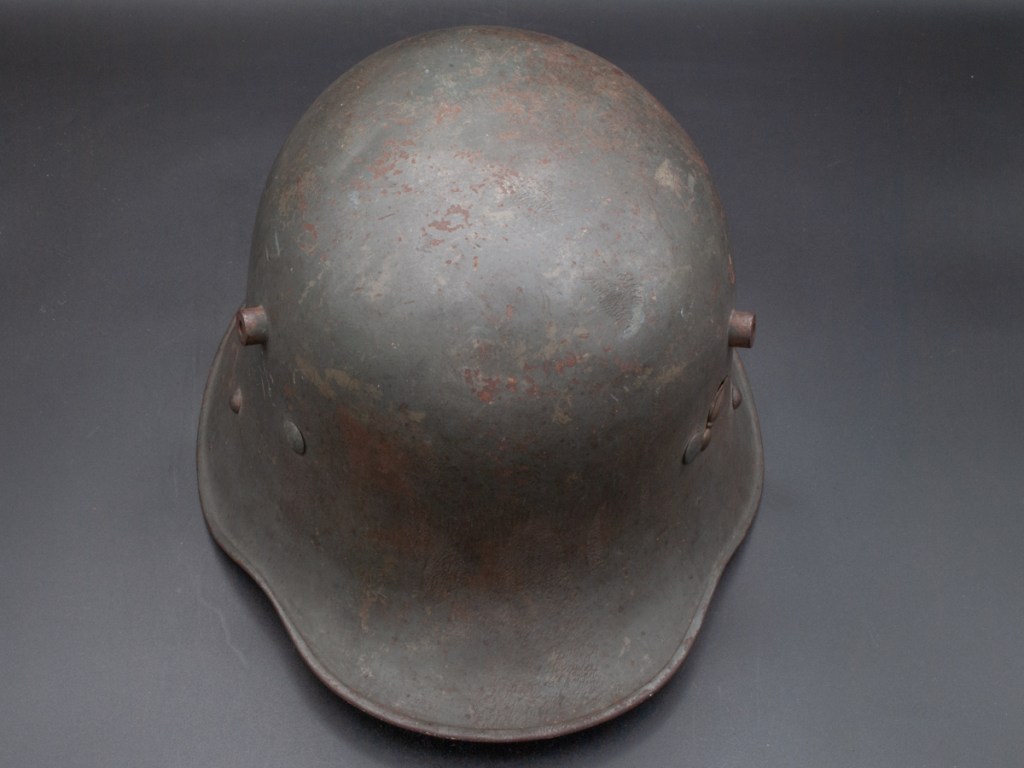
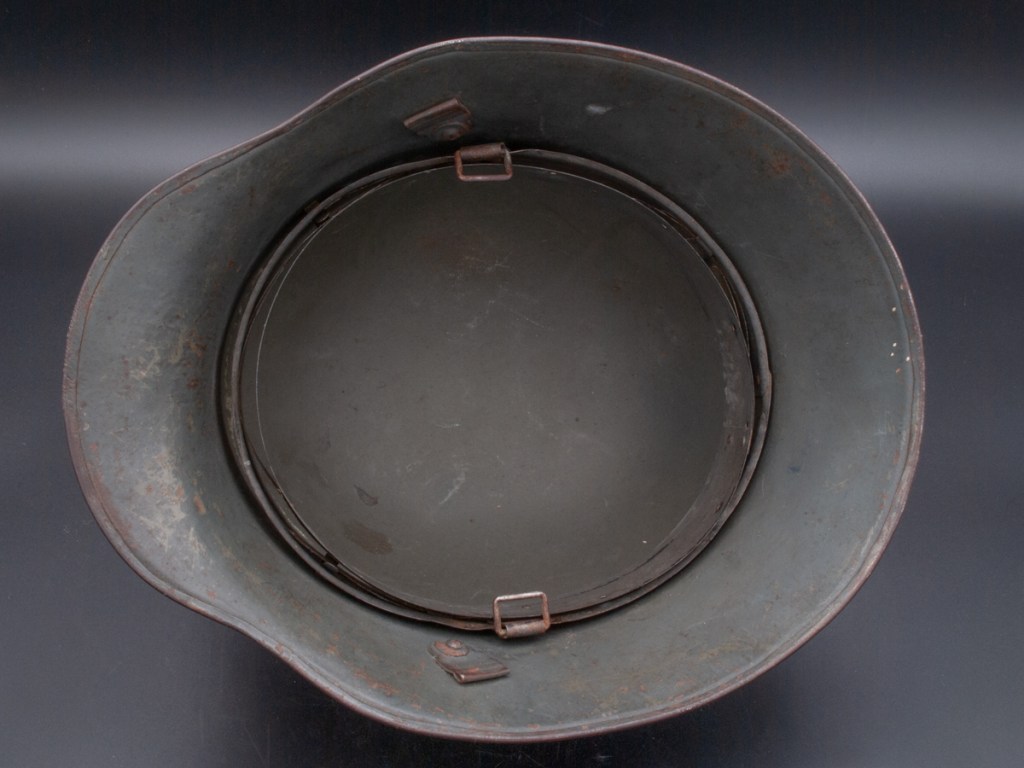
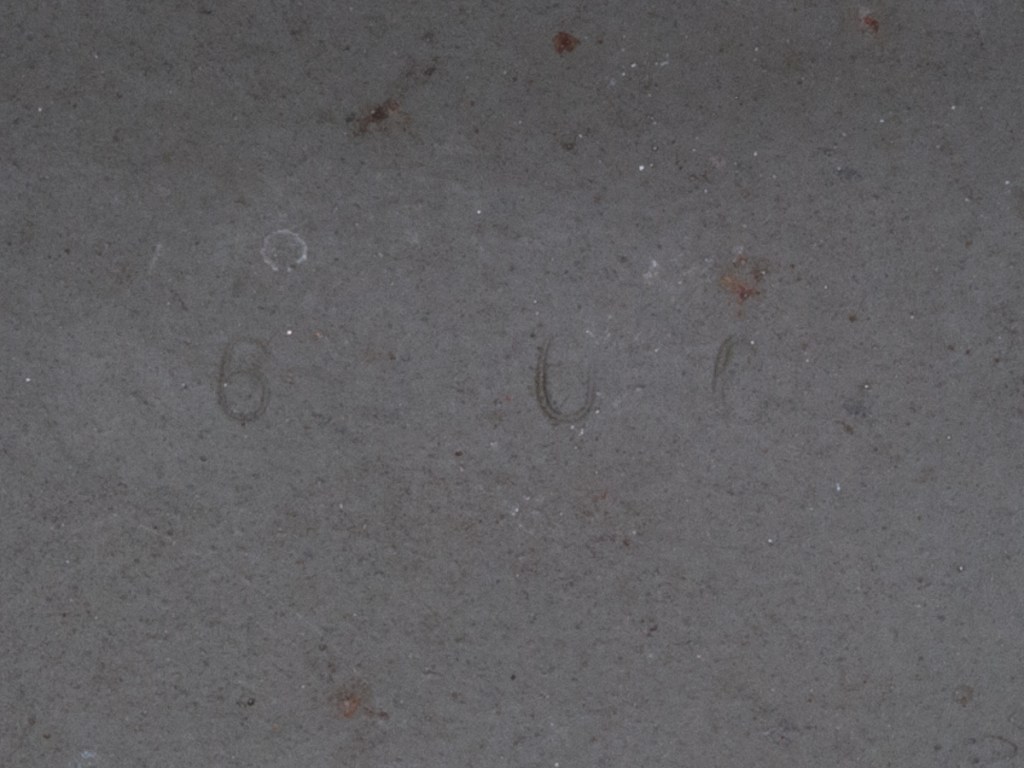
The helmet in the second set of photographs came from a dealer at the 2026 Show of Shows. There are no manufacturer’s stamps on this piece. It may have been manufactured in Czechoslovakian after the First World War. The shell appears to be a size 66 although there is no size stamp. The helmet was reissued after the Anschluss at which time Nazi police decals were applied. The Nazi state decal is visible under the paint on the right side of the helmet although the police decal was scratched off before the helmet was repainted. Unlike the first helmet above, this one had its Austrian liner replaced by a 1942 dated liner made in Litzmannstadt[6]. The leather part of the liner and the chinstrap are gone, but the manufacturer and size stamps are visible on the liner band. The liner size is 64. It is common for WWI helmets reissued in the WWII era to be equipped with M31 liners that are one size smaller than the shell as is the case in this instance.
Collector Notes: These interesting and historical helmets are rare and command relatively high prices, particularly in their Nazi era configurations. Examples in their 1930s configurations, even in Austria, are “next to impossible to find”[7] according to one Austrian collector that I have correspond with.
[1] Baer, L. 2006.
[2] Gruber, Bernhard. “M17 Berndorfer Austrian Rural Gendarmerie!” German Helmet Walhalla. April 27, 2008. Post #6. https://www.germanhelmetwalhalla.com/topic/6247-m17-berndorfer-austrian-rural-gendarmerie/ Accessed January 22, 2025.
[3] Prohorov, Pavel. Personal communication.
[4] Prohorov, Pavel. Ibid. January 23, 2025
[5] Baer, L. 2006. pp.90
[6] The Nazis renamed the Polish city of Łódź “Litzmannstadt”
[7] Gruber, Bernhard. ibid

 Steel Helmets of the World Wars