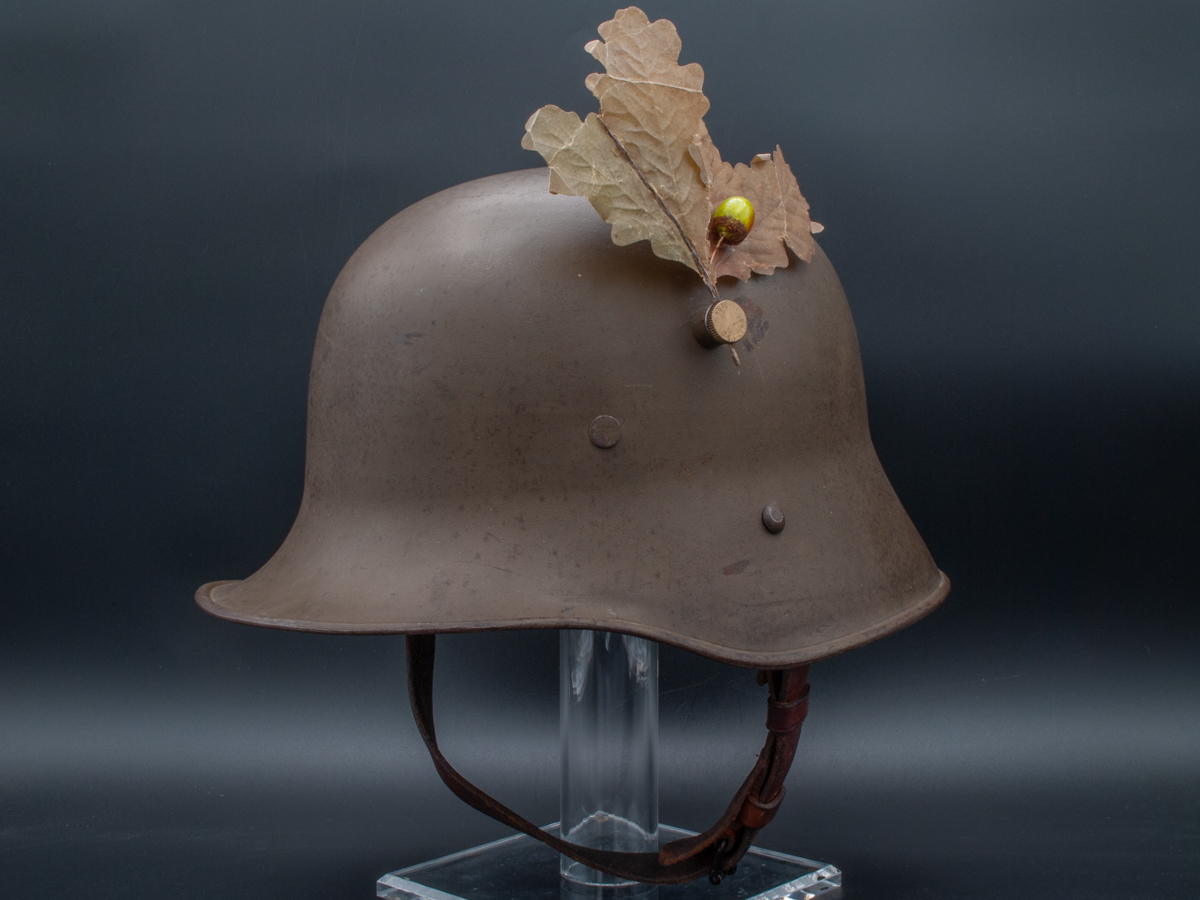
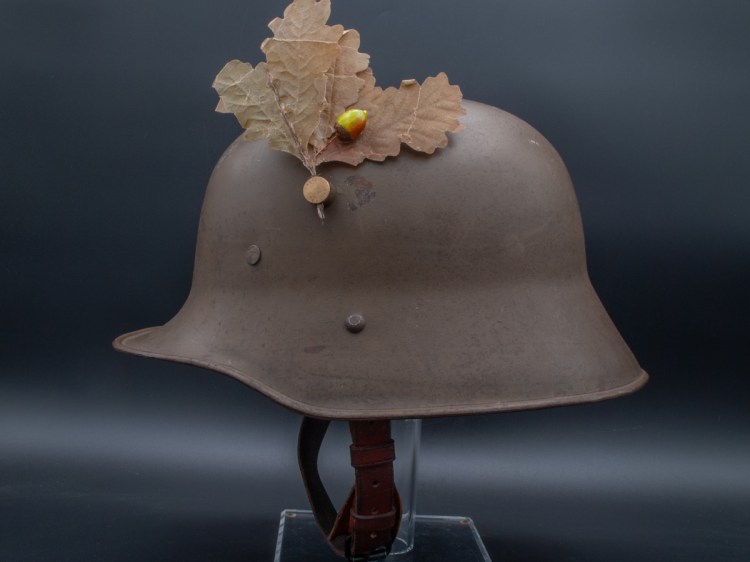
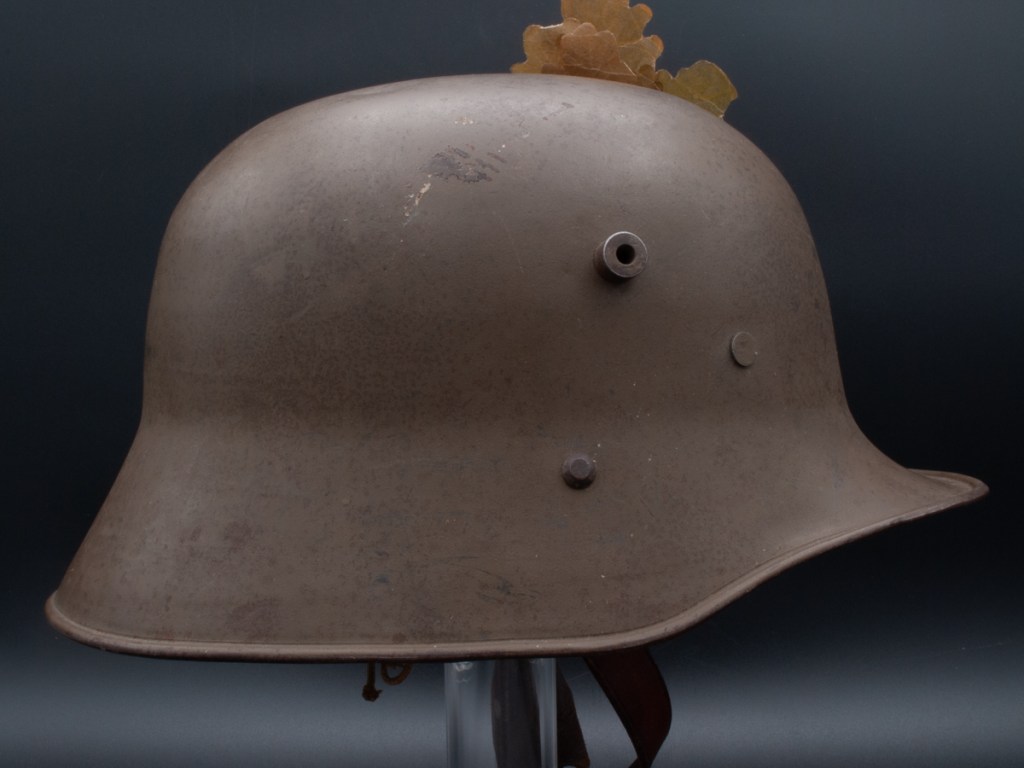
General Information: After the First World War the newly independent country of Austria continued to produce Austro-Hungarian Model 1917 type helmets. These helmets were nearly identical to their wartime counterparts. A quick differentiator for the collector is that the earlier helmets had cloth chinstraps whereas the later versions had leather chinstraps. The thick headed rear split pins used on the wartime models to secure the stirnpanzer straps were generally omitted in the helmets produced after 1918. The color of the helmets was brown like the Austro-Hungarian type.
In 1919 the Austrian Ministry of War identified companies that produced steel helmets and components. The document[1] lists the following helmet manufactures:
1. Krupp A.G in Berndorf. (Berndorfer bear logo, size 64)
2. Warchalowsky, Eissler & Co (acquired by Steg 1925) (“Steg 66” in an oval)
3. Josef Hirsch & Sohne (no manufacturer stamp?)
The Austrian postwar production of the German style helmets is not well documented and it is possible other Austrian companies not listed in the 1919-dated document manufactured helmets in the interwar period. Specifically, some collectors speculate that the Gebrüder Böhler & Company, which was a wartime producer of helmets based in Kapfenberg, Austria, may have continued production in the post-World War One era.[2] [3] In the 1919 Ministry of War document, Gebrüder Böhler & Co, however, is listed as merely a manufacturer of steel plates and helmet accessories. These helmets were all size 66 and bore a logo in the shape of a star.
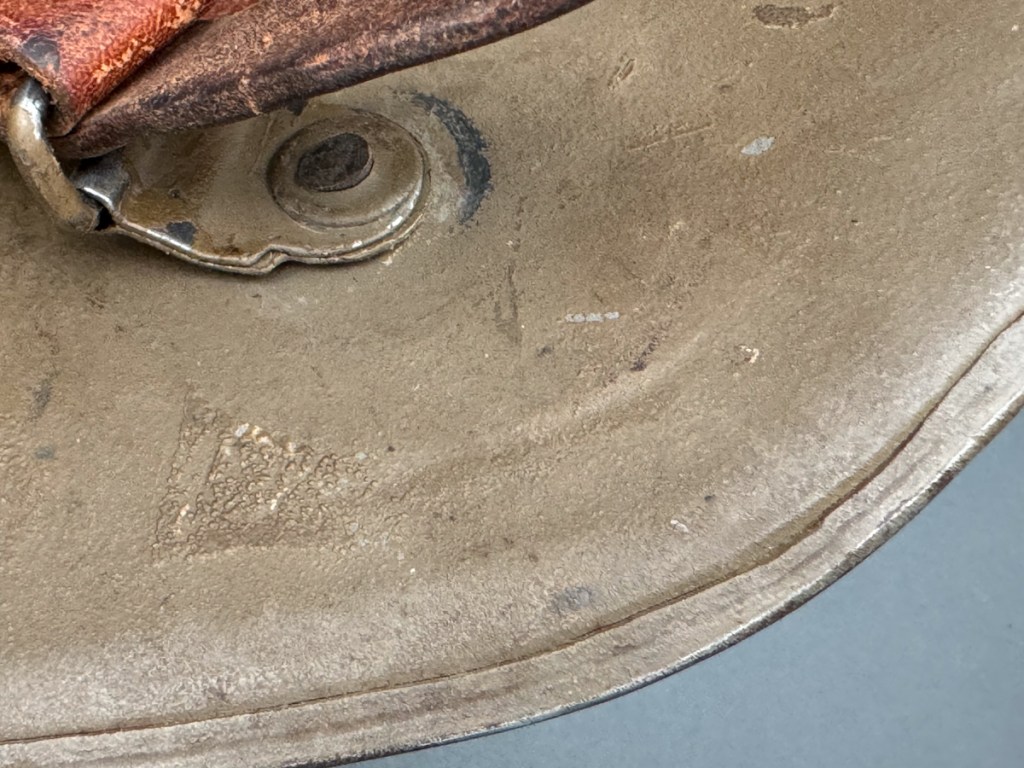
Some postwar helmets, like the one in this post, lack manufacture stamps and the maker, or makers, of these helmets are currently unknown. The Josef Hirsch & Shone company likely would have been a postwar manufacturer of unmarked helmets, but there may have been others. Krupp A.G in Berndorf had a contract to manufacture helmets for the Austrian gendarmerie and Polizei (see Austrian Gendarme). The Steg Austria company bought the wartime helmet manufacture Warchalowski, Eissler & Co. of Vienna in 1925 and produced helmets bearing the logo “Steg 66” with the word “Steg” in a circle.
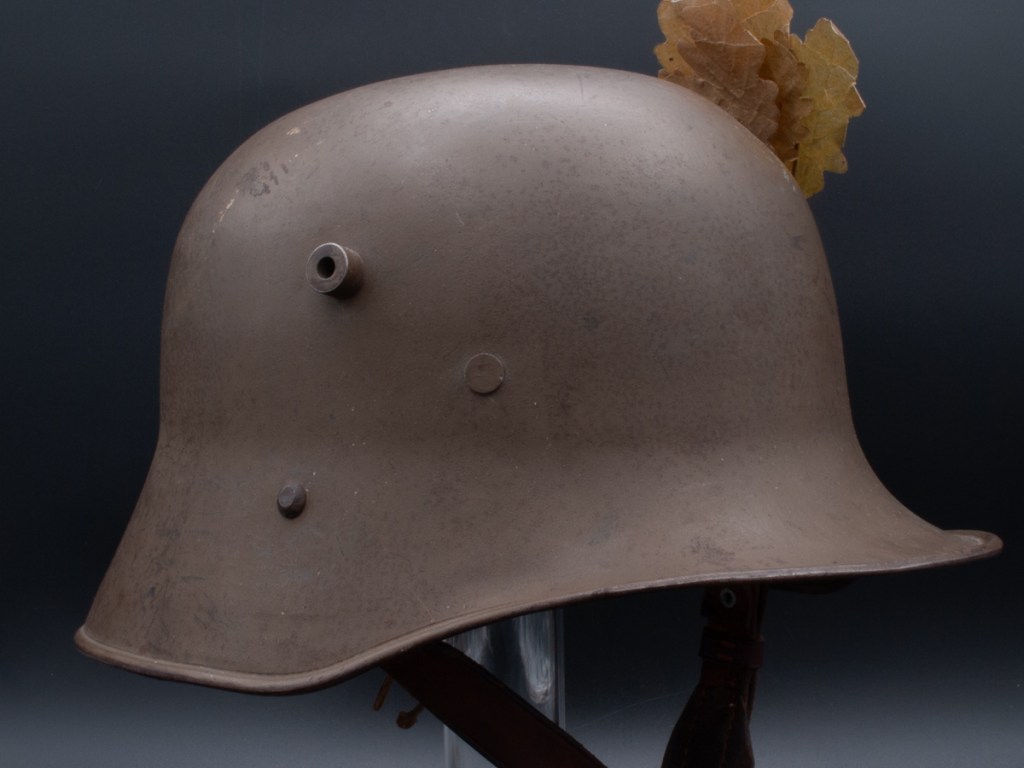
To further muddy the picture for collectors, the Czechoslovakians manufactured German-style helmets after the war. Since these were also made in factories that were part of the former Austro-Hungarian empire, these helmets followed the KuK pattern of having the chinstrap attachment lugs higher in the visor than the German-made helmets. The early Czechoslovakian helmets were painted brown, although later ones were painted green. Externally, these Czechoslovakian helmets, therefore, can be identical to Austrian helmets. One quick differentiator is that the Czechoslovakian helmets tended to have domed rivets for attaching the liner bands whereas the Austrian helmets tended to have flat rivets for this purpose. [4] There are exceptions to this rule, however, such as the postwar Berndorfer helmets which used domed rivets for chinstrap attachment.
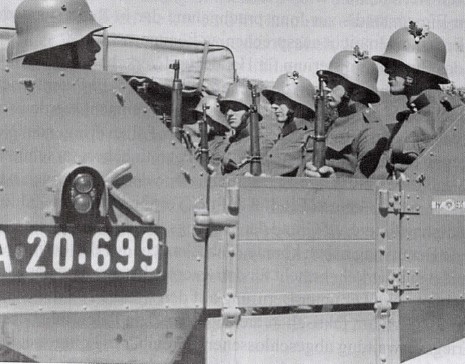
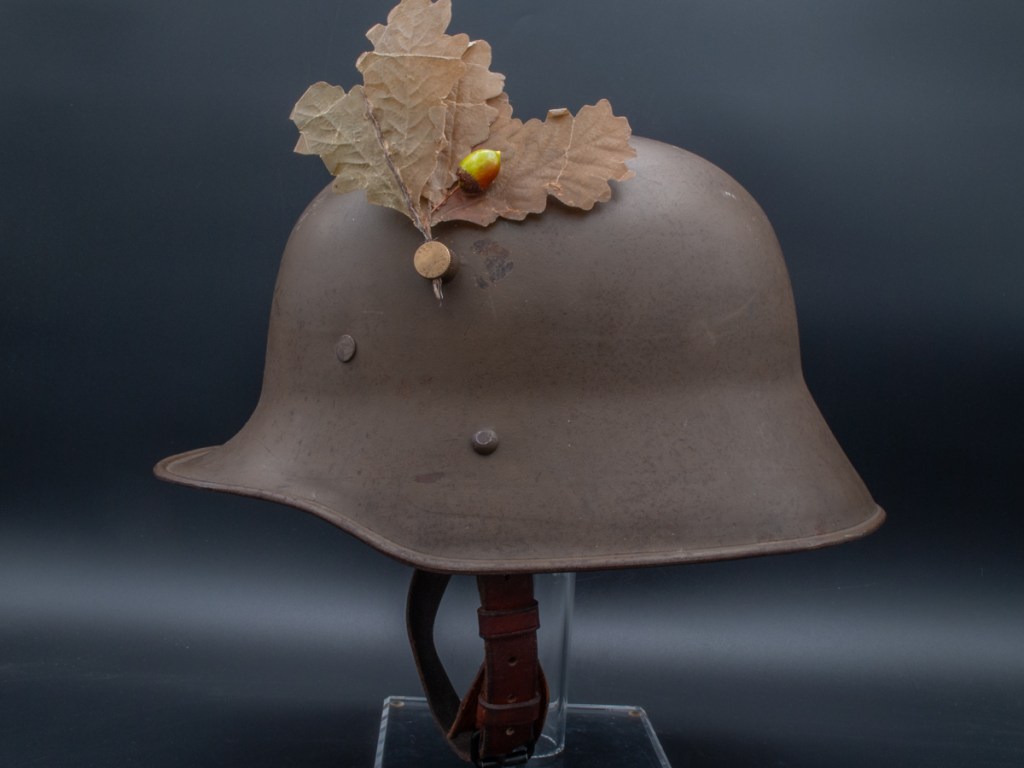
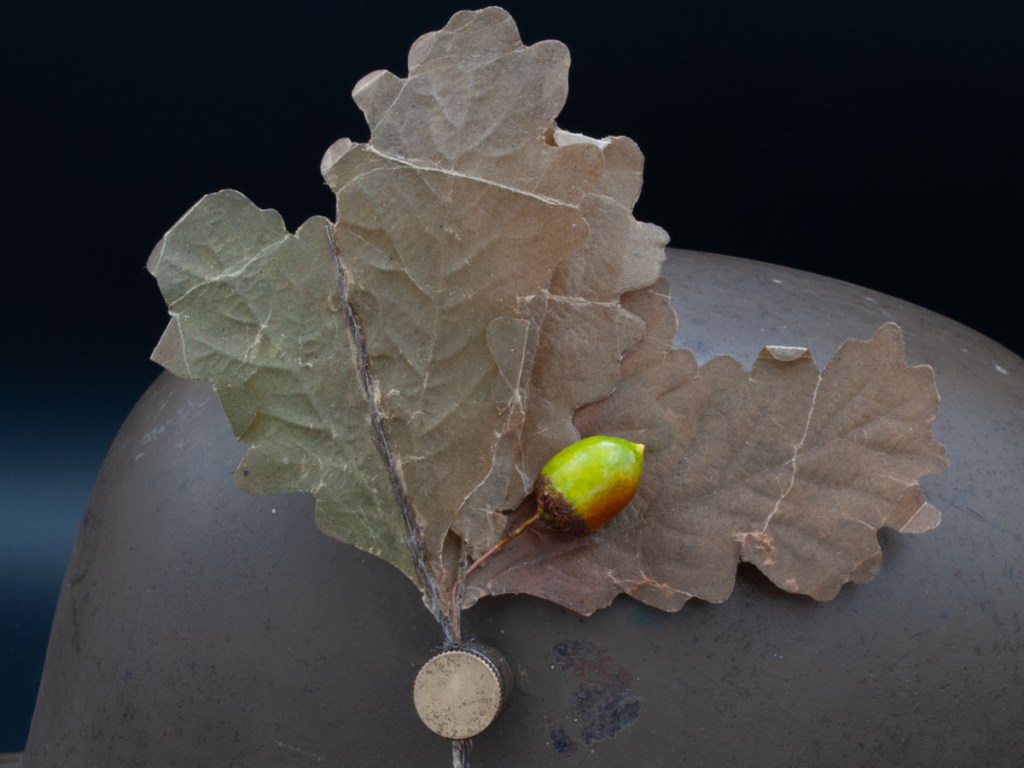
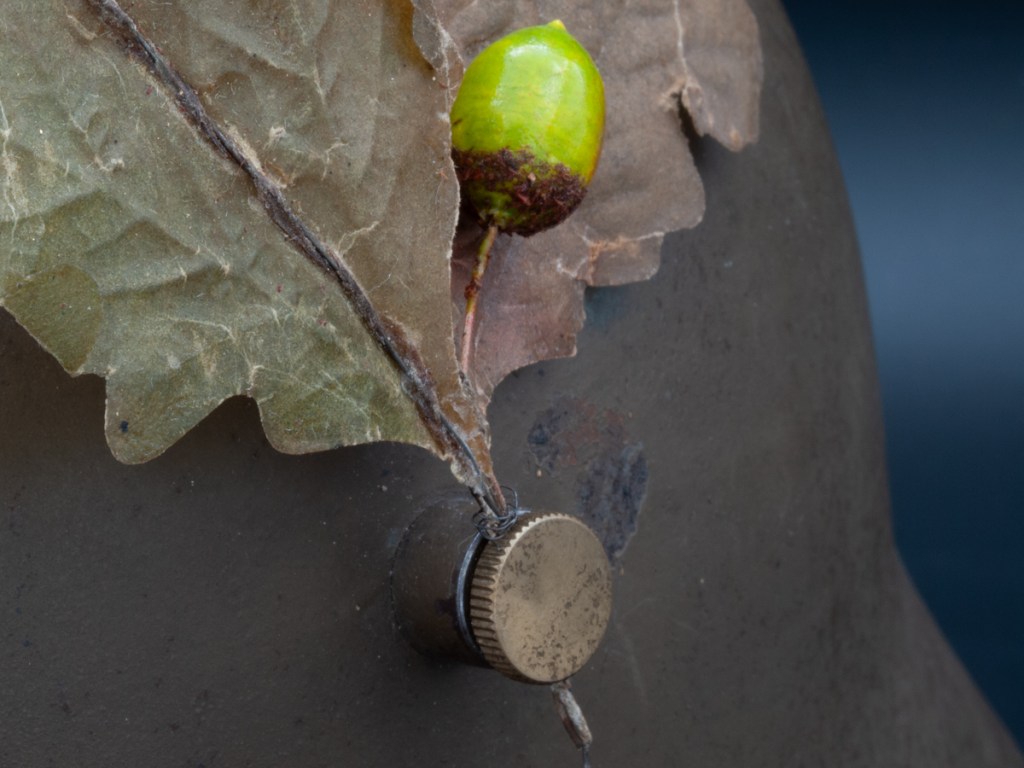
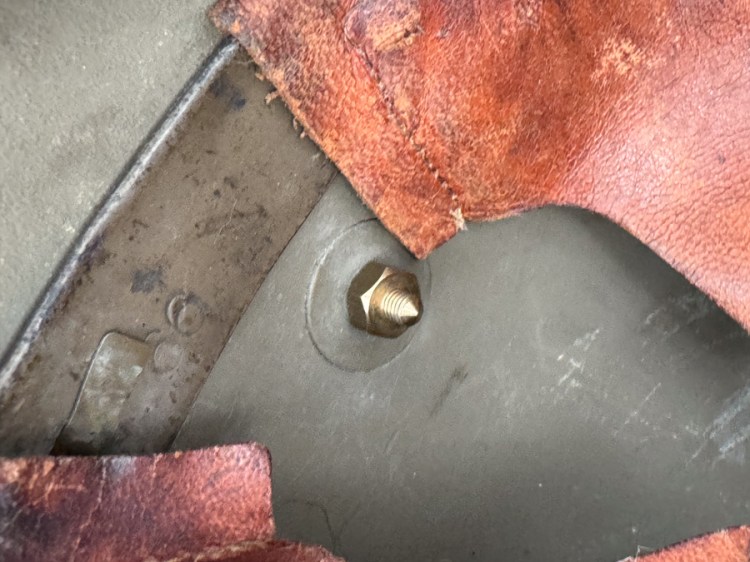
The Austrian army used a feldzeichen (field badge) consisting of three artificial white oak leaves to adorn their helmets for parade or ceremonial purposes. These were attached by means of a feldzeichenschraube (field screw) made of brass. The feldzeichenschraube was supposed to be bright according to army specifications.[5] The Austrian armed forces and gendarme revived the practice of using feldzeichen in the post-WWII era and these were identical, or nearly identical, to those used in the interwar period.
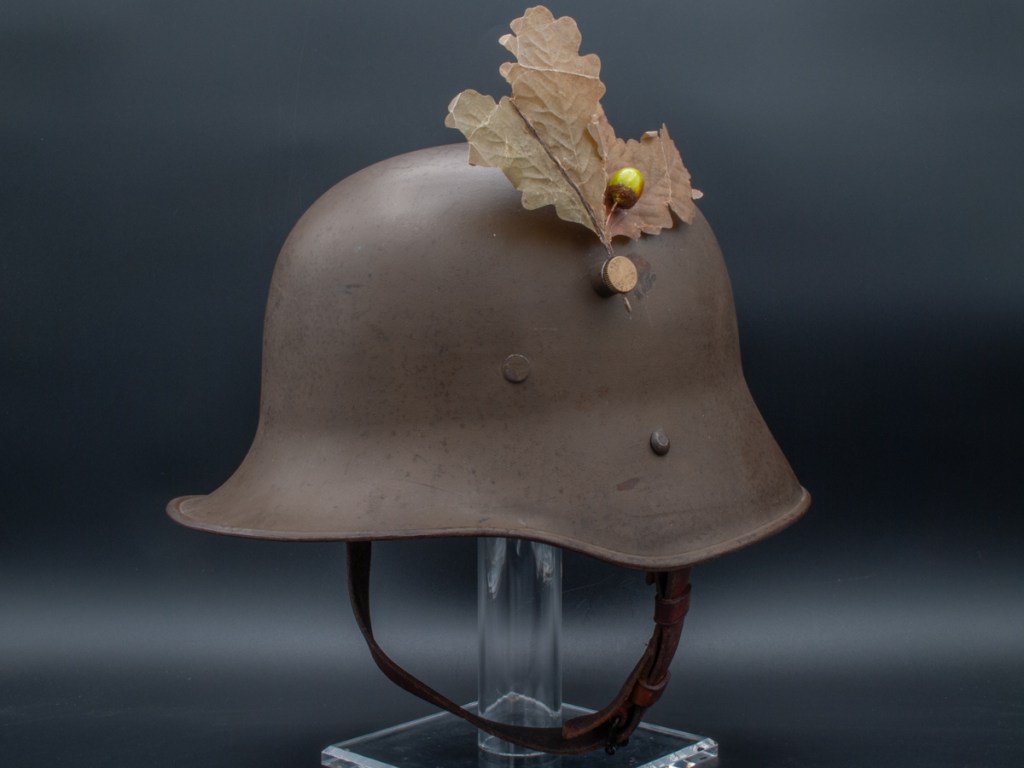
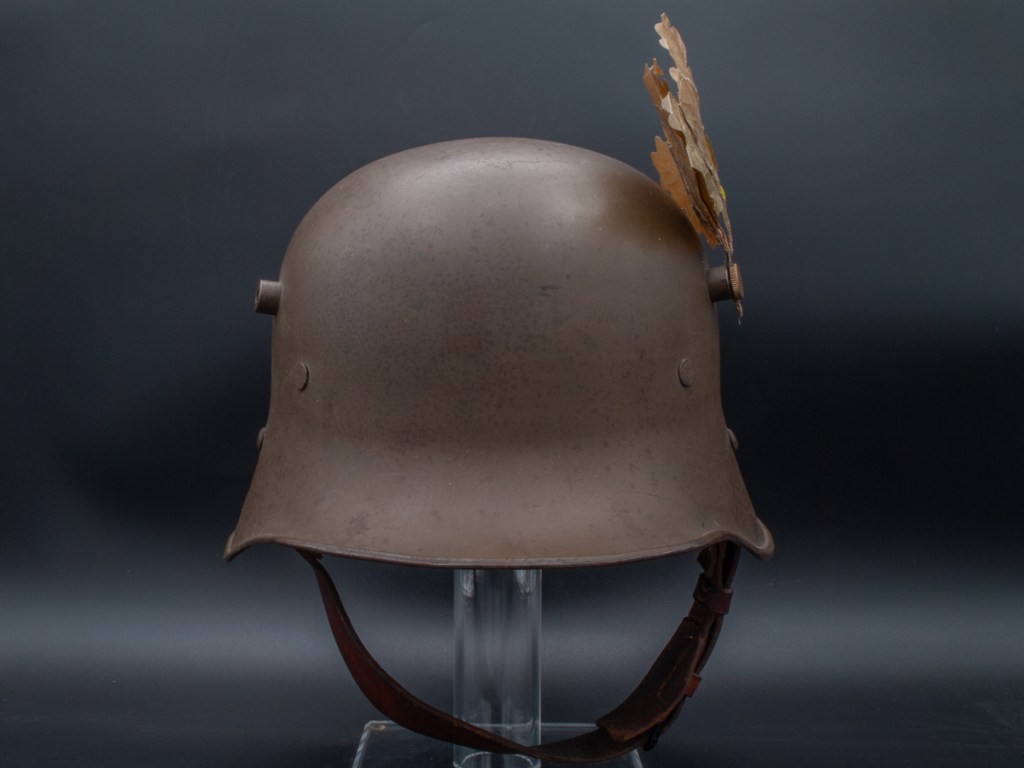
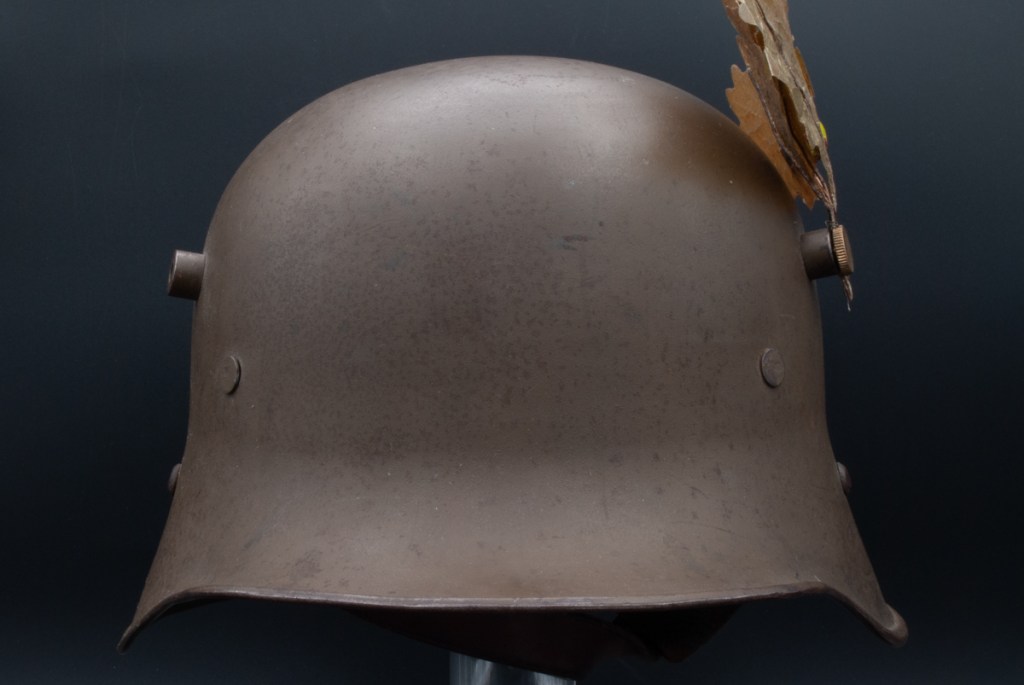
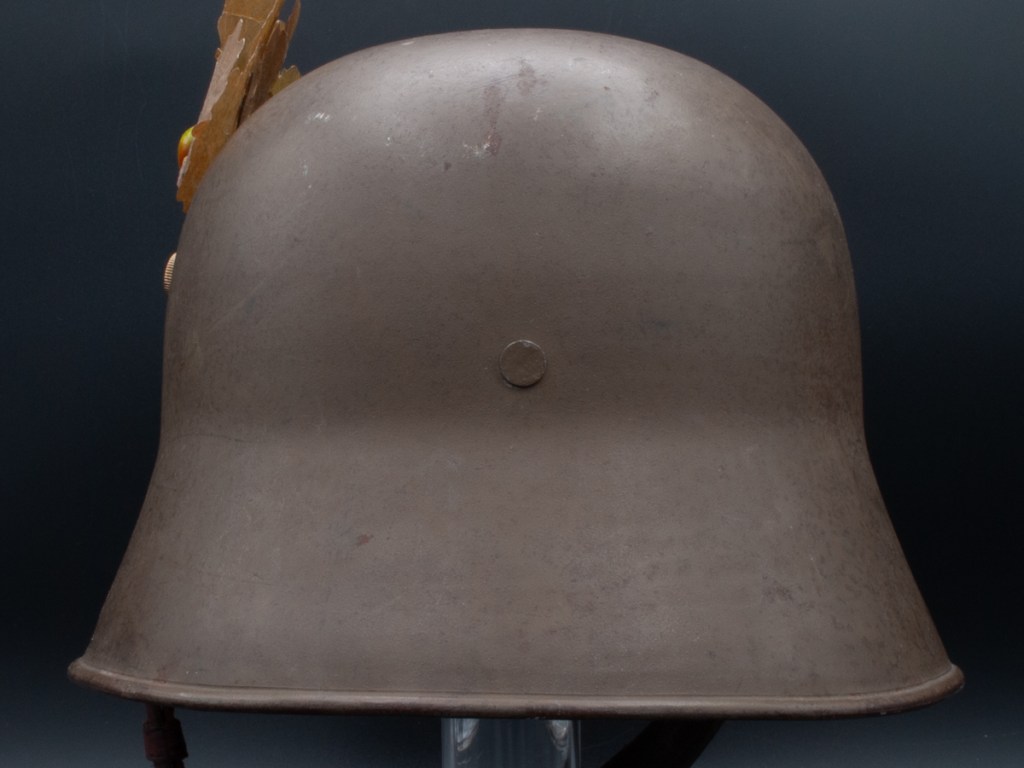
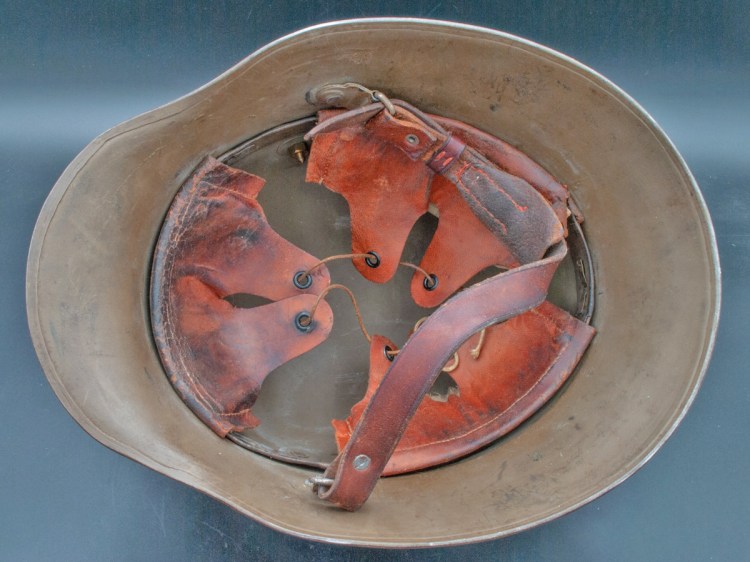
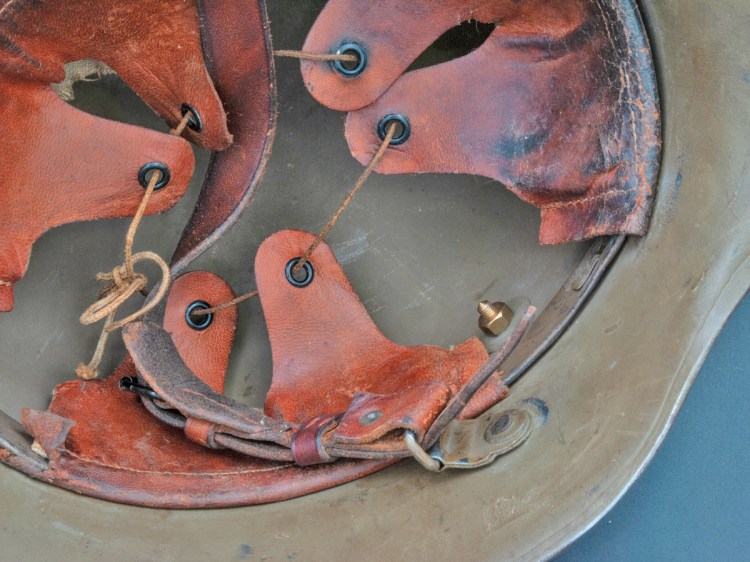
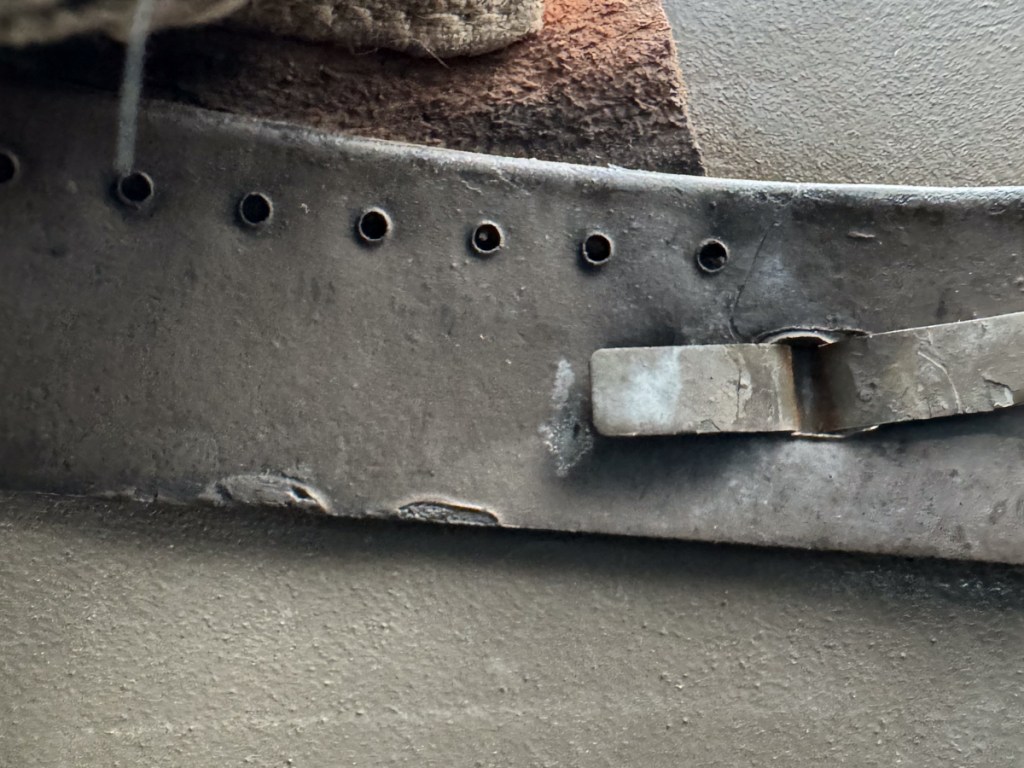
Displayed Example: This was one of the helmets that was on my original wish list for my “Stahlhelm Postwar” collection. I was lucky to find this wonderful example that a collector friend was selling at the 2024 Max Show. It is complete but for the pillows for the two liner pads in the back section of the helmet. The original owners often removed the pillows on this type of liner to adjust for a larger size head. There are no markings of any kind on this piece except for the number “66” stamped into the liner band to indicate the size. An exceptional feature of this specimen is the intact feldzeichen made of wire and waxed paper and secured by a rare and original brass screw to attach the ornament to the left side lug. This particular feldzeichen has an artificial acorn included as part of the ornament.
Collector Notes: After the Anschluss, the armed forces of Greater Germany refurbished and reissued the majority of the Austrian produced Model 1917 type helmets. Austrian post-WWI helmets in their original configurations are relatively difficult items to find. Despite their relative scarcity, there is not much price differential between Austro-Hungarian helmets of the First World War and Austrian helmets produced postwar. The one displayed here is the only one I have ever seen with an original feldzeichen outside of period photographs and some reference sources.
* Deaquisitioned
* Baer, L. 2010 pp. 312
[1] Baer, L. 2010. pp.256. Translation courtesy Pavel Prohorov personal communication January 24, 2025.
[2] Osio, Ari. “OFFICIAL WW1 AUSTRO-HUNGARIAN MAKERS AND HELMETS DEFINITIONS.” WW1 Austro-Hungarian Helmets. March 19, 2018. Facebook. https://www.facebook.com/groups/867675893394241 . Accessed January 30, 2025.
[3] “Austrian helmet makers after 1918” German Helmet Walhalla II. July 3, 2017 to January 25, 2020. www.germanhelmetwalhalla.com/topic/55616-austrian-helmet-makers-after-1918/. Accessed January 16, 2025.
[4] Rubiola, Christian. Personal Communication. November 14, 2024.
[5] Baer, L. 2010 pp.269


 Steel Helmets of the World Wars