Revised February 22, 2026
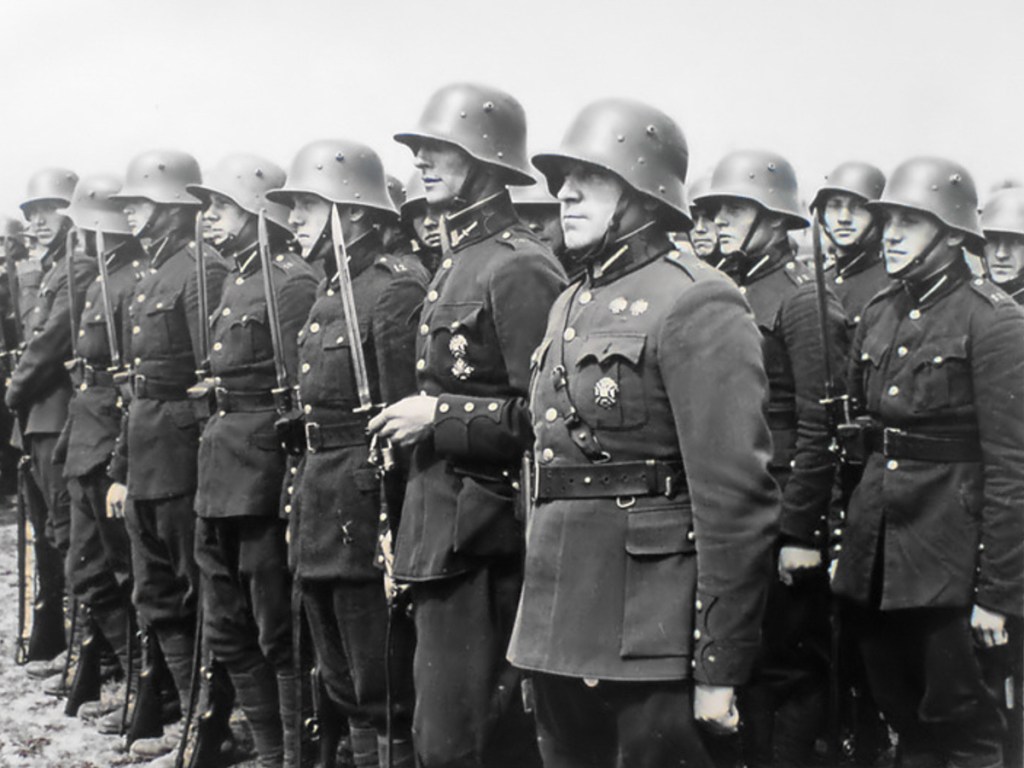
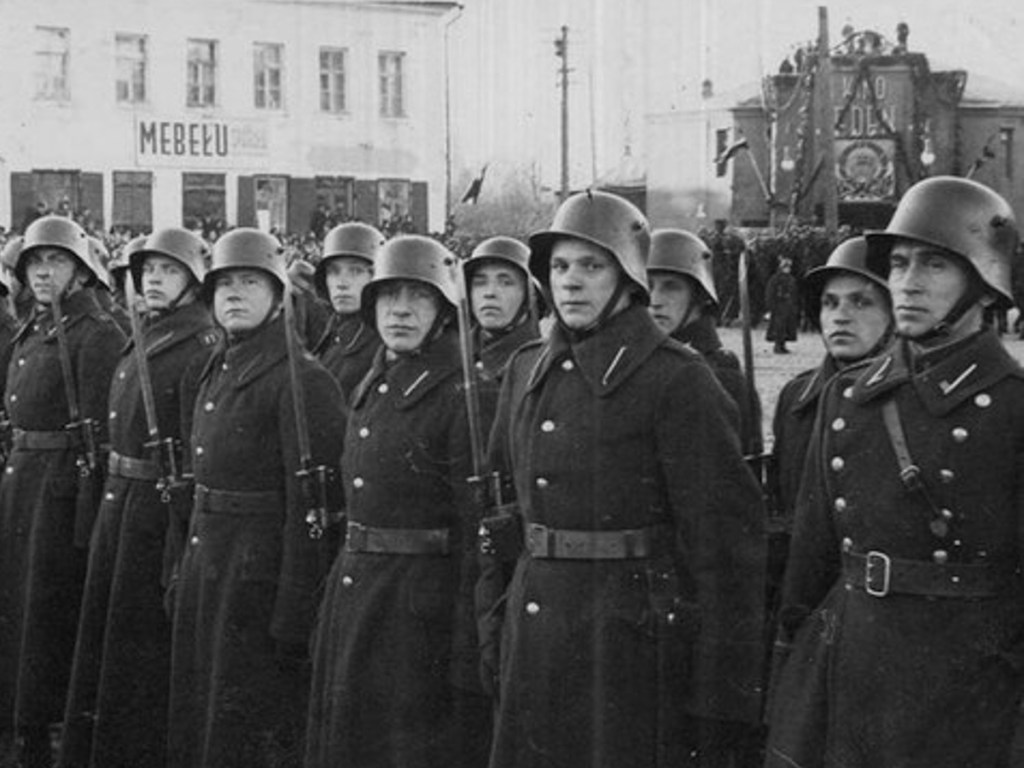
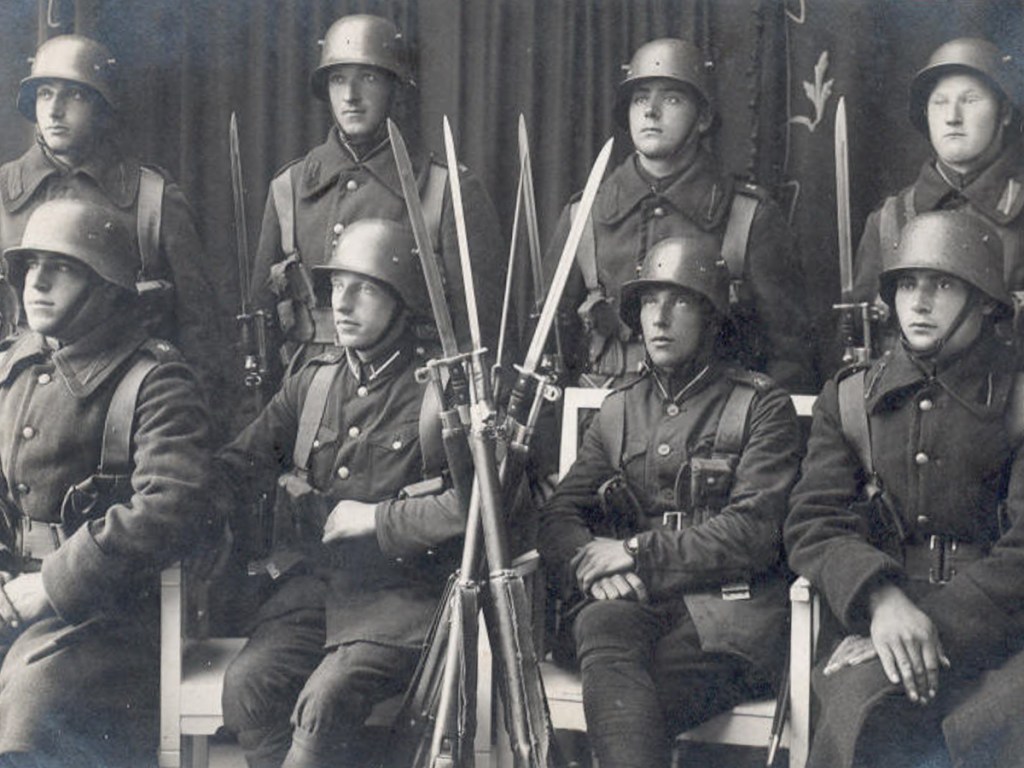
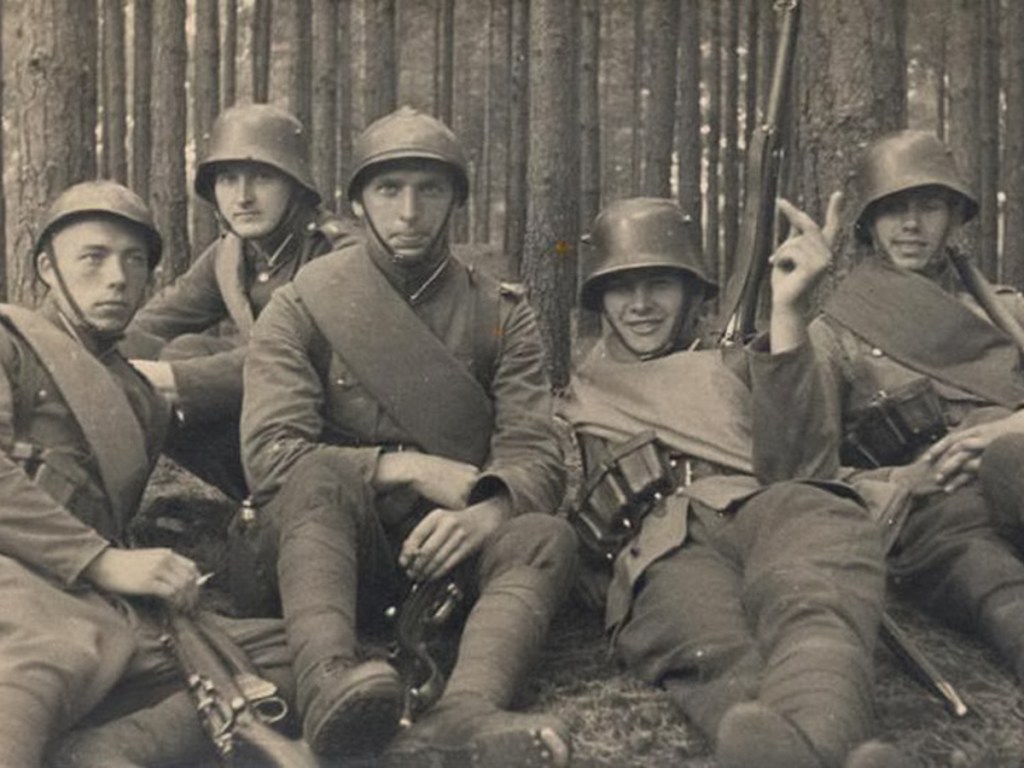
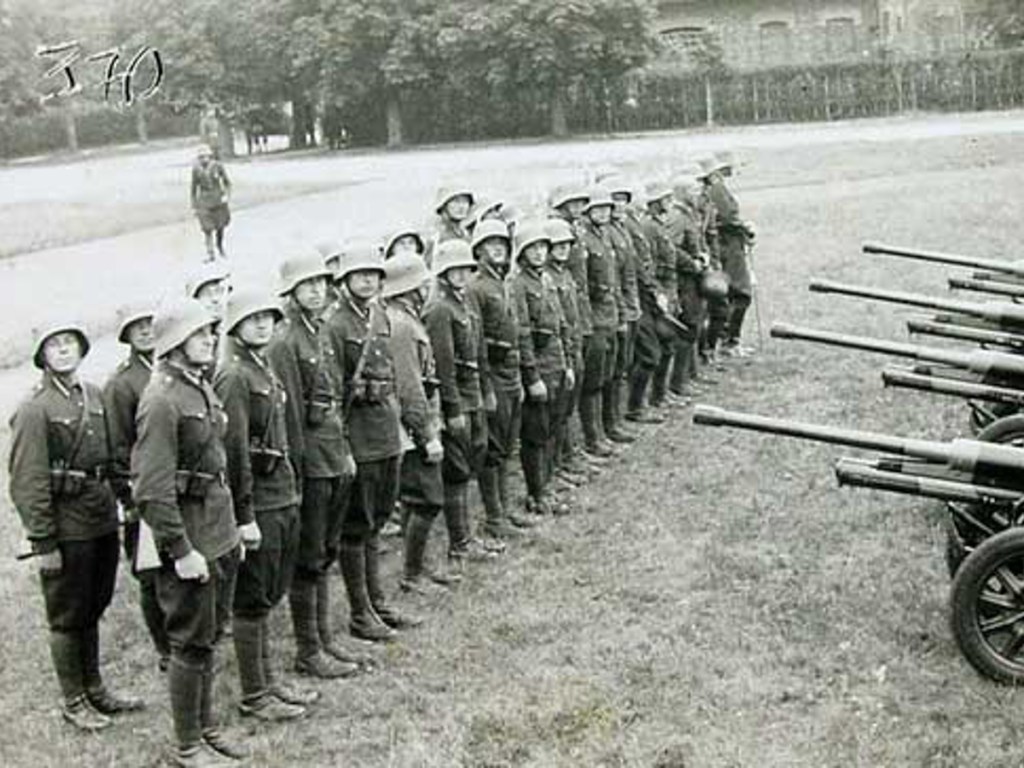
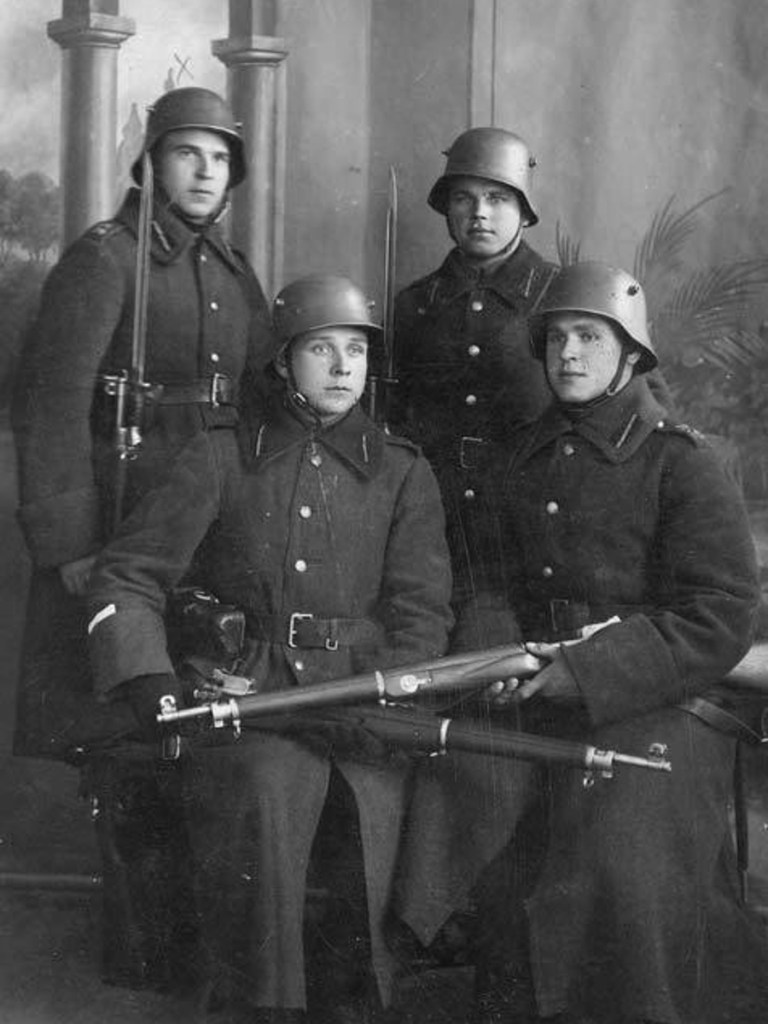
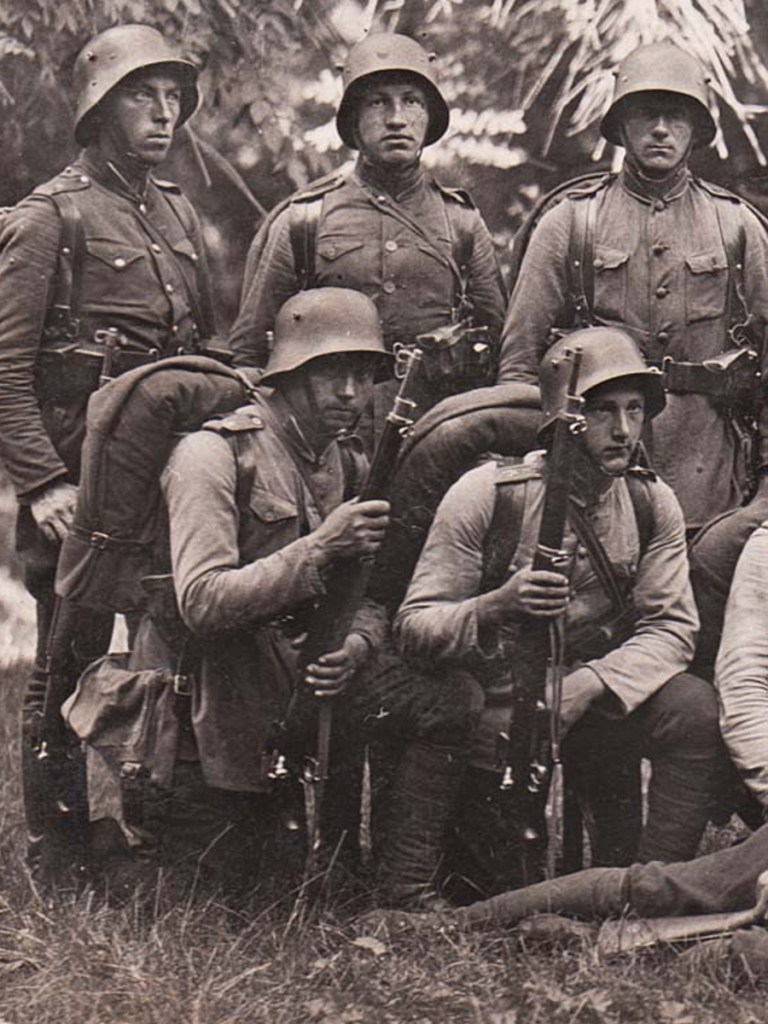
General Information: From the 1920s up to the beginning of World War Two, the Latvian army used First World War German model helmets. These helmets are now extremely rare. Few reference books address this subject and there are scant posts on collector forums regarding this helmet type. What follows is information that I have gleaned from available resources and from my own observations of surviving Latvian M17s. [1] [2] [3] [4]
The German WWI style helmets that the Latvian army used in the interwar period came from different sources. In a manner similar to the procurement process initially used by the Austrians in the post-WWI period (see Polizei/Gendarme Reissue), the Latvians may have relied on trading companies to supply helmets. Some may conceivably have been left behind by German troops retreating from the Baltics after the Armistice. Among the observed specimens there are three basic types. The most common are size 66 Austro-Hungarian model helmets with rivets for the chinstrap hardware in a high-up position relative to their German counterparts. Most of the other Latvian interwar helmets are German M16/17s and all of these observed to date have a single step on the ventilation lugs as used for size 64 shells. There is at least one surviving Latvian helmet from this era that was a German M18 size 64.
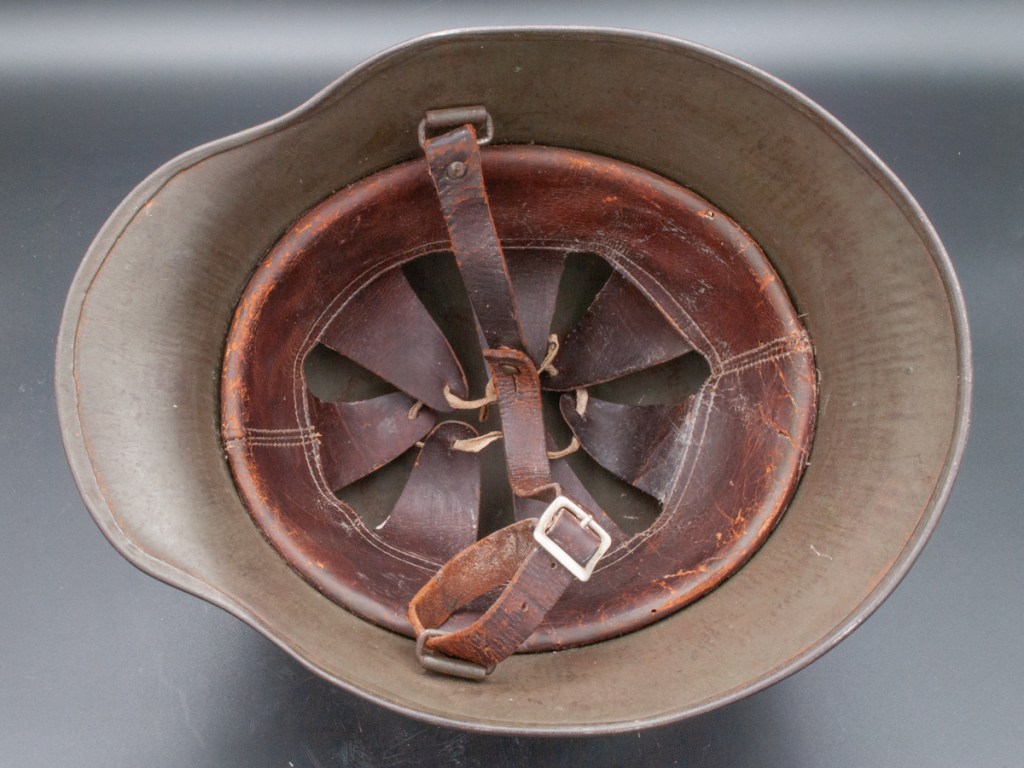
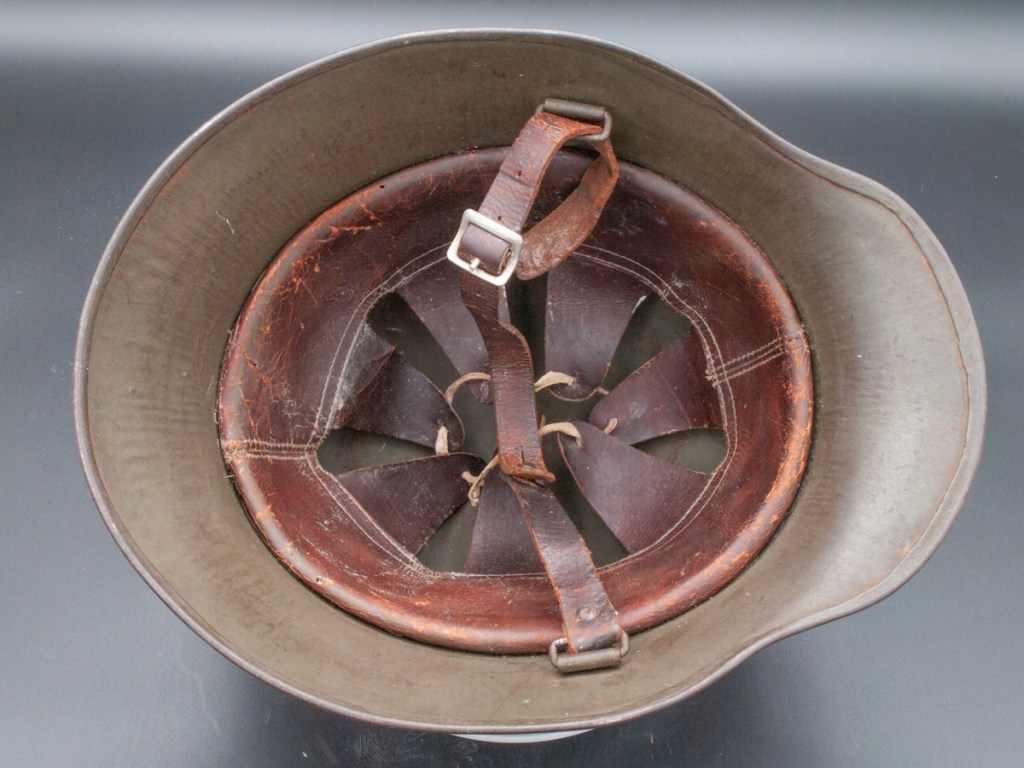
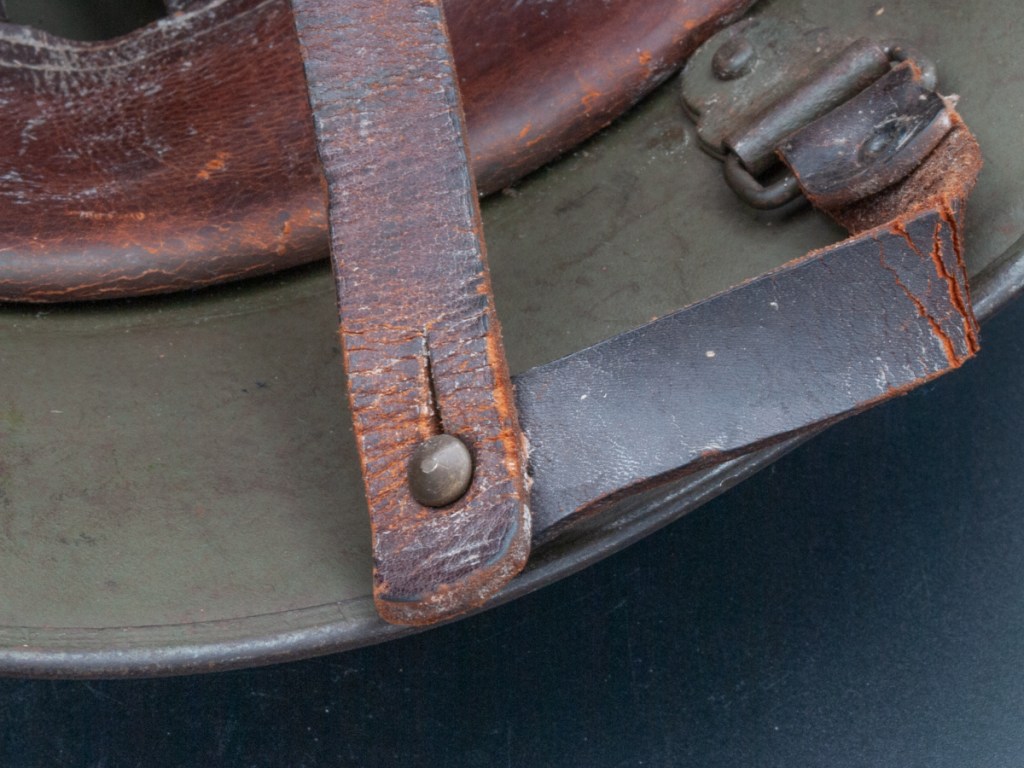
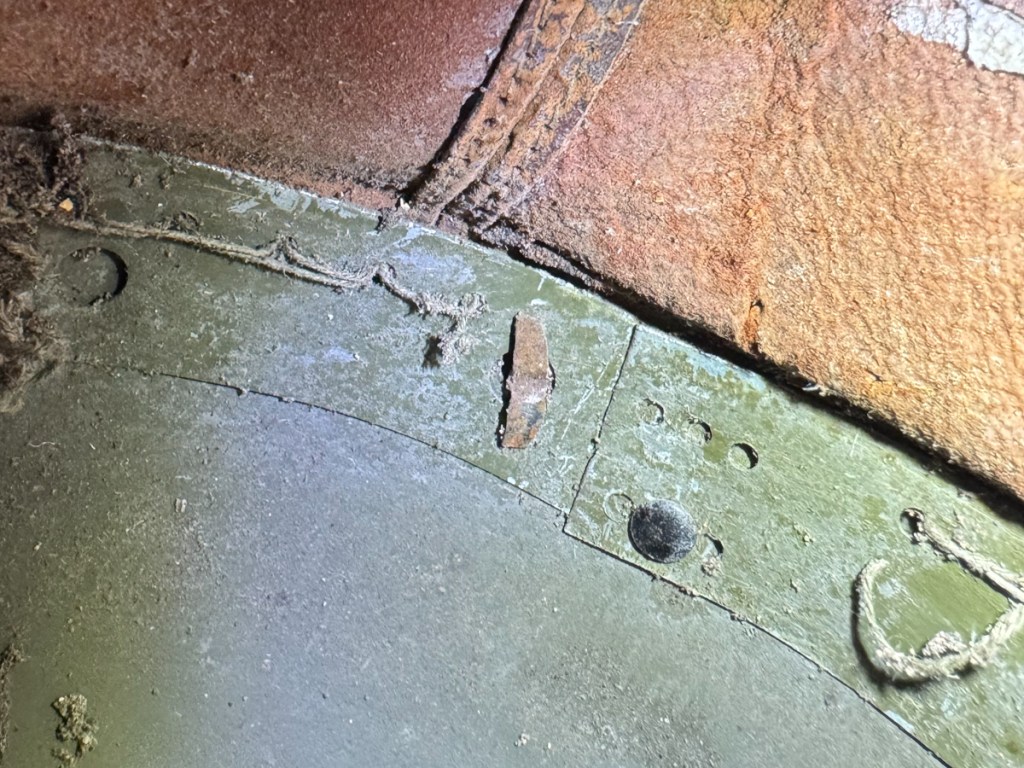
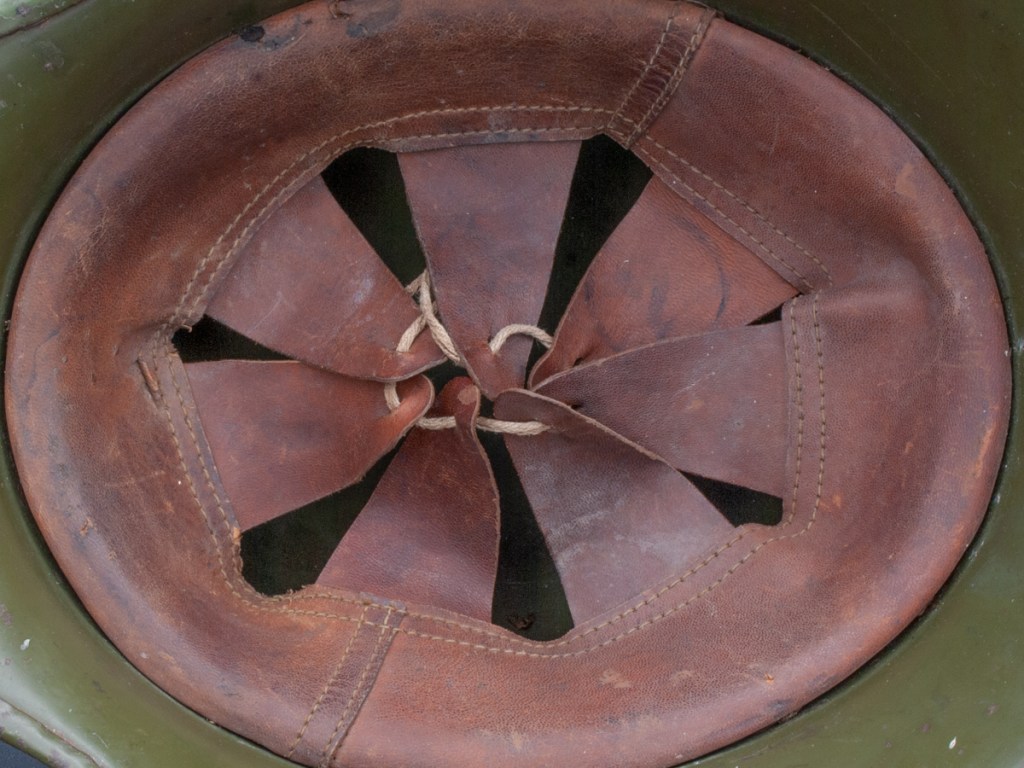
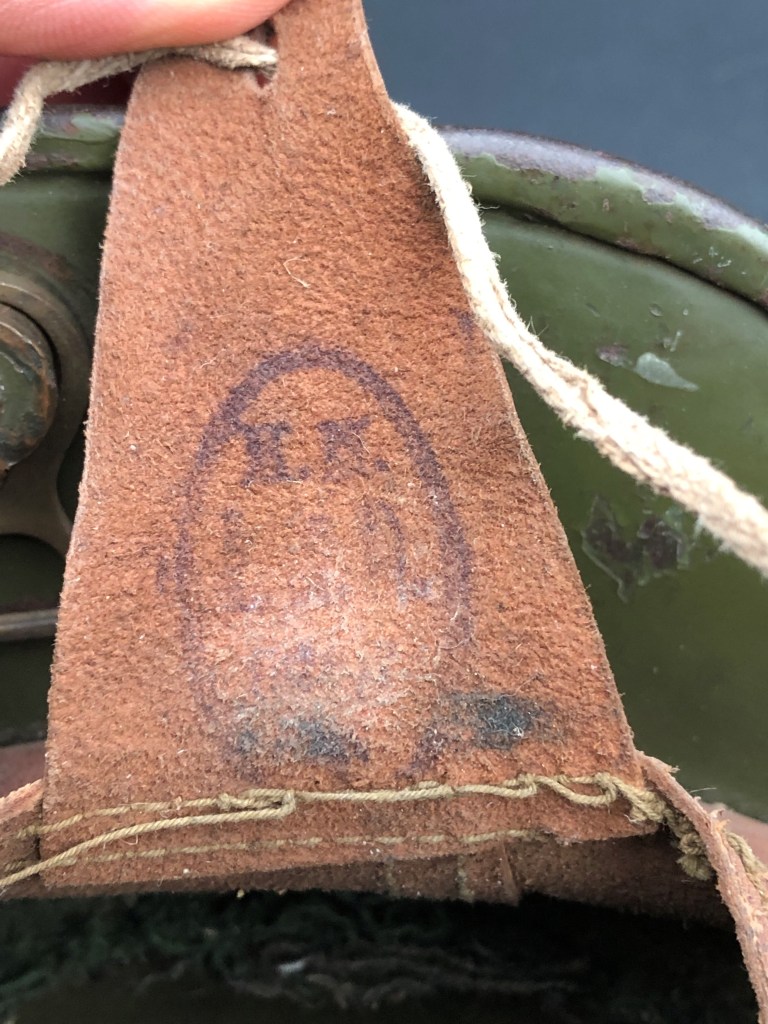
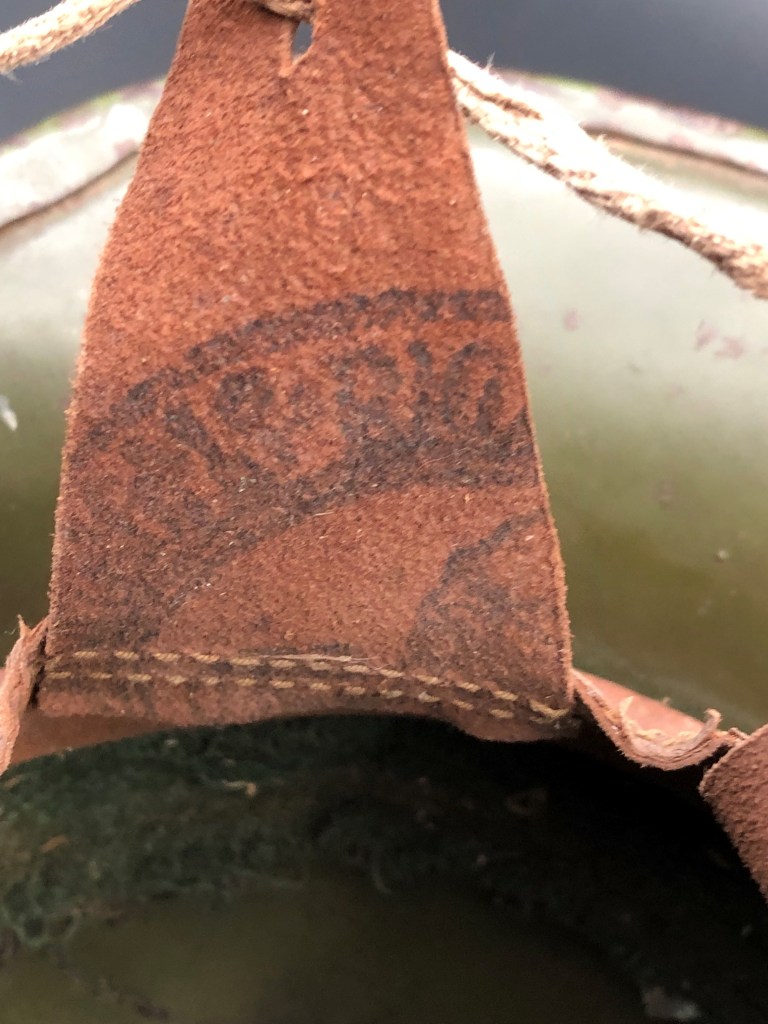
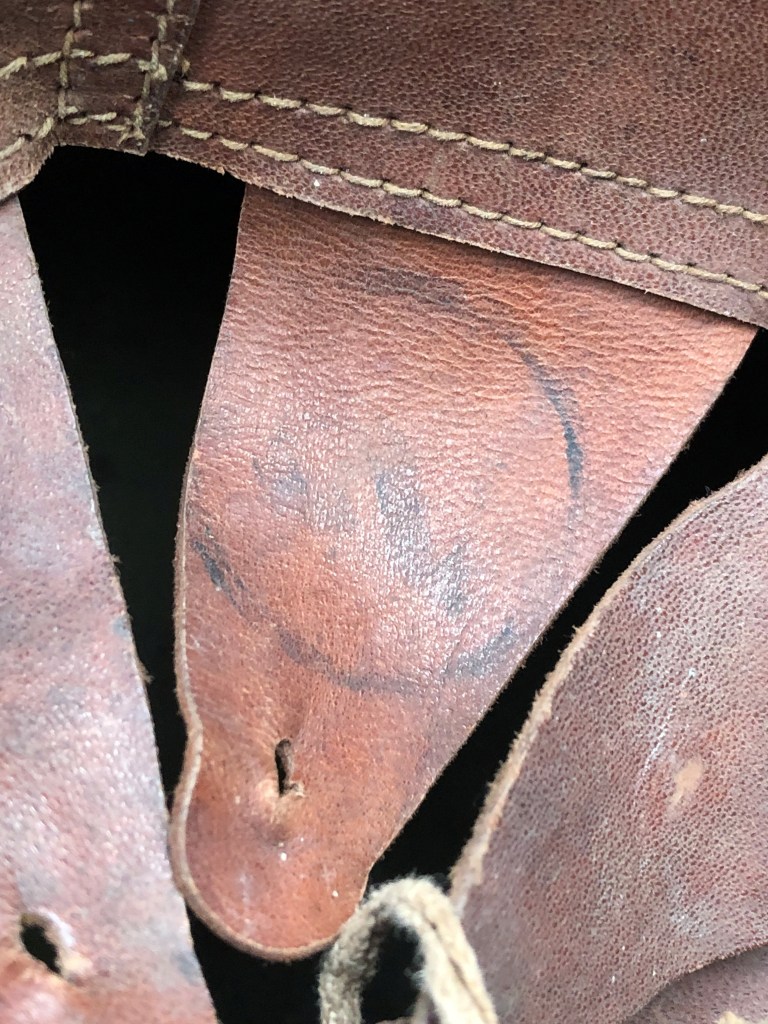
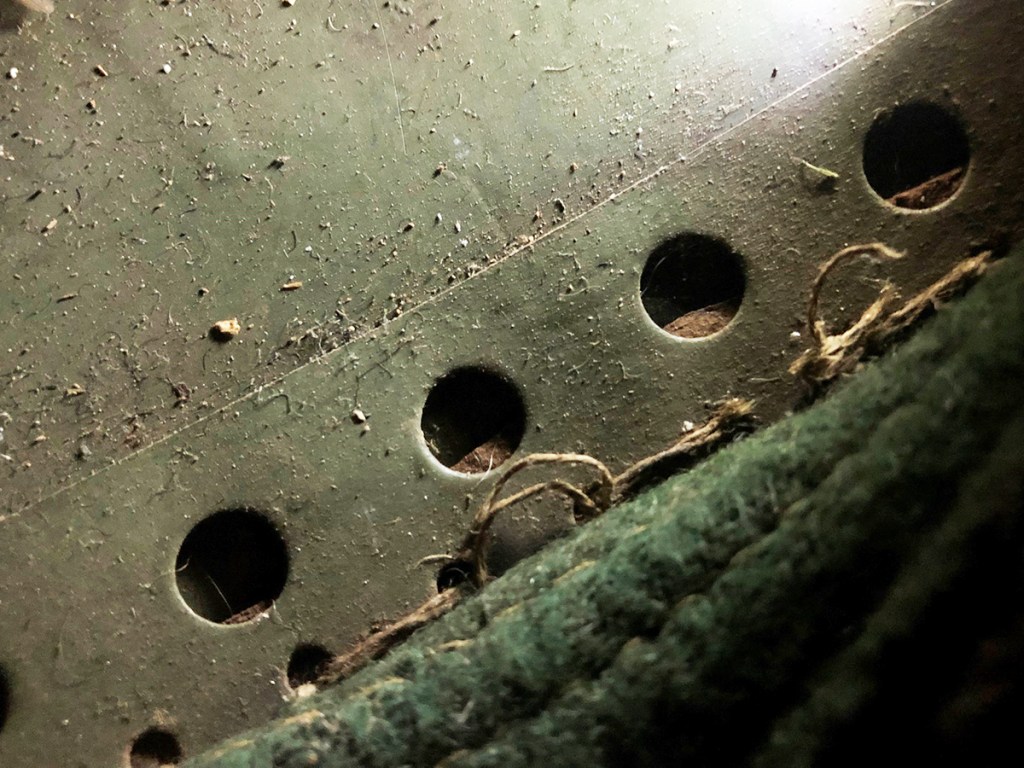
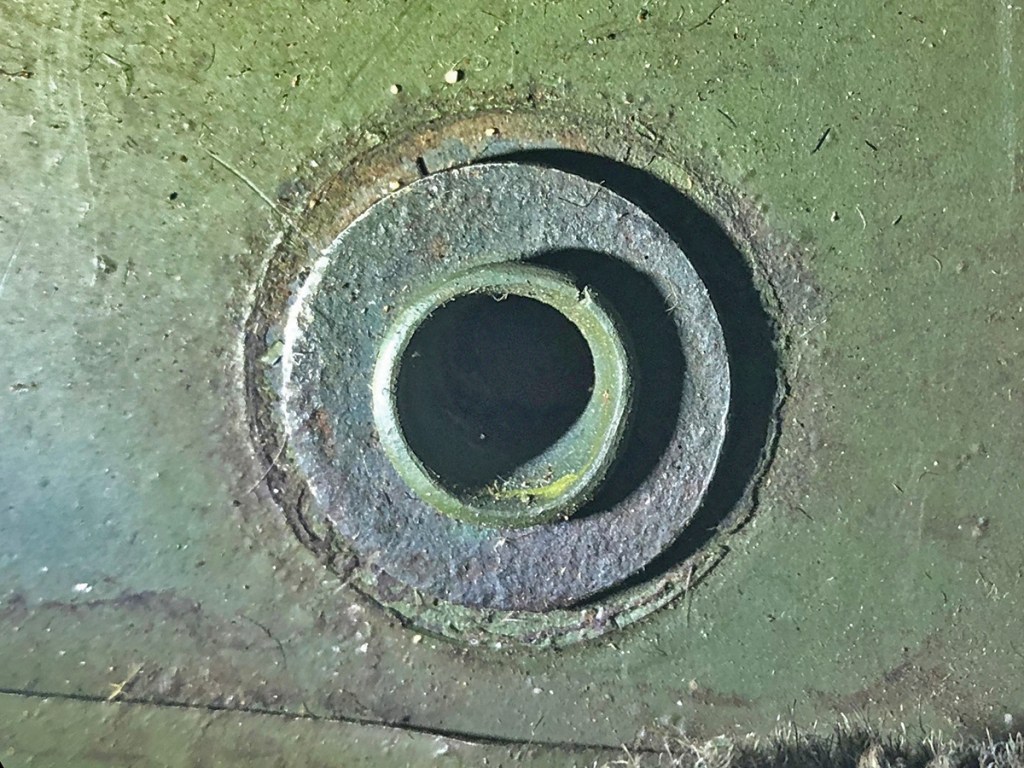
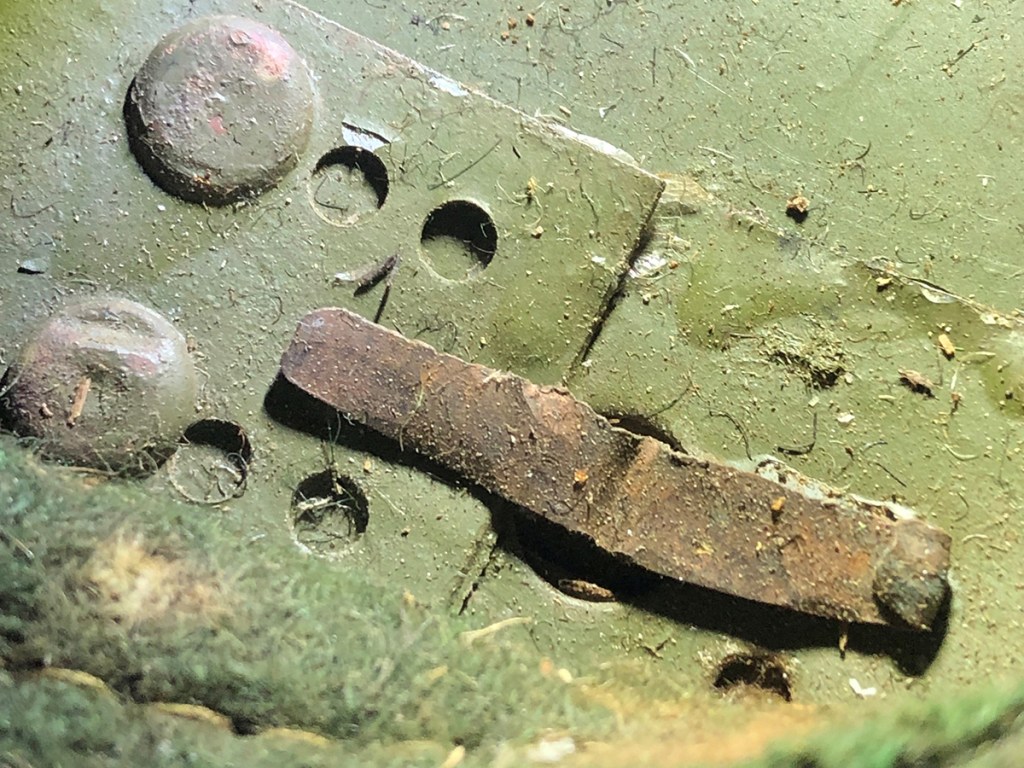
An interesting feature of some of the Latvian M17s is that they appear to have been made from unadorned, blank shells that the Latvians completed in local facilities. Helmets assembled in this manner lack manufacturer’s stamps. Completing these shells involved drilling holes for the liner bands that were smaller than the standard size, approximately 5mm.[5] The ventilation lugs on some of these helmets were not standard German or Austro-Hungarian but appear to have been locally made. In at least one instance a stepped side lugs of the type used for size 64 helmets were installed on a size 66 shell. We cannot, therefore, reliably uses ventilation lugs on Latvian M17s as indicators of shell size. The chinstrap attachment hardware used on the German M16/17 style helmets were sometimes made of brass and typically had the hooks facing forward as opposed to WWI produced German helmets that were made from steel with the hooks facing backwards. The split pins for attaching the liner bands tapered at the ends and were smaller than those used in the First World War. These were made of brass, copper, or steel. The green painted metal liner bands feature series of holes that were approximately the diameter of a pencil on top of a series of smaller holes used to attach woven cloth materiel used as backing of the leather liners. The leather liners followed the style used on French Adrians but were made with thicker material. The liners were made from two pieces of leather to which were attached seven leather tongues with unreinforced holes for the liner drawstring. The drawstrings, at least some, were cotton ribbons with herringbone pattern weave like those used on Austro-Hungarian helmets. In the interior of the liner various Latvian military stamps may be found. Often on the exterior of one of the liner tongues there was a circle with a Roman number I, II, or III or sometimes an Arabic number (e.g., “2”). The meaning of these numbers is not clear, but they were likely military procurement inspection stamps. The chinstraps used on most Latvian M17s had a unique design that incorporated a slot on the long section that fitted over a brass rivet on the short section. The purpose of this device, apparently, was to allow for quick release of the helmet. The Latvian M17s were painted in various shades of green that range from pea green to a dark green color close to German feldgrau.
Pavel Prokhorov[6], one of the few collectors who has carefully studied these helmets, speculates that the Latvians acquired uncompleted blank helmet shells that were left over from German factories after the end of the First World War. The Austro-Hungarian type helmets may have been supplied by one of the companies that continued to make these helmets in the interwar period either for the Austrians or Czechoslovakians. The company Brüder Gottlieb und Brauchbar of Czechoslovakia, which made size 66 helmets for the Austro-Hungarian army in the First World War, was a likely source of helmet shells for the Latvians since this firm also sold shells to trading companies that supplied helmets to the Austrians in the interwar period.[7]
Displayed Examples:
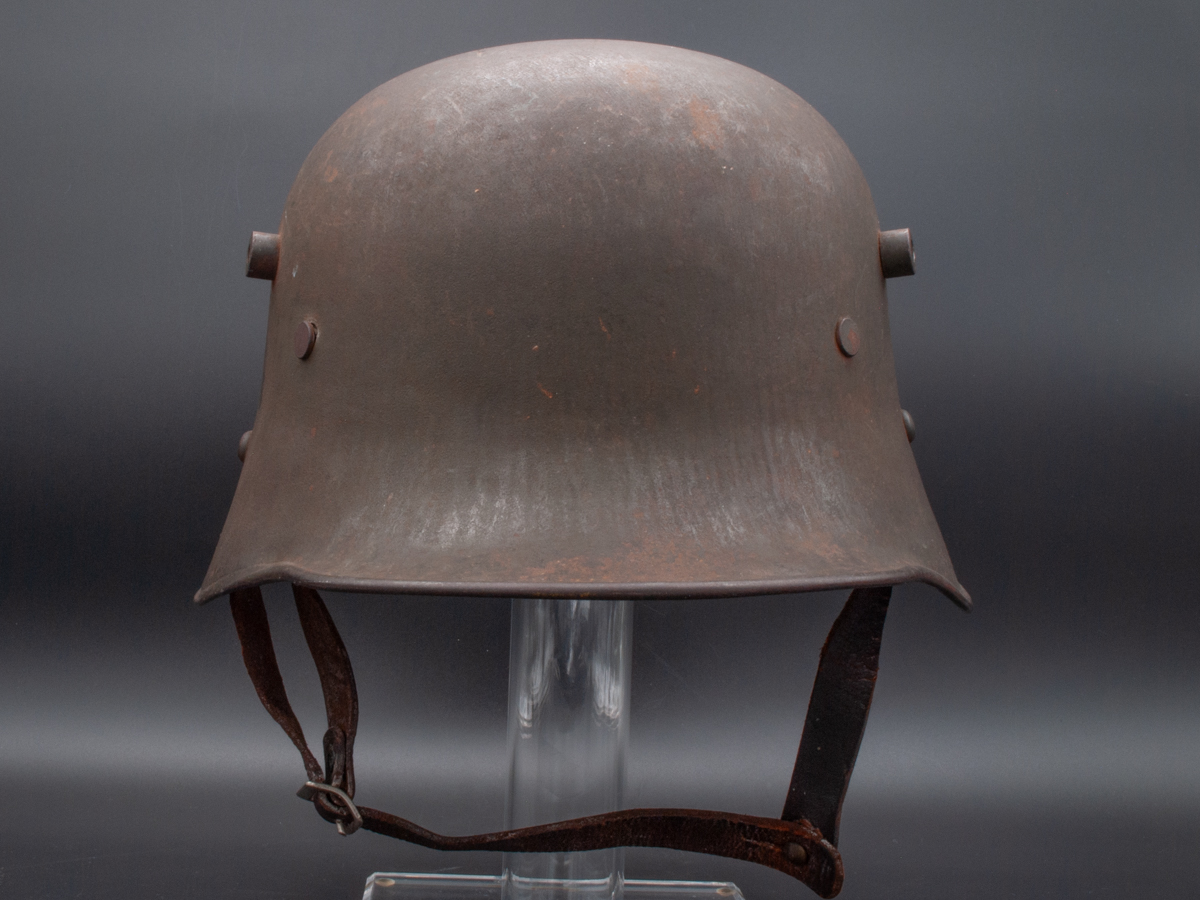
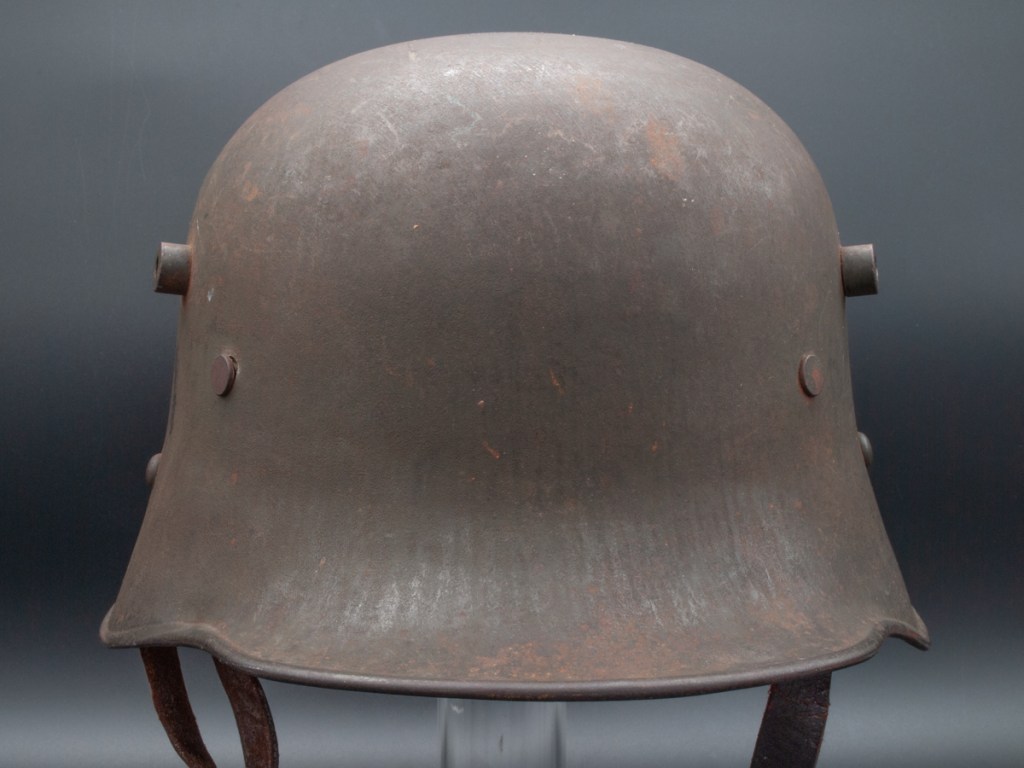
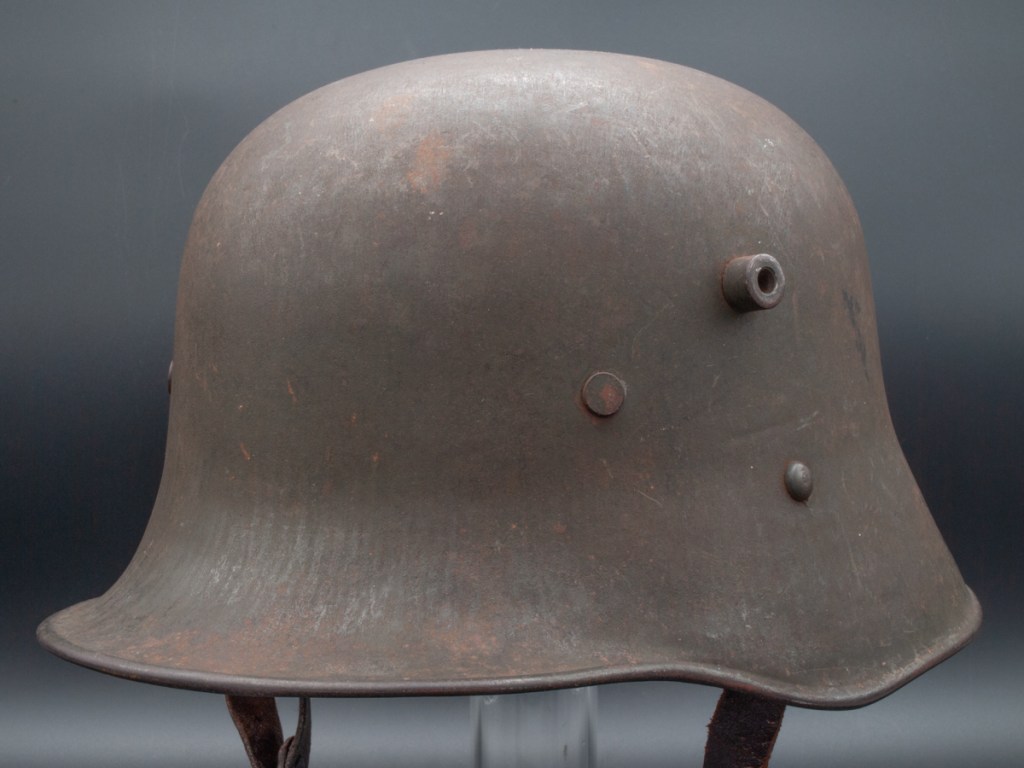
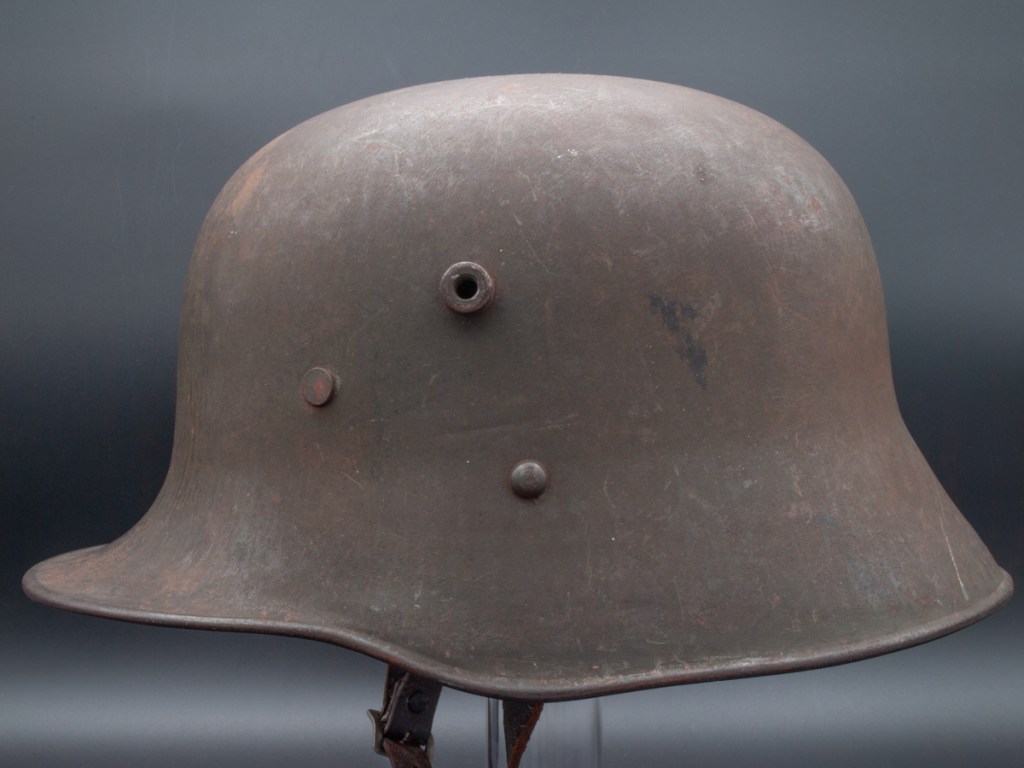
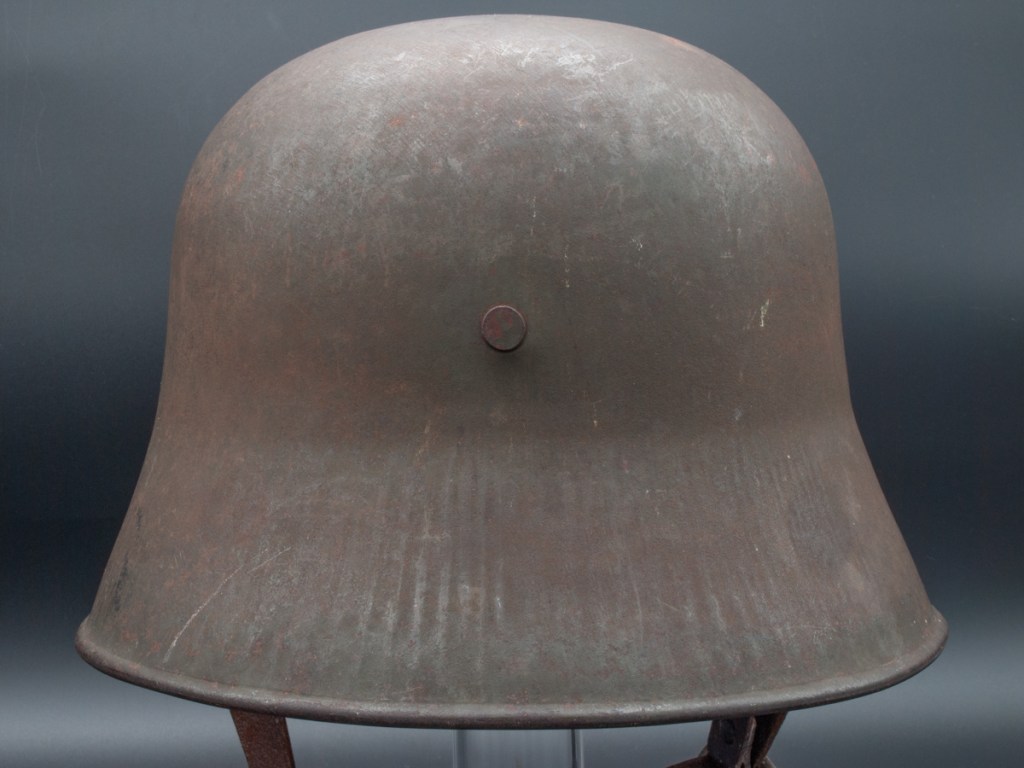
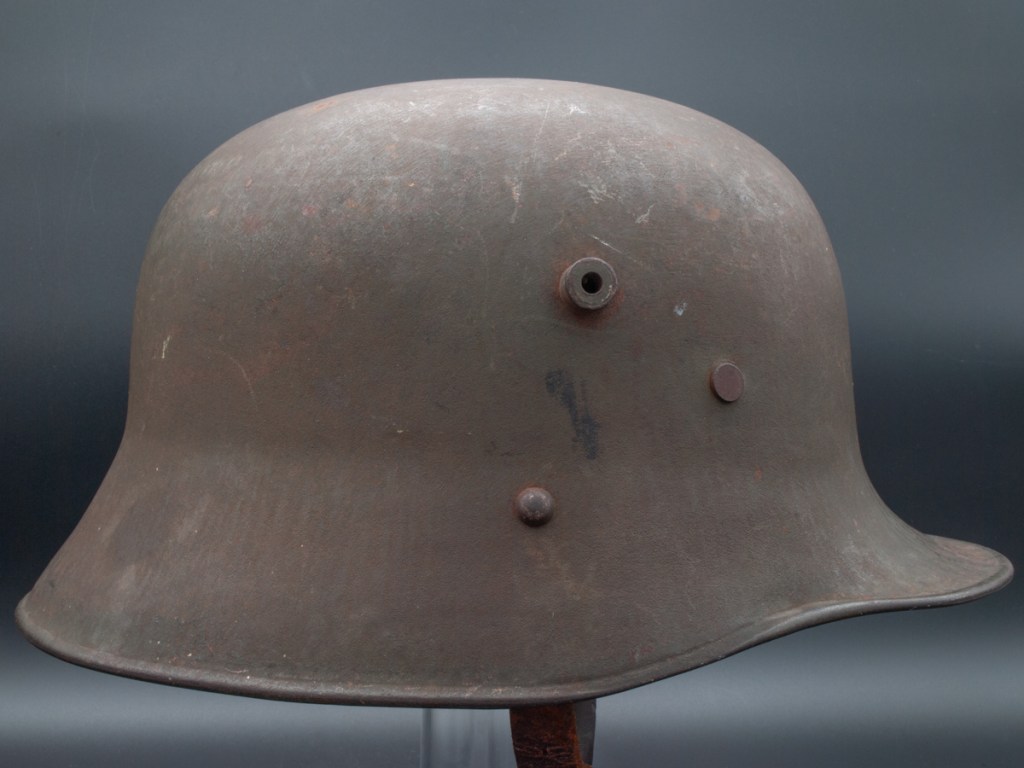
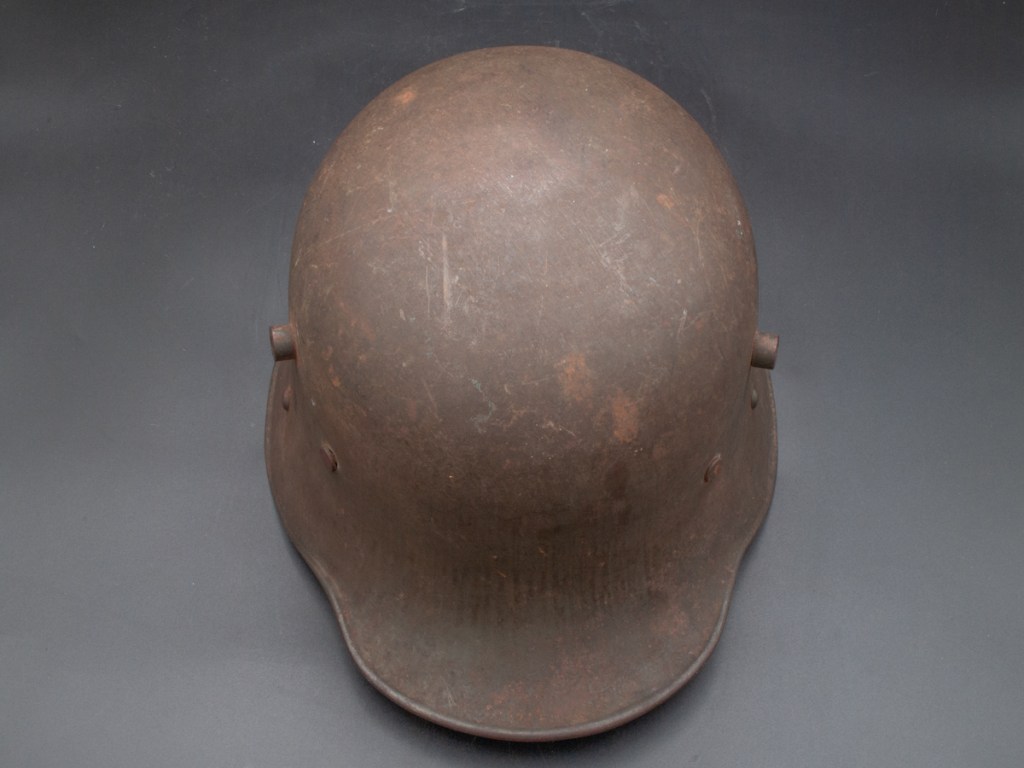
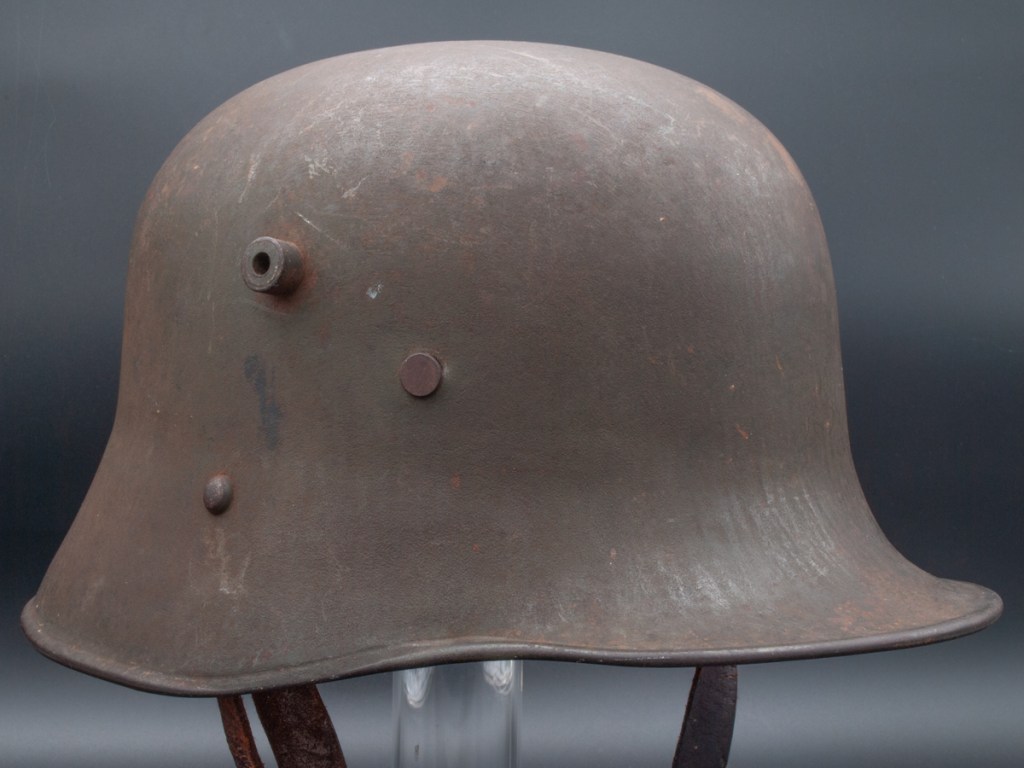
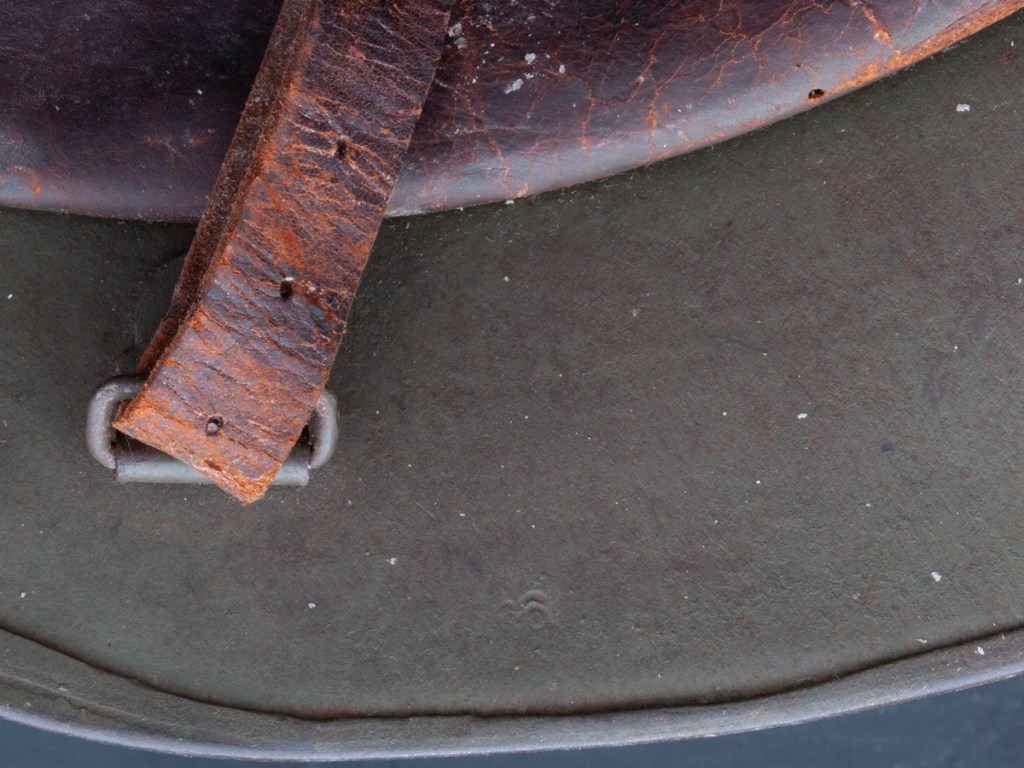
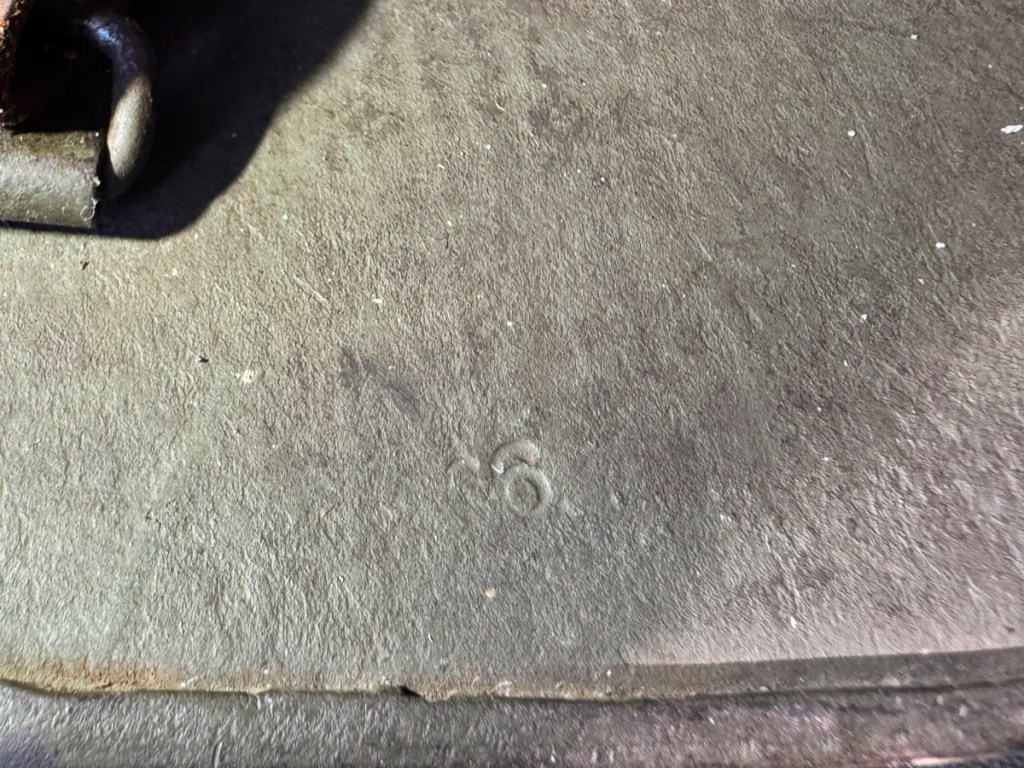
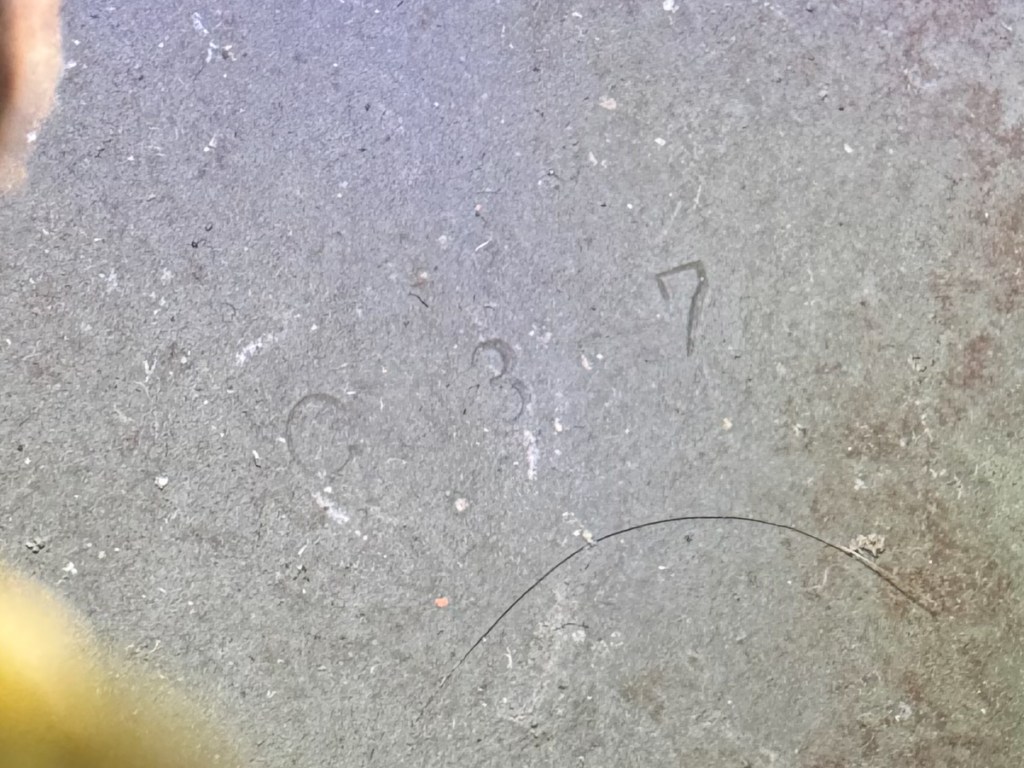
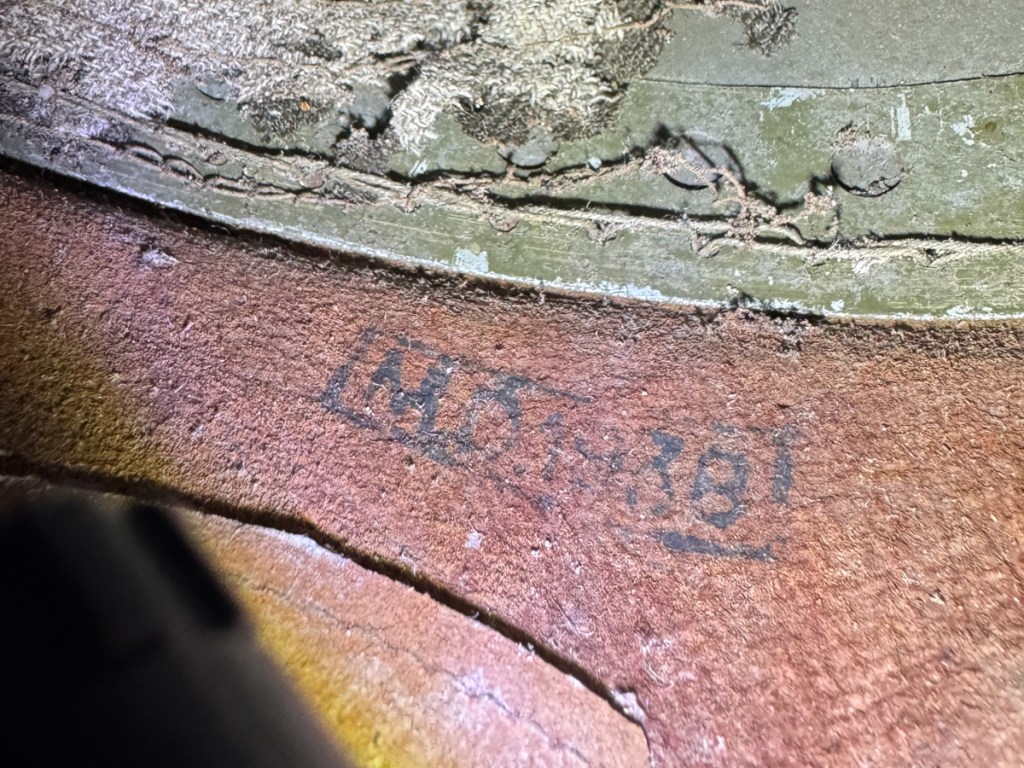
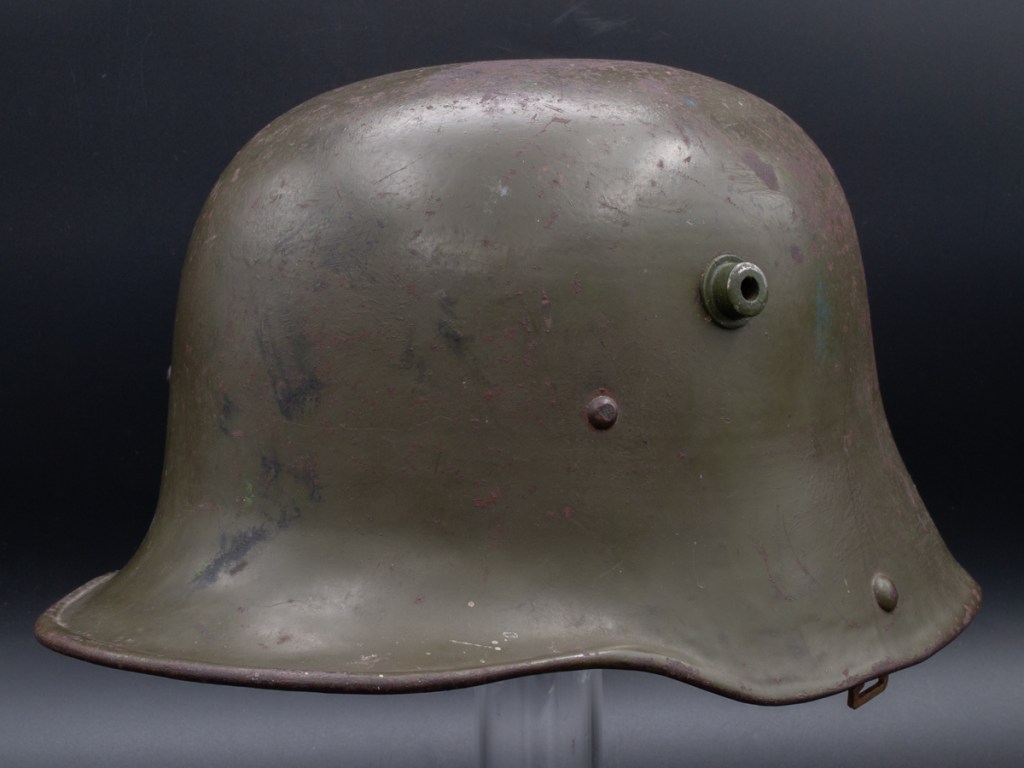
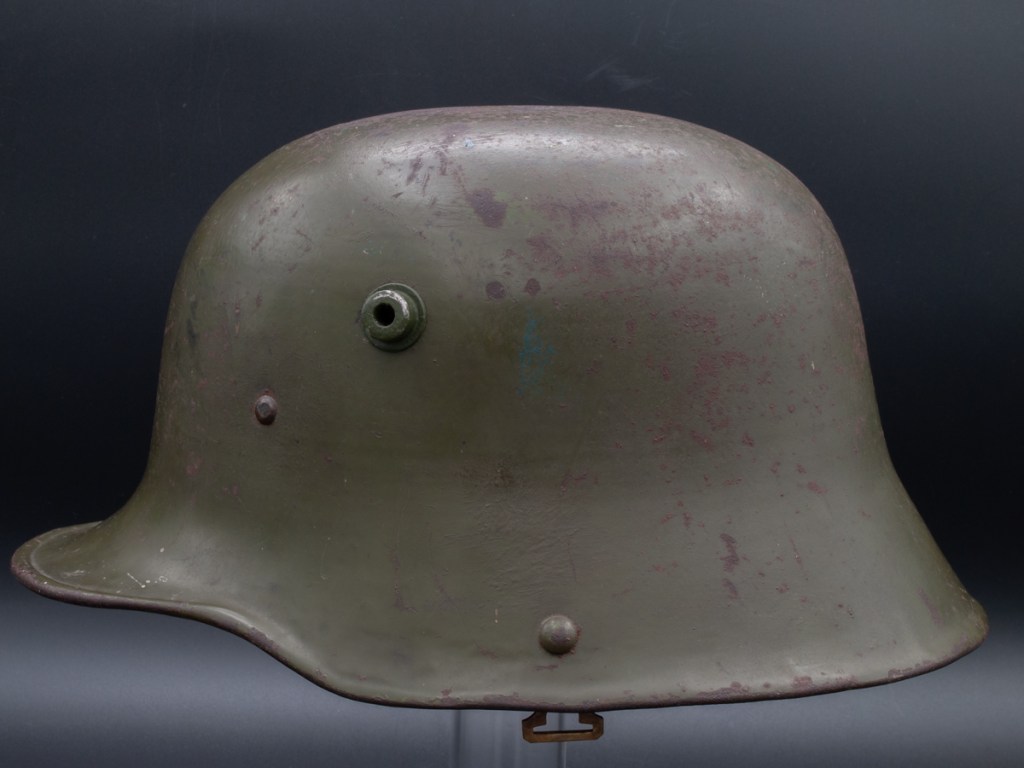
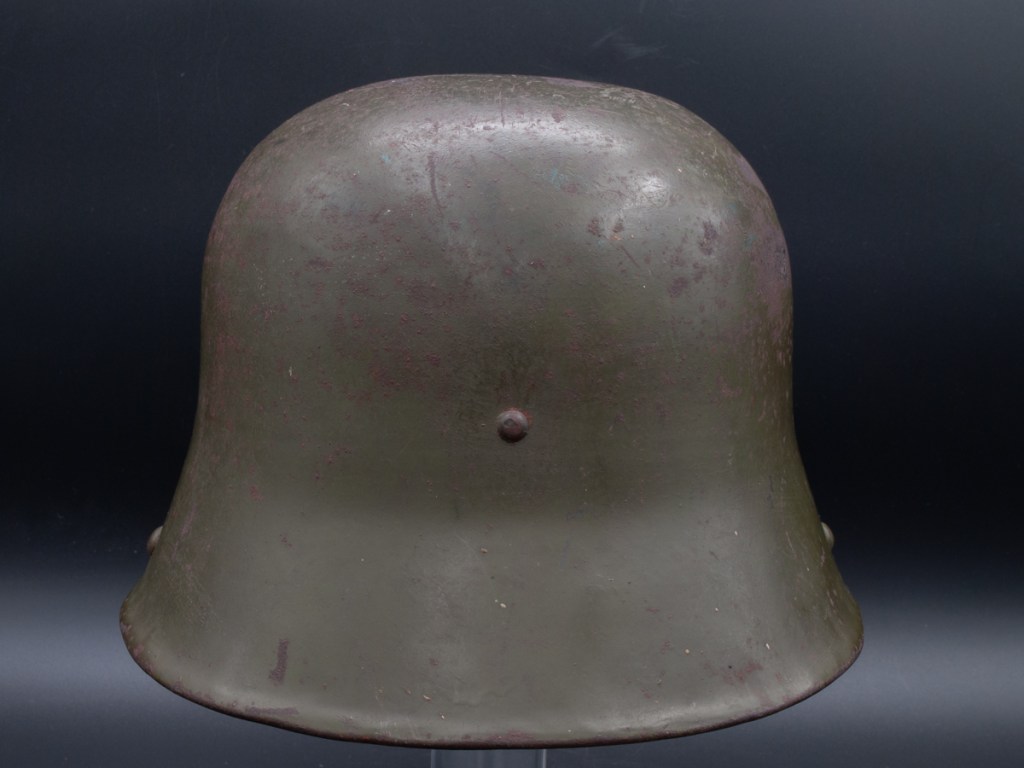
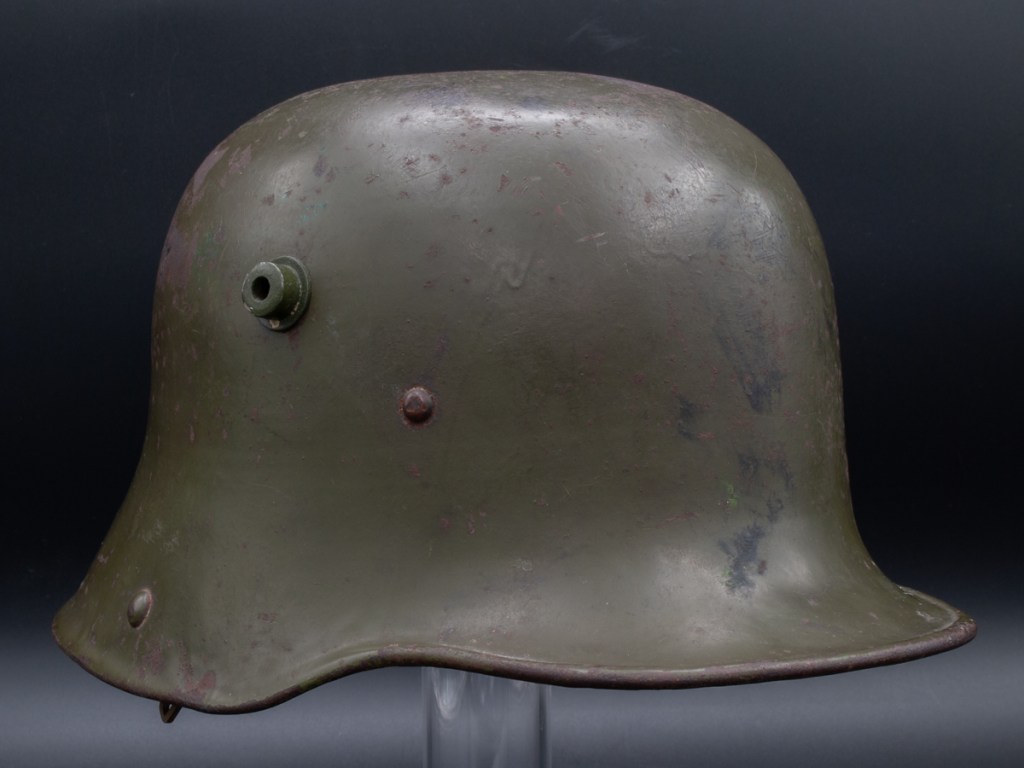
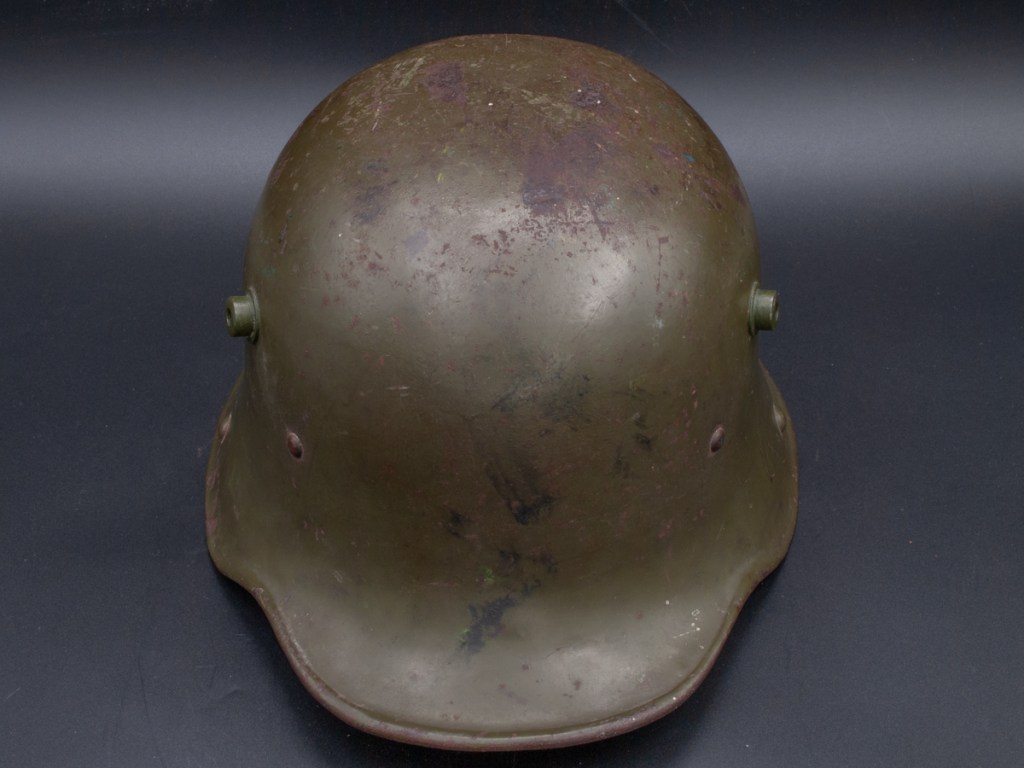
I purchased the helmet in the first set of gallery photos from a European dealer at the 2026 Show of Shows in Louisville, Kentucky. It is a classic example of the type with a typical Latvian liner and Latvian chinstrap with the peculiar quick-release device. The helmet is the Austro-Hungarian/Czechoslovakian type with high-up placement of the chinstrap rivets. As with other observed surviving examples of this type of helmet, it lacks manufacturer’s stamps, but it is stamped “66” on the wearer’s right side of the skirt section. In the interior of the dome there is a short lot number: “C 3 7”. On the exterior of one of the leather liner tabs, there is a faint black ink circle with what appears to be a Roman numeral II inside the circle. In the interior of the helmet liner there is a 1938 date. The helmet retains its original drawstring made from a cotton herringbone twill ribbon.
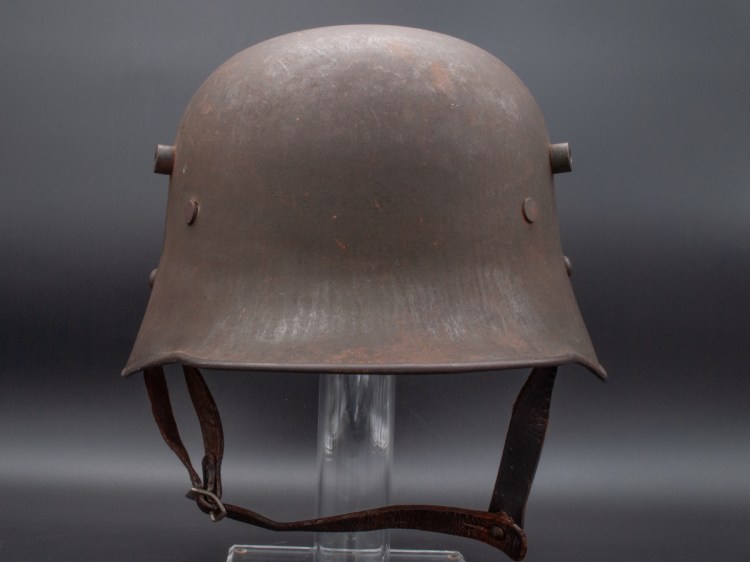
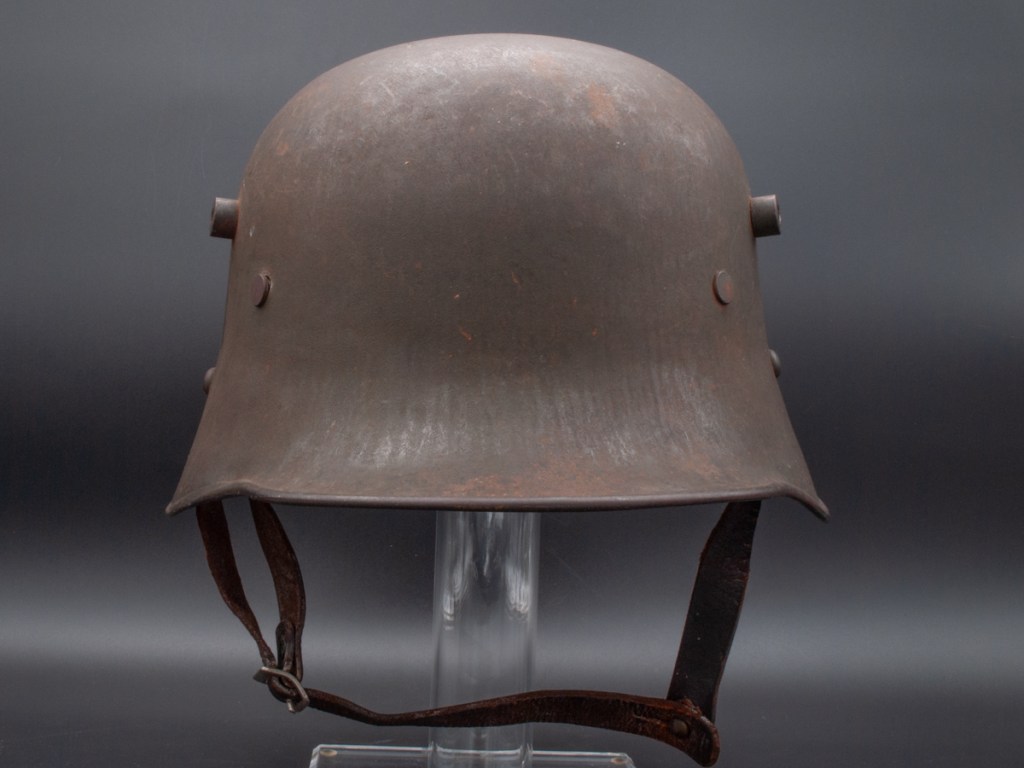
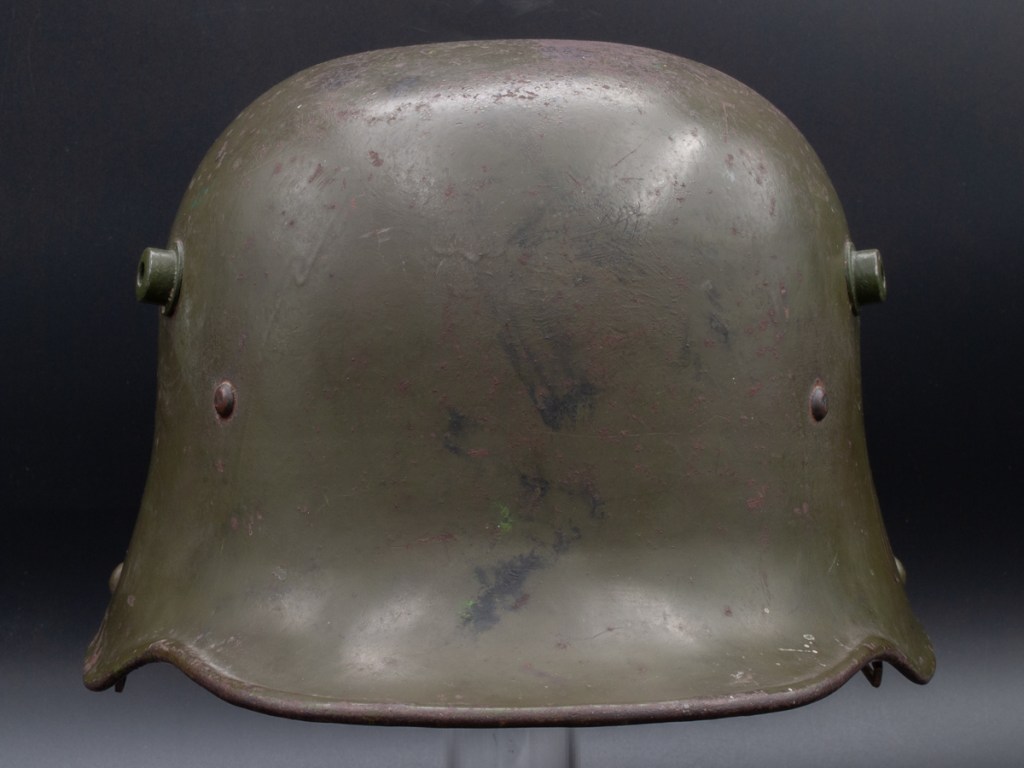
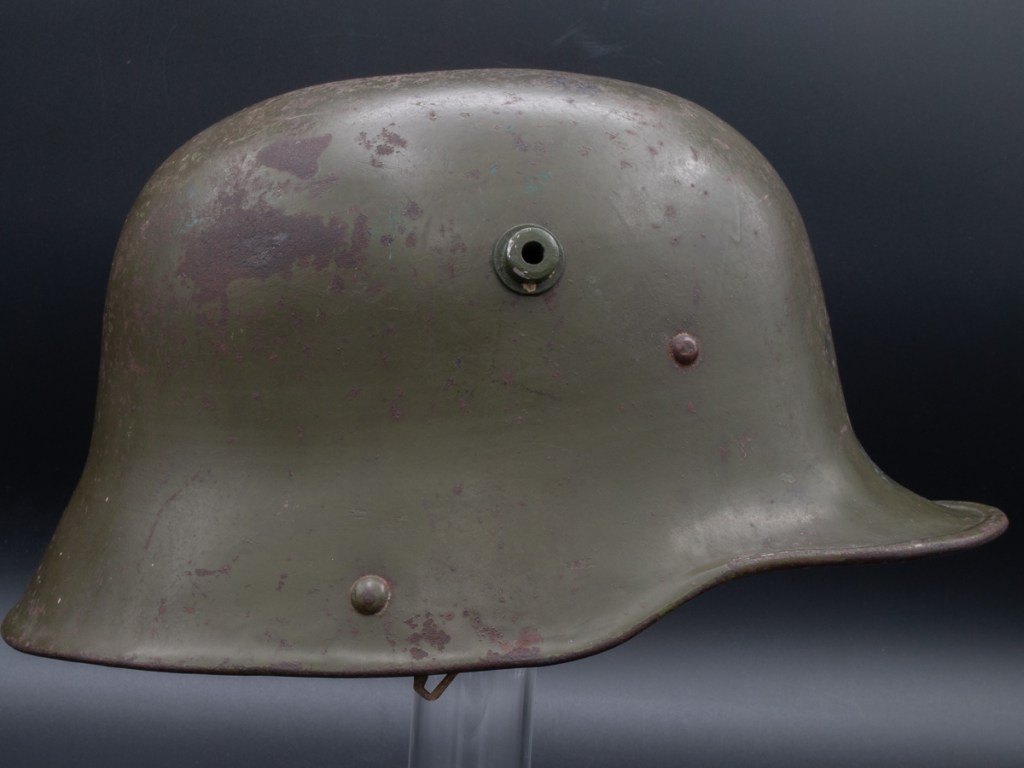
I acquired the helmet in the second set of gallery photos below in a trade with a collector friend from Canada. According to his records, he got this from Riga. It lacks the peculiar Latvian chinstrap with the brass rivet device but is otherwise complete. The ventilation lugs are not the conventional type and appear to have been added after the helmet was painted. They are painted a different shade of green than the rest of the helmet. In addition, the step on the ventilation lug is thinner that those found on German and Austro-Hungarian made German model size 64 helmets. These features, which have been observed on other Latvian M17s, suggest that the ventilation lugs were added locally in Latvia.
The Lavian-made liner has the type of inspection stamps sometimes seen on Latvian M17 helmets. The drawstring is thin cloth ribbon with a woven herringbone pattern like the one in the first helmet displayed here. There are no visible size or manufacturer code markings nor lot numbers. The brass chinstrap hardware is still attached to the chinstrap lugs. These two hardware pieces are slightly mismatched.
Collector Notes: The Latvian pre-war army was small with approximately 25,000 to 27,000 active personnel. After the Soviet occupation of the Baltics, the annexed countries’ armies, including the Latvian army, were reformed as the Territorial Baltic Corps. Some of the German First World War model helmets used by Baltic countries were modified during this period of Soviet occupation by painting a red star on the front of the helmets.[8] Subsequently, after the German takeover of the Baltics, Latvian men were conscripted into Ostbatallion units some of which used reissued Latvian helmets with painted Latvian red and white shields.[9] [10] Latvian battlefield pick-ups from 1941 were reportedly reissued to Estonian self-defense forces. These Estonian reissues were mostly refurbished with locally made liners and chinstraps.[11] These and other factors make the Latvian German model helmets in their original configuration hard to find and they surface rarely on collector markets. The first helmet shown here is the only one I have ever seen for sale.
* Helmet12781 (aka). “Latvian M17.” German Helmet Walhalla. March 26, 2015. https://www.ghw2.com/topic/47187-latvian-m17/#comment-556944. Accessed January 16, 2023.
[1] Johnan Somer’s privately published book (see References section) is the only publication I am aware of that has addressed the Latvian M17 in any detail. The section of his book dealing with Latvian M17s and other Post-WWI used German and KUK helmets was co-authored by Pavel Prokhorov.
[2] Dimas (aka). “Latvian M16.” War Relics Forum. October 12, 2009. https://www.warrelics.eu/forum/steel-helmets/latvian-m-16-helmet-11456/. Accessed October 14, 2025.
[3] Helmet12781 (aka). “Latvian M17.” German Helmet Walhalla. March 26, 2015. https://www.ghw2.com/topic/47187-latvian-m17/#comment-556944.Accessed January 16, 2023.
[4] TrondK (aka) “Aurimas Baltic volunteer collection.” Wehrmacht-Awards.com. March 24. 2014. https://www.wehrmacht-awards.com/forums/forum/wehrmacht-uniforms-and-equipment/heer-uniforms-and-insignia-forum/728442-aurimas-baltic-volunteer-collection/page4. Post #48. Accessed February 22, 2026.
[5] Somers, J. and Pavel Prokhorov. 2023. pp.276
[6] Somers, J. and Pavel Prokhorov. 2023. pp.276
[7] Baer, L. 2006. pp.124
[8] Somers, J. and Pavel Prokhorov. 2023. pp.274
[9] Nozo410 (aka). “Latvian M16 helmet.” War Relics Forum. September 7, 2024. https://www.warrelics.eu/forum/steel-helmets/latvian-m-16-helmet-11456/. Post #8 and #10. Accessed February 22. 2026.
[10] Baer, L. 1994. Band 1. pp.158, 197, & 382
[11] Langemarck (aka). “Latvian M16.” War Relics Forum. October 23, 2009. https://www.warrelics.eu/forum/steel-helmets/latvian-m-16-helmet-11456/. Post #4. Accessed October 14, 2025.
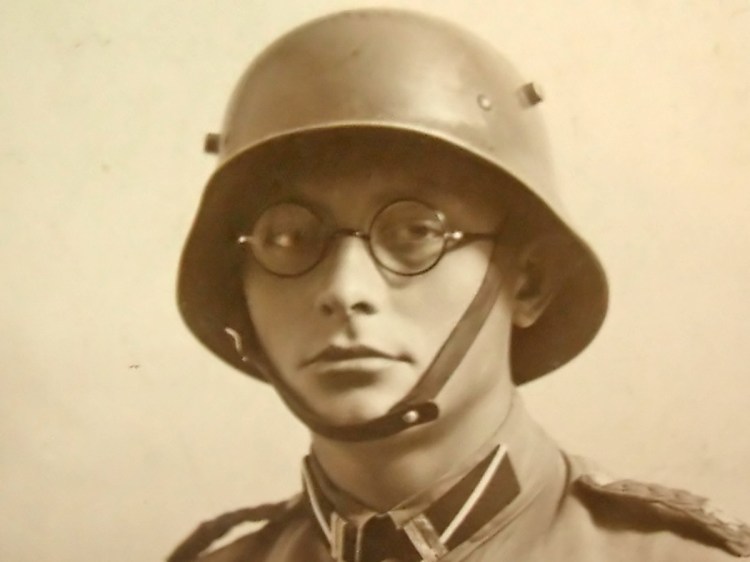
* Citations pending for period photographs below












 Steel Helmets of the World Wars