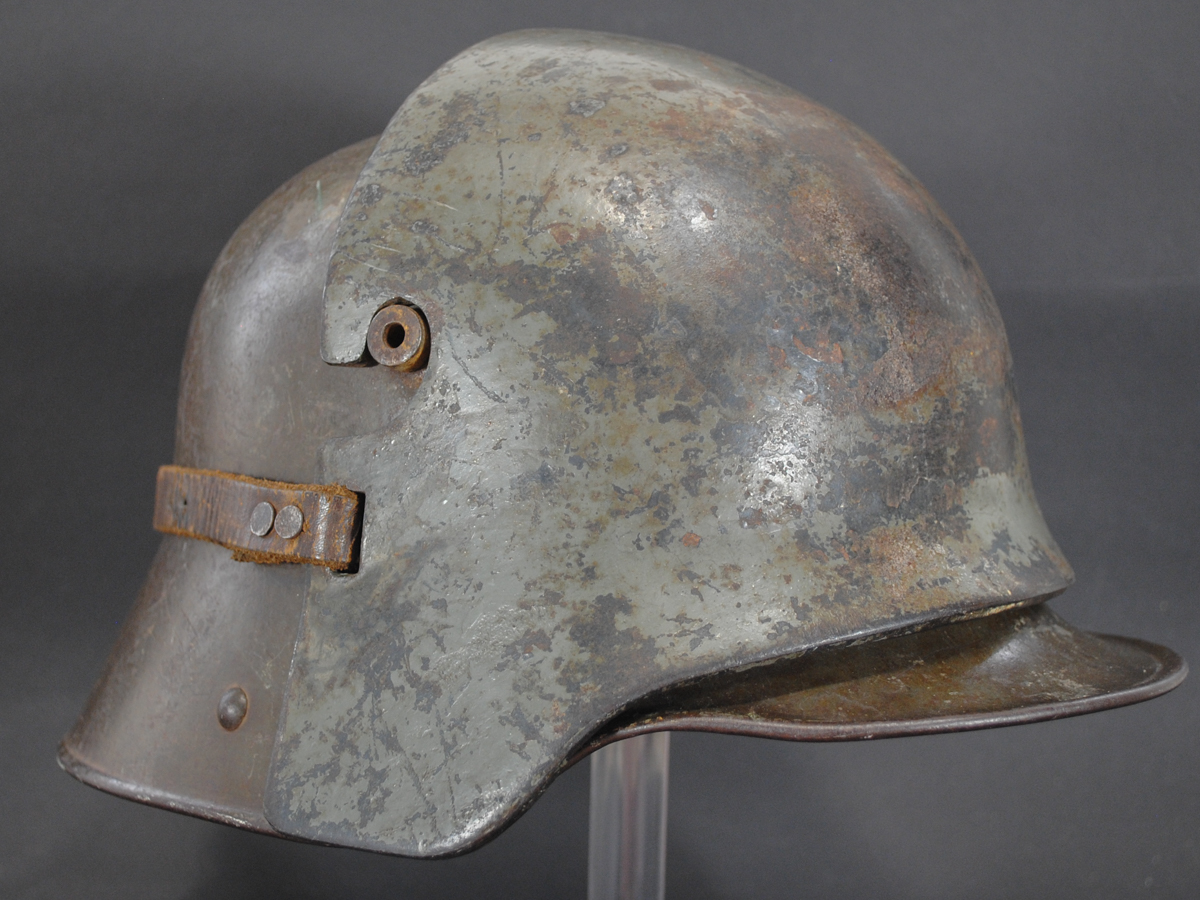
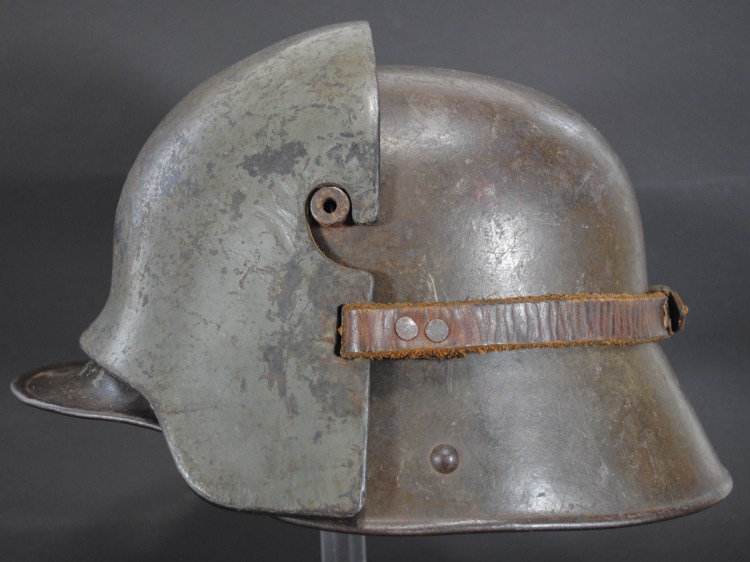
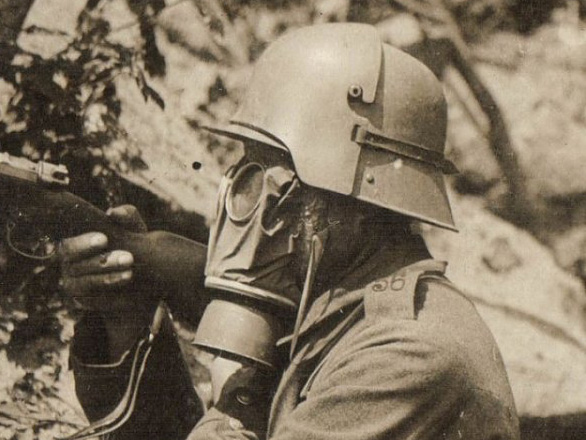
General Information: From its inception, the German Model 1916 steel helmet was designed to accommodate an additional piece of protective armor called a Stirnpanzer (“forehead armor”). Because of the heavy weight of the stirnpanzers (1.2 kg), they were intended to be used only in special circumstances such as for trench fighting or forward observers.[1] In period photographs sentries and snipers are shown wearing this special piece of equipment.
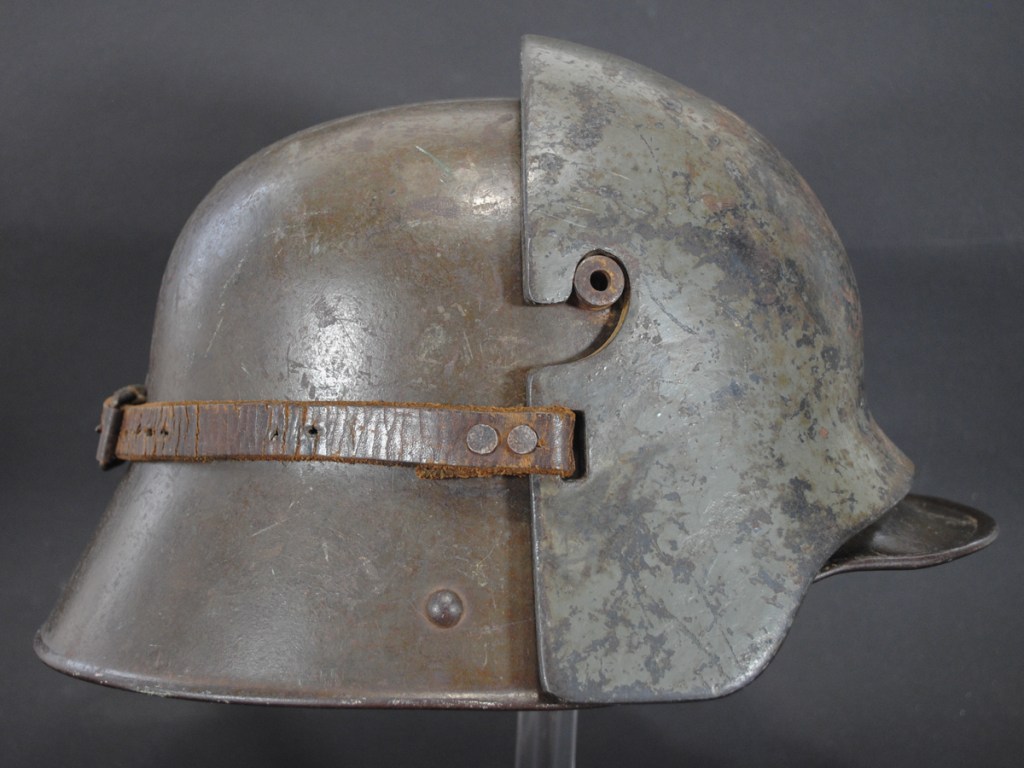
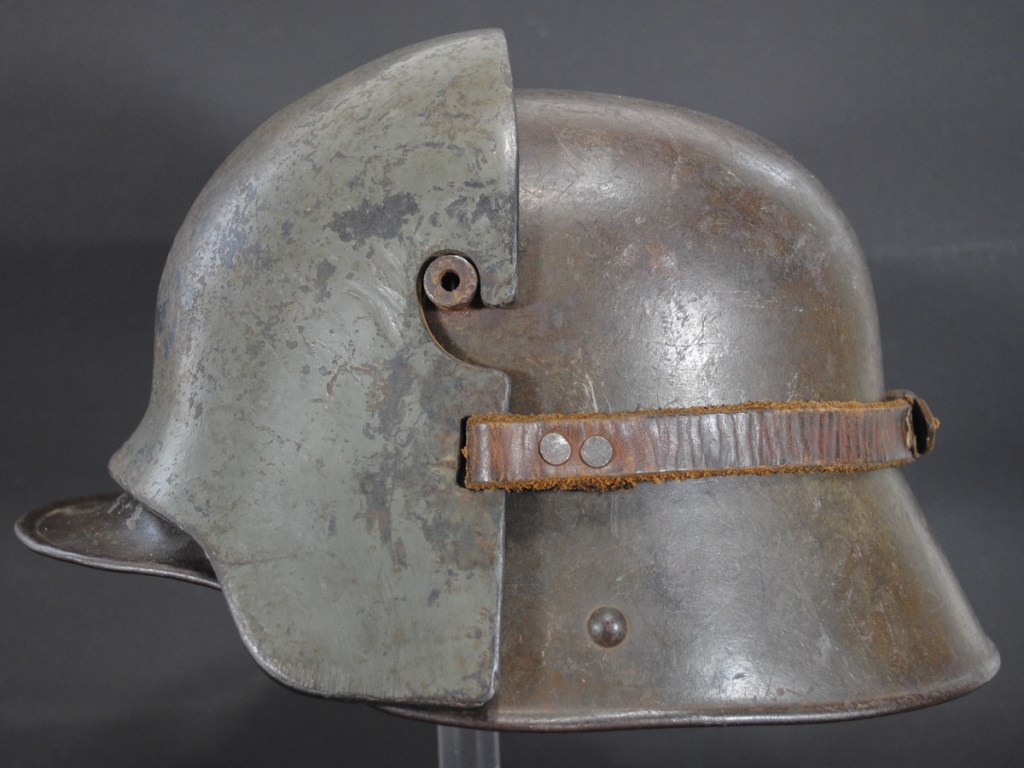
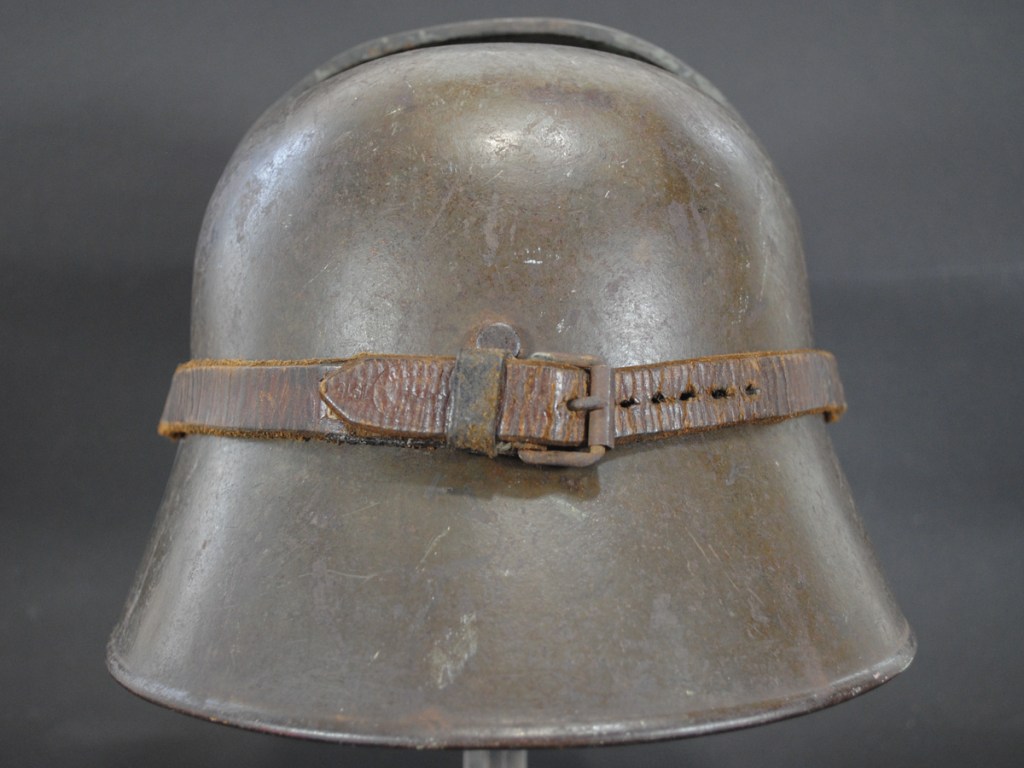
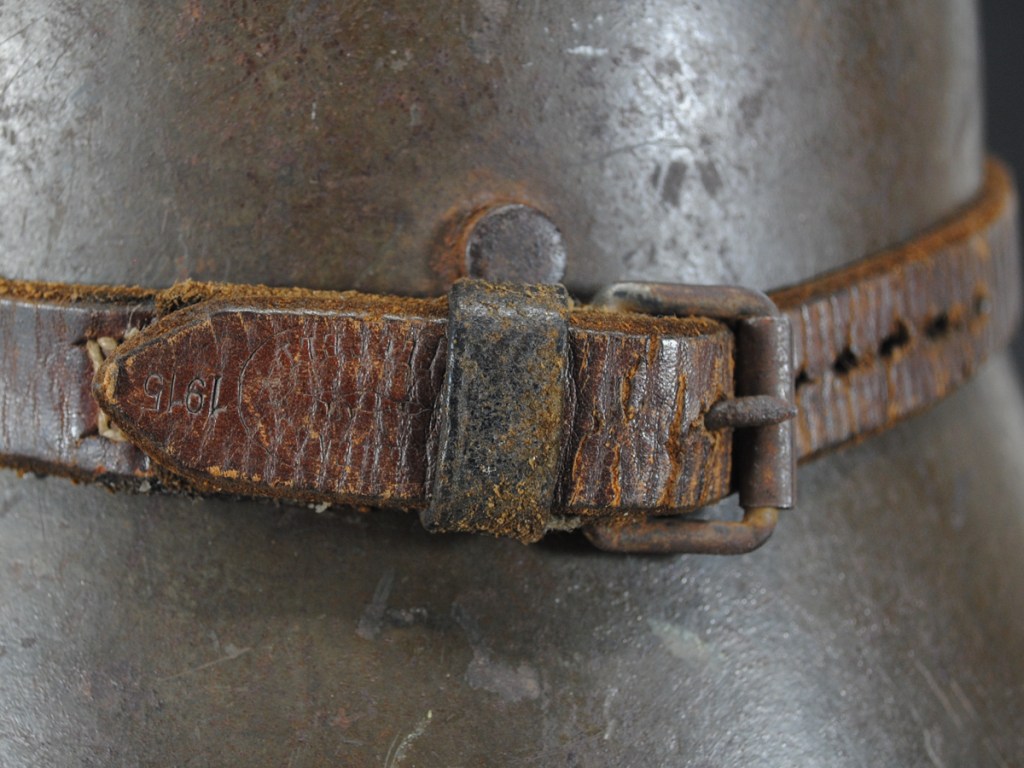
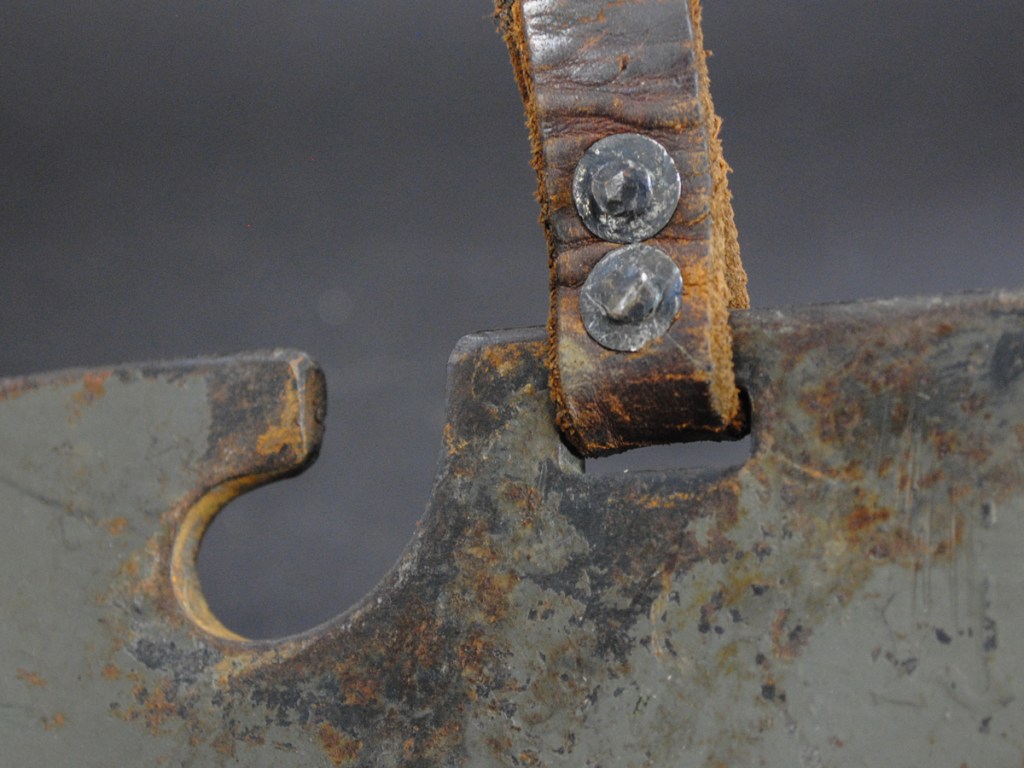
The stirnpanzers were made in only one size. The side ventilation lugs on the M16s sizes 60, 62, and 64 had steps of different thicknesses which enabled the stirnpanzers to fit snugly on the helmets. A leather strap is attached to rectangular openings on the side of the armor. The strap fit below the slightly protruding rear liner band split pin which prevented the strap from sliding upwards. This was the reason that the back split pins on German helmets of the First World War were thicker than the two side split pins. The leather straps were secured by means of two pairs of rivets that were the same type used on the chinstraps for the Model 1918 helmets. The straps had black painted roller buckles. The longer section had thirteen holes,[2] twelve of which would have been redundant. The reason for the redundant holes was that the straps apparently were repurposed standard equipment straps which needed to be adjusted depending on the size of the load they secured.[3] The straps had the manufacturer’s name and manufacturing date, most frequently 1916, stamped into the leather.[4]
The German-made stirnpanzers[5] typically have one or two letters representing the name of the manufacturer as follows:[6]
- BE
- BF (F.C. Bellinger, Fulda)
- N
- R (Rochling’schen Eisen und Stalhwerke in Volkligen)
- RV (Rheinmetall Viersen)
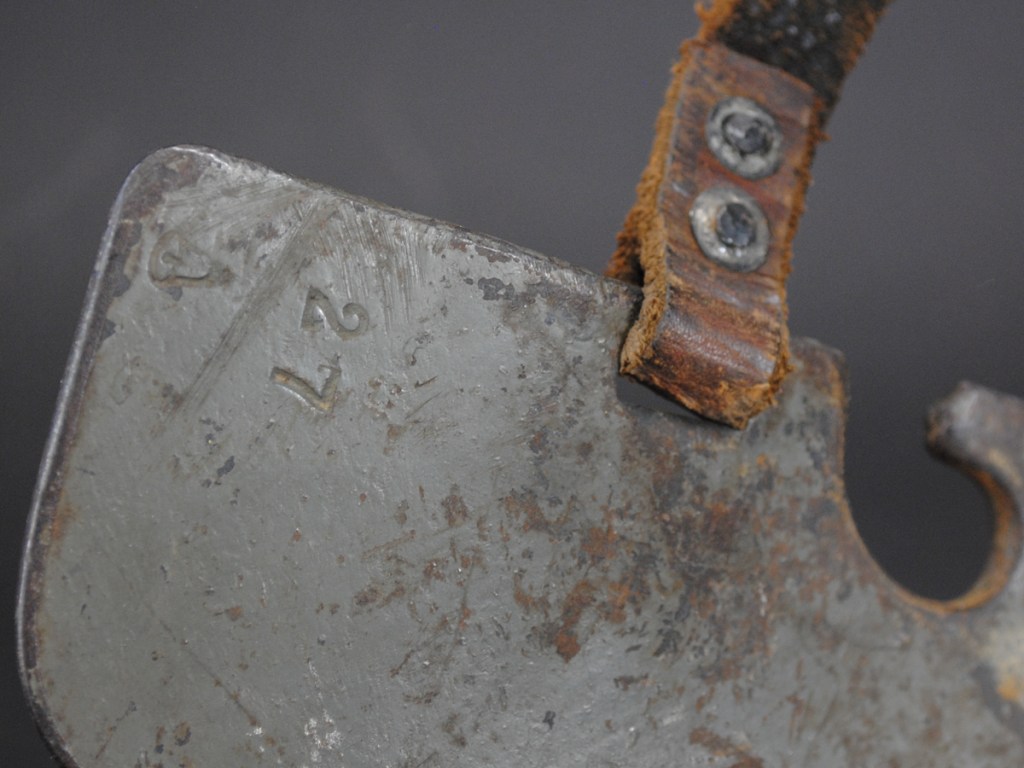
The L. Richard Lindenberg A.G. firm of Ramscheid Hasten, which also made helmets, used a church bell logo rather than letters to identify its stirnpanzers. A number, apparently a lot number, sometimes follows the manufacturer’s identification (e.g., “R.V. 45”). In addition, like the helmets, the stirnpanzers, originally had an “AK” stamp in black ink on the back side.[7] On these stamps the two letters are joined, with the right leg of the “A” also forming the left side of the “K.” “AK” stands for “Abnahmekommando” or “Acceptance Command” which was the military authority responsible for inspecting procurements. On surviving specimens, however, these stamps are usually worn off or may be faintly visible.
The stirnpanzers were made of a steel-nickel alloy and were five to six mm thick. They provided effective protection against small arms fire from 50 meters.[8] They protected the forehead and temples and, because they extended beyond the helmet sides, also provided a degree of protection to the back of the head from frontal fire. Stirnpanzers were pressed out of steel plates rather than being made from casts. They were finished by shaping and smoothing the edges with grinding wheels and marks from the grinding are usually visible on these pieces.
Manufacturing difficulties made it impossible to equip more than five percent of helmets with stirnpanzers.[9] The total number produced is unknown, but it is estimated that approximately 50,000 were made.[10]
The nomenclature for this piece of equipment is variable. In German it is sometimes referred to a “Stirnschild” or “Stirnschutzplatten.” In English, collectors sometimes refer to it as a “frontal plate” or “brow plate.”
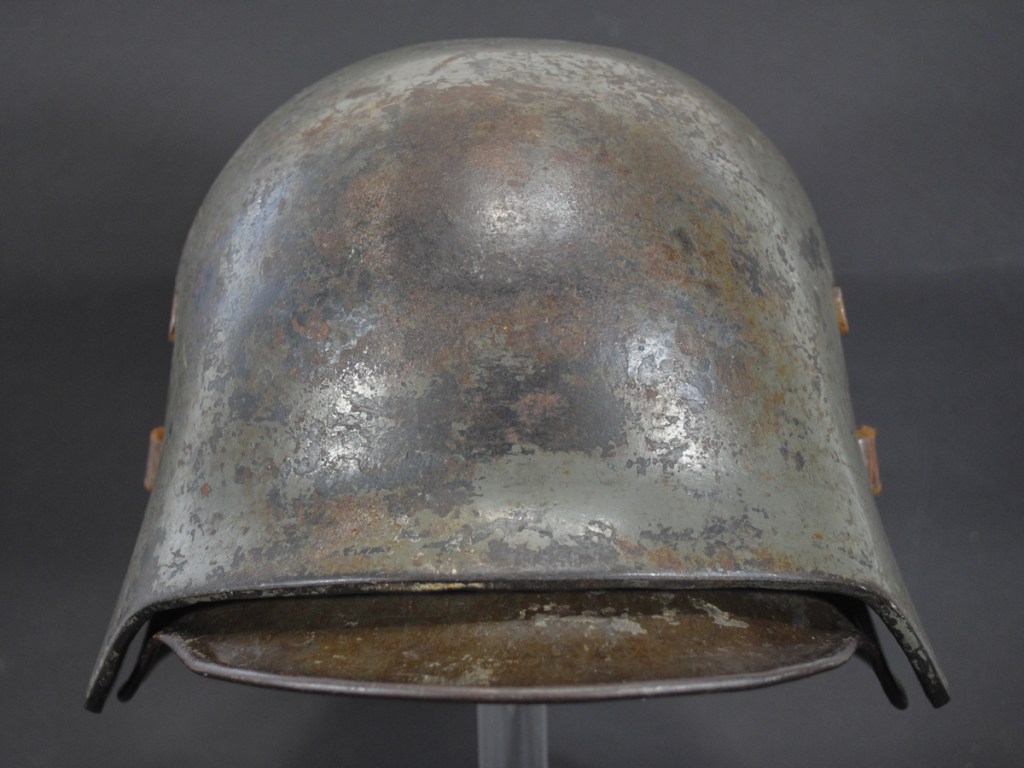
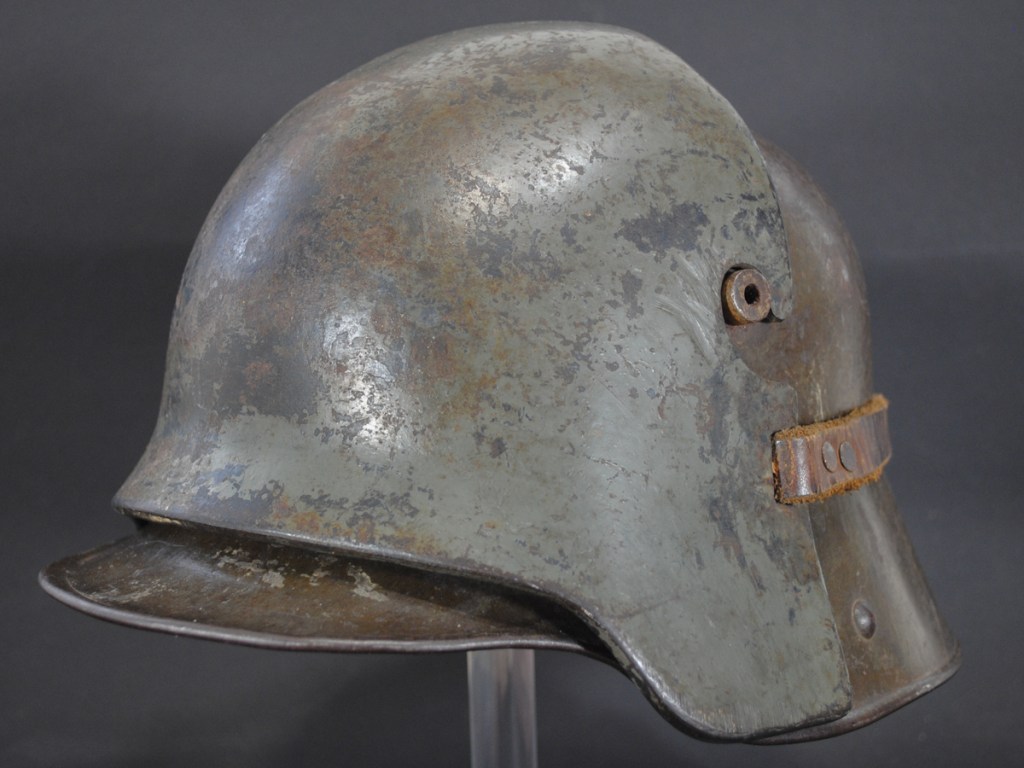
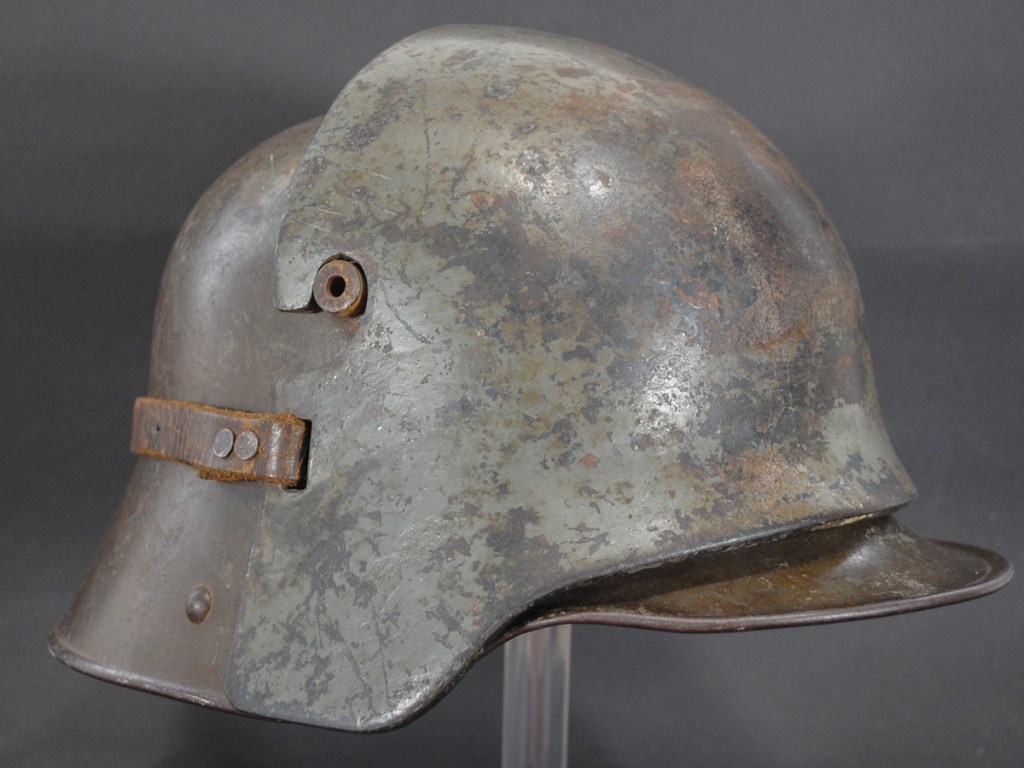
Displayed Example: The stirnpanzer and helmet pictured here surfaced in early 2018 at an estate sale in Sacramento, California. It had been in the family since the end of WWI. The owner was a captain named Louis Beauman. He served in the 48th Regiment, Transportation Corps, 13th Engineers (Railway). In civilian life he had been a railroad engineer. Captain Beauman enlisted at age fifty-four after the death of his son in a wartime plane crash. The antique dealer who purchased these items said that they were from the mansion of a prominent local family. There were many interesting things that came from this estate including several treasures that had not seen the light of day in decades. Included in the lot that I purchased at that time was a grabenpanzer (trench armor), Captain Beauman’s uniform, and period documents related to the grouping.
The stirnpanzer has the bell logo for the Lindenberg firm and the number 27. The strap is something that I fabricated from an original Imperial German equipment strap.
Collector Notes: These are rare and highly sought after by collectors. Surviving specimens seldom have attachment straps, so finding one in its complete, original state is difficult. As is the case with the example displayed here, collectors will occasionally fabricate replica chinstraps for display purposes. Unwary or unscrupulous sellers will sometimes present replica straps as originals. One thing to look for are the two pairs of attachment rivets. As mentioned above, these are identical to the type found on the German M18 helmet chinstraps (see German M18) which are difficult to reproduce. There are many fakes circulating. Typically these are cast rather than pressed from sheets. The reproductions often lack the manufacturer marks. According to collector lore, the originals when hung by a string or wire and struck will make a bell-like tone, whereas the reproductions, when struck, sound flat. I do not know if this is an effective test, but it would be fun to try.
* deaccessioned. Archive photos
* citation pending
[1] Baer, L. 2001. pp.31
[2] Somers, J. pp.179
[3] Author’s hypothesis
[4] Haselgrove, M. 2006. pp.243
[5] Austro-Hungarian stirnpanzers lacked manufacturer markings
[6] Somers, J. pp.183 and Meland, J. 2020. pp 10. This list may not be exhaustive.
[7] Somers, J. pp.183
[8] Baer, L. 2001. pp.31
[9] Baer, L. 2001. pp.47
[10] Haselgrove, M. pp.243 and Somers, J. pp178
 Steel Helmets of the World Wars