

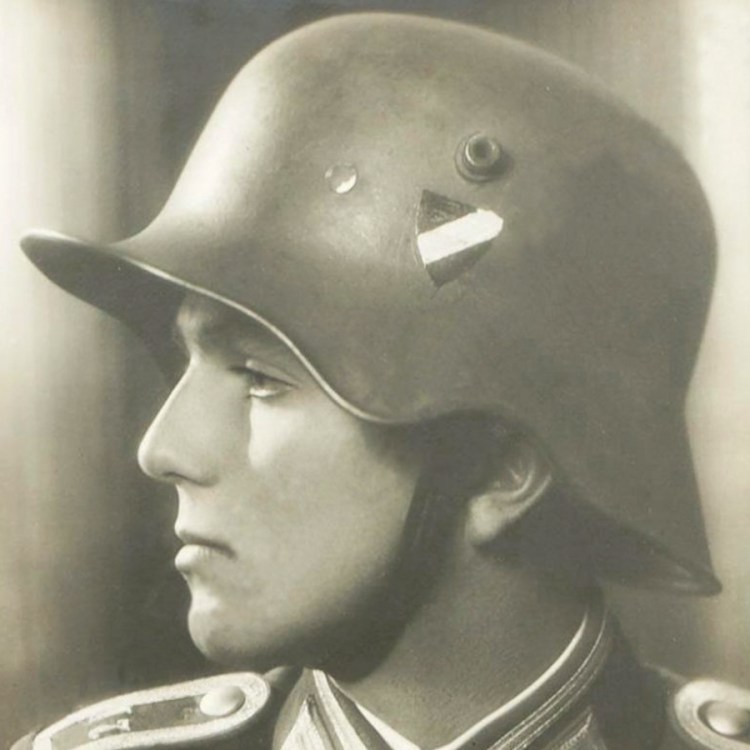
General Information: The German Reichswehr used reissued First World War helmets. These were equipped with their original liners, or were refitted with Model 1927 liners and chinstraps, or later, with Model 1931 liners and chinstraps. From 1923 to 1933 units of the Reichswehr had provincial shields painted on the left side of their helmets. Following a decree by Paul von Hindenburg on March 14, 1933 the provincial shield were to be replaced by black/white/red shields.[1] On surviving examples with national colors, you can sometimes detect the overpainted provincial shields.
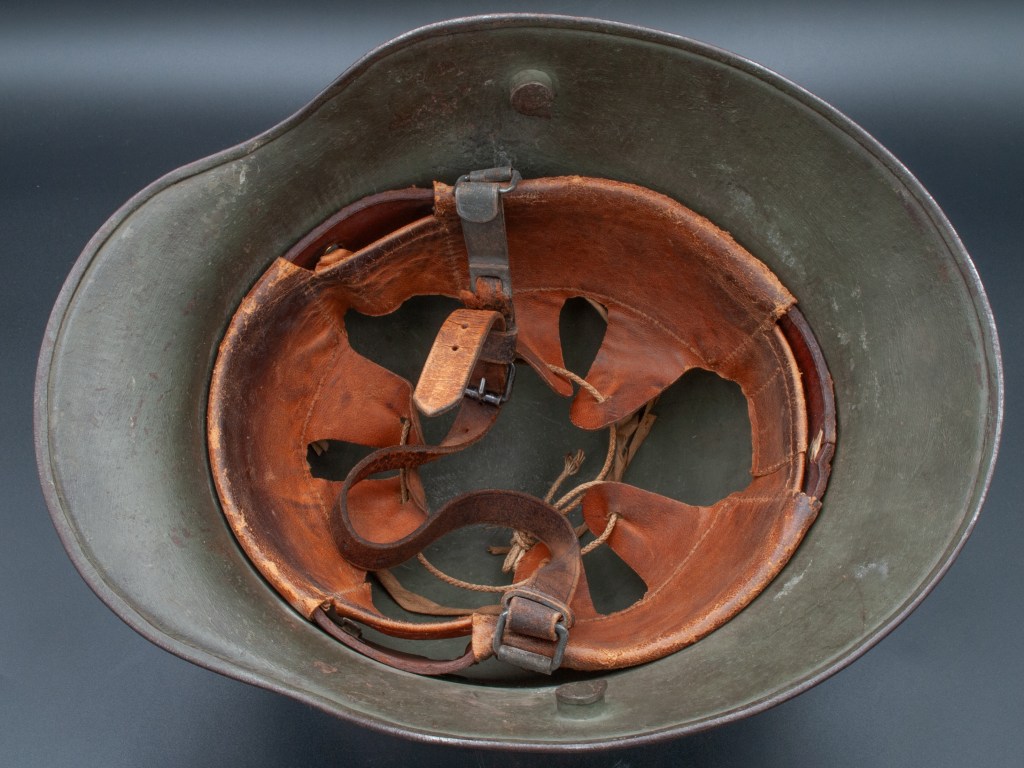
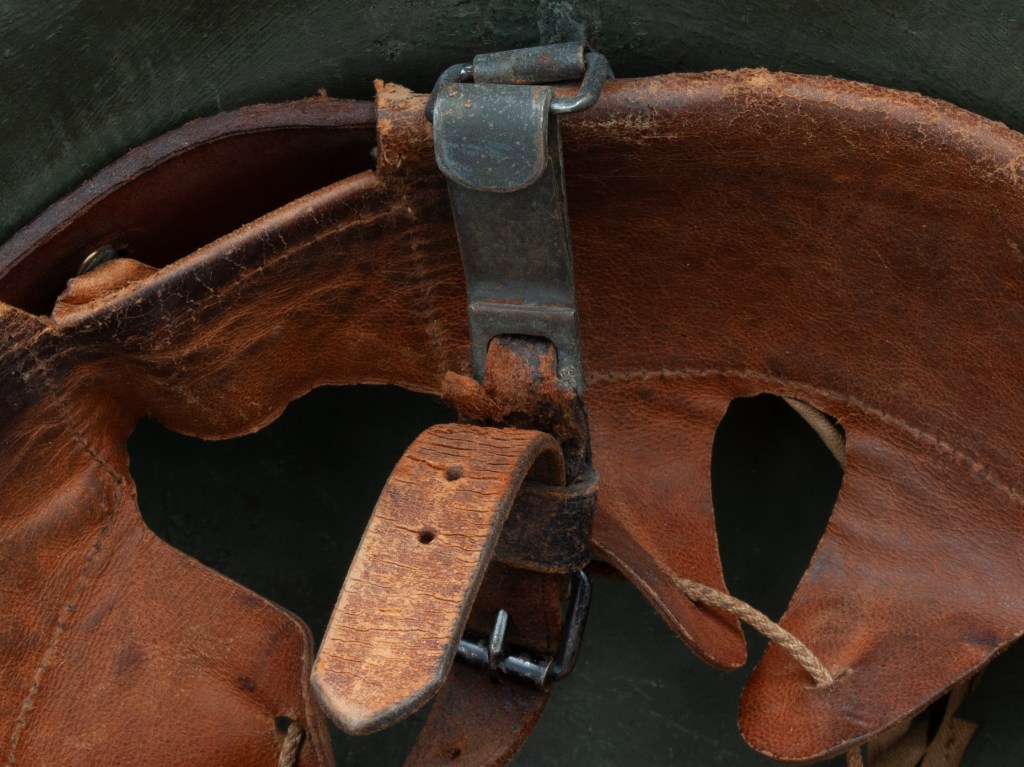
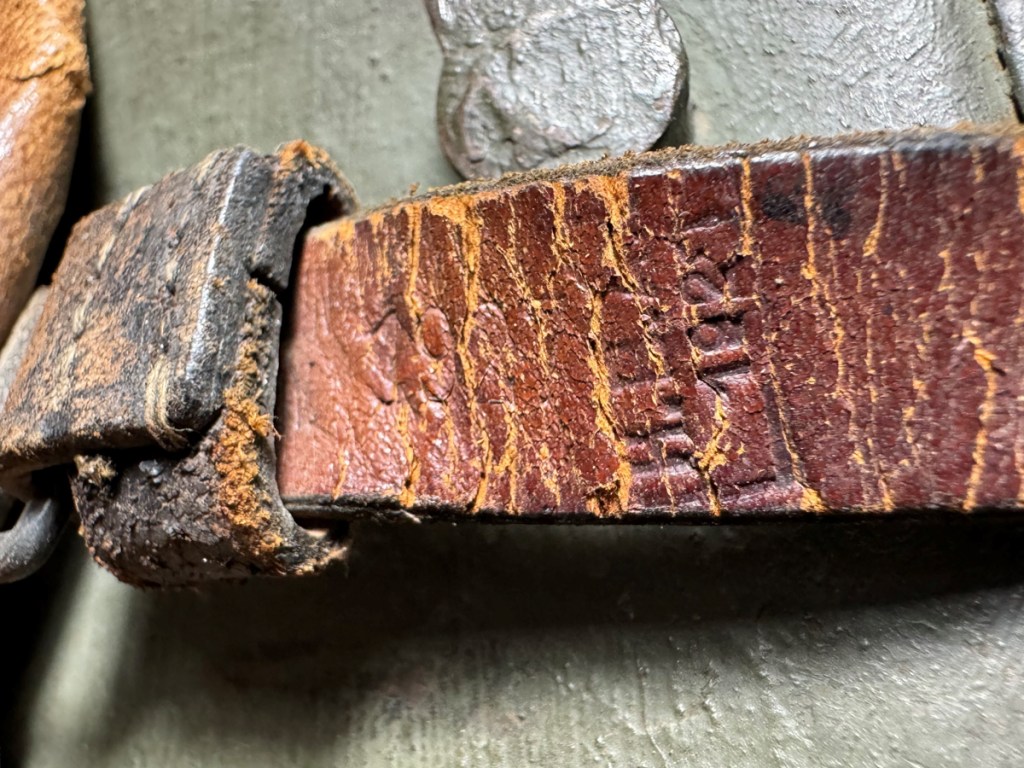
The M27 liners were similar to the First World War three pad type, but were made from a single continuous piece of leather. These are usually stamped with a 1927 date and manufacturer name on the inner liner band. These stamps are only visible if the liner band is separated from the shell. The M27 chinstraps similarly bear manufacturer markings along with a production date, typically 1927.
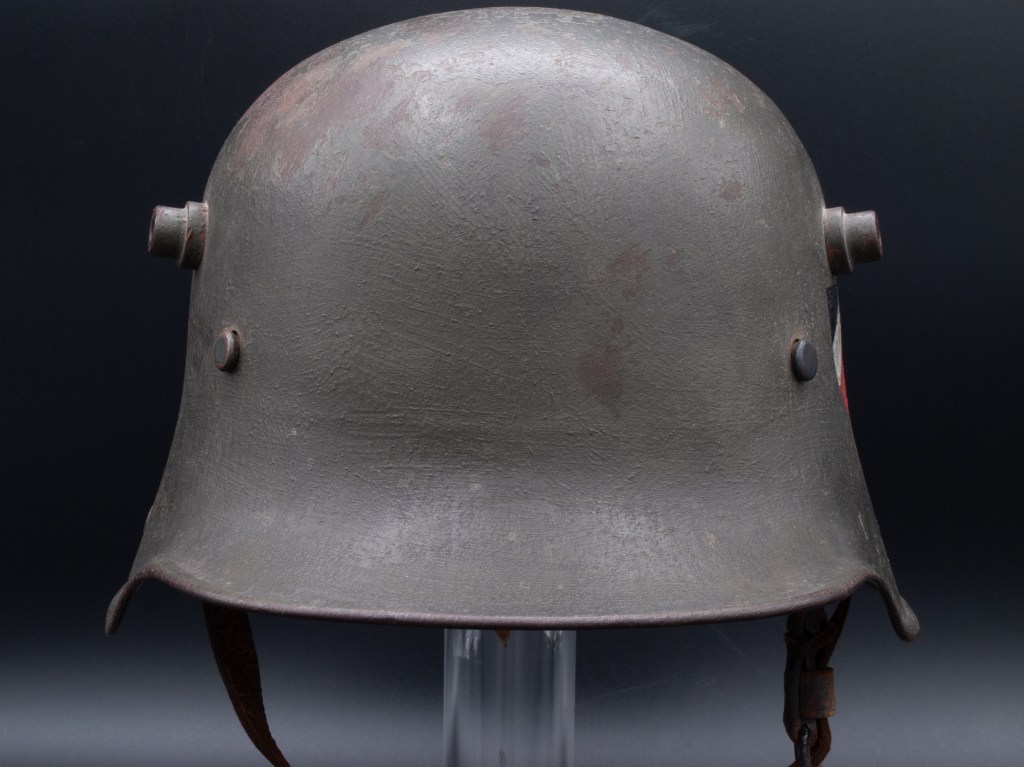
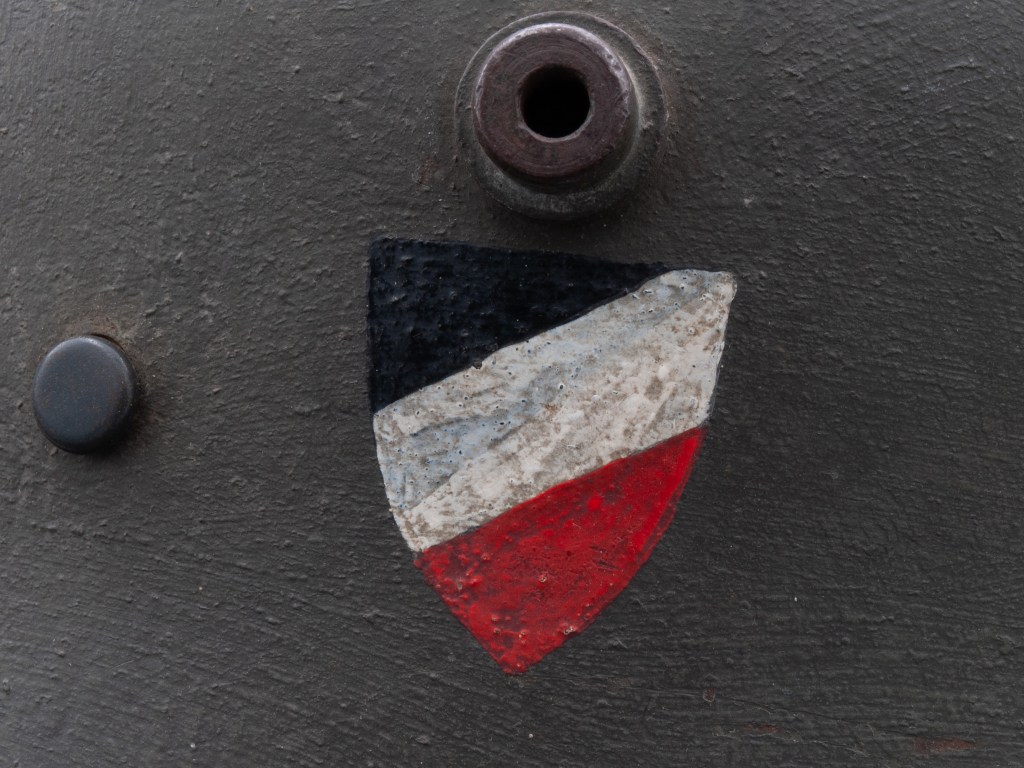
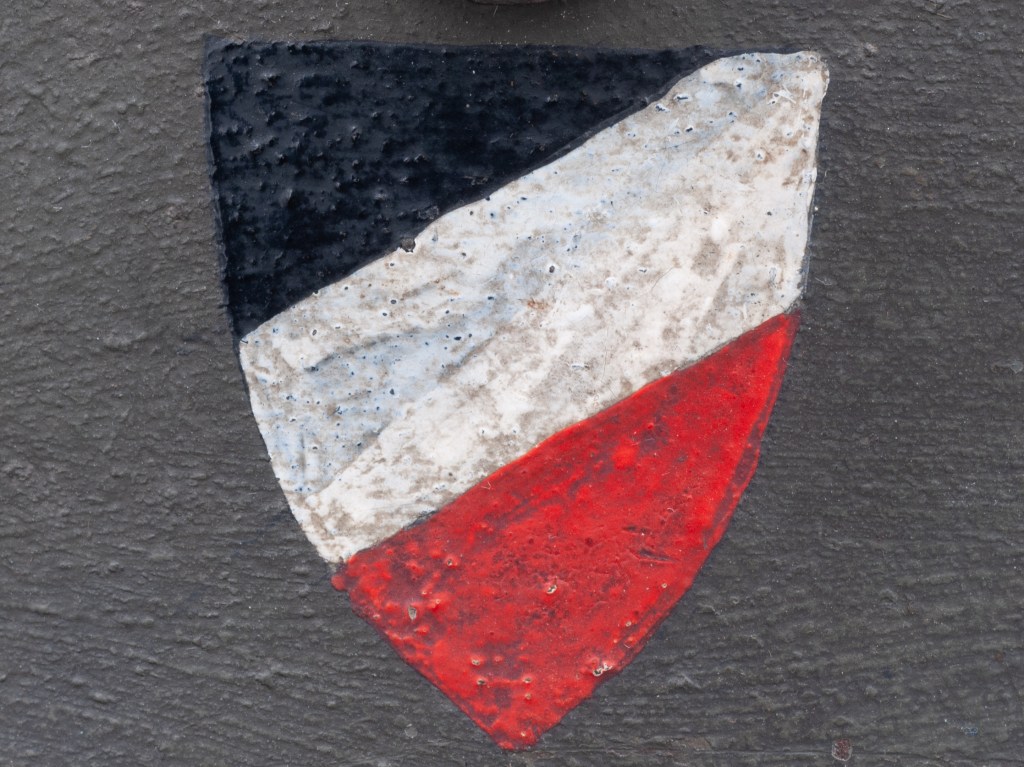
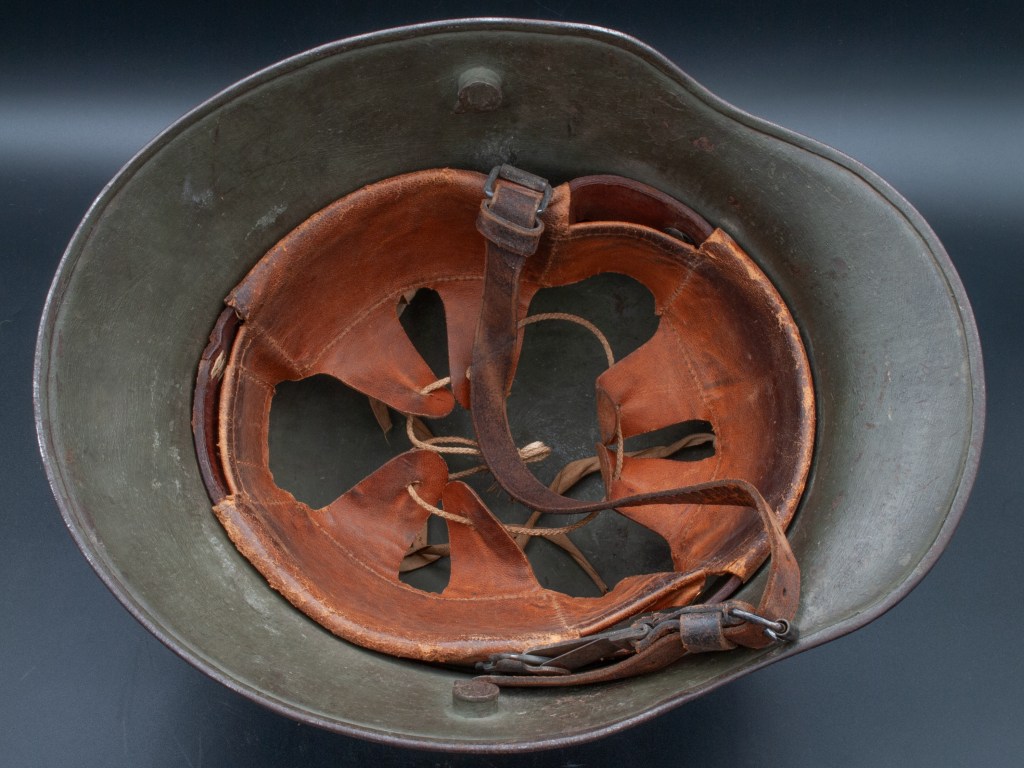
Displayed Example: This helmet is a classic Reichswehr piece. It is a reissued M16 or M17 that is stamped G62 for the manufacturer code and the size, which was the next smallest. The helmet has a M27 liner and chinstrap. The liner pads lack pillows, but it is conceivable that these were removed during the period to accommodate a larger head in a relatively small shell. The hand painting and color is typical of Reichswehr and early transitional helmets. The shield is the national colors type that replaced the provincial shields in early 1933. If you look closely at the shield, you can detect a provincial shield underneath, most likely Prussian. These black/white/red state shields were used for a very brief time, less than a year, until they were replaced by Third Reich decals following an ordinance dated February 17, 1934.[2]
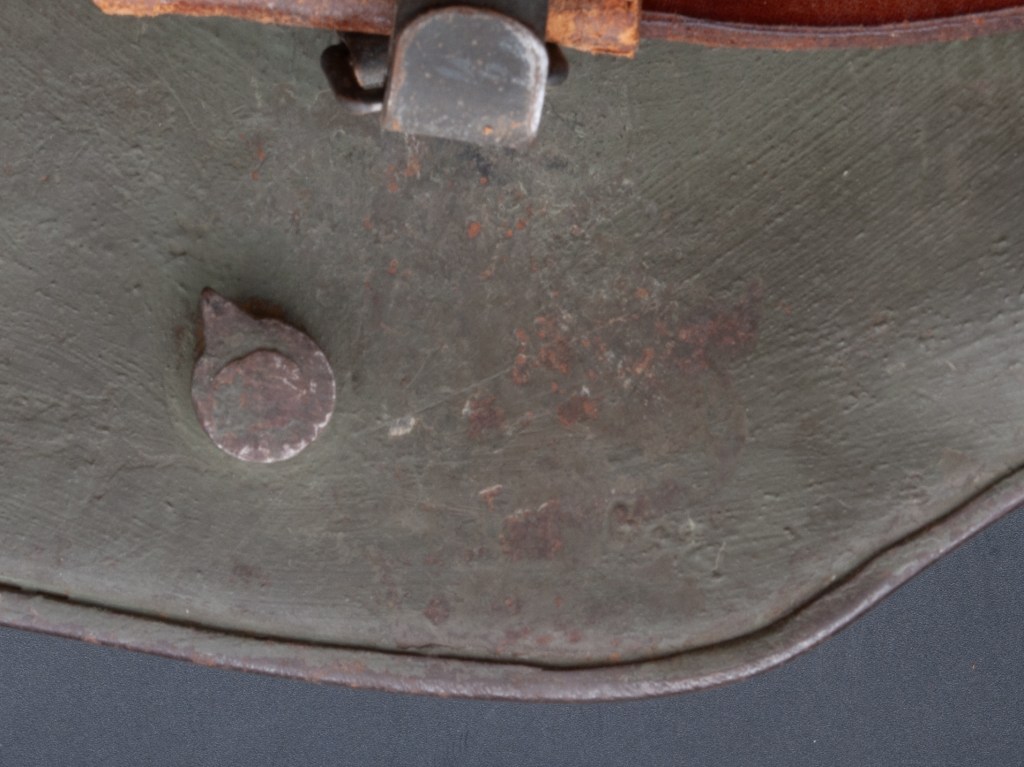
When I acquired the helmet, it was missing the rear split pin. I replaced it with one from my collection of original parts which may be correct for this type. Before I replaced the split pin, I photographed the stamp on the interior of the liner band.
I purchased this helmet in late 2023 from a Spanish collector. He in turn had purchased it from a German family in Spain. The helmet was originally part of a lot of items from the same family. The lot included World War II era family correspondence, Obergefreiter chevrons, and a few other artifacts. The return information on a postcard from this lot indicates that the writer, Hans Runkholz, was an Obergefreiter whose unit designation was Pz. Ers. Abtg. 204. It is not clear if Hans Ruhkholz was the original owner of the helmet pictured here. It could have belonged to his father who may also have been a military man. The seller speculated that the father might have been involved in a German business in Spain or perhaps was part of the German diplomatic corps. The correspondence was to an address in Madrid.
Collector Notes: German Reichswehr helmets are rare. Because the shields were hand painted, they are easily faked. For evaluation, you often have to go on look and feel. If you are examining a helmet like this one with a black/white/red shield, look for signs of a provincial shield underneath. This would increase confidence that the piece was original.
* helmet12782 (aka). “Post your period photographs of WW1 helmets used in the Third Reich.” German Helmet Walhalla II. February 1, 2019. Post #88. http://www.germanhelmetwalhalla.com/topic/28860-post-your-period-photographs-of-ww1-helmets-used-in-the-third-reich/page/4/
[1] Baer. pp 101
[2] ibid




 Steel Helmets of the World Wars