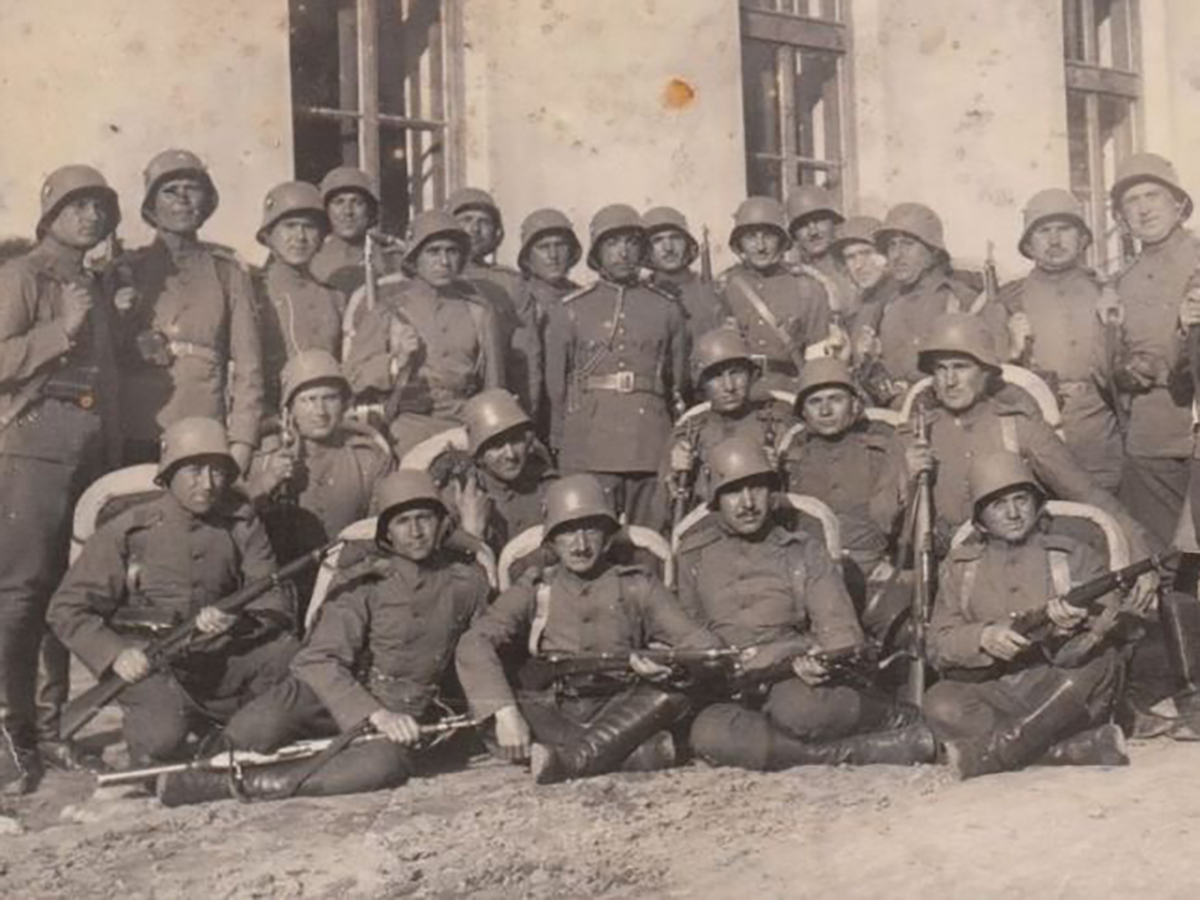
General Information: Germany supplied their Bulgarian First World War allies with approximately 170,000 steel helmets. These were designated the Bulgarian Model 1917.[1] During World War One, Bulgarian soldiers used these helmets without insignia or adornment. It is interesting to note that the number of helmets that the Germans delivered to the Bulgarians was sufficient to equip only about 20% of Bulgarian soldiers.[2] In period photos, images of Bulgarian troops with steel helmets are relatively uncommon.
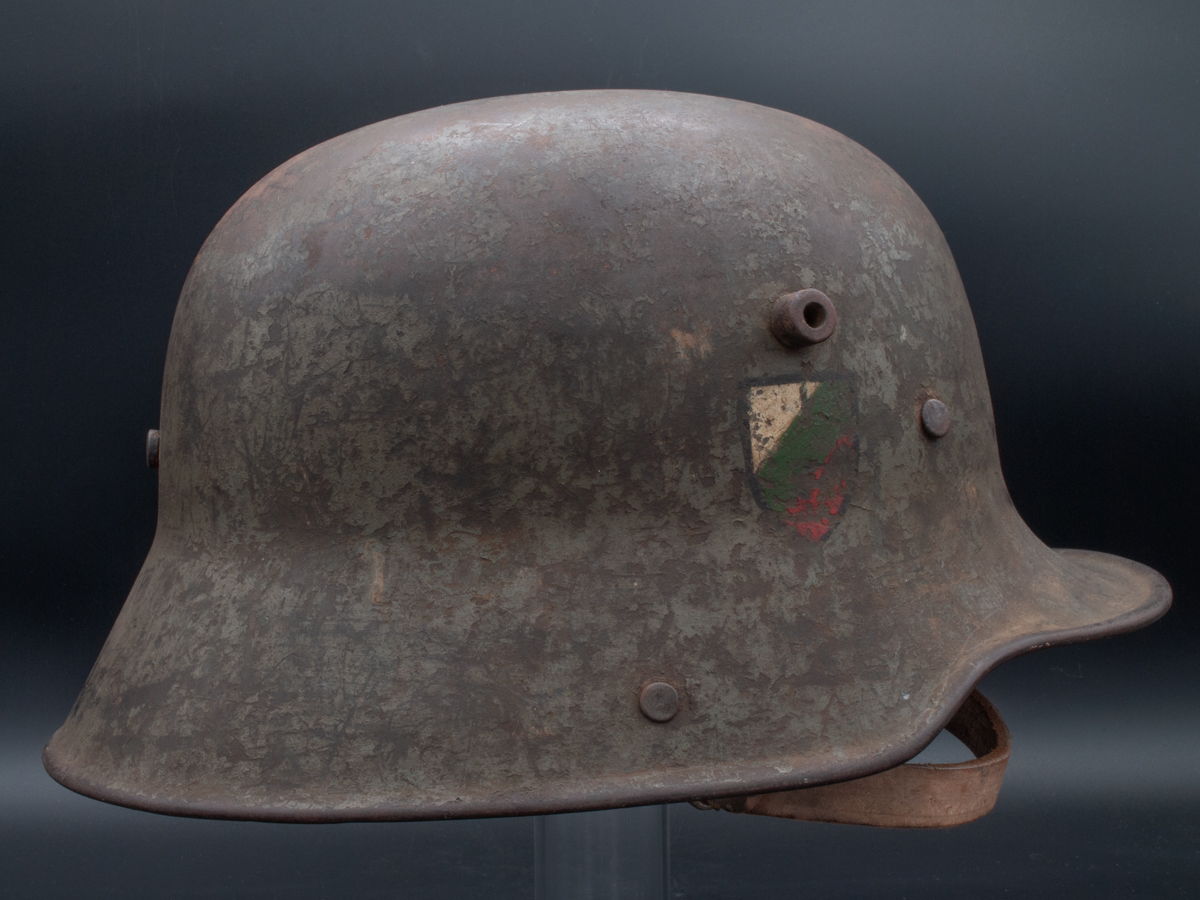
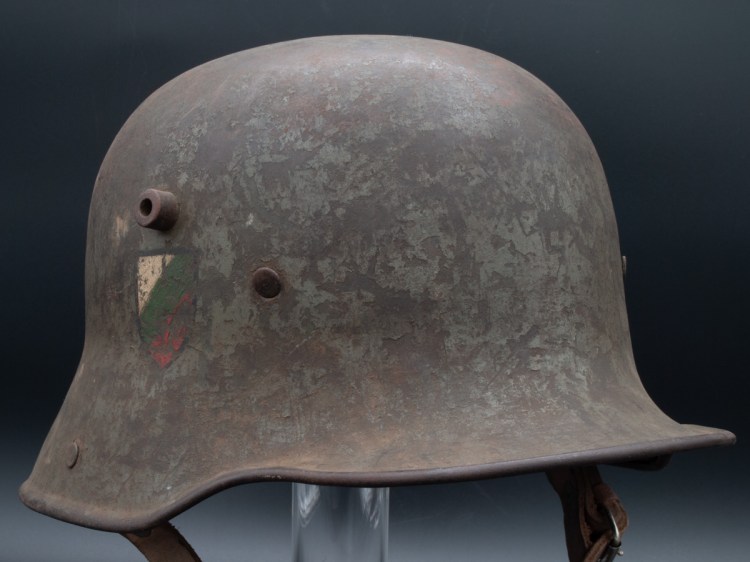
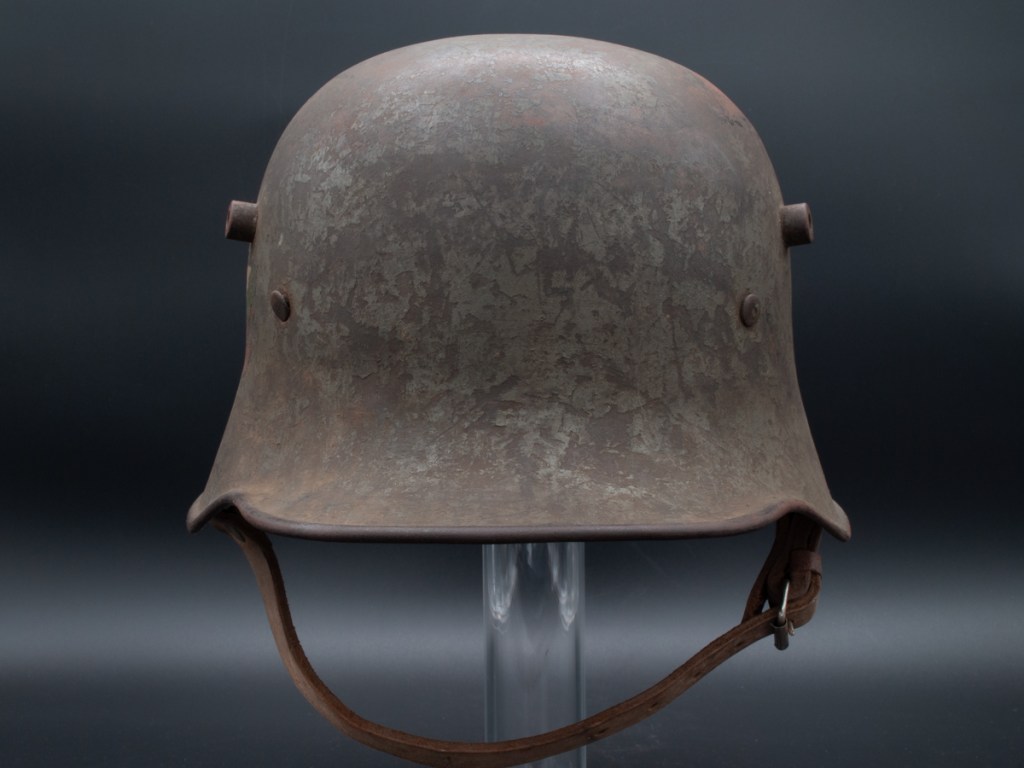
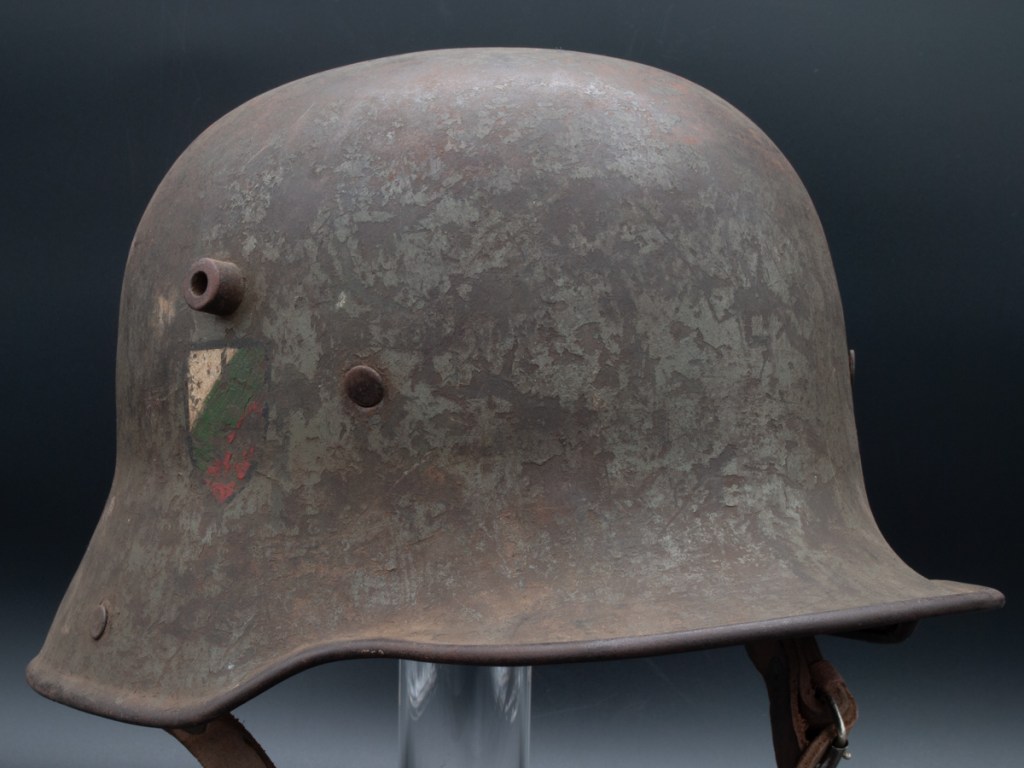
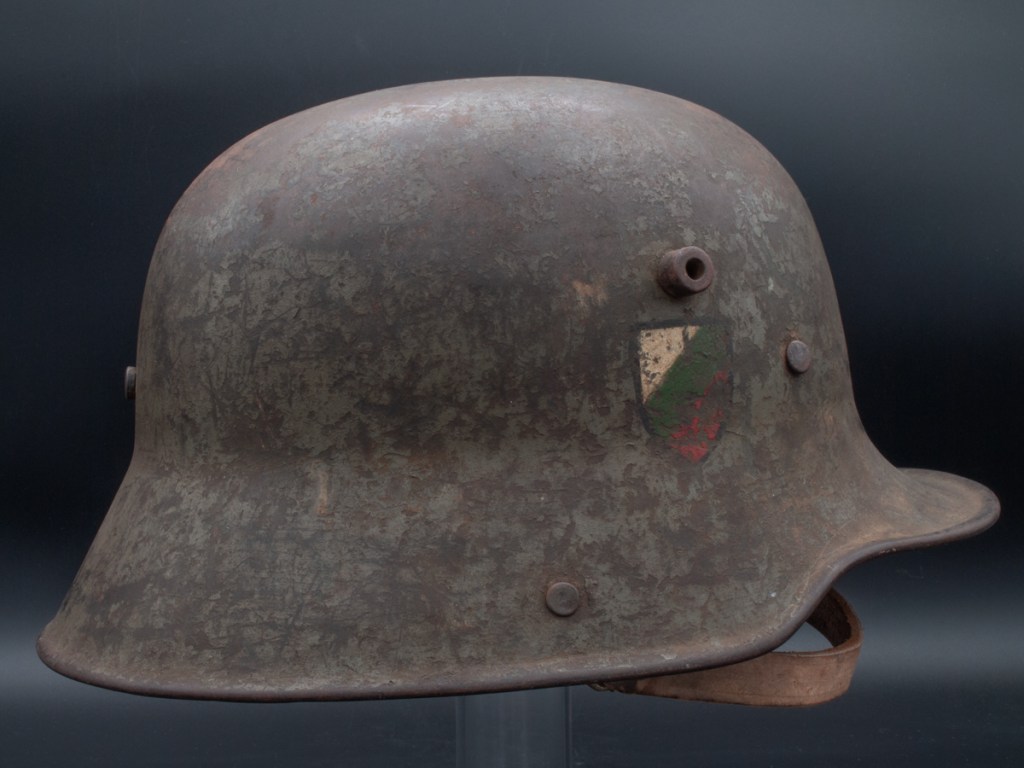
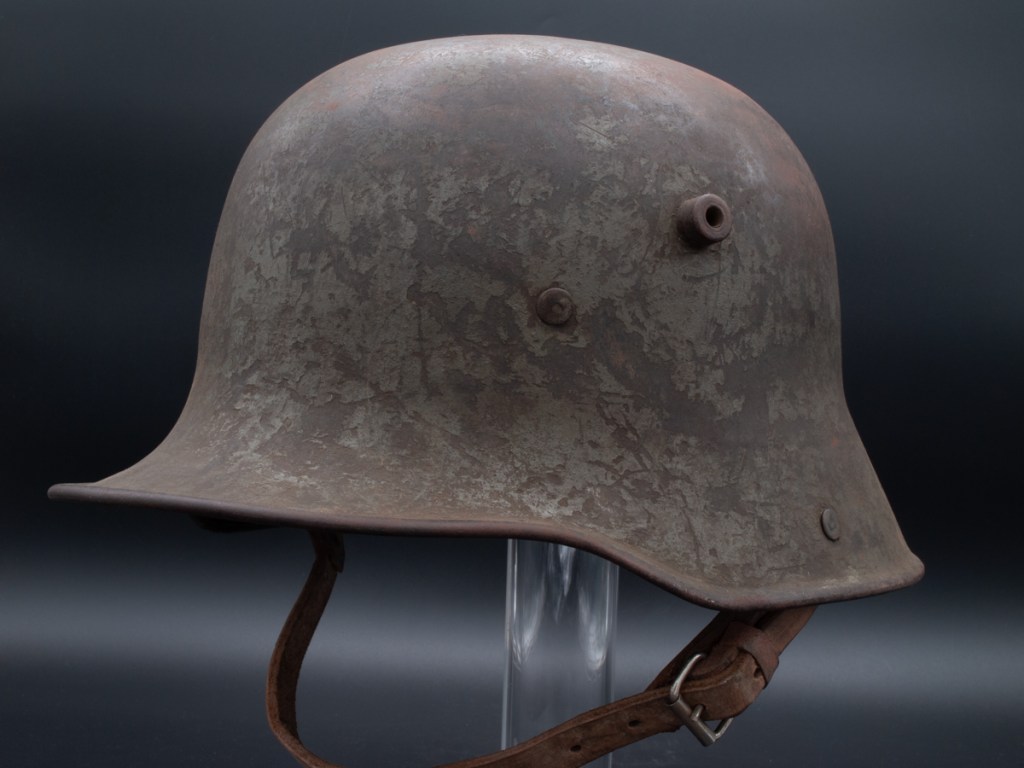
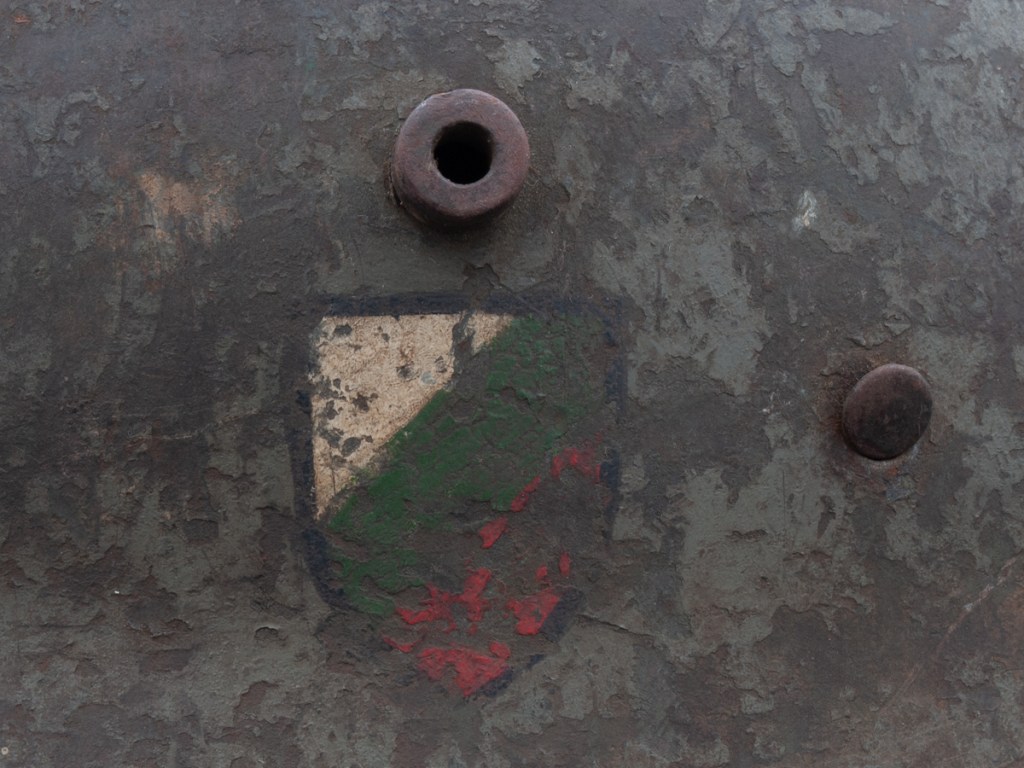
After WWI, the Treaty of Neuilly in 1919 limited Bulgarian armed forces to 33,000 people. These soldiers wore German helmets left over from the war. Starting in the mid-1930s the Bulgarians applied a shield insignia with national colors within a black border. These shields were initially hand painted, but later decals were used.[3] In the same period, most of the stocks of M17s were repainted and refitted with new liners and chinstraps. On many of these refurbished helmets the attachment lugs for the German M91 chinstrap hardware were removed and replaced with non-removable two-piece chinstraps with roller buckle type hardware and attached permanently to the shell with rivets.[4] On some of the helmets, the Bulgarians used liner attachment rivets with rectangular shaped heads.
After the introduction of the Model 1936 Bulgarian helmets, the M17s continued in use throughout the Second World War and beyond, but in much fewer numbers than the new model.
During the communist era, the Bulgarian armed forces refurbished most of the surviving World War One helmets yet again. This involved stripping the helmets, repainting them a vibrant green color and installing Model 1951 type liners used in the Model 1951 Bulgarian helmets. These helmets may be designated the Bulgarian M17/51.[5]
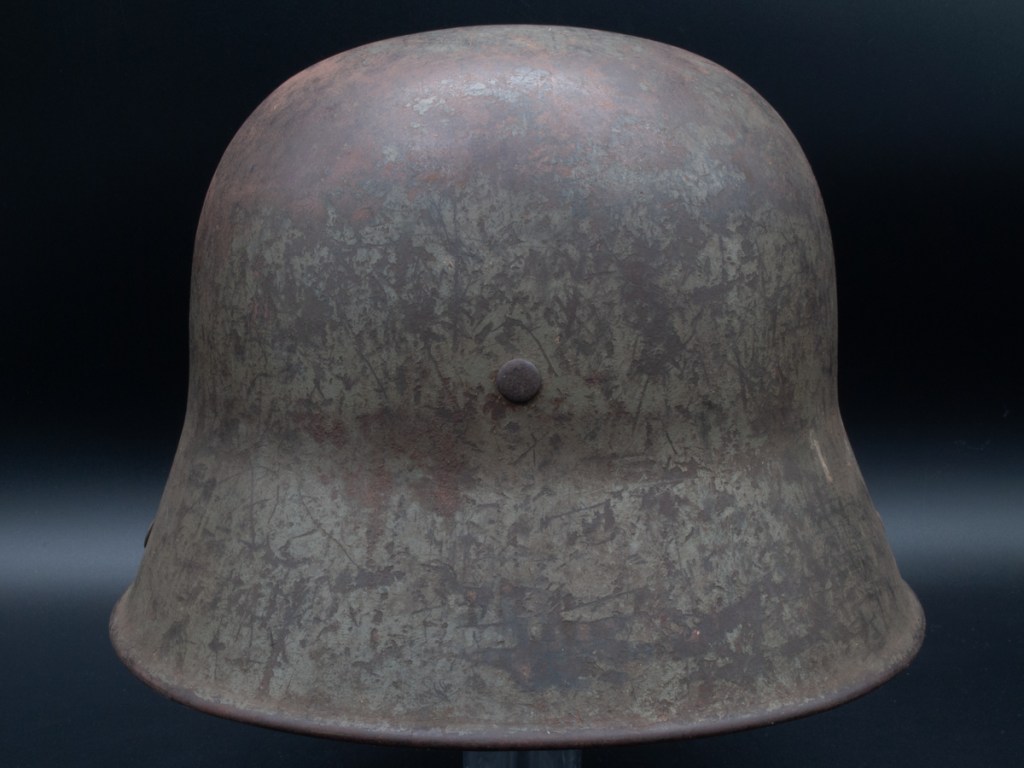
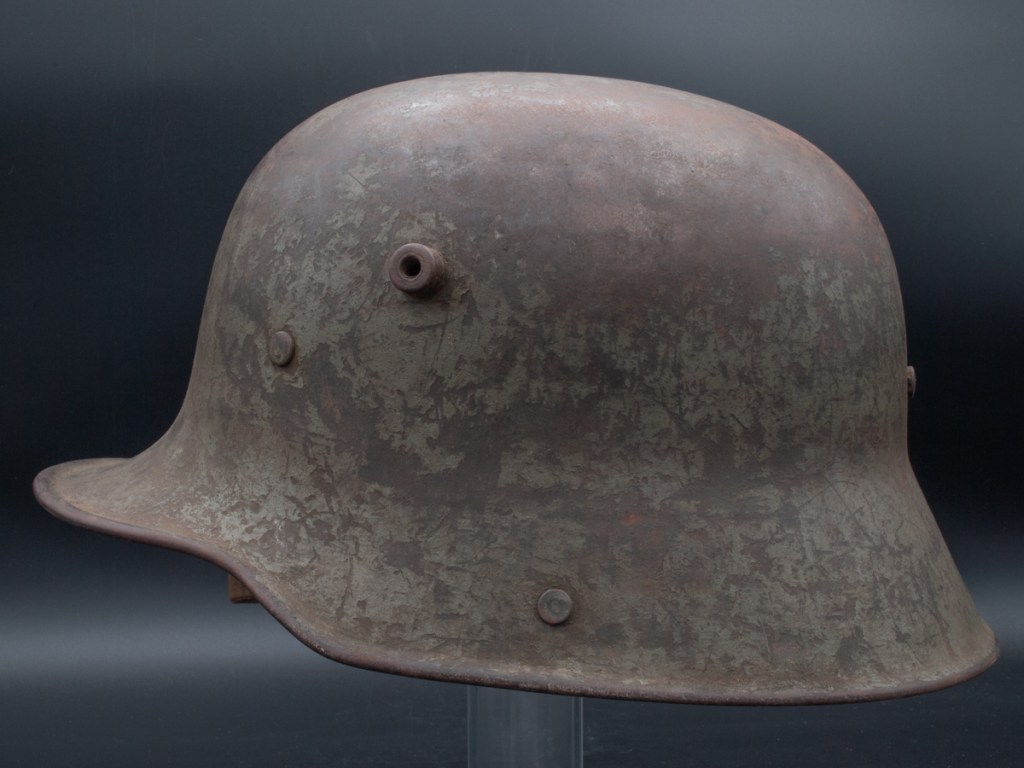
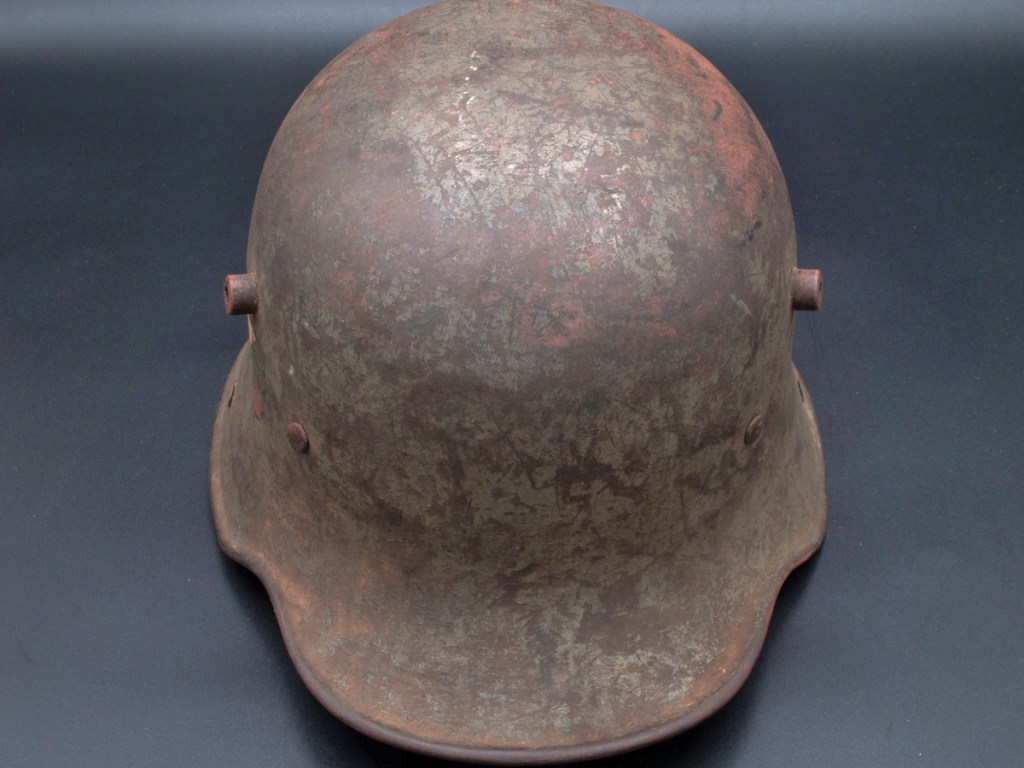
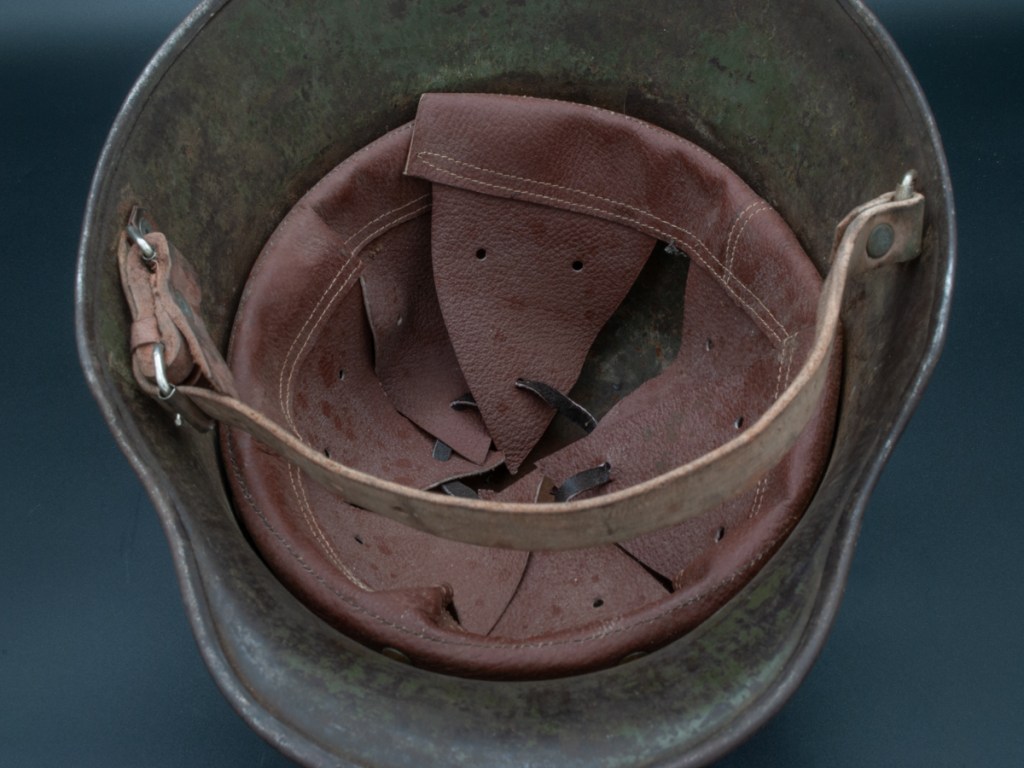
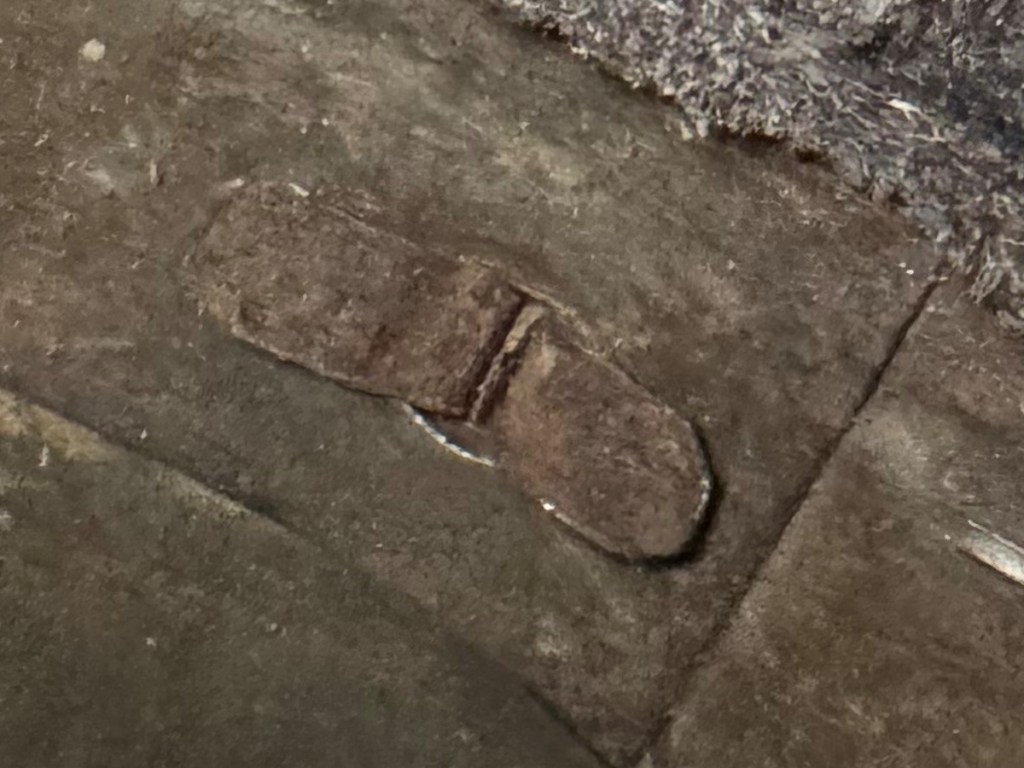
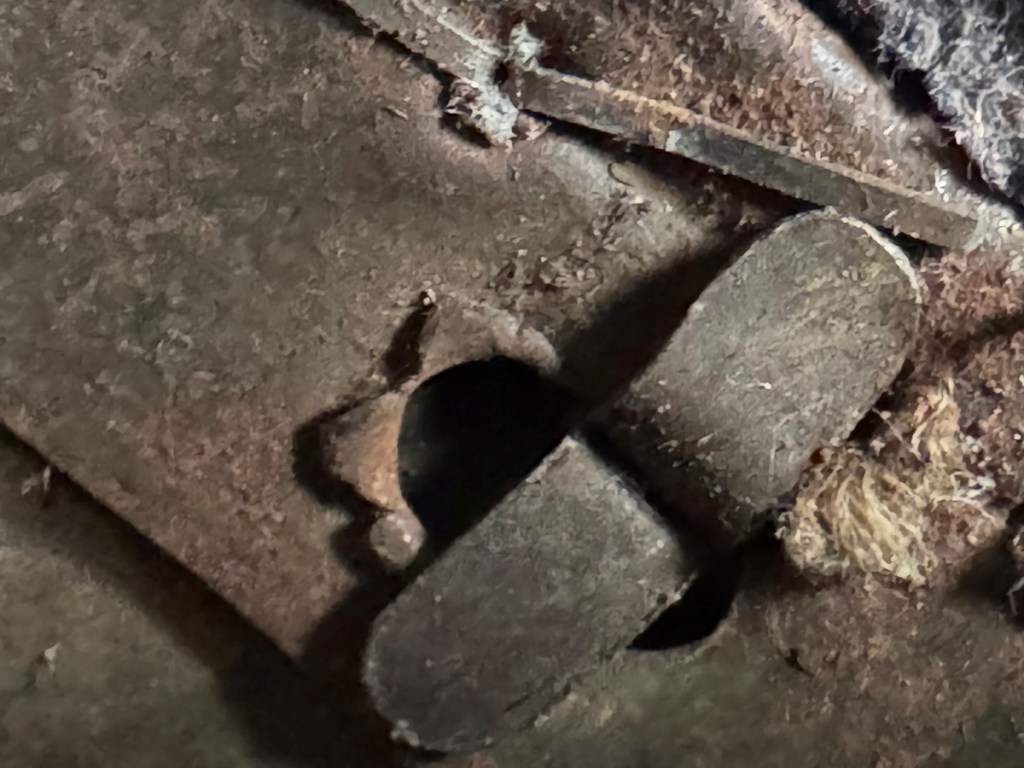
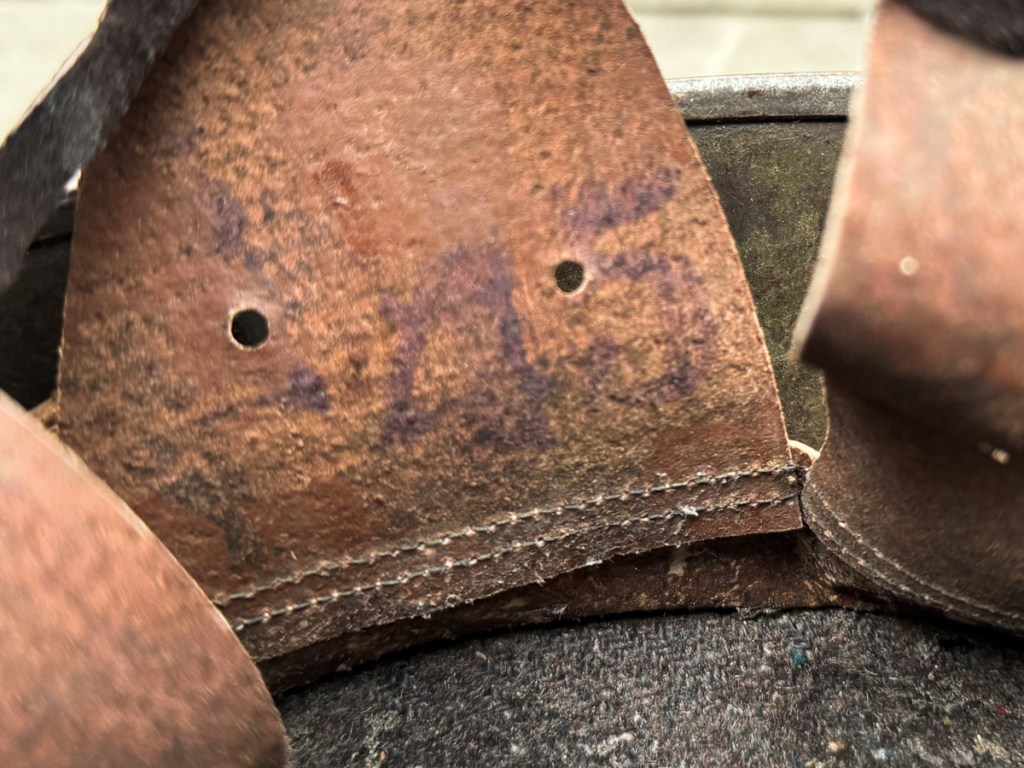
Displayed Example: I purchased this helmet from Ken Niewiariowicz of German Helmets Inc. He, in turn, bought this piece as part of a lot of approximately eighty Bulgarian M17 helmets sourced from a military storage facility in Bulgaria. Of the eighty helmets, only two, including the one displayed here, were non-refurbished during the socialist era. The remainder had what he calls “commie green” paint and M51 replacement liners. It was his Ken’s opinion that the liner and chinstrap date from the 1950s and this may be the case. However, a foremost expert on Bulgarian helmets noted that the liner configuration on this example is unique and may have been added during the war.[6] There is a stamp on the inside of liner that looks like “45.” This may represent a date, or the first character may be a Cyrillic figure and the stamp may represent something like “size 5” or a lot number. The helmet unusually retains its original German M17 metal liner band and the split pins also appear to be original WWI German manufacture. The rear protruding split pin is an original that I added to complete the piece.
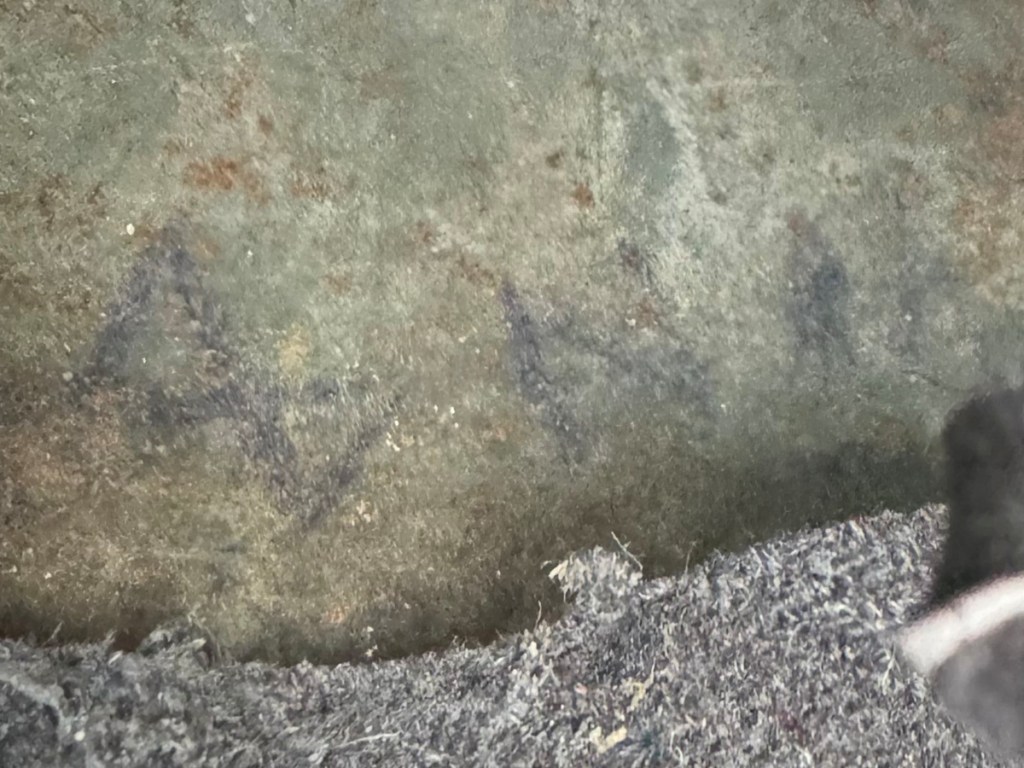
There are some partly legible Cyrillic figures penciled in the dome that could be an original owner’s name.
The helmet is stamped “Si66.” “Si” was the manufacturer code for the Eisenhütte Silesia, Paruschowitz Obershlesien[7] factory and “66” is the helmet size.
Collector Notes: As of this writing, Bulgarian M17/51s are not difficult to find and tend to be priced at the lower end of the price spectrum for German WWI type helmets. Bulgarian M17s that have not been refurbished post-WWII are challenging to acquire and are considerably more expensive. Bulgarian M17 helmets in their original WWI state are exceedingly rare. I have seen a small number of examples of these. Complicating the search for a WWI configured specimen is the fact that few of these were marked in a way that would differentiate them from a regular M16/17 type used by the Imperial German army. There is one in Paolo Marzetti’s seminal book “Elmetti”[8] that has a Bulgarian army inspection stamp, but this may be unique among surviving M17s.
* deaquisitioned
[1] Haselgrove, M. 2006. V1. pp.96
[2] Bulgarian Helmets. 2004. “M-16.” http://kaski.boinaslava.net/m16.htm. Accessed April 19, 2025.
[3] Bulgarian Helmets. 2004. ibid
[4] Bulgarian Helmets. 2004. ibid
[5] Marzetti, P. 2003. pp.54
[6] Jacobs, Walter. Personal communication.
[7] Meland, Jan. 2020. pp10
[8] Marzetti, Paolo. 2003



 Steel Helmets of the World Wars