
Updated: May 2, 2025
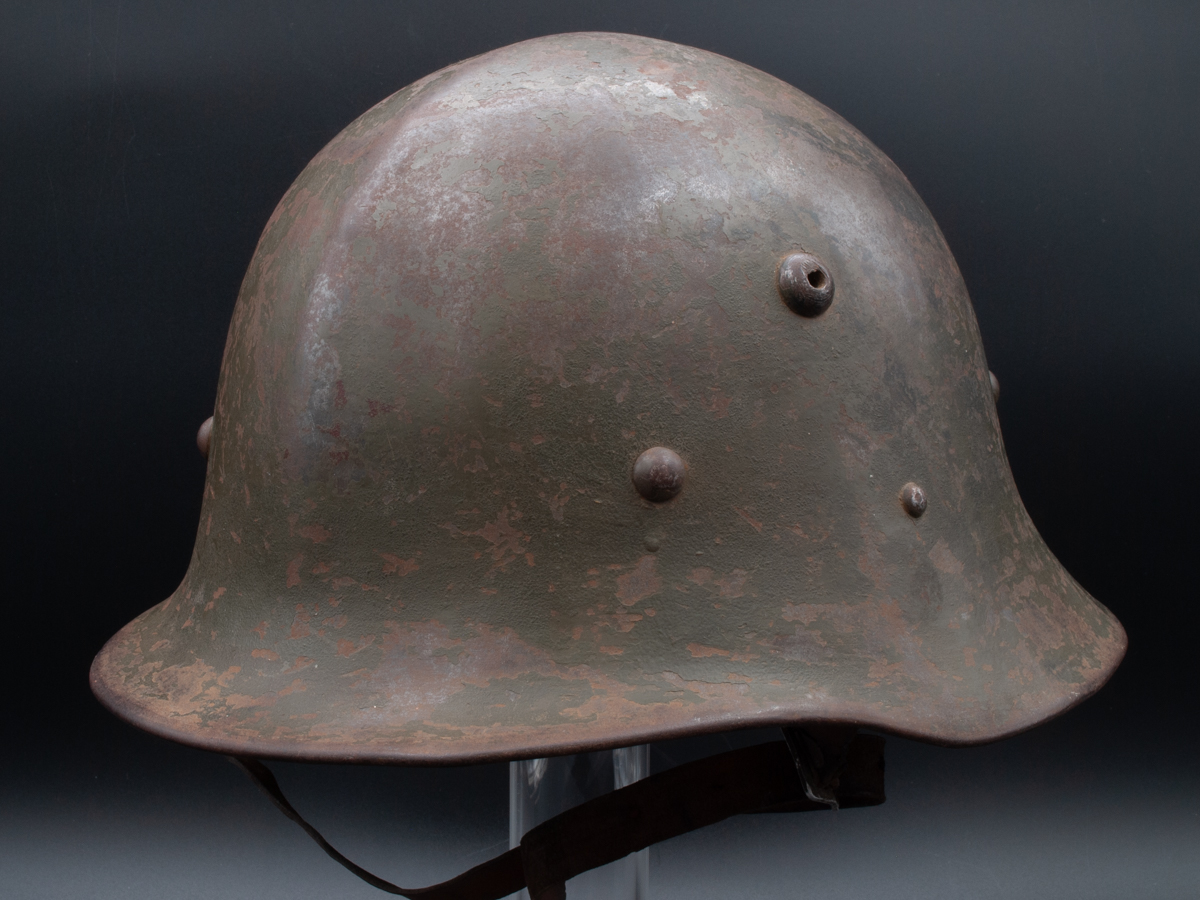
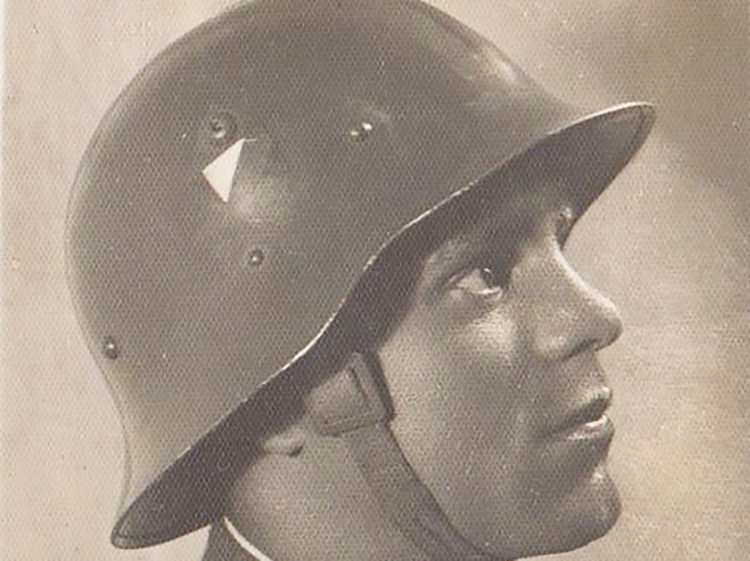
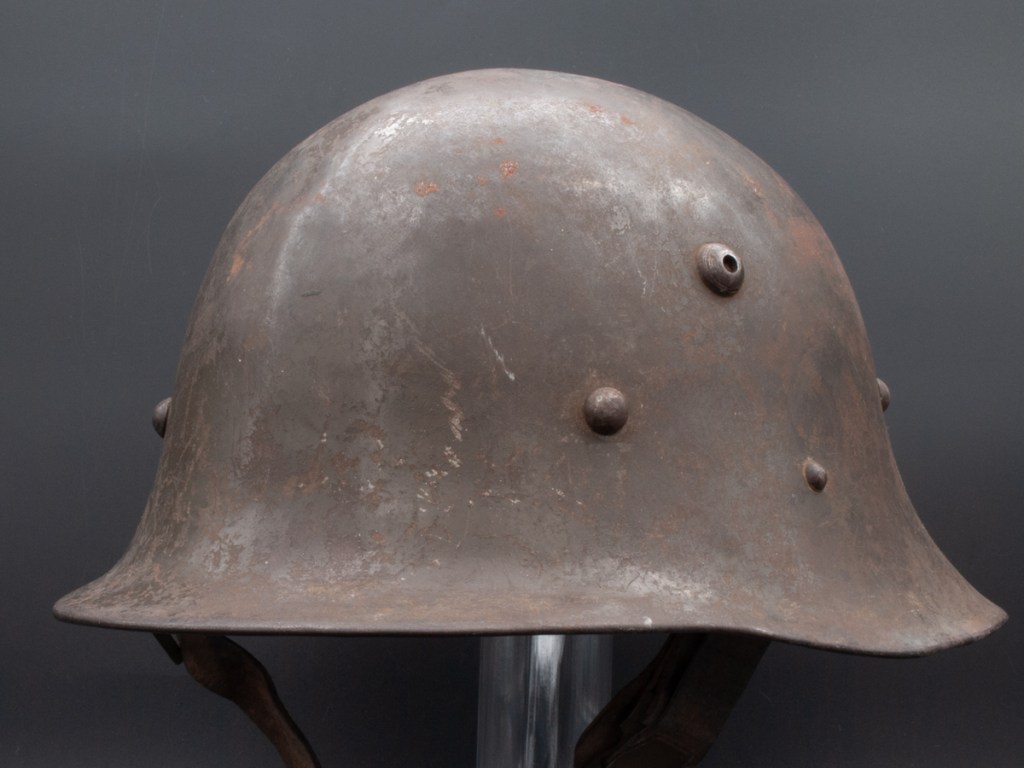
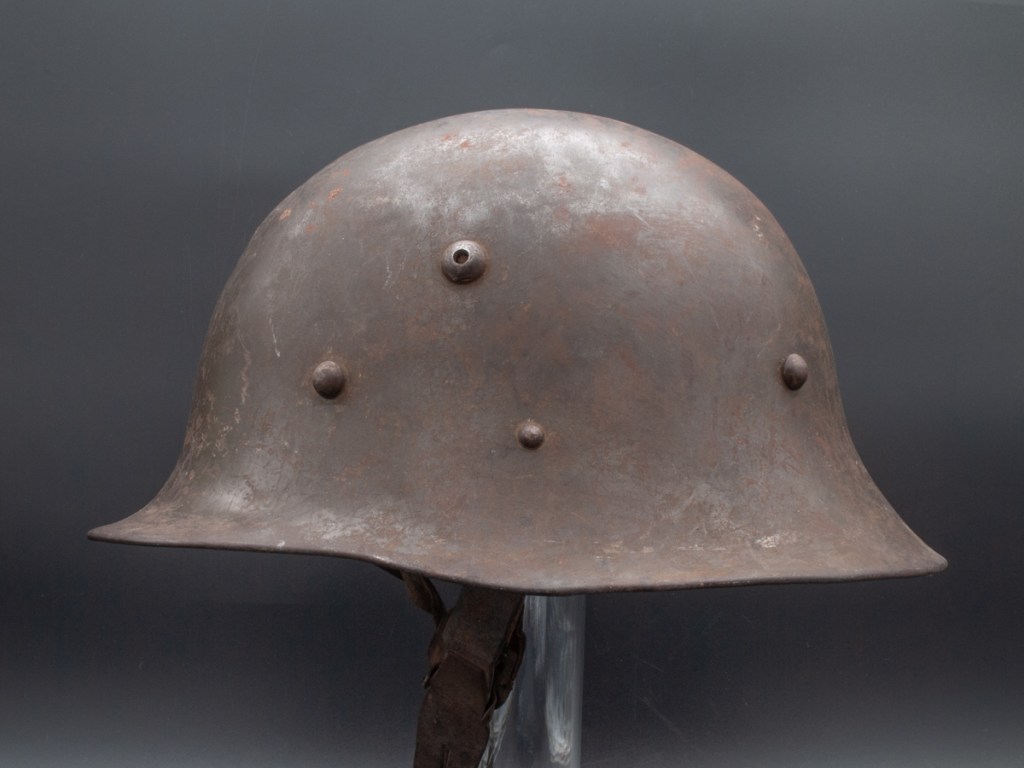
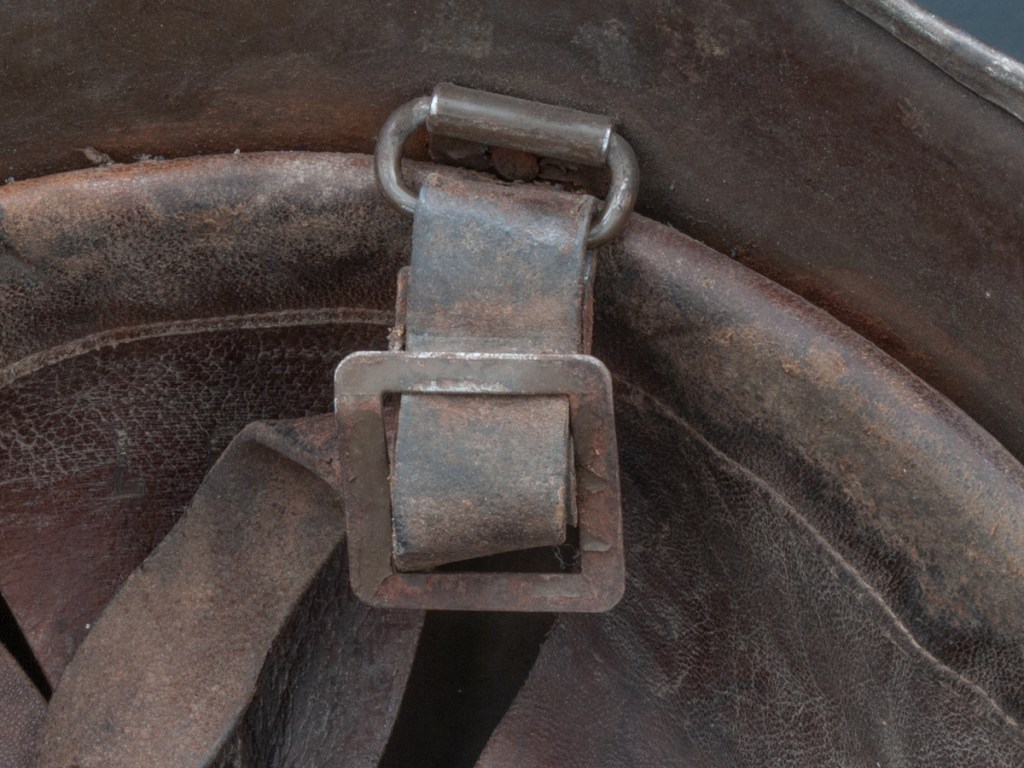
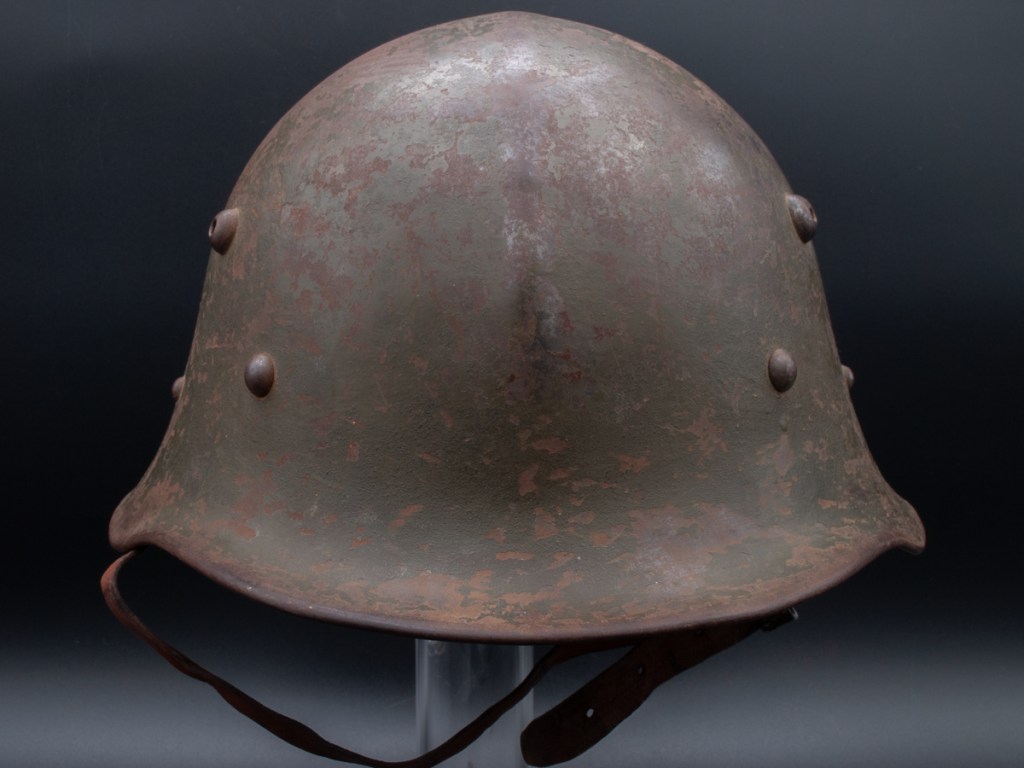
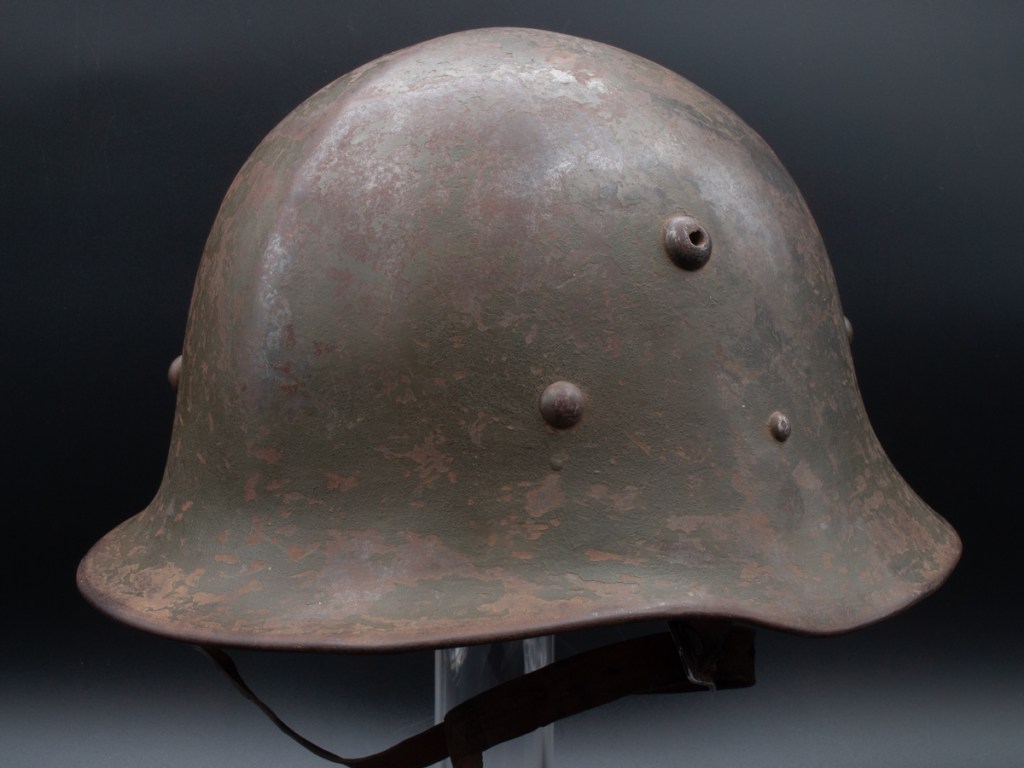
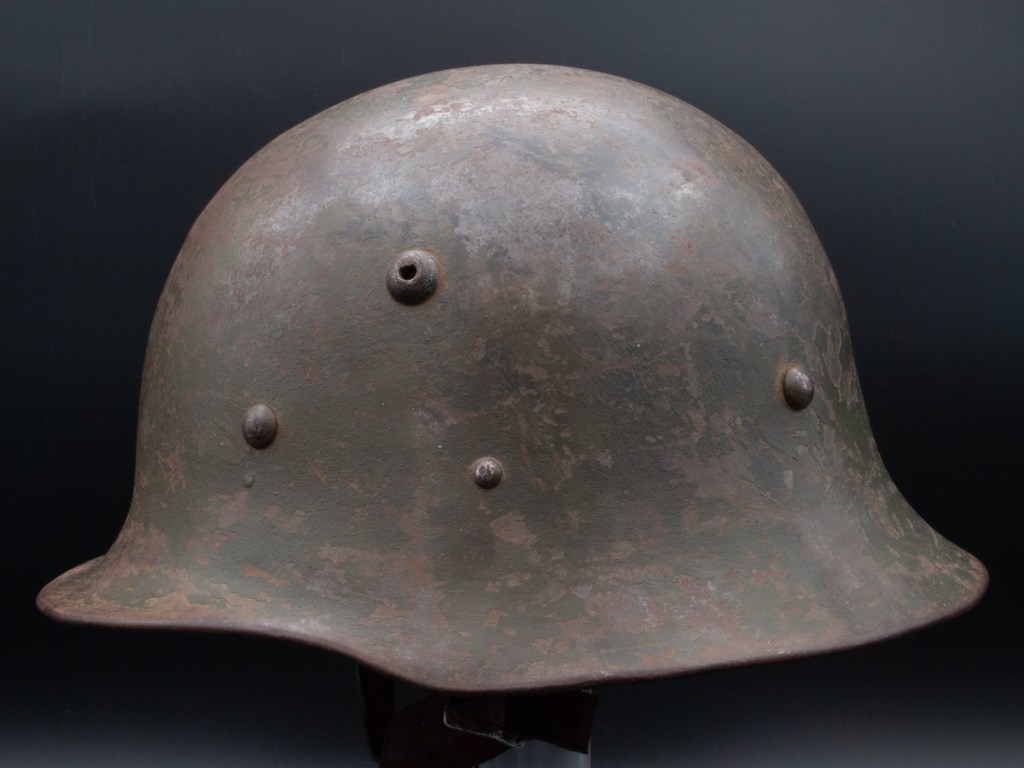
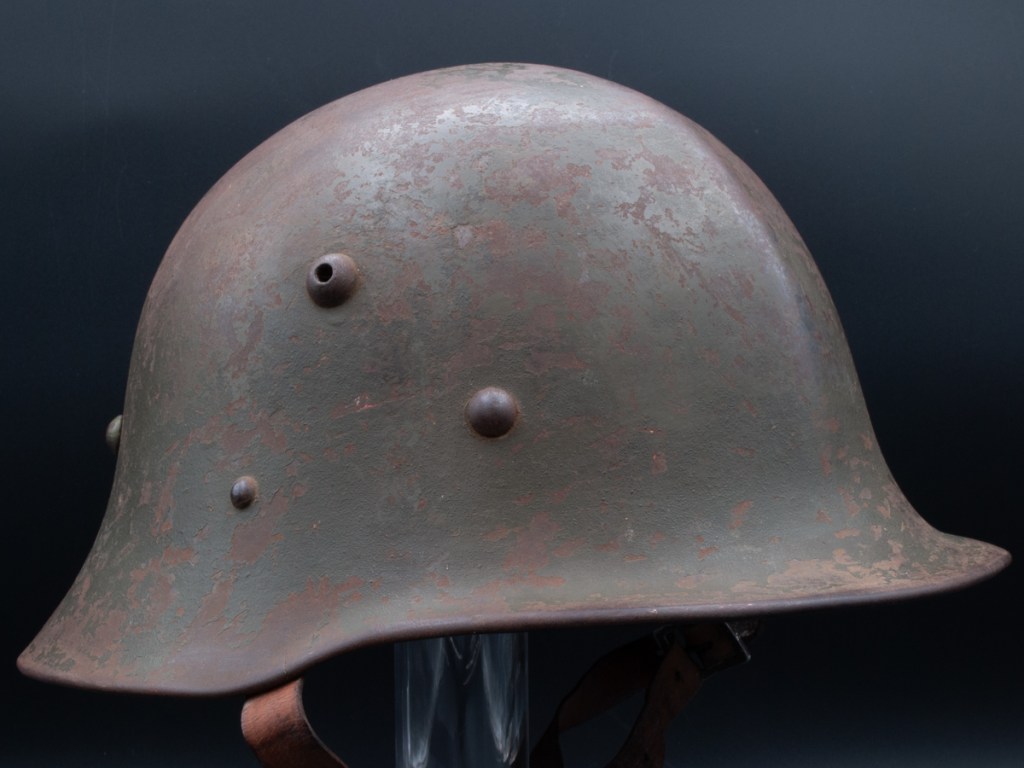
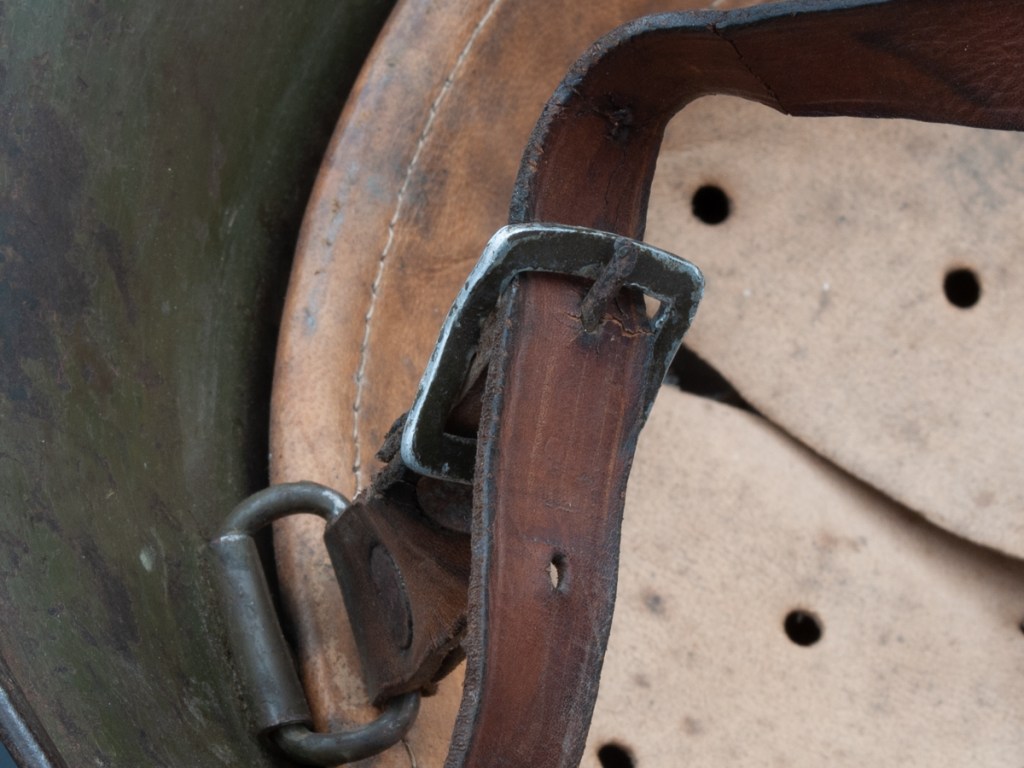
General Information: The Bulgarian Model 1936A was the first of three domestic models of helmet used by Bulgarian armed forces during the Second World War, the subsequent versions being the M36B and the M36C (see Bulgarian M36-C and Bulgarian M36-B). The M36 helmets replaced the German Model 1917 helmets used by the Bulgarians during the First World War through the 1930s, although these earlier helmets continued to see service into the post-World War Two era. The main differences between the M36A and its successors are that it had a rolled edge, was heavier, and had four domed split pins that held the liner suspension in place. Two smaller domed split pins secured the chinstrap hardware. The M36A were made in two sizes: small and large. Most of the M36As were large sized. The small sized ones are quite rare.[1] The original production versions of the M36As had seven leather tongues attached to a leather band. The tongues had steel reinforced gromets for the holes for the draw strings. The chinstraps incorporated clip type hardware and relatively large slide buckles like the Austro-Hungarian Berndorfer helmets and the Czechoslovakian vz20 helmets, but with leather straps instead of cloth, like early-production versions of the vz30s exported to Spain and some of the vz20s exported to Afghanistan (see Afghan). Like the chinstraps on the Czechoslovakian vz32s, the original chinstraps on the M36A had a split in the middle for the wearer’s chin. In addition, the M36s of all types were refurbished both during and after the war using many different locally available materials and in different patterns.
Although available references leave some doubt as to the locations of the factories that produced M36s, the helmets were apparently designed and initially produced in Czechoslovakia.[2] There are two factories thought to be producers of the helmet: Sandrik in Dolné Hámre and Brüder Gottlieb und Brauchbar in Brno (Bratři G&B – Brno).[3] Several sources cite the Eisenhuttenwerk factory in Germany as a manufacturer of the M36A.[4] [5] Recently, however, collectors who have looked into this claim carefully have not been able to confirm German manufacture of the M36s and this may be a case of collectors repeating misinformation.[6] [7] [8] Eventually, the Bulgarians produced a domestic version of the M36 in Kazanlak, Bulgaria using presses imported from Germany[9]. Available references are contradictory or vague about which versions of the M36 (A, B, or C) were produced where. One authority on Bulgarian M36 helmets believes is likely that the factory in Kazanlak produced all three models.[10] The Wikipedia entry[11] on the Bulgarian M36 is not entirely clear on this point but claims that the presses were imported from Germany at the end of 1935. If accurate, we may assume that domestic production of the M36s began at an early date with the earliest model of the M36, the M36A.
On some surviving examples of the M36A, the liners have a stamp with three Cyrillic initials in a circle which stand for Darjavana Voenna Fabrika (State Military Factory)[12]. The same stamp can be found on Bulgarian refurbished Adrian M15s and German Model 1916 helmets. This suggests that the some of the liners were made domestically and installed in shells that were either made in Bulgaria or imported from elsewhere.
“M36A-B-C” is collector nomenclature. In the pioneering book, “Les Casques de Combat: Tome 2” the Models are referred to as M36/I, M36/II, and M36/III. It seems likely that what collectors refer to as the “M36A” was understood to be simply the Model 1936 by the Bulgarian military (per Regulation 22, 8th November 1936[13]). Furthermore, the uncommon, raw edged “M36B” was probably a transitional helmet or an experimental predecessor of the “M36C.” The M36C, in turn, may have had some other official designation such as “Model 1940.”[14] Unfortunately, the archival information on this subject has not yet surfaced, so we are left to conjecture.
Displayed Examples: The helmet in the first photo gallery below came from a collector friend in The Netherlands in early 2025. It is a very rare example of a M38A in its original factory condition. It has its factory original liner with seven leather tongues that have pointed ends and metal reinforced holes for the drawstring, which also appears to be a period original. The chinstrap is a Czechoslovakian designed piece that the Czechoslovakians also used on some of the helmets they exported to Afghanistan. The hardware is the same as used on Austro-Hungarian Berndorfer helmets (see Austro-Hungarian Berndorfer) and also on Czechoslovakian vz.20s (see Czechoslovakian vz.20). The decal, which is almost always missing on these helmets due to their long service and commensurate wear and tear, or due to repainting, is partially present on this specimen.
I bought the helmet in the second photo gallery below from a Bulgarian dealer on eBay in March 2023. The helmet was repainted. This type of dark green paint is sometimes found on factory original and wartime refurbished helmets. The liner and chinstrap are probably not factory originals, but rather replacements using types typically installed on wartime production M36Cs. You can detect remnants of the Bulgarian shield decal under the second coat of paint. My assessment is that this was a wartime modification because the paint is not the postwar pea green type and the helmet has a Czechoslovakian style WWII liner and German style chinstrap of the type used through 1944. It has a small cushion attached to the dome of the helmet. These were used both during the war and in the postwar period.
Like all M36s, it lacks stamps on the shell, but has the size, 57, written twice on the liner (“BX57”). One of the liner split pins is not attached to the liner band. This, apparently, is a defect in the refurbishment of the helmet.
Collector Notes: Seventy percent of the M36s were the Type C. [15] [16] This accounts for the relative scarcity of the A and B types. To my collector eye, the M36As are among the most interesting of the helmets of the era. When examined closely, you can see the legacy features common to German and Austro-Hungarian helmets of the First World War, including the heavy weight, the similar treatment of the rolled edge, and the large washers that back the prominent ventilation lugs. The large domed split pins securing the liner band are like the ones found on pre-WWII Czechoslovakian German model helmets. The chinstraps on later versions of the M36 are less well-made knockoffs of the ones used German WWII helmets. A nice feature of the M36 helmets is that they can be purchased for a relatively modest sum. The Type As are harder to find and have a bit more cachet in the collector market, but they are still a relative bargain for a real, WWII vintage Axis helmet.
The M36s of all types were refurbished by the Bulgarian armed forces after the end of the war. They are usually repainted a vibrant green color (one prominent dealer calls this “commie green”) and refitted with postwar liners and chinstraps. When the Bulgarian army started introducing the M51s the older type helmets were put in storage, starting with the M17s[17] and the M36As which were heavier and less comfortable to wear than the M36Cs. Most of the M36A helmets relegated to storage were refurbished and it is a challenge to find one in its original WWII configuration.
* citation being sought
[1] Jacobs, Walter. Personal communication. March 8, 2025.
[2] Dagnas, J-G. 1991. pp51. (The original citation for this information was: Order of Battle and Handbook of the Bulgarian Armed Forces. Military Intelligence Division, War Department. Washington, DC, USA. December 1943. P33)
[3] See the footnotes and citations in Bulgarian M36-C
[4] Bulgarian Helmets. 2004. https://web.archive.org/web/20071020110602/http://kaski.boinaslava.net/m36.htm#. Accessed February 20, 2025
[5] Dagnas, J-G.1991. Ibid (Plasseraud’s description of the M36’s history is not clear as to what model of M36 was produced in Germany, but he seems to suggest that this was the M36A. No citation is given for the claim of German manufacture of the M36s.)
[6] Prohorov, Pavel. Personal Communication. Email February 6, 2025.
[7] Jacobs, Walter. Personal Communication. Email March 24, 2025.
[8] My tentative conclusion about Eisenhuttenwerk production of the M36s is that this is most likely a myth. To date, no convincing citations supporting German M36 manufacture have surfaced. If Eisenhuttenwerk had produced the M36, it would likely have stamped the shell with manufacturer code (ET), size, and/or lot number like the all other helmets it made, including those exported to Spain and China. On the other hand, like the Bulgarian M36s, none of the post-WWI Czechoslovakian helmets had manufacturer codes or size stamps on the shells.
[9] Bulgarian M36 helmet.” Wikipedia. https://en.wikipedia.org/wiki/Bulgarian_M36_helmet. Last edited June 5, 2021. Accessed July 10, 2022.
[10] Jacobs, Walter. Personal communication. March 8, 2025.
[11] Bulgarian M36 helmet. ibid
[12] Jacobs, Walter, ibid.
[13] Plasseraud, Yves 1991. Ibid
[14] Jacobs, Walter, ibid.
[15] Bulgarian M36 helmet.” Wikipedia. https://en.wikipedia.org/wiki/Bulgarian_M36_helmet. Last edited June 5, 2021. Accessed July 10, 2022.
[16] Bulgarian Helmets. 2004. https://web.archive.org/web/20071020110602/http://kaski.boinaslava.net/m36.htm#. Accessed February 20, 2025.
[17] Personal Communication. Prohorov, Pavel. Email 2/2/2023.









 Steel Helmets of the World Wars