
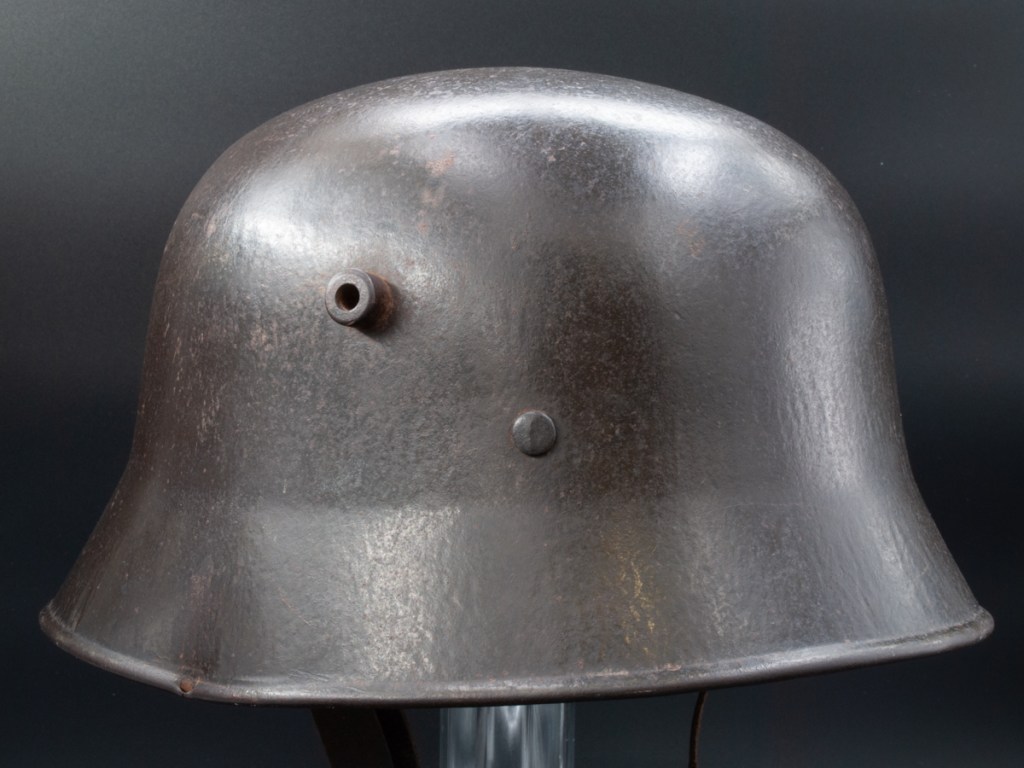

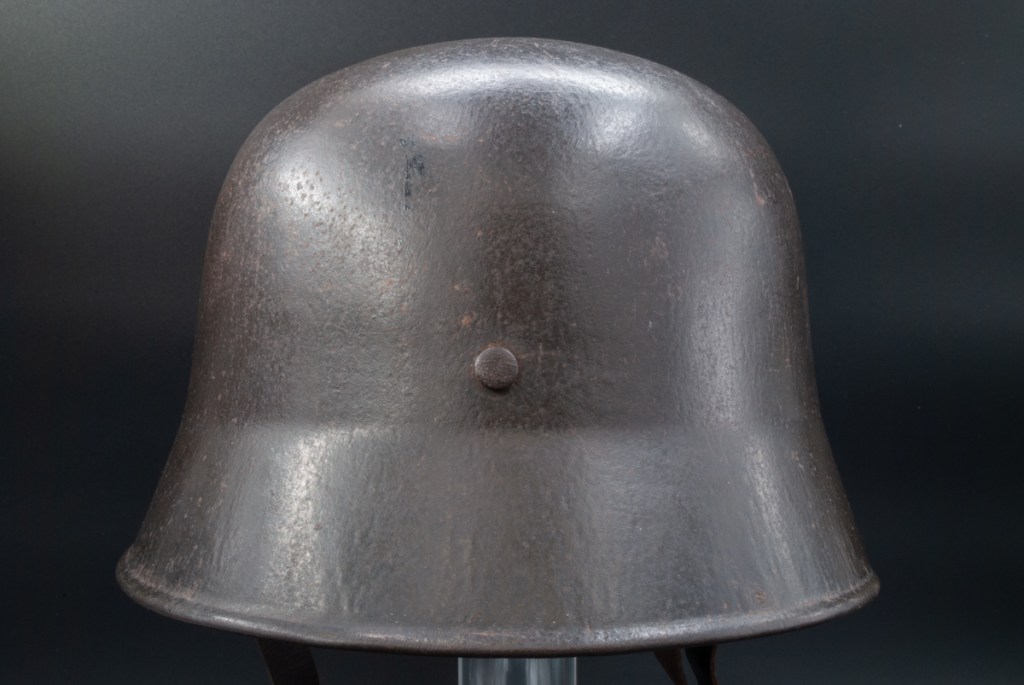
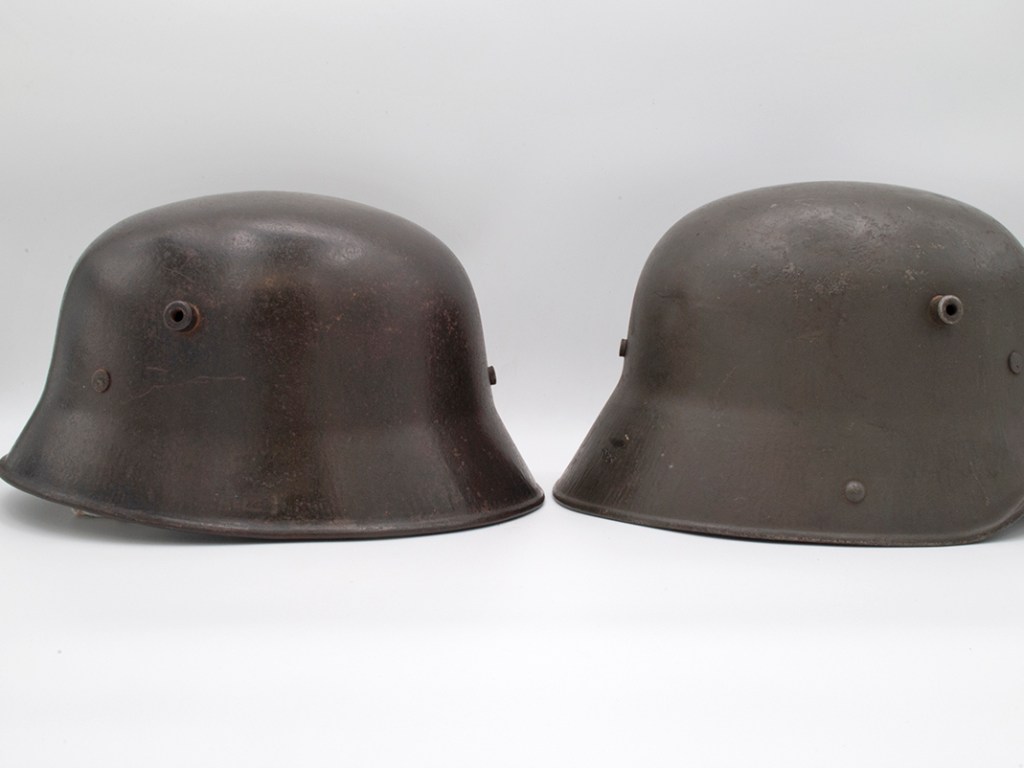
General Information: The Turkish Model 1918 was manufactured in Germany by the Eisenhüttenwerk Thale company. It resembles the German helmets of the First World War, but rather than a visor in front the skirt section continues all the way around the helmet. The reasons for the alteration from the German type are unknown, but there has been speculation as to why. One early theory was that the absence of a visor enabled the Islamic soldiers, while praying, to touch their foreheads to the ground without removing the helmet. This theory is now out of favor. For one thing, it is not possible to touch forehead to ground while wearing the helmet (I tested this). A theory that seems plausible to me is that the Ottomans wanted a helmet that reflected their traditions and was distinctive. The design of the Turkish M18 may have been chosen because it resembled a popular sun helmet worn by officers and NCOs.
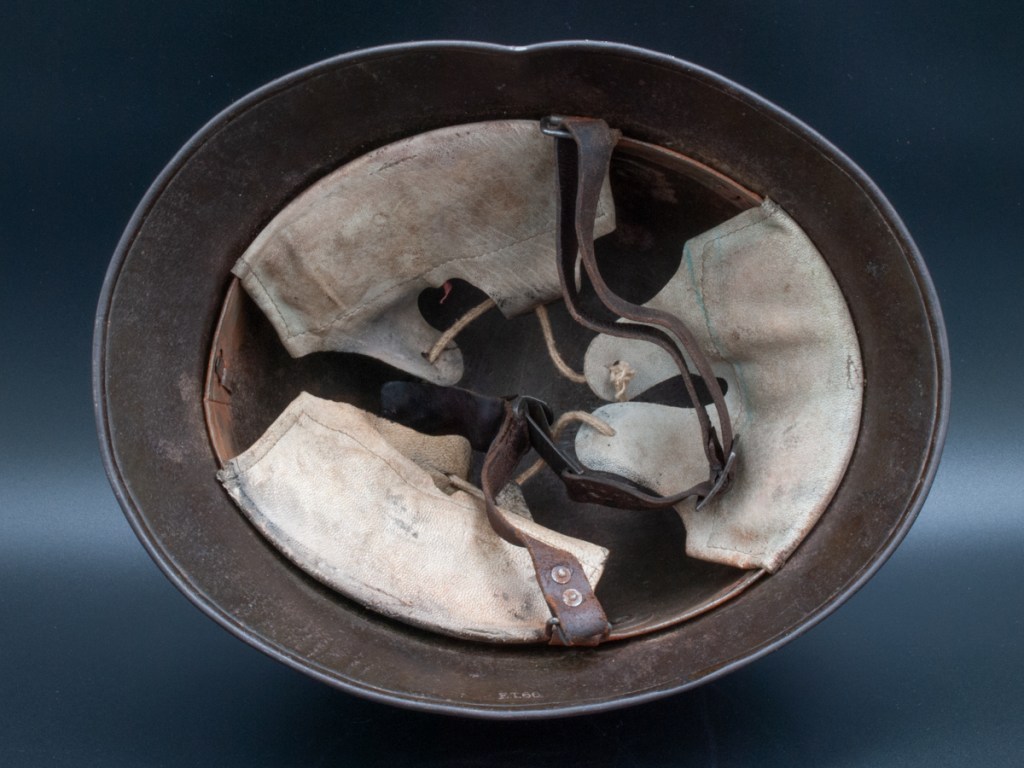
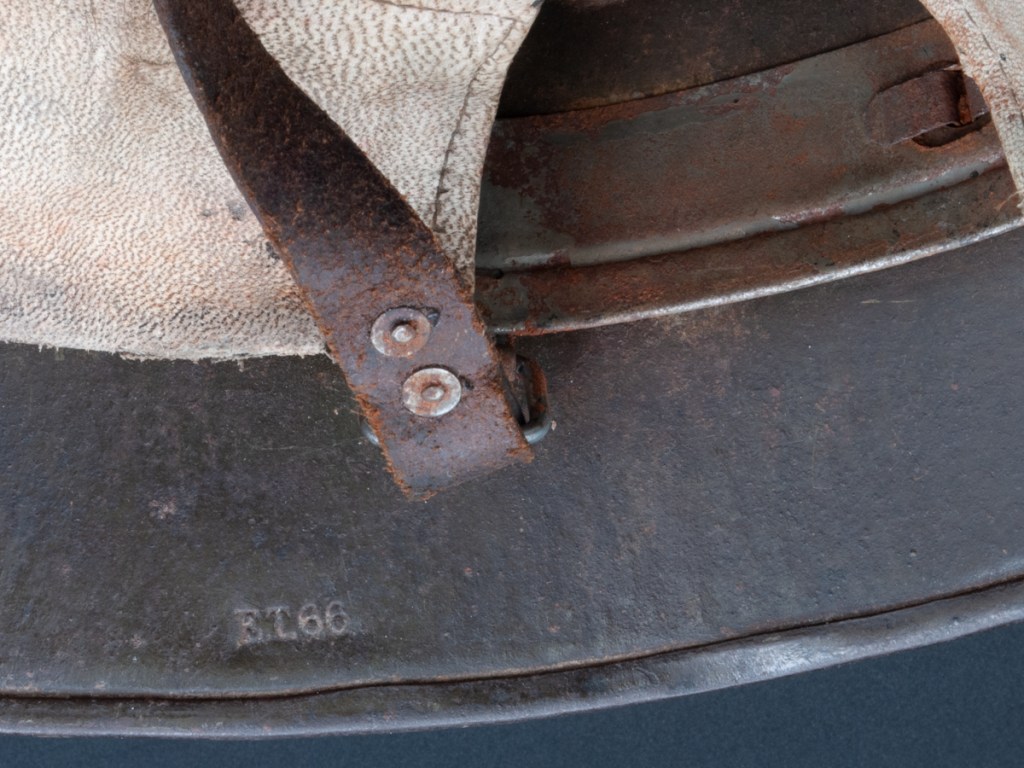
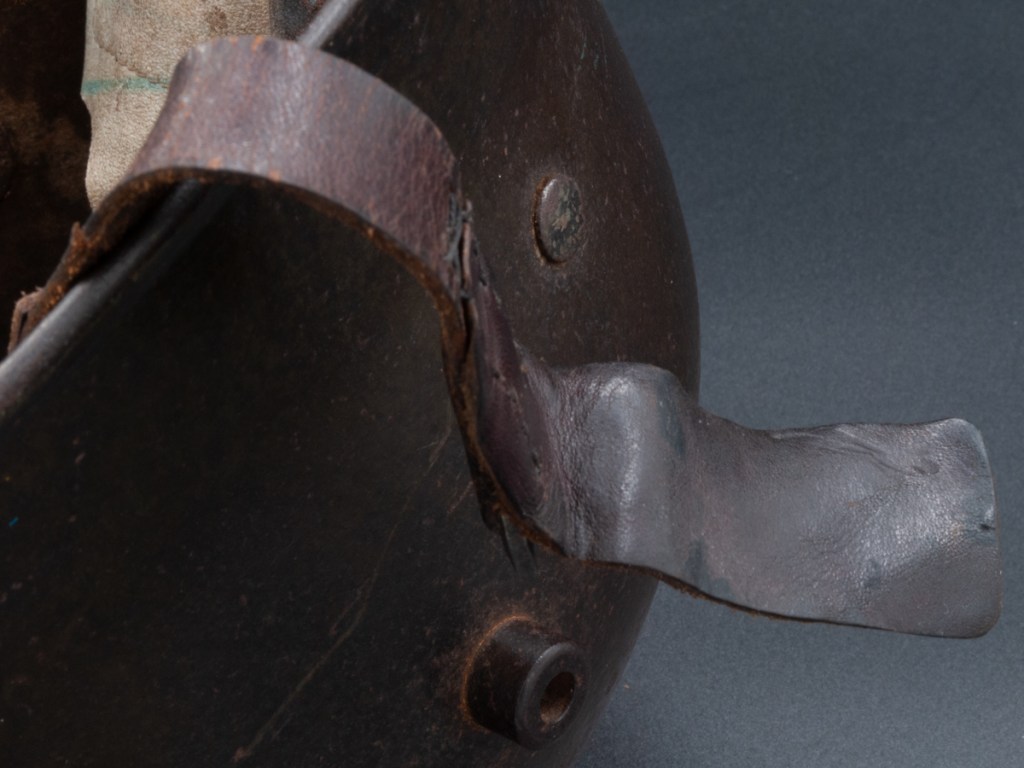
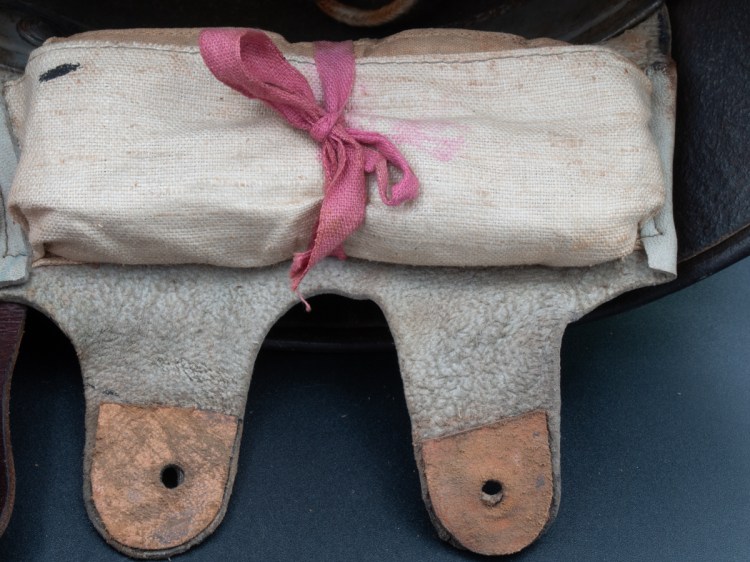
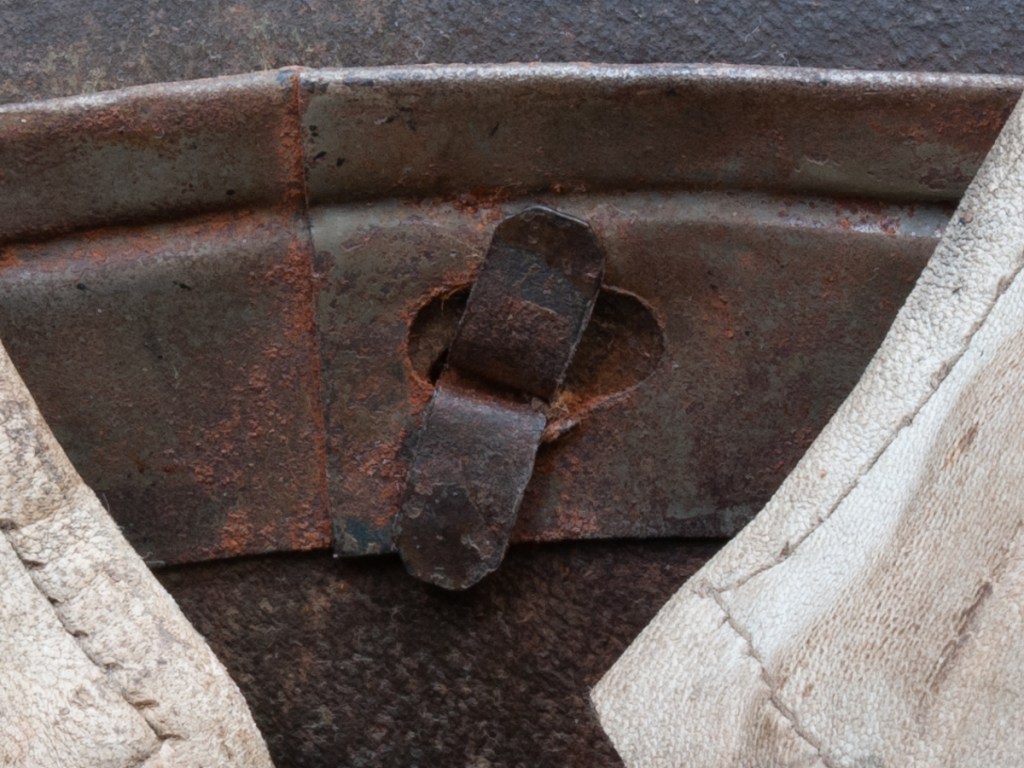
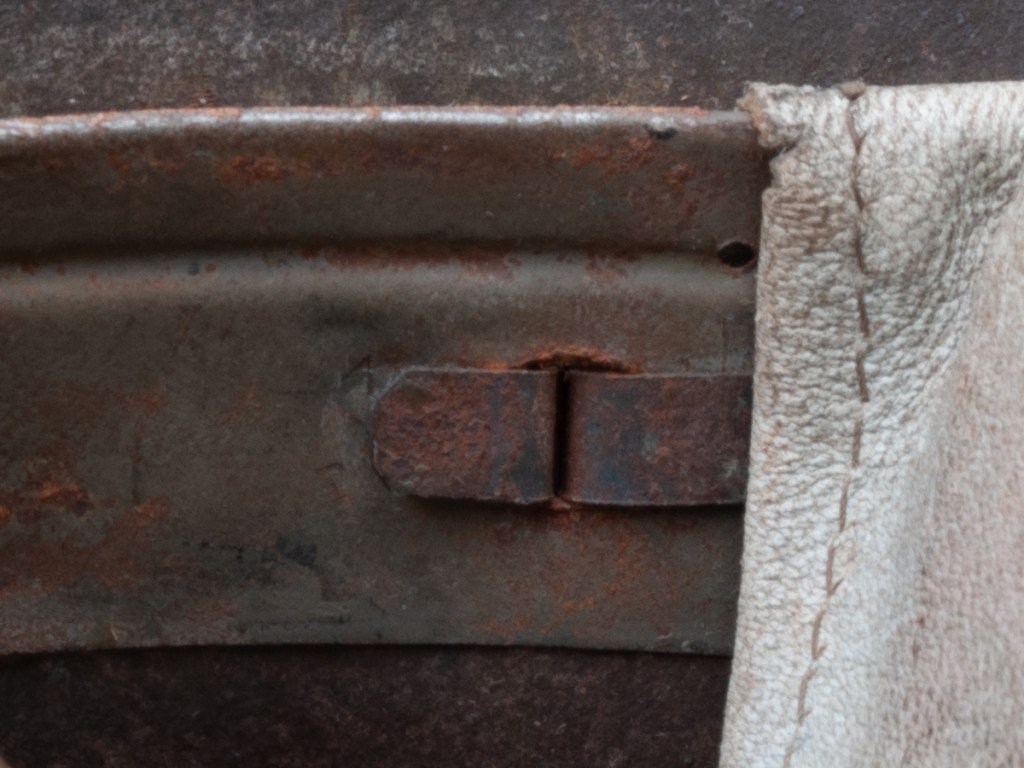
Much of what we know about the Turkish M18 is thanks to Chris Flaherty who wrote an article on the subject based, in part, on material published by the Turkish Military Museum in Istanbul and French language sources that were not widely available to English speaking audiences.[1] According to Flaherty, all of the Turkish M18 helmets were made by the Eisenhütenwerk Thale, AG in town of Thale in central Germany and are marked “ET” along with the size stamp, which for these helmets was always 66. In addition, all these helmets had the German Model 1918 liner with white liner pads and carbine clip chinstrap attachments.
The Turkish M18 is sometimes referred to by collectors as the “full-visor” Turkish helmet to distinguish it from the so called “visorless” “Turkish” helmet. Contrary to popular belief, Flaherty asserts that the “visorless” helmets were made for the Imperial German army, not the Ottoman Turkish army. I recall reading somewhere that these helmets were made for use in tanks. If I can find a reference for that, I’ll post it. There are well known period photographs of Freikorps troops with tanks wearing these “visorless” helmets and this may be the source of the idea that these were made for use in tanks. Eisenhüttenwerk Thale delivered 5,400 of M18 full visor helmets to the Ottoman Turkish army before the Turks declined further deliveries. The production number – 5,400 – has been transposed and erroneously referred to as the number of visorless helmets produced. The source of this error and other misconceptions may be Floyd Tubbs’ pioneering collector book, Stahlhelm.[2] In this volume he identifies the visorless helmet as the “Turkey steel helmet” and claims that 5,400 were delivered to the Turkey. Subsequent scholarship has shown this to be wrong.
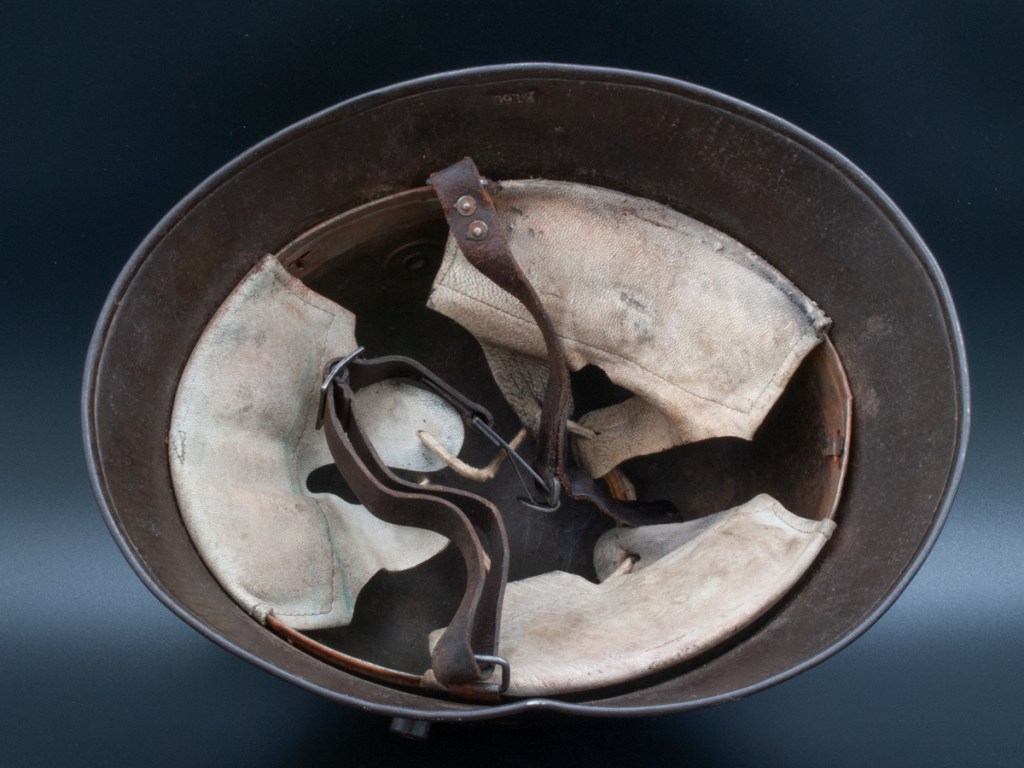
The known lot numbers for the Turkish M18 run from R1460 to R1481.[3] Like other German produced helmets from the era, the lot numbers are stamped inside the helmet at the top of the dome.
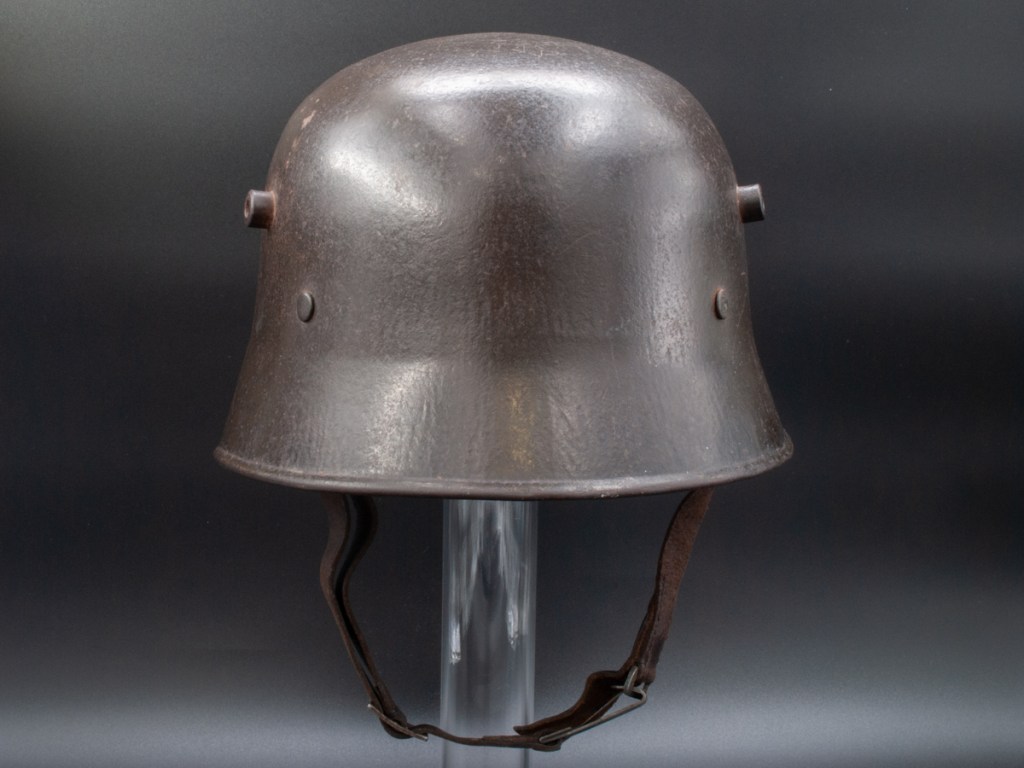
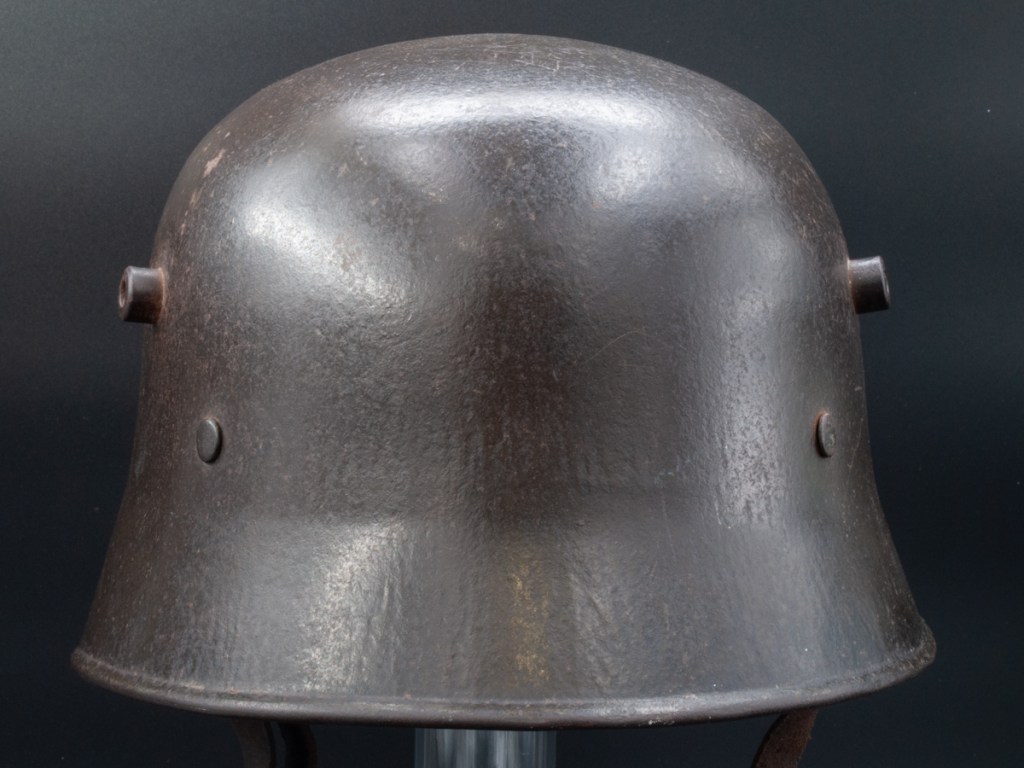
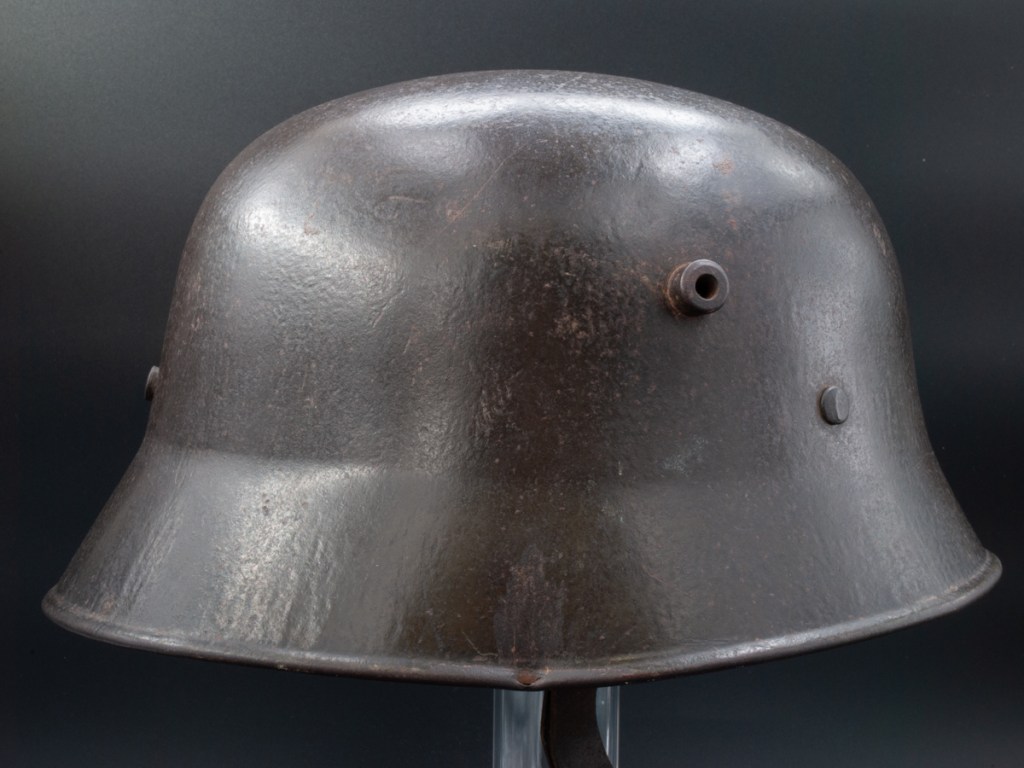
Displayed Example: Just before the 2019 Show of Shows militaria show in Louisville, KY, I contacted a collector friend who usually has a table there. He has been slowly liquidating his wonderful collection of helmets and always has interesting stuff on display. I asked him if he, by any chance, had either of two things I was looking for: a Greek M15/18 and a Turkish M18. He told me he had a Greek M15/18, but he wasn’t sure if it was authentic. I could stop by his table and he would show it to me. When I arrived, he pulled the Greek helmet out from under the table. It looked like a reproduction, but it was priced accordingly and I bought it as a place holder. Then, he pulled out the helmet displayed here, named a price, which I quickly agreed to.
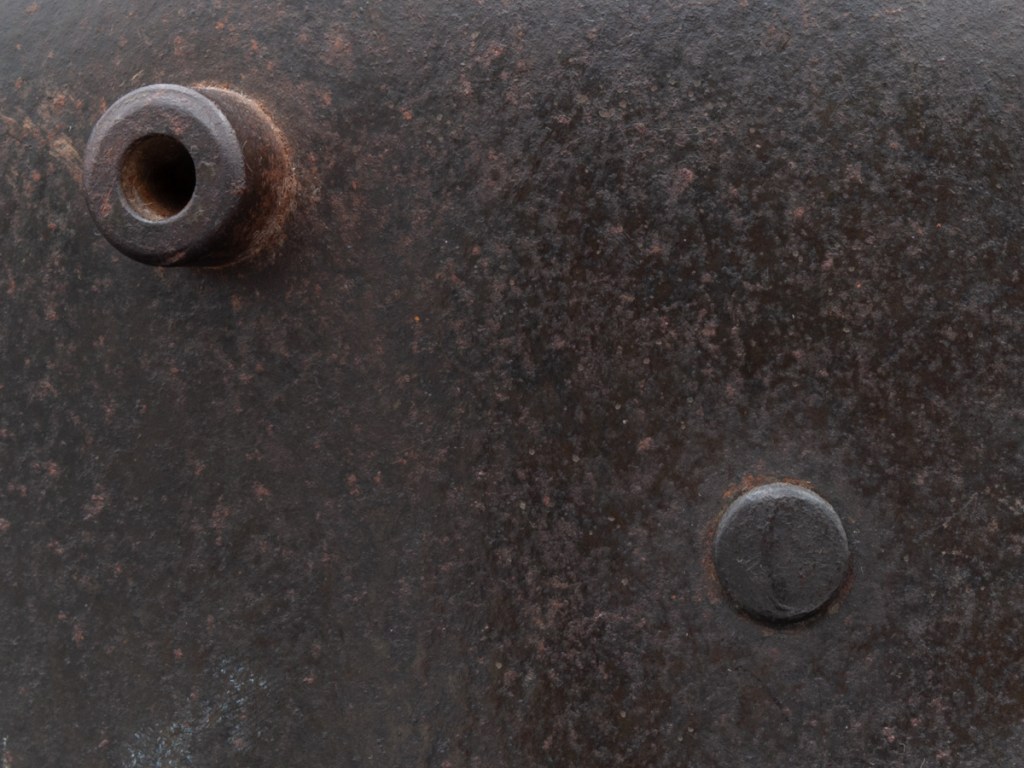
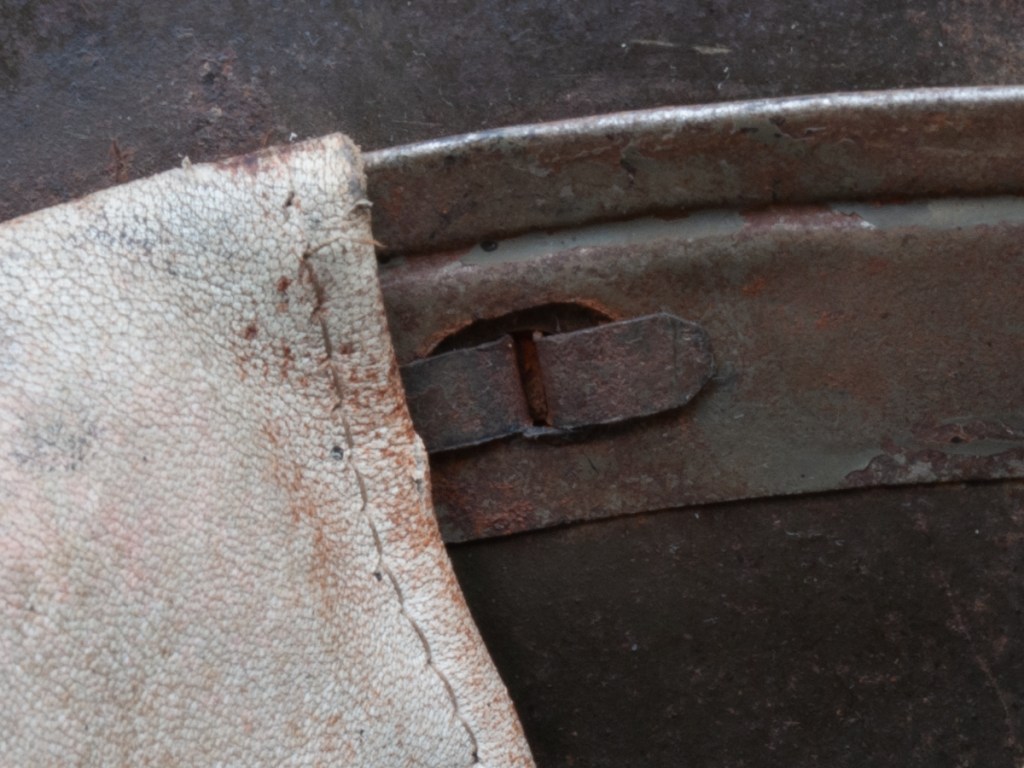
The helmet came from an old-time collector named Charlie Yust. It is exactly the same helmet shown on page 382 of 2003 edition of Paolo Marzetti’s book, Elmetti.[4] The helmet has a distinctive dent on the right side, possibly from something like a shrapnel strike. This is visible in the photo in Marzetti’s book. The liner band showed signs of tampering and one of the split pins was broken. At some point in the helmet’s history some black paint was spilled on the liner pads. This is also partly visible in Elmetti. I had the liner reset by one of the top restorers and the broken split pin replaced by on original one of the correct type and matching patina. At the same time most of the black paint was removed from the liner pads.
Why was the liner tampered with? The simplest answer is that the liner is not original to the helmet. This may be the case, however, there is one thing to suggest that the liner is, indeed, the original one. The German M18 helmets almost invariably have maker stamps on the broad flap section of the chinstrap, or rarely on other sections of the chinstrap. It is very unusual for there to be no maker stamps whatsoever on the M18 chinstraps. I ask one of the top dealers about this and he said of the more than 30 M18s he had sold he could not recall one that had no maker stamp. This specimen has no maker marks. Why would that be? It is very common for export helmets, like the German M35s sent to Spain and China, the export version of the French M26, or the Czechoslovakian vz30 to lack manufacturer stamps where they are usually found on the domestically used versions. The simple reason for this, I believe, is that it was not required as it would have been by the military procurement authorities in the country of manufacture. We cannot know for sure if the liner is original to the helmet, but it is exactly the right type liner and there is at least one reason to think that it is possibly correct.
Collector Notes: This is an extremely rare helmet. Even many advanced collectors have never seen one outside of photos. Most Turkish M18s are rusting on old battlefields somewhere. Rarity, as I have pointed out elsewhere, breeds fakery, and the Turkish M18 is no exception. Flaherty, in his helpful article, describes how to identify some of the convincing looking fakes. These are usually made from Czechoslovakian vz.20 helmets with new front pieces added in place of the visor and the edges expertly rolled. There are three errors that identify the repros:
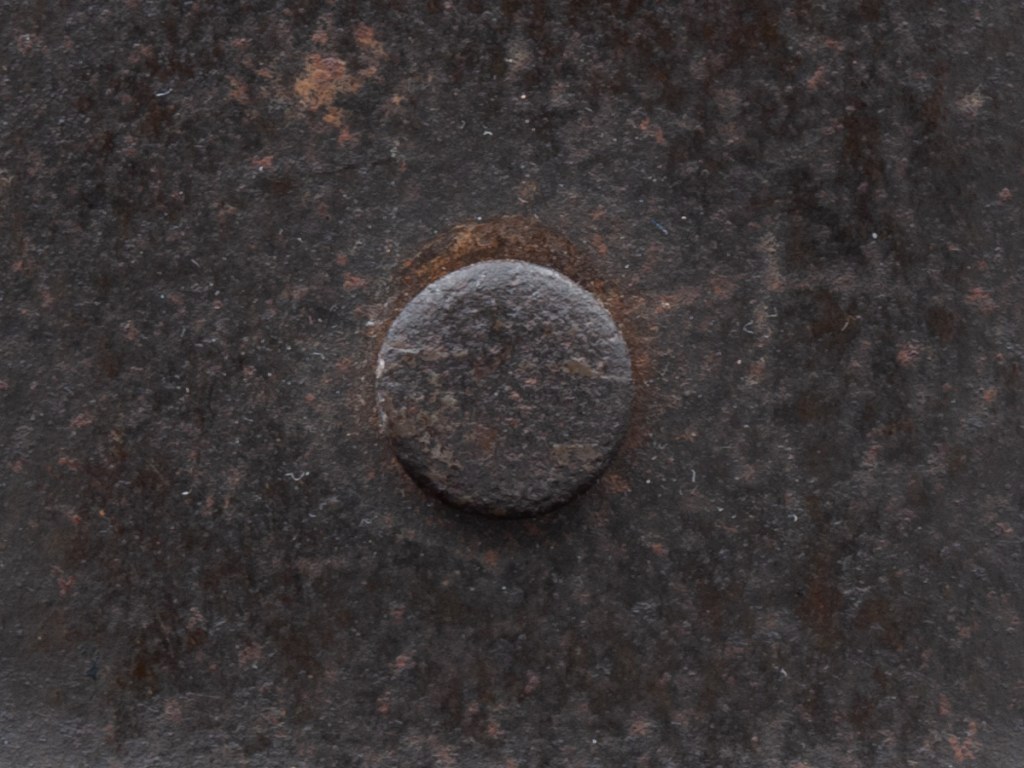
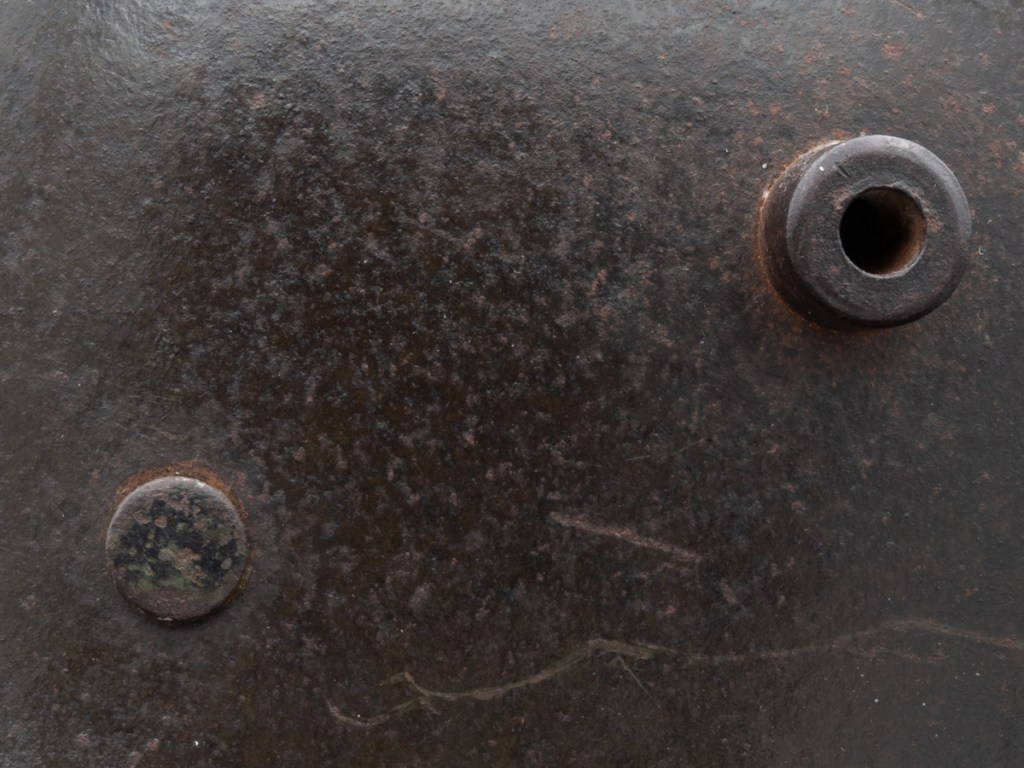
1) They are treated with acid or bleach which produces a very active red rust finish.
2) The lot number is on top of the crown, like Austro-Hungarian and post-war Czechoslovakian helmets, rather than on the interior, which was the norm for German made helmets. In addition, the vz.20s had an Adrian style comb on the top and on the repros you can sometimes see signs of where this has been removed.
3) The Turkish M18 had a slightly shorter rear skirt than the standard German style helmets, but the copies have normal length skirts.
I would add to Flaherty’s observations that an original Turkish M18 should have a lot number stamped on the interior of the dome that is within, or close to, the known range of lot numbers for this type.
[1] Flaherty, Chris. “WWI Ottoman Turkish Steel Helmets”. The Armourer. March/April 2011. pages 36-38.
[2] Tubbs. 1971.
[3] Based on personal research drawing from five specimens of the type. Three of these had lot number R1481. One was R1460. The example from my collection has a lot number that is not perfectly legible, but appears to be R1461.
[4] Marzetti. 2003


 Steel Helmets of the World Wars