
revised February 23, 2026
General Information: From the 1920s up until the start of the Second World War, Lithuanian soldiers were equipped with refurbished German helmets from the First World War. These may have been left behind by German armed forces which did not leave Lithuania until 1919 or they may have been sourced from military stocks left over from the war. Unlike the German helmets used by the Latvian army, there seems to have been less standardization in how the refurbishments were done (see Latvian M17). There is a hand-made quality to the replacement liners and chinstraps. Some, but certainly not all, Lithuanian helmets from this period had hand-painted shields with the Lithuanian national colors – yellow, green and red. From examination of one other similar Lithuanian helmet I have seen and a small number of period photos of helmets with insignia, these were typically formed with horizontal bands with a concave curve at the top.
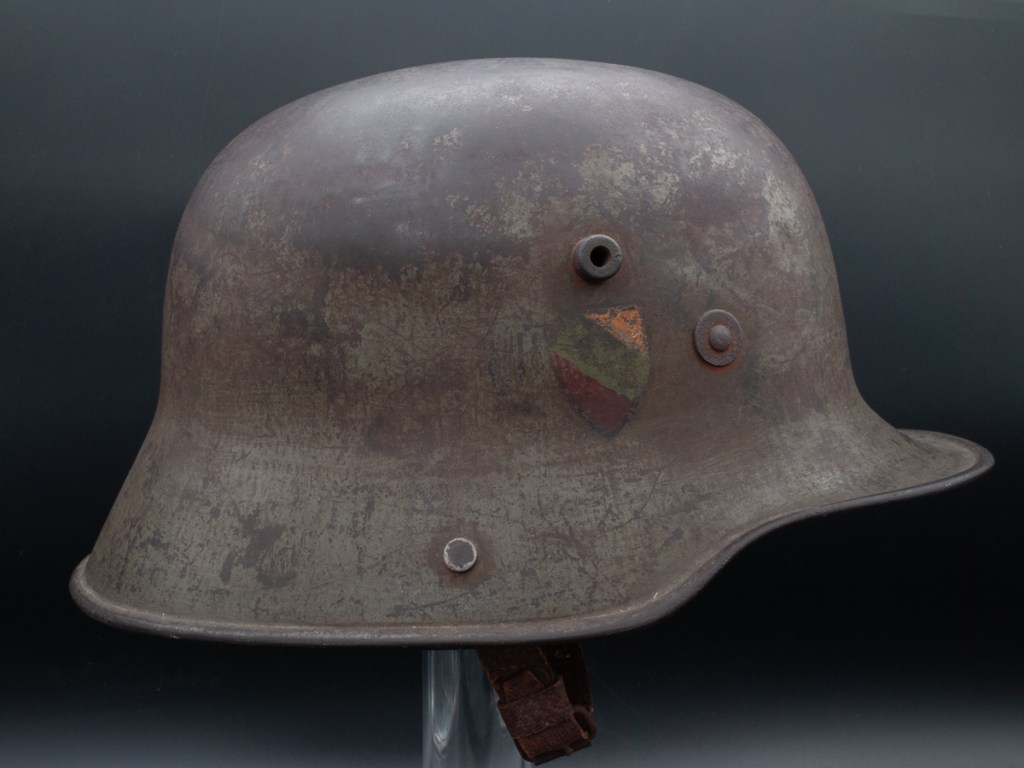
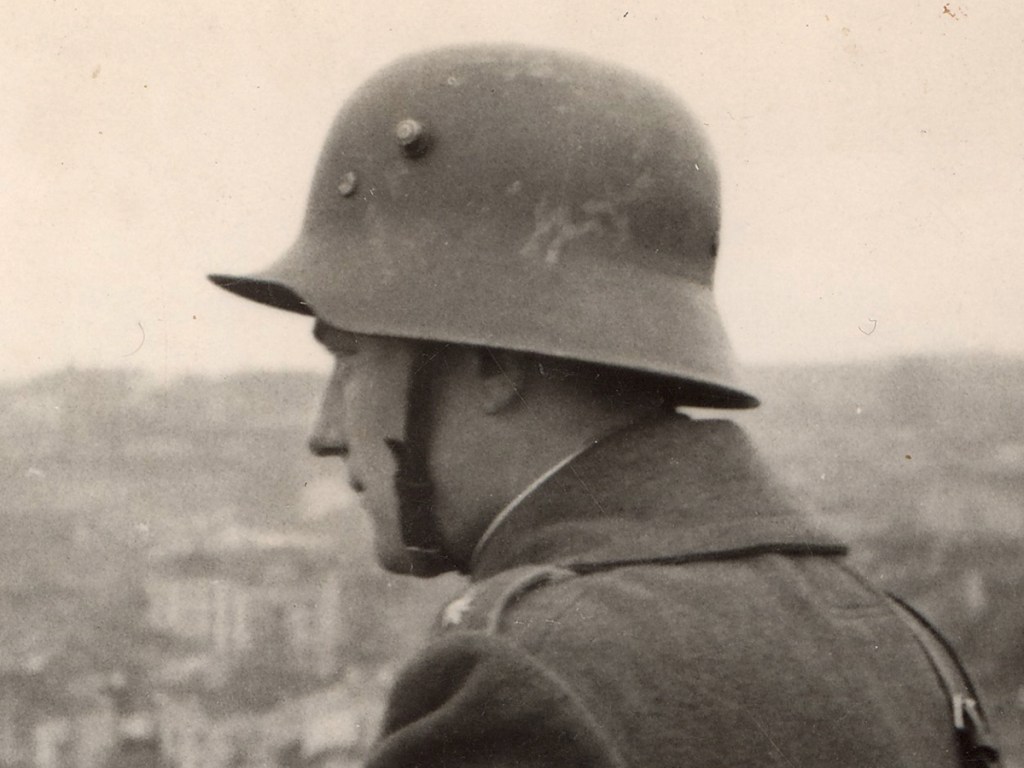
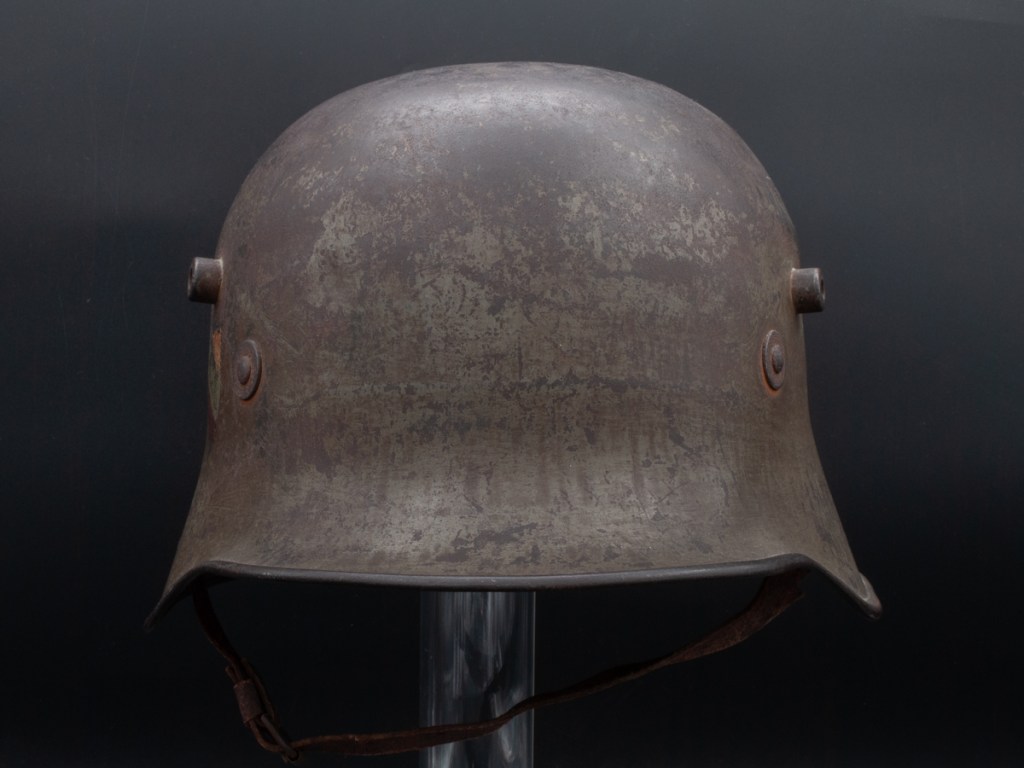
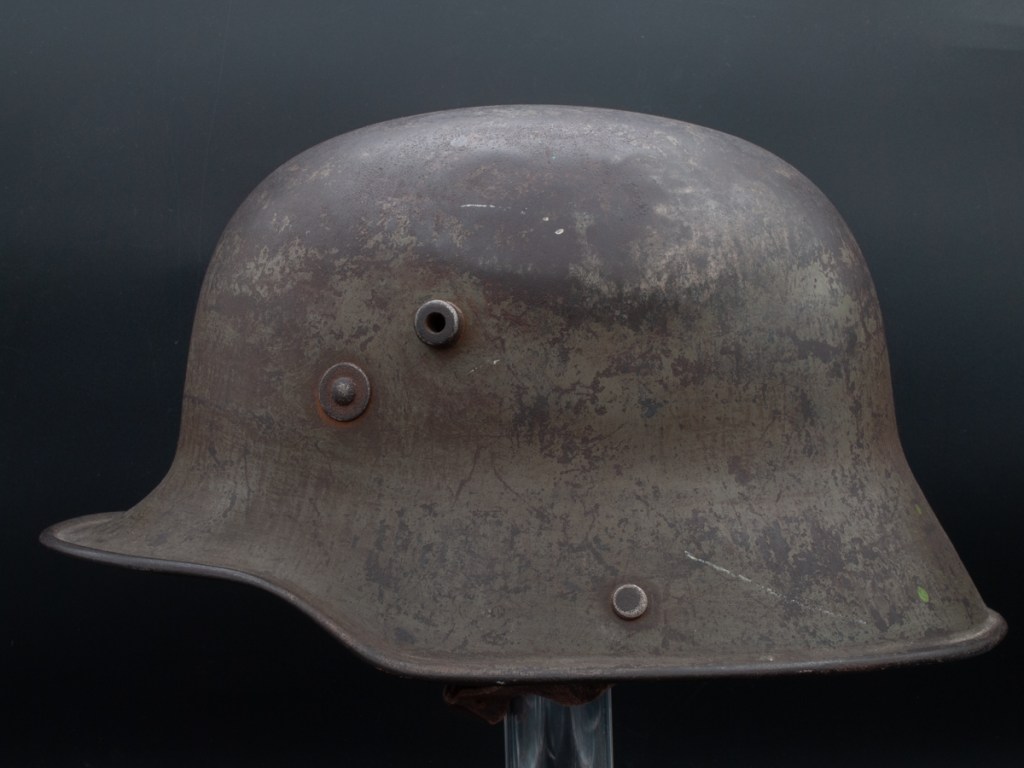
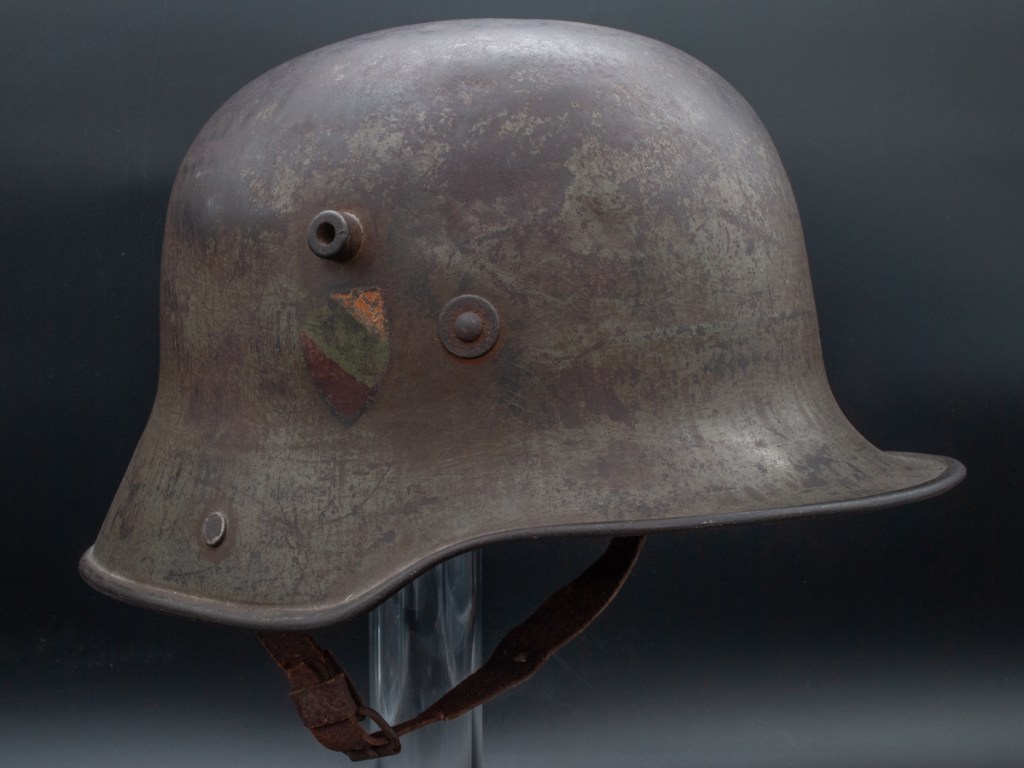
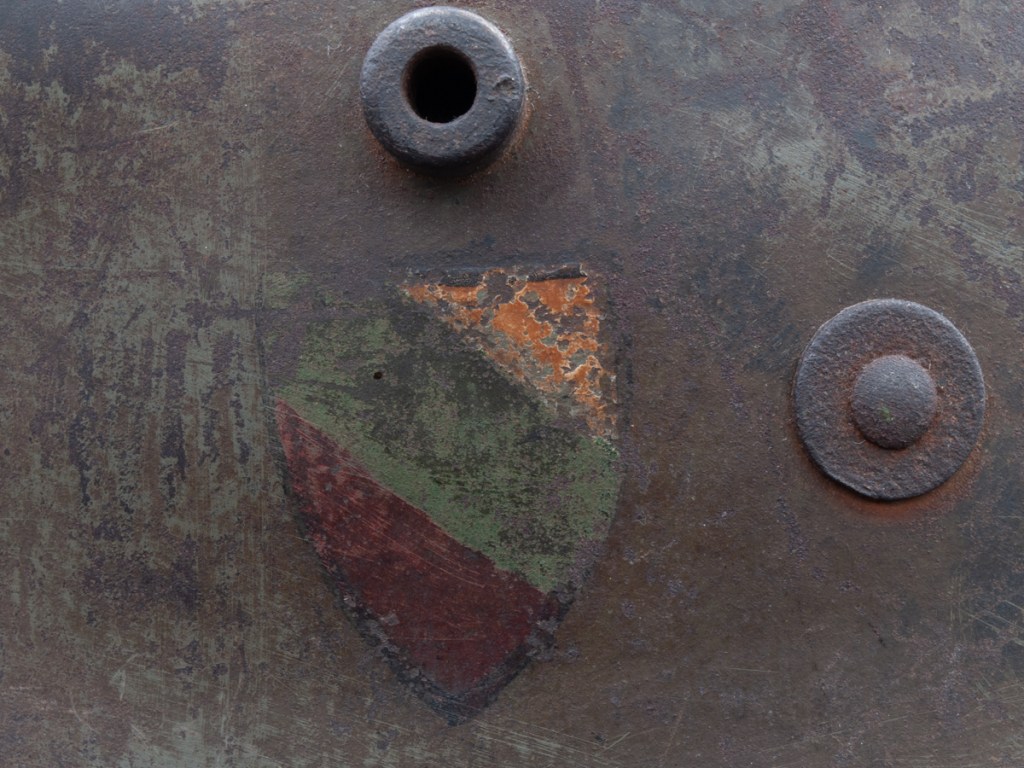
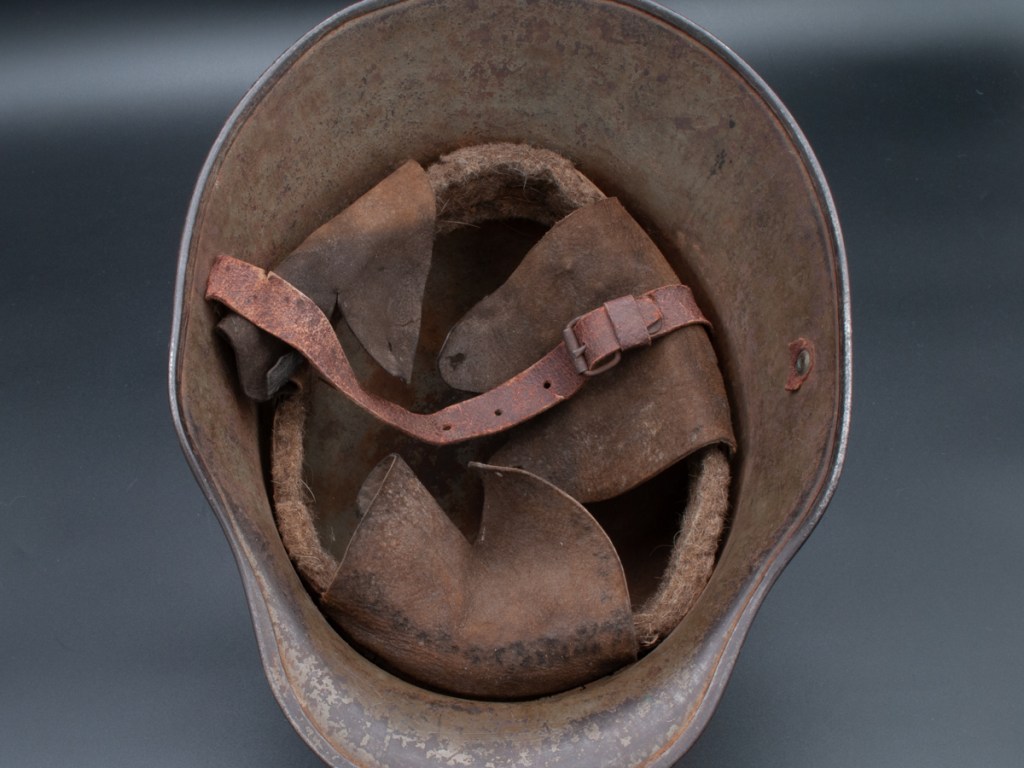
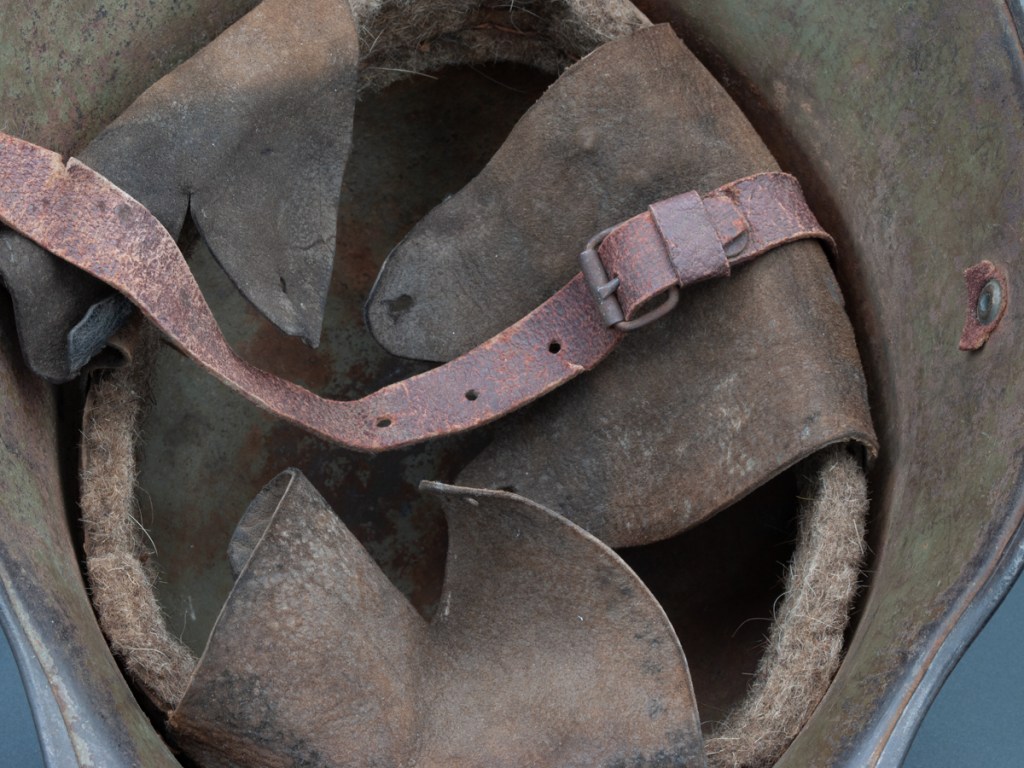
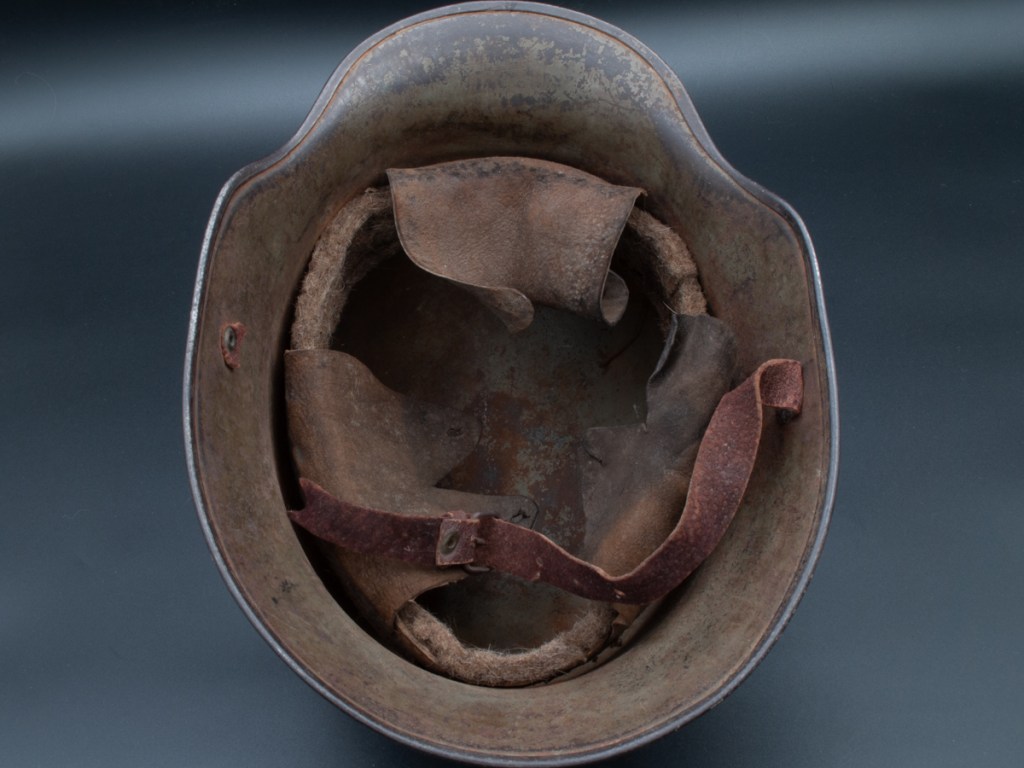
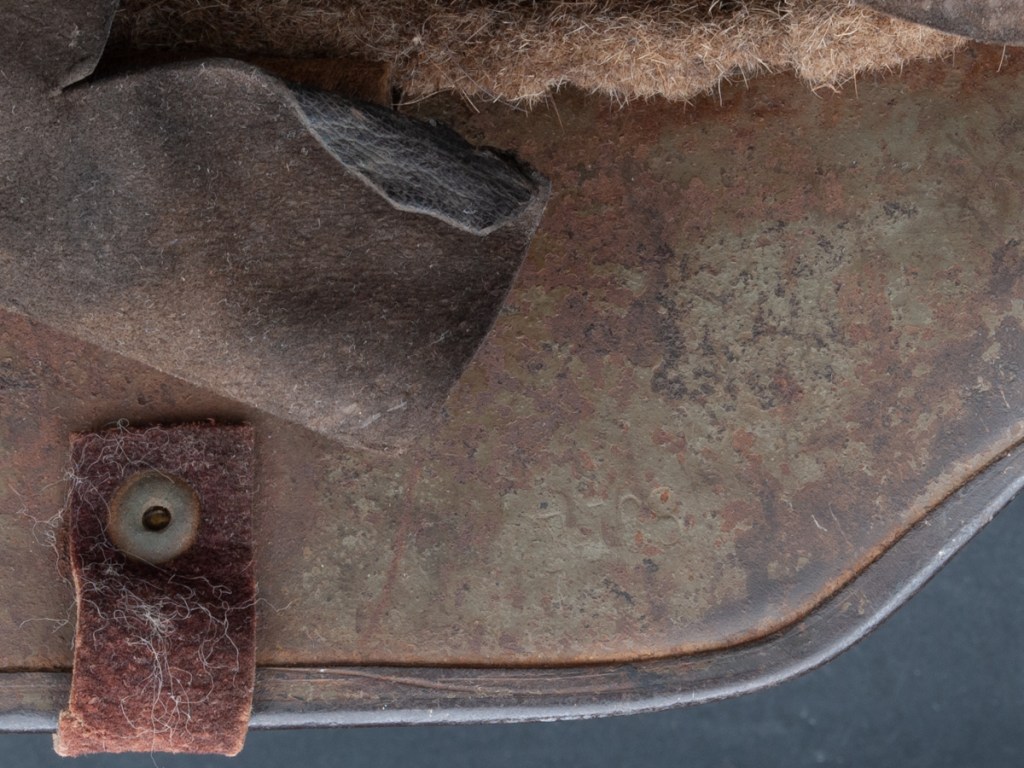
Displayed Example: I bought this helmet on eBay in 2016 from a Dutch seller. He said it came out of an old collection in Germany. The helmet is a size 68 and is marked “T.J.” which stands for the C. Thiel & Söhne company of Lübeck.[1] The Model 1891 chinstrap attachment devices used on original 1916/17 German helmets have been removed. A simply made replacement leather chinstrap is attached with rivets in holes left by the removal of the chinstrap devices. The same type of rivet was used to secure the roller buckle end of the chinstrap. Note that the helmet in the period photo above has a similar type of post-factory chinstrap. The crudely made liner is held in place with split pins backed by washers. I found one period photo that appears to show this same configuration – split pins with washers (see below). The paint appears to be the factory-original application. The hand-painted shield by appearance is entirely original but has diagonal oriented bands like the German Reichswehr shields or Wehrmacht national colors decals rather than the more typical horizontal bands that I have seen on a handful of other specimens.
A collector who is knowledgeable about these helmets suggested that this specimen might be Bulgarian. The shield on this helmet resembles the shields on Bulgarian helmets from the 1930s through the war. These also had black boarders, with diagonal lines. The difference on this helmet is that the lines slope in the opposite direction from standard Bulgarian army pieces and the colors are yellow-green-red rather than white-green-red. The other factor that caused the collector to think it might not be Lithuanian is that based on the small number of surviving examples of Lithuanian reissued German helmets and available period photos, Lithuanian shield had horizontal rather than diagonal lines and a concave, curved line at the top. In addition, these shields were on the left side rather than the right side. On the other hand, a collector who perhaps has the most extensive collection of Bulgarian helmets told me that this helmet does not resemble other Bulgarian reissued WWI helmets and he does not think it is Bulgarian.[2] There is at least one other known example of a Lithuanian M16/17 with painted shield with diagonal rather than vertical lines, flat versus concave top, and located on the right rather than left side.[3] I am not totally persuaded one way or another, but I think the jury is still out as to the definitive identity of this helmet.
Collector Notes: Lithuanian reissued helmets are almost impossible to find. It is possible, however, that a sharp-eyed collector might be able to find a one of these offered for sale by somebody who does not know what they have. Without a Lithuanian shield, however, it could be difficult to determine if the helmet were Lithuanian or something else. Provenance might be revealing. If you found an odd-duck refurbished German WWI helmet from a Lithuanian source, you might have the real McCoy.
* deaquisitioned
* helmet12781 (aka). “Lithuanian M17.” German Helmet Walhalla. July 8, 2016. https://www.ghw2.com/topic/52238-lithuanian-m16/#comment-629164. Accessed January 31, 2023.
[1] Meland. 2020. pp 10
[2] Jacobs, W. Personal Communication.
[3] Baer, L. 1994. Band 1. pp. 382.



 Steel Helmets of the World Wars